Part 45 |
Future Technologies and Next-Generation Intelligent Barcode Printing Systems AI-Assisted Printing, Cloud-Native Architectures, Autonomous Printing Ecosystems, and the Convergence of Barcode, RFID, Computer Vision, and Industrial Digital Identity Technologies |
1. Introduction to the Future Evolution of Barcode Printing Systems |
1.1 |
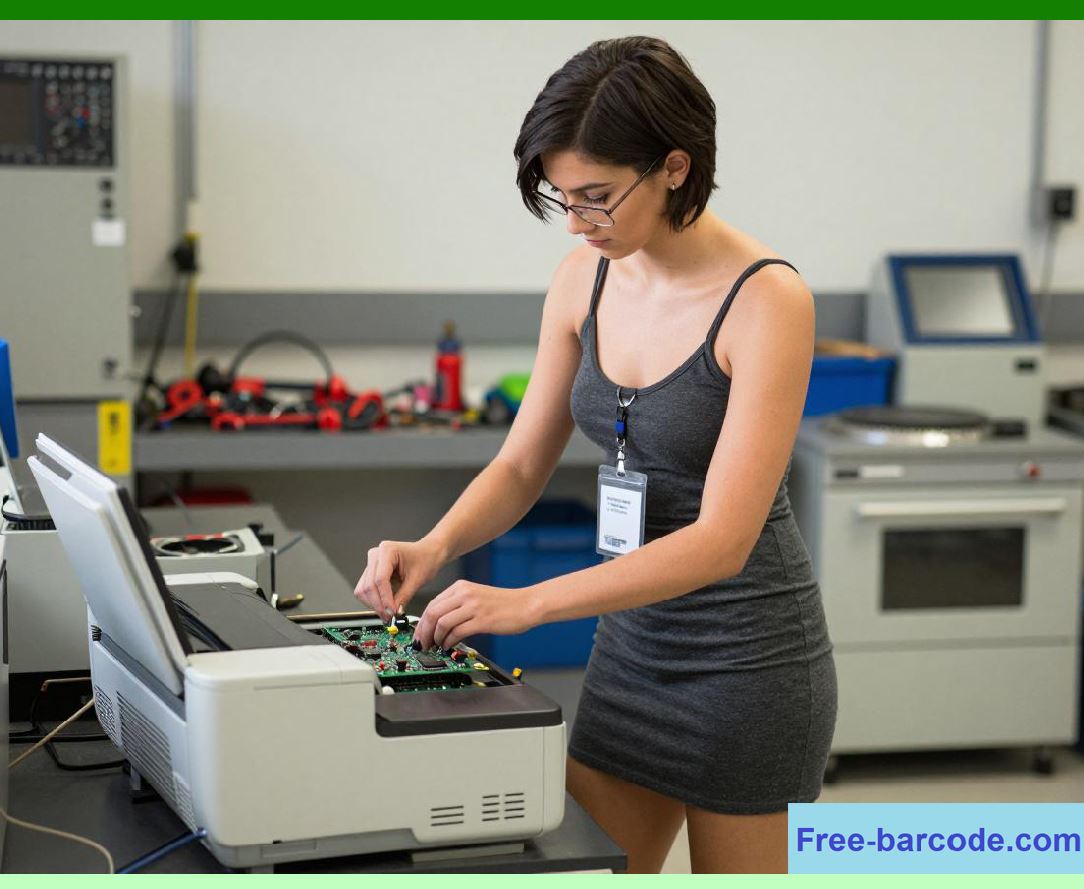
Barcode label printers have evolved from simple electromechanical printing devices into highly integrated intelligent industrial systems. Early barcode printers primarily focused on basic label generation using simple thermal mechanisms and limited embedded control electronics. Modern systems, however, combine advanced firmware, real-time networking, sensor fusion, industrial automation, RFID integration, and cloud-based management. |
1.2 |
The next generation of barcode printing systems will move beyond isolated hardware devices and become autonomous, adaptive, and fully interconnected digital infrastructure components. |
|
1.3 |
Future evolution is being driven by several major technological trends: |
1. Artificial intelligence and machine learning |
2. Industrial Internet of Things (IIoT) |
3. Edge and cloud computing convergence |
4. Real-time computer vision systems |
5. RFID and digital identity integration |
6. Autonomous industrial automation |
1.4 |
These technologies will fundamentally transform the role of barcode printers within manufacturing, logistics, healthcare, retail, transportation, and supply chain systems. |
1.5 |
Future barcode printing systems will increasingly operate as intelligent decision-making nodes rather than passive output peripherals. |
|
2. AI-Assisted Print Optimization and Autonomous Decision Systems |
2.1 |
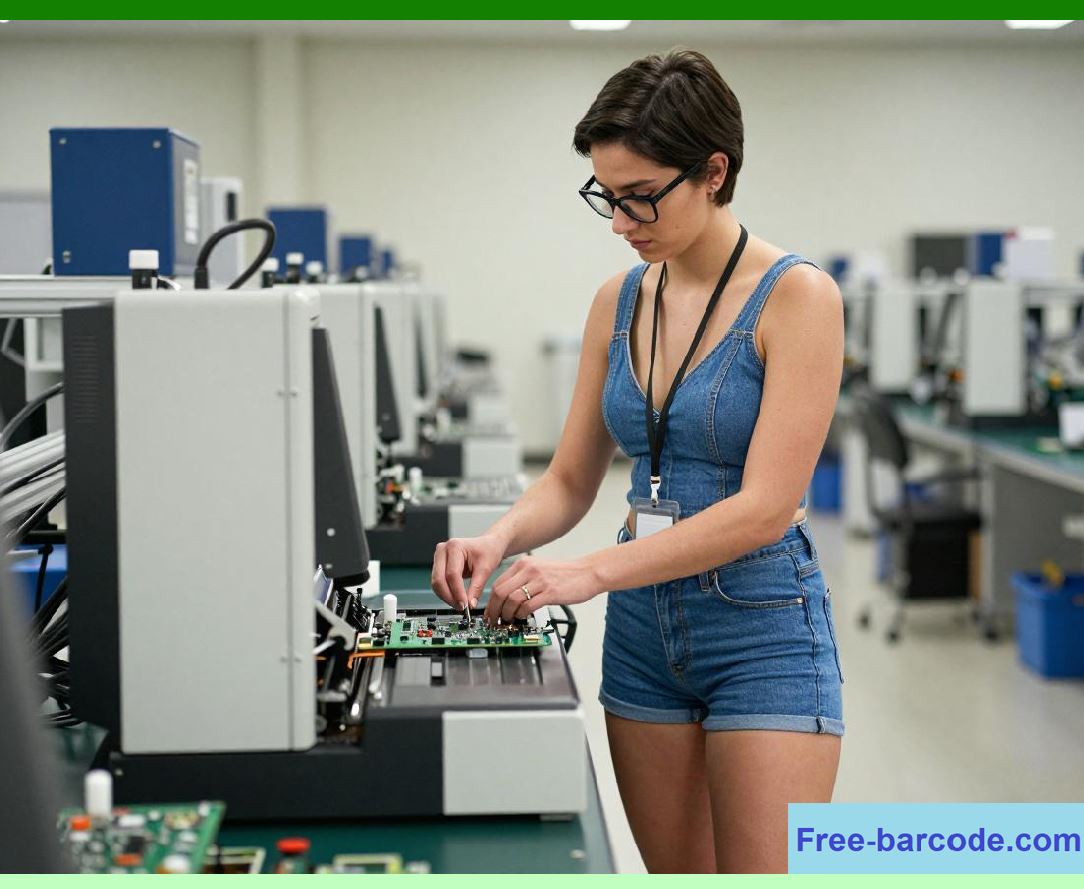
Artificial intelligence will become deeply integrated into future barcode printing architectures. |
2.2 |
AI systems will continuously analyze: |
1. Print quality metrics |
2. Thermal behavior |
3. Mechanical motion stability |
4. Sensor feedback patterns |
5. Environmental conditions |
|
2.3 |
Machine learning algorithms will identify hidden relationships between operating variables and print outcomes. |
2.4 |
AI-assisted optimization will dynamically adjust: |
* Printhead energy |
* Feed speed |
* Motion acceleration profiles |
* Thermal compensation curves |
2.5 |
Traditional static calibration tables will gradually be replaced by adaptive learning systems. |
2.6 |
Printers will increasingly self-optimize during operation without human intervention. |
2.7 |
Real-time predictive correction will improve barcode readability and consistency. |
2.8 |
AI will transform printers into self-adaptive manufacturing devices. |

|
3. Autonomous Fault Prediction and Self-Healing Systems |
3.1 |
Future printers will incorporate predictive failure analysis systems based on continuous operational data monitoring. |
3.2 |
AI-driven diagnostics will analyze: |
1. Motor current signatures |
2. Encoder jitter patterns |
3. Thermal fluctuation trends |
4. Communication latency anomalies |
5. Printhead resistance variation |
3.3 |
Predictive algorithms will identify failure probability long before catastrophic malfunction occurs. |
|
3.4 |
Autonomous systems may initiate: |
* Self-calibration routines |
* Speed reduction for protection |
* Automatic maintenance scheduling |
* Dynamic subsystem rerouting |
3.5 |
Self-healing firmware architectures will isolate unstable modules and recover functionality automatically. |
3.6 |
Operational continuity will increasingly rely on autonomous corrective behavior. |
3.7 |
Downtime will be minimized through predictive intelligence. |
3.8 |
Reliability engineering will become AI-driven. |
|
4. Cloud-Native Barcode Printing Architectures |
4.1 |
Future barcode printers will operate as cloud-connected intelligent devices. |
4.2 |
Cloud-native architectures will support: |
1. Remote print management |
2. Global configuration synchronization |
3. Centralized firmware deployment |
4. Fleet-wide analytics |
4.3 |
Printers will communicate continuously with cloud platforms. |

|
4.4 |
Print jobs may be generated dynamically in cloud environments rather than local PCs. |
4.5 |
Cloud systems will coordinate distributed printing operations across multiple facilities. |
4.6 |
A conceptual distributed print management model can be represented as: |
P_{total} = \sum_{i=1}^{n} P_i |
Where: |
* ( P_{total} ) is total distributed print capacity |
* ( P_i ) represents each printer node |
4.7 |
Cloud-native design will improve scalability and operational visibility. |
4.8 |
Printing infrastructure will become globally coordinated. |
|
5. Edge Computing and Distributed Intelligence |
5.1 |
While cloud systems provide centralized intelligence, edge computing will enable low-latency local decision-making. |
5.2 |
Future printers will include powerful embedded edge processors capable of: |
1. Real-time image analysis |
2. Sensor fusion |
3. Autonomous optimization |
4. Local AI inference |
5.3 |
Edge systems reduce dependence on external networks. |

|
5.4 |
Critical printing operations will remain operational even during cloud disconnection. |
5.5 |
Hybrid cloud-edge architectures will dominate industrial deployments. |
5.6 |
Distributed intelligence will improve resilience. |
5.7 |
Edge processing reduces communication latency. |
5.8 |
Local autonomy will become increasingly important. |

|
6. Computer Vision Integration in Barcode Printing Systems |
6.1 |
Computer vision will become a core subsystem in next-generation printers. |
6.2 |
Integrated cameras and image processing systems will perform: |
1. Real-time barcode verification |
2. Label alignment inspection |
3. Print defect detection |
4. Media deformation analysis |
6.3 |
Vision systems will replace many traditional sensor mechanisms. |

|
6.4 |
AI-powered image analysis will identify microscopic defects invisible to humans. |
6.5 |
Closed-loop visual correction systems will dynamically adjust print parameters. |
6.6 |
High-speed machine vision will operate inline during printing. |
6.7 |
Visual inspection will improve traceability and quality assurance. |
6.8 |
Computer vision will transform printing into a self-verifying process. |

|
7. RFID and Barcode Convergence Technologies |
7.1 |
Future label systems will increasingly combine optical barcodes and RFID technologies into unified digital identity platforms. |
7.2 |
Hybrid labels will support: |
1. Optical scanning |
2. Contactless RFID interrogation |
3. Cloud-linked digital identity verification |
7.3 |
Integrated RFID encoding and barcode printing will occur simultaneously. |
|
7.4 |
Future systems may dynamically synchronize barcode and RFID data fields. |
7.5 |
RFID antennas will become thinner, cheaper, and more flexible. |
7.6 |
Multi-layer smart labels will support sensor integration. |
7.7 |
Hybrid identity systems will improve supply chain visibility. |
7.8 |
Barcode and RFID technologies will increasingly coexist rather than compete. |

|
8. Digital Product Identity and GS1 Digital Link Evolution |
8.1 |
Future barcode systems will increasingly support digital identity ecosystems. |
8.2 |
Traditional static identifiers will evolve into dynamic web-linked identity systems. |
8.3 |
GS1 Digital Link architectures will connect physical products directly to online information systems. |
|
8.4 |
Printed codes may reference: |
1. Product authentication systems |
2. Real-time inventory databases |
3. Regulatory compliance records |
4. Sustainability tracking platforms |
8.5 |
Digital identity systems will support end-to-end traceability. |
8.6 |
Dynamic data retrieval will expand barcode functionality. |
8.7 |
Products will become digitally addressable objects. |
8.8 |
Barcode printers will become gateways into industrial digital identity infrastructures. |

|
9. Smart Media and Advanced Functional Label Technologies |
9.1 |
Future printable media will evolve beyond passive paper or synthetic labels. |
9.2 |
Advanced smart labels may include: |
1. Flexible electronics |
2. Embedded environmental sensors |
3. NFC functionality |
4. Printed batteries |
9.3 |
Printers will increasingly handle multi-functional substrates. |
|
9.4 |
Thermal and mechanical systems must adapt to delicate smart materials. |
9.5 |
Sensor-enabled labels may monitor temperature, humidity, or tampering. |
9.6 |
Functional printing will expand beyond visual identification. |
9.7 |
Advanced media will increase printer complexity. |
9.8 |
Labels will evolve into intelligent data carriers. |

|
10. Fully Autonomous Industrial Labeling Ecosystems |
10.1 |
Future industrial systems will integrate barcode printers into autonomous manufacturing ecosystems. |
10.2 |
These ecosystems will include: |
1. Autonomous robots |
2. Smart conveyors |
3. AI-driven logistics systems |
4. Self-coordinating production lines |
10.3 |
Printers will automatically adapt output to production conditions in real time. |
|
10.4 |
Human intervention will decrease significantly. |
10.5 |
Production scheduling and labeling will become self-organizing processes. |
10.6 |
Autonomous systems will dynamically optimize throughput and quality. |
10.7 |
Industrial coordination will become increasingly decentralized. |
10.8 |
Printing systems will evolve into autonomous industrial agents. |
|
11. Sustainability and Energy-Efficient Printing Technologies |
11.1 |
Environmental sustainability will strongly influence future printer design. |
11.2 |
Key sustainability goals include: |
1. Reduced power consumption |
2. Longer printhead lifespan |
3. Recyclable media support |
4. Reduced material waste |
11.3 |
AI optimization may reduce unnecessary thermal energy usage. |

|
11.4 |
Eco-friendly substrates will become more common. |
11.5 |
Low-power electronics will improve energy efficiency. |
11.6 |
Circular economy principles will influence lifecycle design. |
11.7 |
Environmental regulations will shape industrial standards. |
11.8 |
Sustainability engineering will become increasingly important. |

|
12. Quantum, Nanotechnology, and Advanced Materials Research |
12.1 |
Long-term future research may introduce radical new technologies into printing systems. |
12.2 |
Potential developments include: |
1. Nanomaterial-based heating elements |
2. Ultra-durable graphene conductive structures |
3. Quantum sensor technologies |
4. Self-repairing polymer materials |
12.3 |
Advanced materials could dramatically improve reliability and speed. |
|
12.4 |
Miniaturized sensors may enhance control precision. |
12.5 |
Thermal efficiency could improve significantly. |
12.6 |
Research remains experimental but promising. |
12.7 |
Material science will continue driving innovation. |
12.8 |
Future breakthroughs may fundamentally reshape printer architecture. |

|
13. Cybersecurity and Trusted Identity Infrastructure |
13.1 |
As printers become deeply integrated into global industrial networks, cybersecurity importance will continue increasing. |
13.2 |
Future security systems may include: |
1. Hardware root-of-trust modules |
2. Blockchain-backed traceability systems |
3. Zero-trust industrial network models |
4. AI-based intrusion detection systems |
13.3 |
Secure digital identity will become essential in supply chains. |

|
13.4 |
Tamper-resistant firmware systems will protect industrial operations. |
13.5 |
Authentication mechanisms will secure print authorization. |
13.6 |
Cybersecurity will become inseparable from reliability engineering. |
13.7 |
Secure industrial identity management will expand rapidly. |
13.8 |
Future printing ecosystems must be both intelligent and secure. |
|
14. Human-Machine Collaboration and Intelligent User Interfaces |
14.1 |
Future printers will feature increasingly intelligent interfaces that simplify operation. |
14.2 |
Advanced systems may include: |
1. Voice-guided diagnostics |
2. Augmented reality maintenance assistance |
3. AI-powered configuration support |
4. Predictive maintenance recommendations |
14.3 |
Operators will interact with systems more naturally. |
14.4 |
Complex technical procedures will become automated. |
14.5 |
Human-machine collaboration will improve efficiency. |
14.6 |
Training requirements may decrease. |
14.7 |
Intelligent interfaces will improve usability. |
14.8 |
Future systems will become more self-explanatory. |
|
15. Long-Term Vision of Intelligent Digital Labeling Infrastructure |
15.1 |
The future of barcode printing is not merely faster or higher-resolution printing. The long-term evolution points toward intelligent digital labeling infrastructures integrated deeply into global commerce, manufacturing, healthcare, logistics, and smart city ecosystems. |
15.2 |
Future barcode printing systems will likely function as: |
1. Intelligent identity generation nodes |
2. Real-time industrial communication endpoints |
3. Autonomous traceability management systems |
4. AI-assisted manufacturing infrastructure components |
15.3 |
The distinction between barcode printers, RFID encoders, industrial sensors, and IoT devices will increasingly disappear. |
15.4 |
Physical products will become continuously connected to digital information systems throughout their entire lifecycle. |
15.5 |
Printing systems will evolve from static output devices into adaptive, networked intelligence platforms. |
15.6 |
Despite all technological transformations, the foundational principle established by the earliest barcode printers will remain unchanged: accurately creating machine-readable identifiers that connect physical objects with digital information systems in a reliable, scalable, and standardized manner. |
|
Technical Content Summary |
This part explored future technologies and next-generation intelligent barcode printing systems. The discussion covered AI-assisted optimization, autonomous fault prediction, cloud-native printing architectures, edge computing, computer vision integration, RFID-barcode convergence, GS1 Digital Link evolution, smart labels, autonomous industrial ecosystems, sustainability engineering, advanced materials research, cybersecurity infrastructure, intelligent user interfaces, and the long-term future of digital identity systems. |
The article explained how barcode printing systems are evolving from isolated hardware devices into intelligent, adaptive, and fully interconnected industrial infrastructure components. It also analyzed how artificial intelligence, IoT, cloud systems, and computer vision will fundamentally transform printing architectures and operational models. |
Additionally, this section described how future printers will increasingly operate as autonomous digital identity generation platforms deeply integrated into global industrial and commercial ecosystems. |
This concludes the complete multi-part technical series on the circuit principles, embedded systems, mechanical engineering, automation integration, reliability engineering, and future technologies of barcode label printers from early original designs to modern intelligent RFID-integrated systems. |
 cs@easiersoft.com