Part 25: Barcode Printer Industry Applications and Sector-Specific Deployment Models (Retail, Logistics, Healthcare, Manufacturing, and Government Systems) |
1. Introduction to Industry-Specific Deployment of Barcode Printers |
1.1 Barcode printers are not uniform tools; their configuration, performance requirements, and integration models vary significantly across industries. |
1.2 Each sector imposes unique demands on: |
* Print volume |
* Durability |
* Regulatory compliance |
* System integration |
* Data security |
1.3 Therefore, understanding industry-specific deployment models is essential for designing efficient barcode printing ecosystems. |

|
2. Retail Industry Applications |
2.1 The retail industry uses barcode printers primarily for product identification, pricing, and inventory management. |
2.2 Typical use cases include: |
* Price tags |
* Shelf labels |
* Discount labels |
* Product packaging labels |
2.3 Retail environments require: |
* Fast label generation |
* Easy usability |
* Compact desktop printers |
* Integration with POS systems |
2.4 Key characteristics of retail deployment: |
* Low-to-medium print volume |
* High frequency of label changes |
* Emphasis on operational speed |
2.5 Retail barcode systems support real-time pricing updates and dynamic promotions. |

|
3. Logistics and Supply Chain Applications |
3.1 Logistics is one of the largest users of barcode printing systems. |
3.2 Applications include: |
* Shipping labels |
* Tracking identifiers |
* Warehouse bin labels |
* Pallet identification tags |
3.3 Logistics environments require: |
* High-speed industrial printers |
* Continuous operation capability |
* Network integration with WMS systems |
3.4 Key performance priorities: |
* Throughput efficiency |
* Label durability during transit |
* Real-time synchronization with shipment data |
3.5 Barcode printers in logistics are essential for global traceability systems. |

|
4. Healthcare and Medical Applications |
4.1 Healthcare environments demand extremely high accuracy and regulatory compliance. |
4.2 Common applications: |
* Patient wristbands |
* Medication labels |
* Laboratory specimen tracking |
* Blood bag identification |
4.3 Requirements include: |
* High-resolution printing |
* Chemical-resistant labels |
* Sterile environment compatibility |
* Data privacy protection |
4.4 Barcode printing ensures: |
* Patient safety |
* Medication accuracy |
* Regulatory compliance |
4.5 Errors in healthcare labeling can have critical consequences, making reliability essential. |

|
5. Manufacturing Industry Applications |
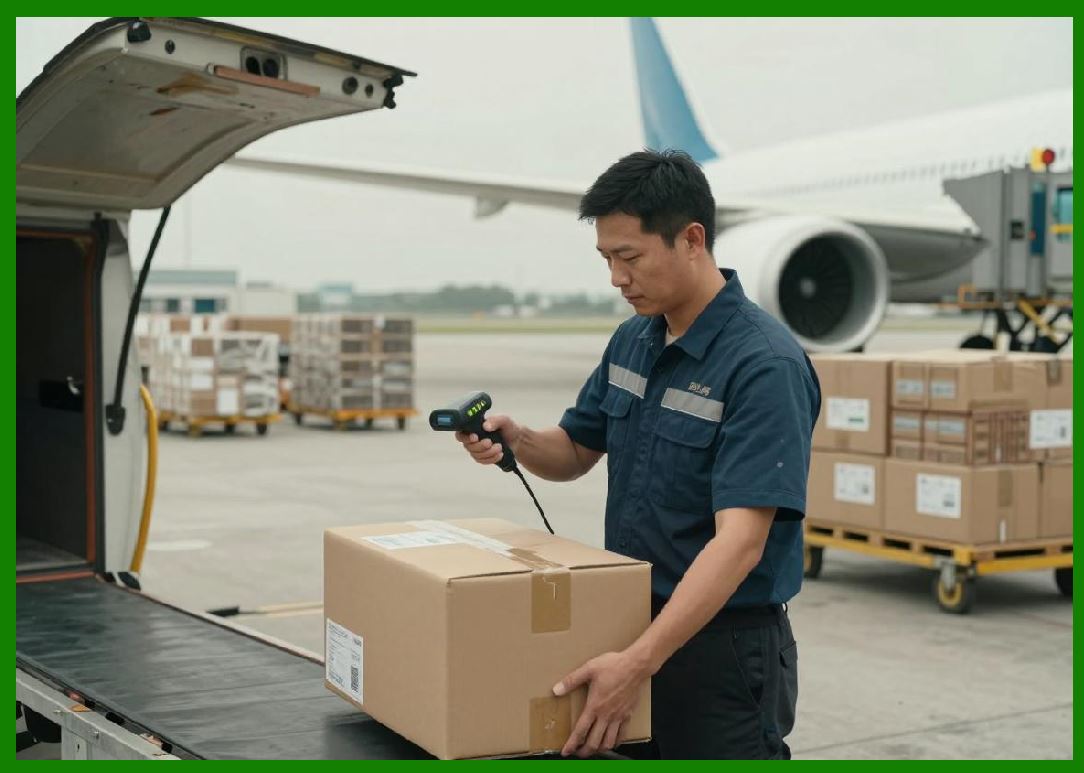
5.1 Manufacturing uses barcode printers for production tracking and quality control. |
5.2 Applications include: |
* Work-in-progress tracking |
* Component labeling |
* Batch identification |
* Compliance labeling |
5.3 Manufacturing environments require: |
* Industrial-grade printers |
* High durability under harsh conditions |
* Integration with MES systems |
5.4 Key benefits: |
* Full product traceability |
* Reduced production errors |
* Improved quality assurance |
5.5 Barcode systems are essential for lean manufacturing and Industry 4.0. |
|
6. Government and Public Sector Applications |
6.1 Government agencies use barcode printing for: |
* Document tracking |
* Asset management |
* Identification systems |
* Postal and logistics operations |
6.2 Requirements include: |
* High security standards |
* Audit traceability |
* Long-term durability |
6.3 Government deployments often emphasize: |
* Standardization across departments |
* Centralized control systems |
* Regulatory compliance |

|
7. Transportation and Postal Systems |
7.1 Transportation and postal services rely heavily on barcode printing. |
7.2 Applications include: |
* Package tracking labels |
* Sorting identifiers |
* Delivery routing labels |
7.3 Requirements: |
* High-speed printing |
* Resistance to handling damage |
* Integration with sorting systems |
7.4 Barcode systems enable automated parcel sorting and global tracking. |

|
8. Pharmaceutical and Life Sciences Industry |
8.1 Pharmaceutical applications require extreme precision and traceability. |
8.2 Use cases: |
* Drug packaging labels |
* Serial number tracking |
* Regulatory compliance labels |
8.3 Requirements: |
* Anti-counterfeiting features |
* High-resolution printing |
* Regulatory compliance (serialization systems) |
8.4 Barcode printers support global drug safety initiatives. |

|
9. Food and Beverage Industry Applications |
9.1 Food industry barcode printing focuses on: |
* Expiration date labeling |
* Batch tracking |
* Ingredient identification |
9.2 Requirements: |
* Moisture-resistant labels |
* Temperature-resistant adhesives |
* Fast production line integration |
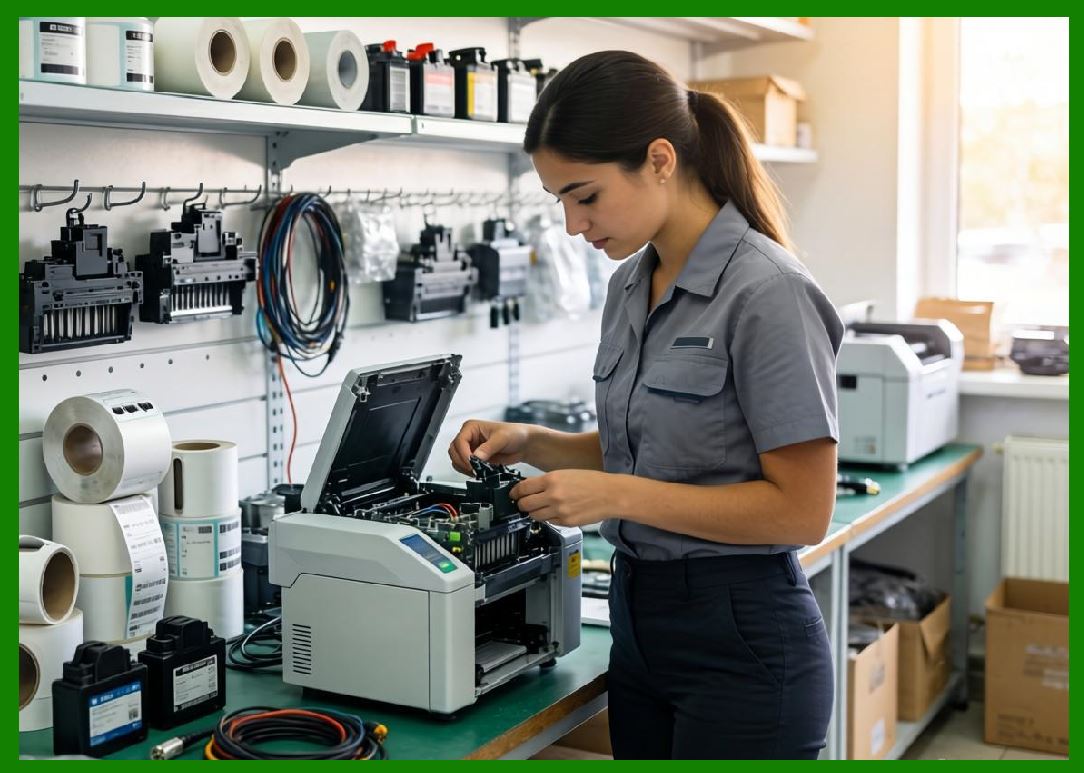
9.3 Barcode systems ensure food safety traceability from production to consumption. |
|
10. Automotive Industry Applications |
10.1 Automotive manufacturing uses barcode systems for: |
* Component tracking |
* Assembly line coordination |
* Warranty traceability |
10.2 Requirements: |
* High durability labels |
* Chemical and heat resistance |
* Integration with robotics systems |
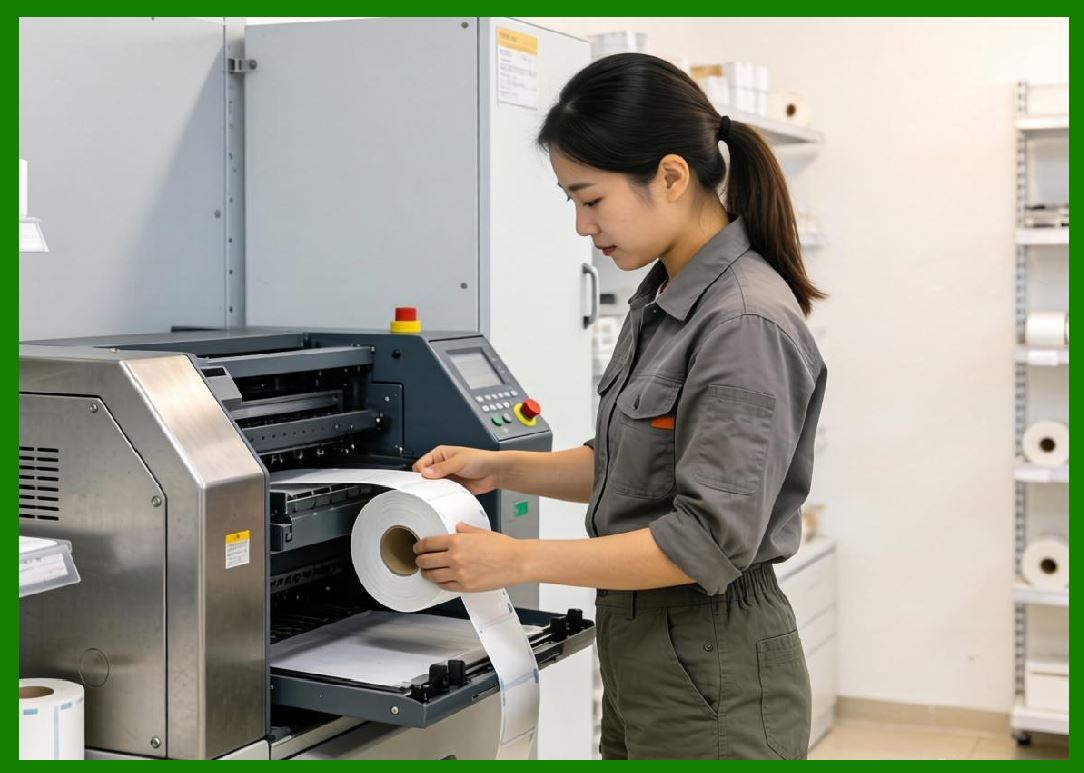
10.3 Barcode systems support complex supply chain management in automotive production. |
|
11. E-commerce and Fulfillment Centers |
11.1 E-commerce relies heavily on barcode printing for order fulfillment. |
11.2 Applications include: |
* Order shipping labels |
* Return labels |
* Inventory management |
11.3 Requirements: |
* Extremely high throughput |
* Real-time order synchronization |
* Scalable printing infrastructure |
11.4 Barcode printers are essential for same-day and next-day delivery systems. |

|
12. Cross-Industry Deployment Models |
12.1 Barcode printing systems can be deployed using different architectural models: |
* Centralized printing systems |
* Distributed printing networks |
* Cloud-managed printing infrastructure |
* Edge-based autonomous printing nodes |
12.2 Each model balances: |
* Control |
* Scalability |
* Speed |
* Cost |

|
13. Regulatory and Compliance Requirements |
13.1 Many industries require compliance with standards such as: |
* Traceability regulations |
* Data security laws |
* Labeling standards |
13.2 Compliance ensures: |
* Legal validity of labels |
* Product safety assurance |
* Audit readiness |

|
14. Integration with Enterprise Systems |
14.1 Industry deployment relies heavily on integration with: |
* ERP systems |
* WMS platforms |
* MES systems |
* Cloud data platforms |
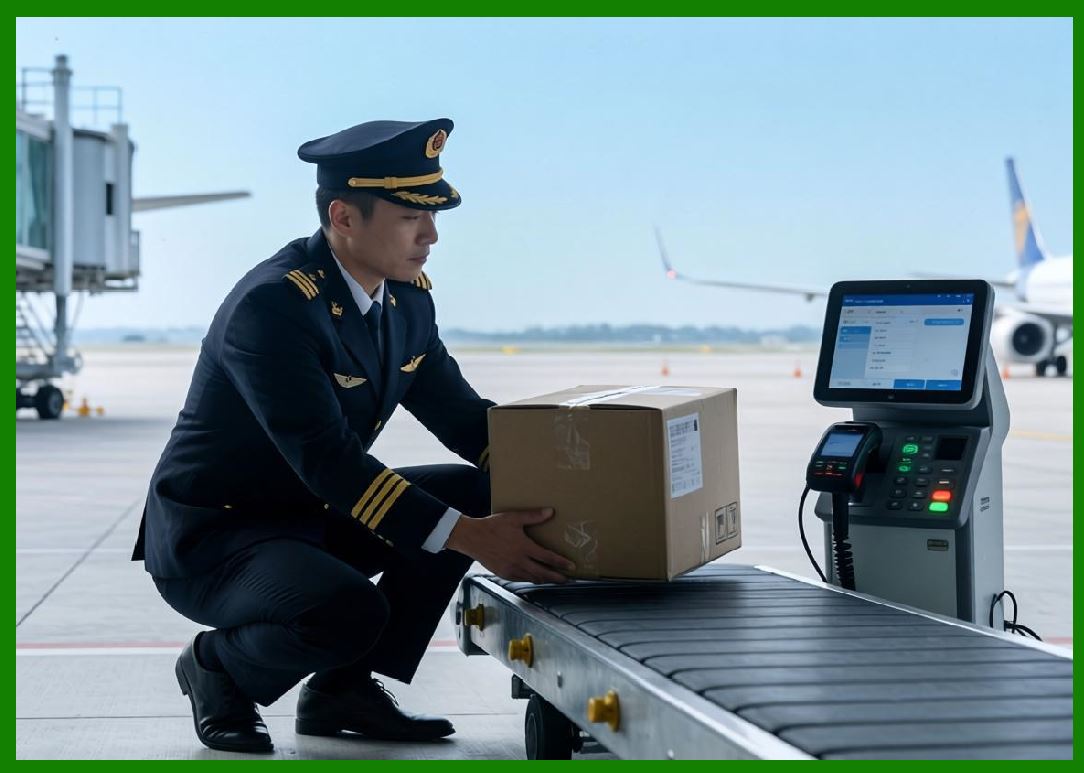
14.2 This enables real-time synchronization of physical and digital data. |
|
15. Cost Variations Across Industries |
15.1 Cost structures vary significantly: |
* Retail: low-cost desktop systems |
* Logistics: high-volume industrial systems |
* Healthcare: high-precision, compliance-driven systems |
* Manufacturing: durable industrial systems |

|
16. Operational Efficiency Gains |
16.1 Across industries, barcode printers improve: |
* Speed of operations |
* Accuracy of data capture |
* Traceability of assets |
* Automation of workflows |

|
17. Future Industry Trends |
17.1 Emerging trends include: |
* Fully autonomous printing ecosystems |
* AI-optimized supply chain labeling |
* Blockchain-based traceability systems |
* Fully cloud-native enterprise printing networks |

|
18. Summary of Part 25 |
18.1 Barcode printers serve as foundational infrastructure across multiple industries, each with distinct operational requirements and deployment models. |
18.2 From retail pricing to pharmaceutical serialization and global logistics tracking, barcode printing systems enable accurate, scalable, and automated identification systems. |
18.3 Industry-specific customization ensures optimal performance, compliance, and efficiency in diverse operational environments. |
End of Part 25 |

|
Part 26: Future Development Trends of Barcode Printers (AI Integration, Smart Materials, Fully Autonomous Printing Systems, and Next-Generation Standards). |
 cs@easiersoft.com