Historical Development of Barcode Printing Technology (Part 7) |
*(Focus: Global Standardization, Supply Chain Integration, Regulatory Frameworks, and Digital Transformation)* |
47. Introduction to Global Standardization in Barcode Printing |
47.1 |
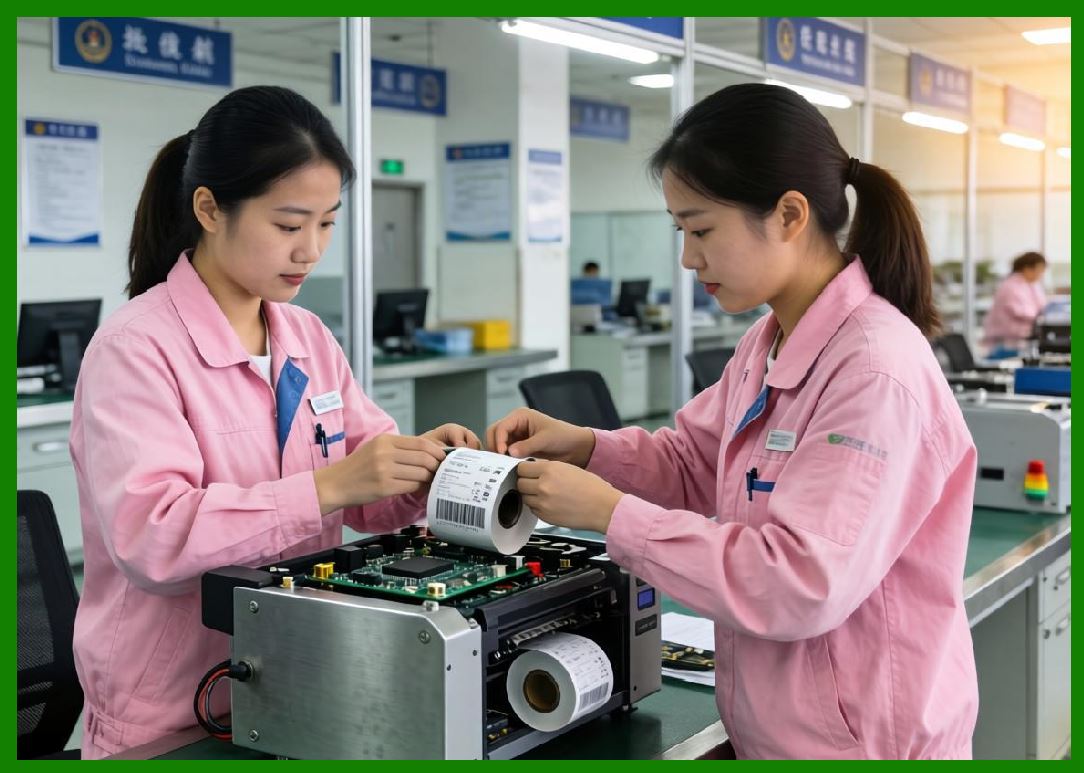
As barcode technology expanded globally, the need for standardization became essential. Without consistent rules governing barcode structure, printing, and usage, interoperability between manufacturers, retailers, logistics providers, and regulatory agencies would not be possible. |
47.2 |
Standardization ensures that a barcode printed in one country can be accurately scanned and interpreted anywhere in the world. This requirement directly influenced the evolution of barcode printing technology, forcing manufacturers to adhere to strict dimensional, contrast, and encoding specifications. |
47.3 |
The development of global barcode standards is closely tied to the work of international organizations, most notably GS1, which has played a central role in defining how barcodes are structured, encoded, and printed. |
|
48. The GS1 System and Its Influence on Printing Technology |
48.1 Overview of the GS1 System |
48.1.1 |
GS1 is a global organization responsible for developing and maintaining standards for supply chain identification systems. |
48.1.2 |
The GS1 system includes: |
48.1.2.1 |
Global Trade Item Number (GTIN) |
48.1.2.2 |
Serial Shipping Container Code (SSCC) |
48.1.2.3 |
Application Identifiers (AIs) |
48.1.3 |
These standards define how data is encoded within barcodes and how it should be interpreted. |
48.2 Impact on Barcode Printing Requirements |
48.2.1 |
GS1 standards impose strict requirements on barcode printing, including: |
48.2.1.1 |
Minimum and maximum bar widths |
48.2.1.2 |
Quiet zones (blank areas around the barcode) |
48.2.1.3 |
Contrast ratios |
48.2.1.4 |
Print quality grades |
48.2.2 |
These requirements directly influenced the design of barcode printers, particularly in terms of: |
48.2.2.1 |
Resolution capabilities |
48.2.2.2 |
Calibration accuracy |
48.2.2.3 |
Firmware algorithms |
48.3 Standardization of Linear Barcodes |
48.3.1 |
Linear barcodes such as EAN/UPC became globally standardized. |
48.3.2 |
These barcodes require: |
48.3.2.1 |
Precise dimensional accuracy |
48.3.2.2 |
Uniform bar spacing |
48.3.2.3 |
Consistent print contrast |
48.3.3 |
Printing technology had to evolve to meet these stringent requirements, especially for high-volume retail applications. |
48.4 Expansion to 2D Barcode Standards |
48.4.1 |
GS1 also supports 2D barcode standards, including: |
48.4.1.1 |
QR Code |
48.4.1.2 |
Data Matrix |
48.4.2 |
These standards enable encoding of more complex data, such as: |
48.4.2.1 |
Batch numbers |
48.4.2.2 |
Expiration dates |
48.4.2.3 |
Serial numbers |
48.4.3 |
This shift significantly increased the demands on printing precision and quality. |

|
49. Barcode Printing in Global Supply Chains |
49.1 Role of Barcodes in Supply Chain Management |
49.1.1 |
Barcodes serve as the backbone of modern supply chain systems. |
49.1.2 |
They enable: |
49.1.2.1 |
Product identification |
49.1.2.2 |
Inventory tracking |
49.1.2.3 |
Shipment verification |
49.1.2.4 |
Automated data capture |
49.2 Printing Requirements in Logistics |
49.2.1 |
Supply chain environments require barcode printers to: |
49.2.1.1 |
Operate at high speeds |
49.2.1.2 |
Produce consistent quality |
49.2.1.3 |
Handle large volumes |
49.2.2 |
Labels must remain readable throughout the entire logistics process, including: |
49.2.2.1 |
Transportation |
49.2.2.2 |
Warehousing |
49.2.2.3 |
Distribution |
49.3 Standardized Shipping Labels |
49.3.1 |
Shipping labels often include standardized barcode formats such as SSCC. |
49.3.2 |
These labels must comply with international guidelines to ensure compatibility across systems. |
49.3.3 |
Printing technology must support: |
49.3.3.1 |
Large label sizes |
49.3.3.2 |
Multiple barcode types on a single label |
49.4 Real-Time Printing in Supply Chains |
49.4.1 |
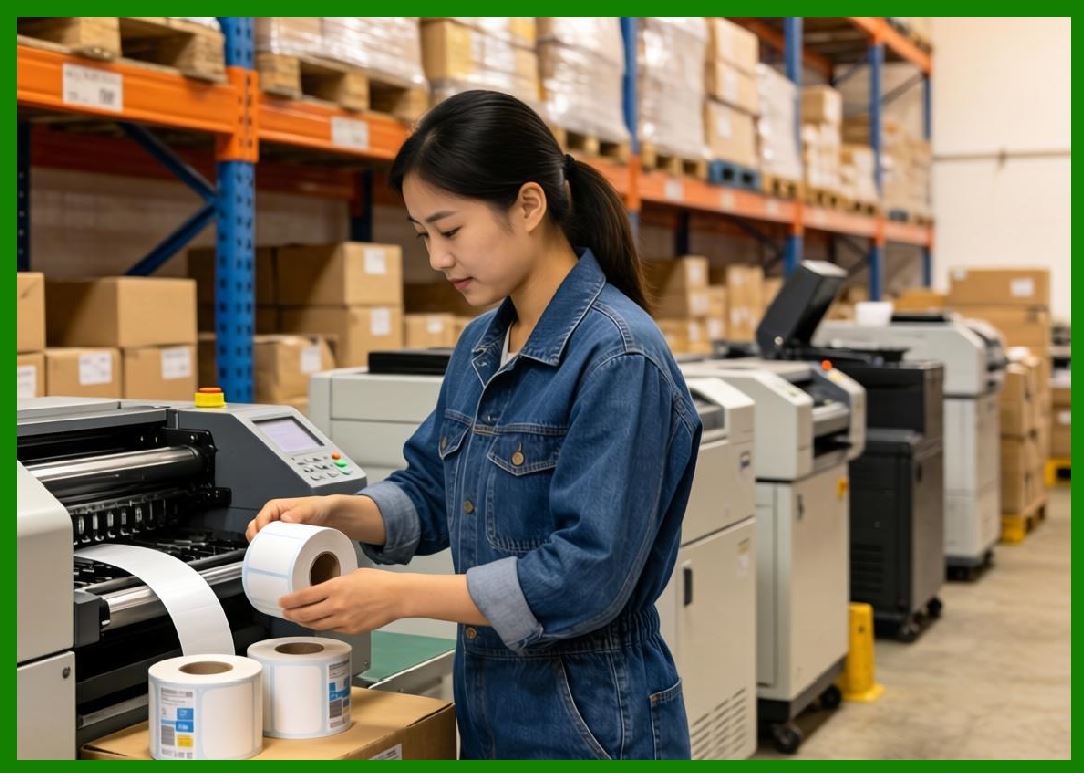
Modern supply chains rely on real-time label generation. |
49.4.2 |
This requires: |
49.4.2.1 |
Fast processing speeds |
49.4.2.2 |
Reliable connectivity |
49.4.2.3 |
Minimal downtime |

|
50. Regulatory Requirements Across Industries |
50.1 Healthcare Regulations |
50.1.1 |
Healthcare industries require strict barcode compliance for patient safety. |
50.1.2 |
Applications include: |
50.1.2.1 |
Medication labeling |
50.1.2.2 |
Patient wristbands |
50.1.2.3 |
Specimen tracking |
50.1.3 |
Regulations often mandate: |
50.1.3.1 |
High print quality |
50.1.3.2 |
Durability under sterilization |
50.2 Pharmaceutical Serialization Laws |
50.2.1 |
Pharmaceutical industries require unique identifiers for each product unit. |
50.2.2 |
This involves: |
50.2.2.1 |
Serialization |
50.2.2.2 |
Track-and-trace systems |
50.2.2.3 |
Use of 2D barcodes such as Data Matrix |
50.2.3 |
Printing technology must ensure: |
50.2.3.1 |
High-resolution output |
50.2.3.2 |
Error-free encoding |
50.3 Food Industry Regulations |
50.3.1 |
Food labeling requires: |
50.3.1.1 |
Traceability |
50.3.1.2 |
Expiration date tracking |
50.3.1.3 |
Batch identification |
50.3.2 |
Barcodes must remain readable under refrigeration and handling conditions. |
50.4 Automotive and Aerospace Standards |
50.4.1 |
Industries such as automotive and aerospace require compliance with strict labeling standards. |
50.4.2 |
These standards define: |
50.4.2.1 |
Barcode format |
50.4.2.2 |
Durability requirements |
50.4.2.3 |
Verification procedures |

|
51. Digital Transformation in Barcode Printing |
51.1 Shift Toward Digital Ecosystems |
51.1.1 |
Barcode printing is increasingly integrated into digital ecosystems. |
51.1.2 |
This includes: |
51.1.2.1 |
Cloud-based systems |
51.1.2.2 |
IoT platforms |
51.1.2.3 |
Enterprise software integration |
51.2 Smart Labeling Systems |
51.2.1 |
Smart labeling combines physical barcodes with digital data systems. |
51.2.2 |
Features include: |
51.2.2.1 |
Dynamic data updates |
51.2.2.2 |
Real-time tracking |
51.2.2.3 |
Integration with databases |
51.3 Digital Link Technology |
51.3.1 |
Modern systems use digital link standards to connect barcodes with online data. |
51.3.2 |
For example, scanning a QR Code can link to: |
51.3.2.1 |
Product information |
51.3.2.2 |
Authentication services |
51.3.2.3 |
Supply chain data |
51.4 Role of Cloud Computing |
51.4.1 |
Cloud-based printing systems enable: |
51.4.1.1 |
Centralized management |
51.4.1.2 |
Remote configuration |
51.4.1.3 |
Scalable deployment |
51.5 Integration with Automation Systems |
51.5.1 |
Barcode printers are integrated with automated systems such as: |
51.5.1.1 |
Conveyor belts |
51.5.1.2 |
Robotic labeling systems |
51.5.1.3 |
Automated packaging lines |
51.5.2 |
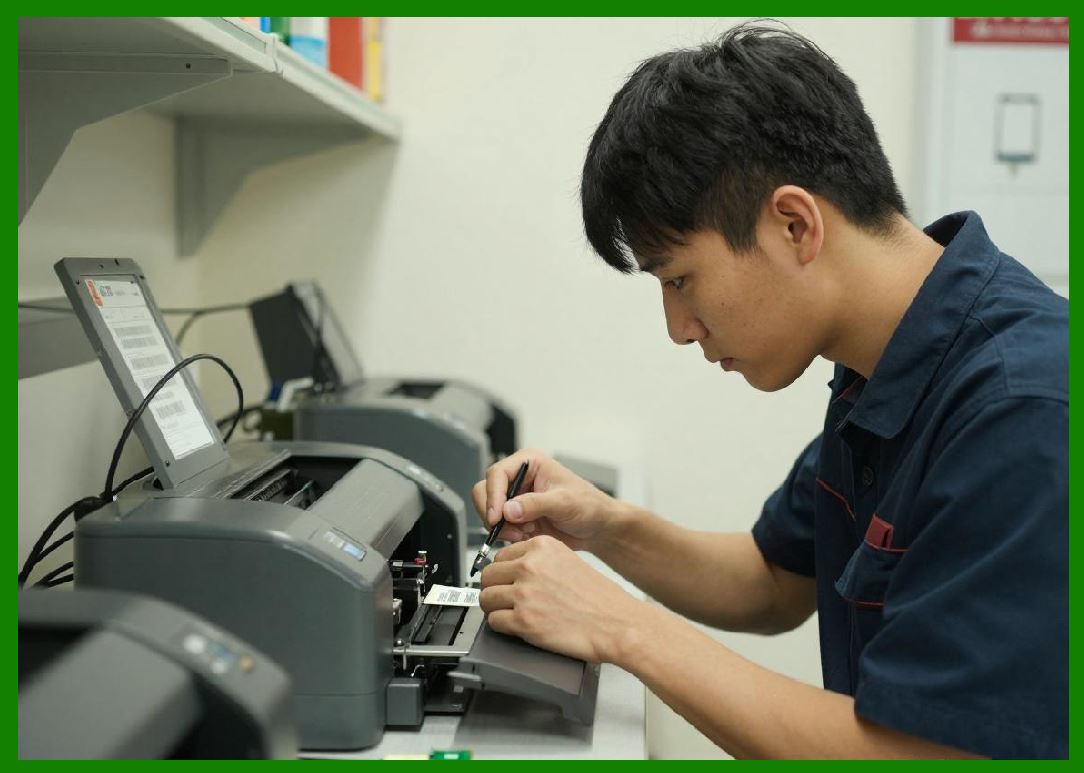
This integration enhances efficiency and reduces human error. |
|
52. Challenges in Global Standardization and Implementation |
52.1 |
Despite standardization efforts, challenges remain: |
52.1.1 |
Variations in regional regulations |
52.1.2 |
Differences in infrastructure |
52.1.3 |
Legacy systems compatibility |
52.2 |
Barcode printing technology must be adaptable to these variations. |

|
53. Future Trends in Global Barcode Systems |
53.1 |
Emerging trends include: |
53.1.1 |
Transition from 1D to 2D barcodes globally |
53.1.2 |
Increased use of digital link technologies |
53.1.3 |
Integration with blockchain systems |
53.1.4 |
Expansion of smart packaging |
|
54. Summary of Part 7 |
54.1 |
Global standardization is essential for barcode interoperability. |
54.2 |
Organizations like GS1 play a central role in defining requirements. |
54.3 |
Barcode printing technology has evolved to meet strict global standards. |
54.4 |
Supply chains rely heavily on reliable barcode printing systems. |
54.5 |
Regulatory requirements drive innovation in printing quality and durability. |
54.6 |
Digital transformation is reshaping barcode printing into a connected, intelligent ecosystem. |
|
Next Step |
* Future innovations in barcode printing technology |
* AI-driven printing optimization |
* Next-generation materials and nano-printing |
* Sustainability and eco-friendly printing solutions |
 cs@easiersoft.com