Chapter 62. Depth of Field: Why the Laser Scanner Wins the Working-Range Contest |
Summary. This chapter compares the three classic barcode scanning technologies -- the handheld laser gun, the CCD (charge-coupled device) scanner, and the contact wand -- on the single dimension of depth of field, meaning the range of distances over which a scanner can reliably read a barcode. The headline finding is simple and has shaped real purchasing decisions for three decades: the laser gun reads from direct contact out to roughly 30 centimeters or more, the CCD scanner is limited to about 2.5 centimeters, and the wand is a contact-only device. The chapter explains why this gap exists in plain physical terms, then spends most of its length walking through concrete industry examples -- retail, warehousing, manufacturing, healthcare, logistics, field service, libraries, and more -- to show how depth of field translates into real operational consequences. A detailed summary closes the chapter. |

|
1. Introduction: What Depth of Field Means for a Barcode Scanner |
Depth of field is the distance range over which a scanner can produce a usable read. In photography, depth of field describes the zone of sharp focus in front of and behind the subject. In barcode scanning, the idea is closely related but practical rather than artistic: it is the span of working distances from the scanner's nose to the label at which the device will decode the symbol reliably, at a normal angle, under normal lighting, with a normal barcode. |
Every scanning technology has such a range, and the range is not a minor specification. It determines how the operator holds the device, how far the operator must walk, how much the workflow must slow down, whether the scanner can read a label on a top shelf without a ladder, and whether a worker can scan a parcel on a moving conveyor without reaching into the belt. Depth of field is therefore one of the first specifications a system designer examines, and it is frequently the specification that decides which technology is purchased. |
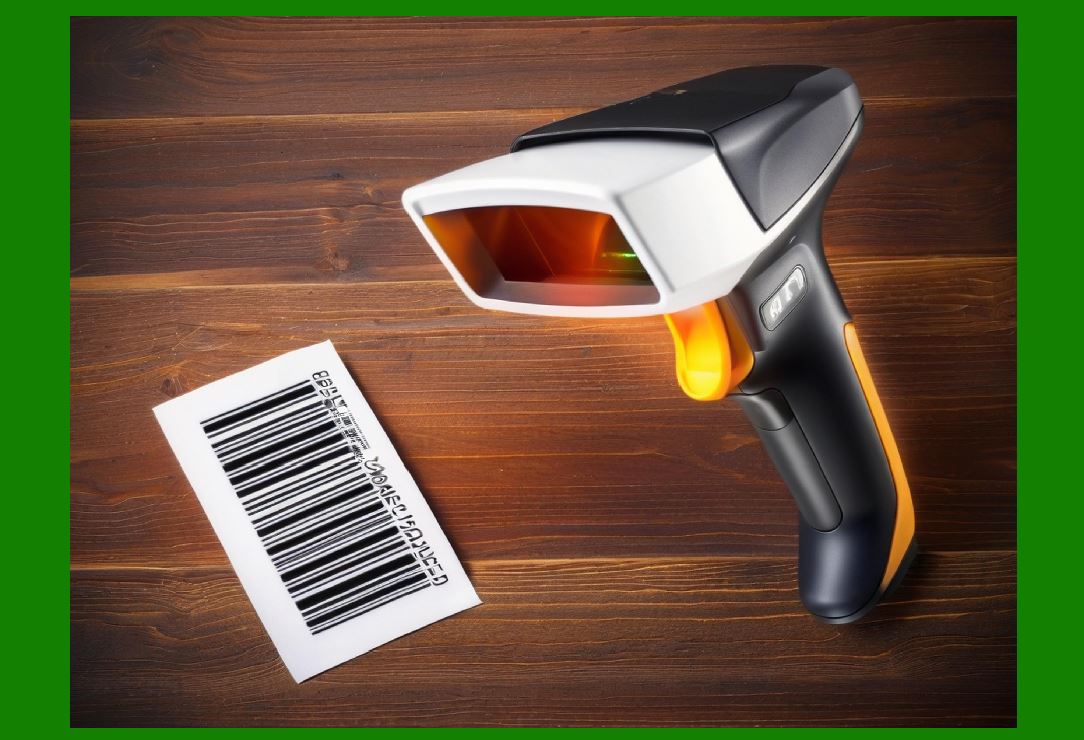
The three classic technologies sit at very different points on this scale. The handheld laser gun is the long-range champion among the three, reading from contact out to 30 centimeters or more. The CCD scanner, which floods the symbol with light and images it with a small sensor, reads only within about 2.5 centimeters. The wand, a pen-shaped contact device, has no working range at all in the usual sense: it must touch the label and be dragged across it. |

|
2. Why the Laser Gun Reaches So Far |
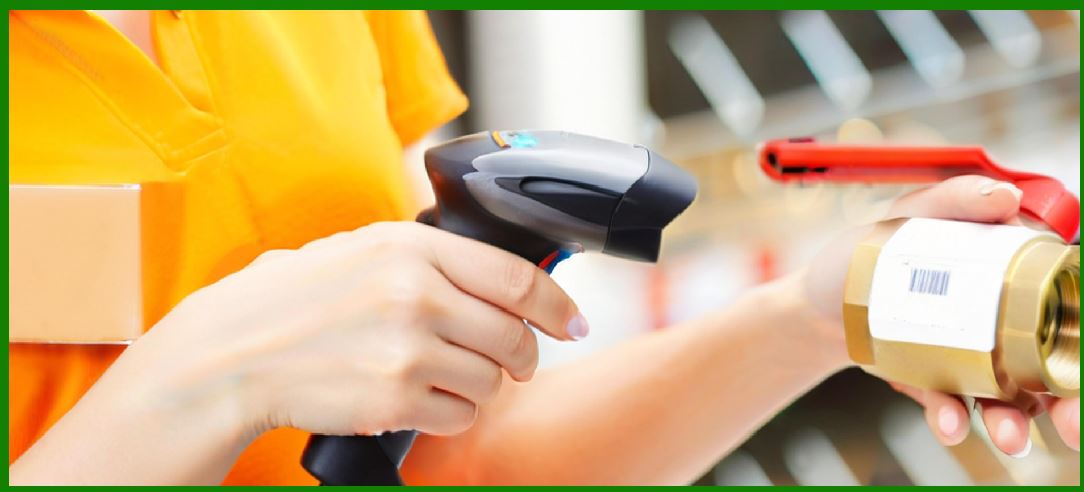
The laser scanner's range comes from the way it builds its reading beam. A laser diode produces a very narrow, very bright, highly directional beam of coherent light. Optics shape that beam into a thin line or a sweeping spot, and a spinning or oscillating mirror fans it across the symbol. Because the beam is intense and tightly collimated, a useful amount of light returns to the photodetector even from a label a foot away. The scanner is not imaging the whole symbol at once; it is measuring the sequence of light and dark crossings as the beam sweeps, and that measurement survives distance far better than an image does. |
The practical consequence is a working range that begins at contact and extends outward continuously. A typical handheld laser gun will read a label pressed against its window and will also read a label on a shelf 30 centimeters away, with the sweet spot usually somewhere in the middle. Higher-end models reach considerably farther. This continuous, forgiving range is why the laser gun became the default general-purpose scanner in retail and logistics for decades, and why it remains common wherever labels are at varying distances from the operator. |
|
3. Why the CCD Scanner Stays Close |
The CCD scanner works on a completely different principle. Instead of sweeping a beam, it floods the symbol with light from an array of LEDs, images the reflected light through a lens onto a linear CCD sensor, and processes the resulting row of pixel intensities. This is essentially a tiny camera reading a single line of the symbol at a time, and it depends on the symbol being imaged sharply and brightly onto the sensor. |
That dependence is what limits the range. The illumination falls off with distance, the lens has a fixed focus optimized for a short working distance, and the pixel row must capture enough contrast across each bar and space. In practice, a typical CCD scanner reads reliably only within about 2.5 centimeters of its window. Move farther back and the symbol blurs, dims, and shrinks below the resolution the sensor needs. The CCD scanner compensates with other virtues -- it has no moving parts, it is cheap, it is rugged, and it reads low-contrast and damaged labels well at close range -- but depth of field is not among its strengths. |

|
4. Why the Wand Is Contact-Only |
The wand is the oldest of the three and the simplest. It contains a light source and a photodetector in a pen-shaped body, and the operator drags its tip across the label at a steady speed. The wand does not project a beam and does not image the symbol; it senses the reflected light as the tip passes over bars and spaces, and the electronics reconstruct the pattern from the timing of the light and dark changes. |
Because the reading depends on the tip being close enough to the label to pick up the reflection from a tiny spot, and because the operator's drag speed is part of the measurement, the wand has no meaningful working distance. It must touch the label. This makes it cheap, durable, and immune to ambient light in ways the others are not, but it also makes it slow and ergonomically demanding, and it explains why the wand survives mainly in niche roles -- library checkout desks, some point-of-sale counters, and simple inventory tasks -- rather than in general scanning. |

|
5. The Comparison in Plain Terms |
Put the three side by side and the contrast is stark. The laser gun offers a continuous range from contact to 30 centimeters or more, which means the operator never has to think much about distance. The CCD scanner offers a narrow window of about 2.5 centimeters, which means the operator must bring the label to the device and hold it there. The wand offers no window at all beyond contact, which means the operator must physically drag the device across every label. |
This single difference ripples through every workflow that uses a scanner. It changes how fast a cashier can work, how a warehouse picker reaches a shelf, how a nurse scans a patient wristband, and how a field technician reads an equipment tag. The sections that follow take each of these settings in turn and show what depth of field actually means on the floor. |
|
6. Retail Point of Sale: The Cashier's Reach |
At a supermarket or convenience store checkout, the laser gun's range shows up as speed. The cashier holds the gun in one hand and sweeps it across the items on the belt without lifting each one to a fixed window. A label on the bottom of a heavy item can be read by tilting the item slightly and scanning from a comfortable distance, and a label on a large box can be read from 20 or 30 centimeters away without bringing the box to the scanner. |
A CCD scanner at the same counter forces a different motion. The cashier must bring each label to within about 2.5 centimeters of the window, which on a busy lane means more lifting, more twisting, and more time per item. Over a shift of hundreds of transactions, the difference is real. This is why the laser gun dominated general retail scanning for so long, and why CCD units at checkout tend to be fixed, counter-mounted devices where the operator brings the item to the scanner rather than the scanner to the item. |

|
7. Retail: Shelf-Edge and Price Verification |
Price verification is a smaller but telling example. A clerk checking a shelf tag against the system can point a laser gun at the tag from a comfortable standing distance, reading it without crouching or reaching. The same clerk with a CCD scanner must bring the device to within a couple of centimeters of the tag, which on a low shelf means kneeling and on a high shelf means stretching. |
The wand makes this worse still. Dragging a wand across a shelf-edge label requires the clerk to touch every tag, which is slow and awkward in a crowded aisle. The result is that price verification, where it is done at all, is almost always a laser-gun task, and the depth of field is the reason. |

|
8. Warehousing and Distribution: Reaching the Pallet |
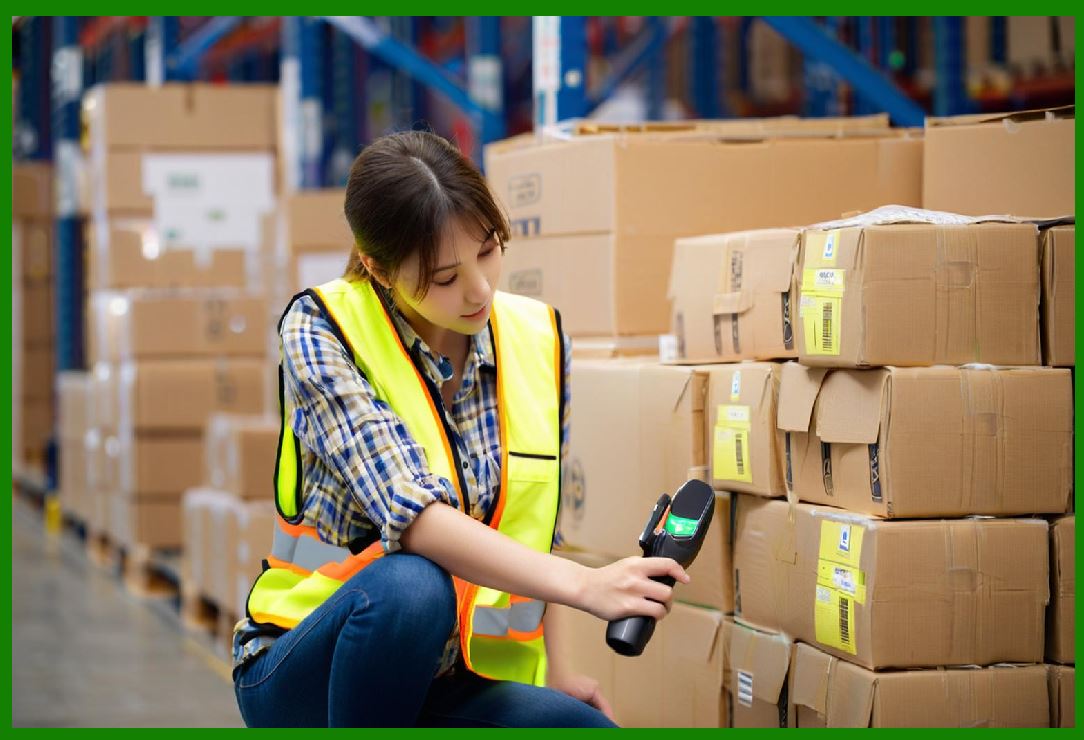
In a distribution center, labels are rarely at a convenient height. They sit on pallets at floor level, on rack beams overhead, on cartons stacked three high, and on shrink-wrapped loads that cannot easily be moved. The laser gun's 30-centimeter range lets a picker stand at a safe distance and scan without climbing or bending, and it lets a receiver scan a pallet label from the aisle rather than stepping into the rack. |
A CCD scanner in the same aisle would require the picker to bring the device to each label, which on a high rack means a ladder or a long reach and on a low pallet means a crouch. The wand would require dragging across every carton, which is impractical at pallet scale. This is why handheld laser guns, and later long-range laser-based imagers, became the standard tool of the warehouse floor, and why the working range is often the first thing a warehouse operator asks about when evaluating a new device. |
|
9. Warehousing: Conveyor and Receiving Lanes |
Receiving lanes present a different geometry. Parcels move along a conveyor, and the scanner must read labels as they pass. A fixed laser scanner mounted above the belt can read labels across the full width of the conveyor because its beam reaches down to the parcel surface from a useful height. A CCD-based fixed scanner must be mounted much closer to the belt, which constrains conveyor design and makes it harder to cover tall parcels. |
Handheld scanning at the receiving dock shows the same logic. A receiver holding a laser gun can scan a label on a parcel in a cart, on the floor, or on a pallet without moving the parcel. A CCD unit forces the receiver to lift each parcel to the window, which slows the lane and increases strain. The wand is effectively unusable here, since dragging across every parcel on a busy dock is far too slow. |

|
10. Manufacturing and Production Lines: Fixed-Mount Reading |
On a production line, the scanner is often fixed in place and the product moves past it. A laser scanner mounted at a workstation can read a label on a part as the part approaches, because its working range covers the approach path. This gives the control system time to act on the read before the part reaches the next station. |
A CCD scanner mounted in the same place must be positioned very close to the passing part, which means the part must be guided precisely and the scanner must be protected from knocks. The result is that laser-based fixed scanners dominate line-side reading where parts vary in position, and CCD units are used where the part is presented at a fixed, close distance, such as on a controlled indexing conveyor. |
|
11. Manufacturing: Work-in-Progress Tracking |
Work-in-progress tracking involves scanning the same part at many stations, often by operators wearing gloves and working in awkward postures. The laser gun's range lets an operator scan a label on a fixture from a comfortable stance, without leaning into the machine. On a noisy, crowded line, that ergonomic margin matters for both speed and safety. |
A CCD scanner would require the operator to bring the device to the fixture, which is awkward when the fixture is inside a machine guard or behind a safety barrier. The wand would require contact, which is often impossible when the label faces away from the operator. Depth of field, in other words, is not just a convenience here; it determines whether the scan can be done at all without stopping the line. |
|
12. Healthcare: Patient Wristbands and Medication |
In a hospital, a nurse scanning a patient wristband is often doing so under time pressure, with one hand occupied, at a bedside where the patient may be lying at an awkward angle. The laser gun's range lets the nurse scan the wristband from a comfortable distance without disturbing the patient, and it lets the nurse scan a medication label on a cart without lifting every item. |
A CCD scanner would require bringing the device to the wristband, which is harder when the patient's arm is under a blanket or when the nurse is holding a medication cup. The wand would require dragging across the wristband, which is unacceptable for both comfort and infection-control reasons. This is why laser-based scanners, and later laser-based imagers, became standard in bedside medication administration, and why the working range is treated as a safety-relevant specification rather than a luxury. |
|
13. Healthcare: Laboratory and Specimen Tracking |
In the laboratory, specimen tubes and slides carry small labels that must be read without cross-contamination and without disturbing racks. A laser scanner can read a tube label from a short distance above the rack, which keeps the device from touching the specimen. A CCD scanner must come within about 2.5 centimeters, which is still workable at a bench but leaves less margin for error. |
The wand is a poor fit here because contact with specimen containers is undesirable, and because tube labels are often curved and small. The result is that labs tend to favor laser or imaging scanners with a useful working range, and the depth of field is part of the reason. |

|
14. Logistics and Parcel Handling: Sorting and Routing |
Parcel sorting is a high-speed, high-volume environment where labels pass a fixed scanner at speed. A laser scanner mounted over the belt can read labels across a range of parcel heights because its beam reaches down to the parcel surface from a useful distance. This tolerance for height variation is exactly what a sorting line needs, since parcels arrive in every size and shape. |
A CCD scanner would have to be mounted close to the parcel surface, which is impractical when parcel heights vary widely. The wand has no role at all in automated sorting. Depth of field here is not about operator comfort; it is about whether the line can handle mixed parcels at all. |

|
15. Logistics: Last-Mile Delivery and Field Service |
On a delivery route, a driver scans parcels in the back of a van, at a doorstep, and sometimes on a doorstep in the rain. The laser gun's range lets the driver scan a parcel label without lifting the parcel out of the stack, and it lets the driver scan a label on a doorstep from a standing position. This saves time on every stop, and on a route of a hundred stops the savings compound. |
A CCD scanner would force the driver to bring each parcel to the window, which is slow and awkward in a cramped van. The wand would require contact, which is impractical when the driver is wearing gloves or holding a parcel. This is why handheld laser-based scanners, and later rugged laser-based imagers, became standard equipment for delivery drivers and field service technicians. |

|
16. Field Service and Utilities: Reading Tags at a Distance |
Field service technicians read equipment tags on poles, meters, and panels that are often out of comfortable reach. A laser scanner with a long working range lets the technician read a tag on a utility pole from ground level, or read a meter label from behind a fence. This is a genuine safety benefit, since it avoids climbing and reaching into hazardous areas. |
A CCD scanner would require the technician to bring the device to the tag, which may be impossible without a ladder. The wand would require contact, which is out of the question on an energized panel. In this setting, depth of field is not a convenience at all; it is the difference between a task that can be done safely from the ground and a task that requires climbing. |

|
17. Libraries and Archives: The Wand's Remaining Home |
Libraries are one of the few places where the wand still earns its keep. At a checkout desk, the wand's contact-only operation is actually an advantage: the librarian drags the wand across the book's barcode, which is fast for a single item at a fixed station, and the wand's low cost and durability suit a high-turnover desk. |
But even here, the limits show. When a librarian needs to read a barcode on a book that is already shelved, the wand is useless, and a laser gun or CCD scanner is needed. The wand's survival in libraries is a reminder that depth of field is not the only specification that matters; it is simply the one that decides the general-purpose winner. |

|
18. Automotive and Heavy Industry: Reading in Harsh Conditions |
In automotive plants and heavy industry, labels are often on large parts, inside fixtures, or on equipment in noisy, dirty environments. A laser gun's range lets an operator scan a label on an engine block from a safe distance, without leaning into the machine. The beam's intensity also helps in dusty air, where a CCD scanner's flood illumination would be scattered. |
The wand is a poor fit in these environments because contact with oily or sharp parts is undesirable, and because the operator is often wearing heavy gloves. Depth of field, combined with ruggedness, is why laser-based scanners dominate the shop floor. |

|
19. Food and Agriculture: Reading in the Field and the Cold Chain |
In agriculture and food processing, labels appear on crates, pallets, and cold-chain packaging. A laser scanner's range lets a worker scan a crate label on a stack without unloading the stack, and it lets a worker scan a pallet label in a cold room while wearing gloves. The CCD scanner's short range is workable at a packing station but awkward in a cold room where workers move quickly. |
The wand is impractical in cold rooms because contact with frozen packaging is unpleasant and slow. Depth of field, in this setting, is about keeping workers moving in an environment where every extra second is costly. |

|
20. The Trade-Offs Behind the Numbers |
It would be misleading to present depth of field as a free lunch. The laser gun's range comes with costs: moving parts that can fail, a beam that must be aimed, and a read that depends on the symbol being within the beam's sweep. The CCD scanner's short range comes with benefits: no moving parts, lower cost, better performance on damaged or low-contrast labels at close range, and no laser safety considerations. The wand's contact-only operation comes with benefits too: simplicity, durability, and immunity to many ambient-light problems. |
The point of this chapter is not that one technology is universally better. It is that depth of field is a decisive specification in a large number of real workflows, and that the laser gun's range from contact to 30 centimeters or more is why it dominates those workflows. The CCD scanner's 2.5-centimeter window and the wand's contact-only operation are not defects; they are design choices that fit specific tasks. But when the task involves labels at varying distances, the laser gun wins. |
|
21. How the Range Difference Shapes System Design |
The range difference also shapes how systems are designed around the scanner. A laser-gun workflow can tolerate variability in label position, parcel size, and operator stance, which means the system designer can spend less effort on fixtures and guides. A CCD-based workflow must control the distance between scanner and label, which means fixtures, guides, and presentation jigs become part of the design. |
This is why a system built around a laser gun often looks simpler than a system built around a CCD scanner, and why retrofitting a CCD scanner into a laser-gun workflow so often requires reworking the physical layout. The depth of field specification, in other words, propagates into the physical design of the whole operation. |

|
22. The Role of Operator Training and Ergonomics |
Depth of field also affects training and ergonomics. A laser gun's forgiving range means a new operator can be productive almost immediately, since the device works whether the label is close or a foot away. A CCD scanner requires the operator to learn the sweet spot, and a wand requires the operator to learn a steady drag speed. |
Over a large workforce, this difference in learning curve matters. It also matters for ergonomics: a device that lets the operator stand comfortably and scan from a distance reduces reaching, bending, and repetitive strain. The laser gun's range is therefore an ergonomic feature as much as a technical one, and it is part of why the device became so widely adopted. |

|
23. Ambient Light and Environmental Interactions |
Depth of field interacts with the environment in ways that matter on the floor. The laser gun's intense, narrow beam is relatively tolerant of ambient light, because the photodetector is looking for the specific modulated signal of the returning beam rather than imaging the whole scene. The CCD scanner, which images the symbol, is more sensitive to bright ambient light, which can wash out the contrast the sensor needs. |
This interaction reinforces the range difference in real settings. A loading dock with bright daylight is friendlier to a laser gun than to a CCD scanner, and a dim warehouse is friendlier to both than to a wand that depends on a tiny reflected spot. The practical result is that the laser gun's range advantage tends to hold up, and even widen, in the environments where scanning is hardest. |
|
24. The Arrival of Imaging Scanners and What It Changes |
Modern imaging scanners, which use a two-dimensional sensor and decode the symbol in software, have blurred the old boundaries. Many imaging scanners now offer working ranges that rival or exceed the laser gun, and they can read symbols at varying distances without the moving parts of a laser. This has changed the purchasing calculus in many industries. |
But the underlying lesson of this chapter still holds. The reason imaging scanners were developed with long working ranges is precisely that the laser gun's range was so valuable in real workflows. The depth of field contest that the laser gun won against the CCD scanner and the wand is the contest that shaped the requirements for everything that came after. |
|
25. Detailed Summary |
This chapter compared the handheld laser gun, the CCD scanner, and the contact wand on depth of field, and found a decisive gap: the laser gun reads from contact out to 30 centimeters or more, the CCD scanner reads only within about 2.5 centimeters, and the wand is contact-only. The gap exists because the laser gun sweeps an intense, narrow beam and senses the returning signal, while the CCD scanner images the symbol onto a sensor at a fixed short focus and the wand senses a tiny reflected spot as it is dragged across the label. |
The chapter then traced that gap through real industries. In retail point of sale, the laser gun lets cashiers scan without lifting every item, while the CCD scanner forces items to the window and the wand forces contact. In shelf-edge price verification, the laser gun reads from a standing distance, while the CCD scanner requires crouching and the wand requires touching every tag. In warehousing and distribution, the laser gun lets pickers scan pallets at floor level and on high racks without climbing or bending, while the CCD scanner requires bringing the device to each label and the wand is impractical at pallet scale. On conveyors and receiving lanes, fixed laser scanners cover the full width and height variation of passing parcels, while CCD units must be mounted much closer and the wand has no role. |
In manufacturing, fixed laser scanners read parts as they approach a workstation, while CCD units require precise, close presentation. In work-in-progress tracking, the laser gun lets gloved operators scan fixtures from a comfortable stance, while the CCD scanner requires reaching into guards and the wand is often impossible. In healthcare, the laser gun lets nurses scan wristbands and medication labels without disturbing patients, while the CCD scanner requires bringing the device to the wristband and the wand is unacceptable for comfort and infection control. In laboratories, the laser gun reads tube labels without touching specimens, while the CCD scanner has less margin and the wand is a poor fit for curved, small labels. |
In logistics, fixed laser scanners handle mixed parcel heights on sorting lines, while CCD units require close mounting and the wand has no role. For last-mile delivery and field service, the laser gun lets drivers scan parcels in cramped vans and technicians read tags on poles and panels from the ground, while the CCD scanner forces the device to the label and the wand requires contact that may be unsafe or impossible. In libraries, the wand survives at checkout desks where contact is acceptable, but it fails for shelved books where a laser gun or CCD scanner is needed. In automotive and heavy industry, the laser gun reads large parts and equipment from a safe distance in dusty air, while the CCD scanner is more affected by ambient light and the wand is impractical with gloves. In food and agriculture, the laser gun reads crate and pallet labels in cold rooms and on stacks without unloading, while the CCD scanner is workable only at close, fixed stations and the wand is slow and unpleasant in the cold chain. |
The chapter also noted the trade-offs behind the numbers. The laser gun's range comes with moving parts, aiming requirements, and laser safety considerations; the CCD scanner's short range comes with no moving parts, lower cost, and good close-range performance on damaged labels; the wand's contact-only operation comes with simplicity and durability. The point is not that one technology is universally better, but that depth of field is a decisive specification in a large number of real workflows, and that the laser gun's range from contact to 30 centimeters or more is why it dominates those workflows. |
Finally, the chapter observed that the range difference shapes system design, operator training, ergonomics, and environmental tolerance, and that the arrival of imaging scanners with long working ranges is itself a tribute to how valuable the laser gun's depth of field proved to be. The depth of field contest that the laser gun won against the CCD scanner and the wand is the contest that shaped the requirements for everything that came after, and it remains one of the clearest examples in this book of how a single physical specification can determine the outcome of a technology competition across an entire industry. |
 cs@easiersoft.com