Chapter 63: Ambient Light Immunity Across Scanner Architectures: A Comparative Field Assessment | Summary. Among the three foundational barcode scanning technologies, the laser scanner achieves the highest degree of ambient light immunity through synchronous demodulation, the CCD scanner occupies a middle ground via timed integration synchronized to its readout cycle, and the wand scanner remains the most vulnerable because its continuous illumination scheme offers no temporal discrimination against environmental light. This chapter examines the practical consequences of these architectural differences across retail, logistics, healthcare, manufacturing, and field service environments, illustrating how the theoretical hierarchy manifests in real-world deployment decisions. | 
| 1. Introduction: Why Ambient Light Immunity Matters in the Field | Ambient light immunity determines whether a scanner performs reliably in the uncontrolled lighting conditions of actual workplaces. A barcode scanner must detect a relatively weak reflected signal from printed bars and spaces while rejecting the far stronger and highly variable illumination that bathes the same label. Sunlight streaming through a supermarket window, overhead fluorescent fixtures with magnetic ballasts, LED luminaires with high-frequency flicker, and the harsh glare of a warehouse loading dock all present distinct spectral and temporal challenges. The architectural choices made by scanner designers---how light is emitted, how the returning signal is detected, and how the detection process is timed---profoundly shape a device's ability to function under these conditions. The hierarchy of immunity, from laser to CCD to wand, is not merely a laboratory curiosity; it translates directly into the operational envelopes within which each technology can be trusted. | 
| 2. The Physical Basis of Ambient Light Interference | Ambient light interferes with barcode scanning by adding a broadband, time-varying offset to the photodetector signal. In any optical scanning system, the photodetector receives not only the light deliberately reflected from the barcode but also light arriving from every other source in its field of view. This unwanted component is problematic for two reasons. First, it is typically orders of magnitude stronger than the modulated signal carrying barcode information, particularly in outdoor or brightly lit indoor settings. Second, ambient light is not constant: it fluctuates with mains ripple from artificial sources, with the flicker of LED drivers, with the movement of clouds and shadows, and with the motion of the scanner itself relative to light sources. The detection circuitry must somehow extract the small, information-bearing portion of the signal while rejecting the large, uninformative portion. The three scanner architectures achieve this with markedly different degrees of success. | 
| 3. Laser Scanners: Synchronous Demodulation as the Gold Standard | The laser scanner's immunity derives from its ability to modulate the emitted beam and then synchronously detect only that modulation. In a typical laser scanner, the light source is not simply turned on continuously; it is pulsed or modulated at a known frequency, often in the range of hundreds of kilohertz to several megahertz. The photodetector receives a mixture of the modulated laser light reflected from the barcode and the unmodulated ambient light. The receiver circuit then multiplies this combined signal by a reference signal at the same modulation frequency and integrates the result over time. Because the ambient light carries no energy at the modulation frequency, the multiplication and integration process effectively cancels it, while the barcode signal, which is locked to the reference, survives and is amplified. This technique, known as synchronous demodulation, allows the laser scanner to operate in environments where the ambient light is many times stronger than the returned laser signal. | In practical terms, synchronous demodulation gives the laser scanner a near-immunity to steady and slowly varying light sources. A laser scanner can read a barcode in direct sunlight that would saturate the sensor of a simpler device. It can function beneath flickering fluorescent tubes whose 100 or 120 Hertz ripple would otherwise appear as noise in the barcode signal. It can tolerate the high-frequency flicker of modern LED lighting, because that flicker, however rapid, is not synchronized to the scanner's own modulation frequency and is therefore rejected by the demodulator . The result is a device that works reliably across the widest range of lighting conditions of any scanning technology. | The laser scanner's advantage is not without costs, and these costs shape its application profile. The modulation and demodulation circuitry is more complex and more expensive than the simple continuous-illumination approach of a wand. The laser diode itself must be driven with carefully controlled pulses, and the receiver must include a narrowband filter or a synchronous detector, both of which add cost and power consumption. Furthermore, the laser's coherent, monochromatic beam, while excellent for signal-to-noise ratio, creates safety considerations that do not apply to simpler light sources. These trade-offs explain why laser scanners dominate in applications where ambient light immunity is paramount and where the cost premium can be justified by the operational environment. | 
| 4. CCD Scanners: Synchronous Integration as a Middle Path | CCD scanners achieve moderate ambient light immunity through timed charge integration synchronized to the readout cycle. Unlike the laser scanner, which modulates its light source, a CCD scanner typically illuminates the barcode with a burst of light from an LED array and then allows the photosensitive elements to accumulate charge for a precisely controlled interval. At the end of this integration period, the accumulated charge in each pixel is transferred to a readout register and digitized. The key to ambient light rejection lies in the brevity of the integration window: by limiting the exposure time to a short interval, the CCD sensor captures proportionally less ambient light while still capturing the bright, brief illumination pulse from its own LEDs. This is a form of temporal discrimination, though less elegant than the laser's frequency-domain approach. | The CCD's integration-based immunity is effective against steady light but struggles with sources that vary on the same timescale as the exposure. In a typical CCD barcode scanner, the exposure might last on the order of a millisecond. A steady fluorescent or incandescent source contributes a roughly constant offset during that millisecond, which can be subtracted or tolerated. But an LED source driven by a pulse-width-modulation dimmer may switch on and off many times within that same millisecond, producing fluctuations that the CCD cannot distinguish from the barcode pattern itself. The situation is further complicated by the fact that the CCD's own illumination must be synchronized with the exposure; if the LED burst and the integration window are not precisely aligned, the effective signal-to-noise ratio degrades. Nevertheless, for the majority of indoor environments where lighting is relatively stable, the CCD scanner provides adequate performance at a lower cost than a laser scanner. | CCD scanners are commonly deployed in retail point-of-sale and light industrial settings where the lighting is controlled and the scanning distances are short. Their moderate immunity is sufficient for checkout counters illuminated by steady overhead lighting and for handheld inventory applications where the scanner is brought close to the label. The limited depth of field of most CCD scanners---often less than an inch for older designs---means they are typically used in contact or near-contact applications, which also reduces the ambient light collected by the optics. In these roles, the CCD scanner's balance of cost, durability, and adequate immunity has made it a workhorse technology for decades. | 
| 5. Wand Scanners: Continuous Illumination and Maximum Vulnerability | The wand scanner's continuous illumination scheme offers no temporal discrimination against ambient light, making it the most vulnerable of the three architectures. A wand scanner, also known as a wand reader or pen scanner, operates by illuminating the barcode with a continuously energized light source---typically an LED or a small incandescent lamp---and detecting the reflected light with a photodetector as the user manually drags the wand across the label. Because the illumination is continuous and unmodulated, the photodetector receives the barcode signal and the ambient light superimposed, with no means of separating them in the time or frequency domain. The only defense against ambient light is optical filtering, which can reject some wavelengths but cannot address the broadband nature of most environmental light, and electronic high-pass filtering, which can remove slowly varying offsets but cannot cope with rapidly fluctuating sources. | The practical consequence is that wand scanners are easily overwhelmed by sunlight and by bright artificial lighting. In direct sunlight, the ambient light falling on the photodetector can be orders of magnitude stronger than the light returned from the barcode, saturating the detector or driving the signal-processing circuitry into a nonlinear regime where the barcode information is lost . Even in less extreme conditions---beneath a bright window or near a halogen spotlight---the wand's performance degrades noticeably, requiring the user to seek shade or to shield the label with their hand. The wand's vulnerability is compounded by its manual operation: the user's hand and arm may cast shifting shadows that introduce additional fluctuations, and the wand's contact-based scanning geometry means that any ambient light that reaches the small optical aperture is directly competing with the weak reflected signal. | Despite this vulnerability, wand scanners retain a niche in environments where their limitations are acceptable or where their unique advantages outweigh their weaknesses. They are inexpensive, compact, and draw very little power, making them suitable for low-volume applications in controlled lighting. Some wand designs incorporate modest mitigation measures, such as a shroud that shields the optical path from overhead light or a high-pass filter that removes the direct-current component of the ambient light . But these measures provide only marginal improvement. The wand's fundamental architecture---continuous illumination, no modulation, no timed integration---sets a hard ceiling on its ambient light immunity that no amount of signal processing can overcome. | 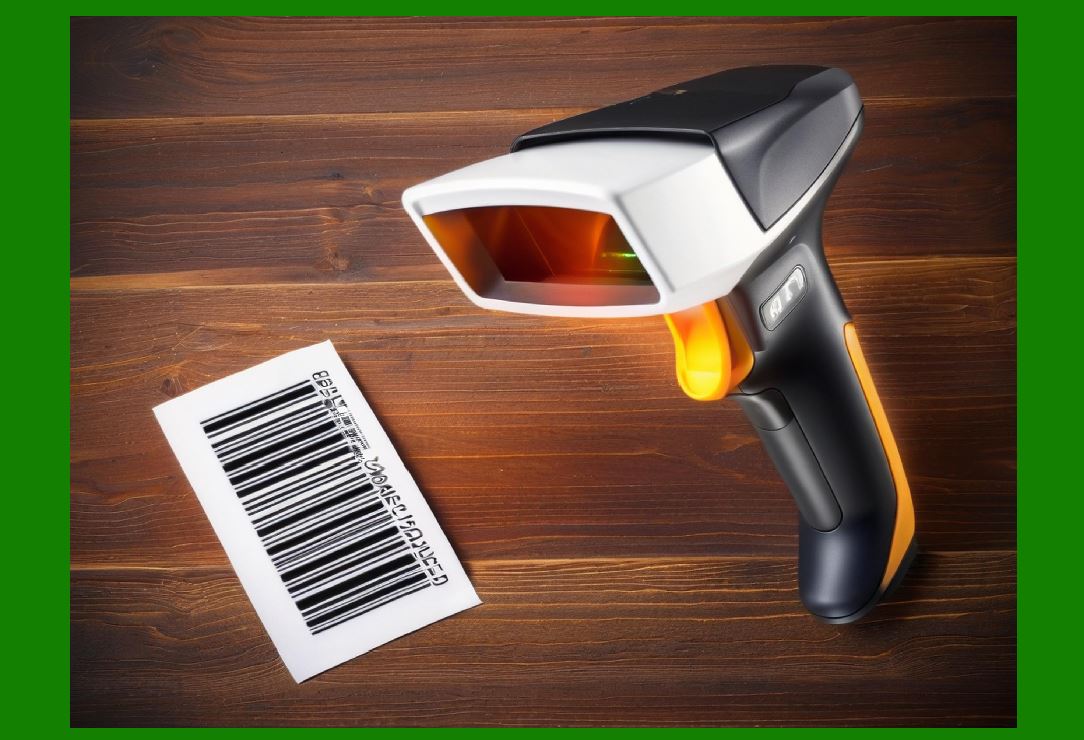
| 6. Application Domain One: Retail Point-of-Sale | In retail point-of-sale environments, the laser scanner's immunity enables reliable operation at checkout counters that face windows, skylights, or bright display lighting. A supermarket checkout lane is a deceptively challenging optical environment. The scanner must read barcodes on products that may be oriented at awkward angles, covered in reflective plastic film, or passed quickly by a cashier under time pressure. At the same time, the lane may be flooded with natural light from a storefront window, or illuminated by overhead fixtures that create specular reflections on glossy packaging. The laser scanner's synchronous demodulation cuts through this clutter, allowing it to maintain a high first-read rate even when the ambient conditions would defeat a simpler device. This reliability is why laser scanners, particularly multi-line or raster-scanning models, have long been the default choice for high-throughput retail checkout. | CCD scanners occupy the lower-throughput and space-constrained niches of retail, where their adequate immunity and lower cost are sufficient. Convenience stores, small specialty shops, and pharmacy counters often use CCD-based scanners because the lighting is typically stable indoor illumination and the transaction volume does not justify the expense of a laser unit. In these settings, the CCD's integration-based rejection of steady light is sufficient, and its lack of moving parts (compared to a laser scanner's spinning polygon mirror) offers a durability advantage. However, a CCD scanner near a sunlit entrance may struggle during certain hours, forcing staff to reposition the device or shield the label---a minor inconvenience that becomes a significant operational issue in higher-volume settings. | Wand scanners have largely disappeared from retail checkout, and their ambient light vulnerability is a contributing factor. A wand requires the cashier to manually drag it across each barcode, a slow and ergonomically taxing process that is incompatible with modern checkout speed expectations. But even in the low-volume settings where wands might otherwise be viable, the presence of bright display lighting or window light makes them unreliable. The few retail applications that still use wands---typically very small shops with dim lighting and low transaction counts---represent the narrow envelope within which the wand's limitations are tolerable. | 
| 7. Application Domain Two: Warehousing and Logistics | Warehouse and distribution center environments demand the highest ambient light immunity, and laser scanners meet this demand across the widest range of conditions. A modern warehouse is an optical obstacle course. High-bay LED or fluorescent lighting creates bright pools and deep shadows. Loading dock doors open to admit direct sunlight that can strike a label at an angle. Forklifts and conveyors move labels rapidly past fixed scanners. In these conditions, the laser scanner's ability to reject ambient light while maintaining a high scan rate is not a luxury but an operational necessity. Fixed-position laser scanners mounted over conveyor belts must read every carton that passes, often at speeds of several meters per second, and a single missed read can divert a package to manual handling. Synchronous demodulation allows these scanners to achieve the read rates that automated sortation depends upon. | CCD scanners serve in warehouse roles where the scanning task is more controlled and the ambient challenge is lower. Handheld CCD scanners are used for inventory counts, shelf audits, and order picking, where the operator brings the scanner close to the label and can control the angle and distance. In these applications, the CCD's moderate immunity is usually sufficient, particularly in the aisles of a warehouse where lighting is artificial and relatively stable. However, CCD scanners are rarely chosen for fixed-mount, high-speed conveyor applications, where their limited depth of field and lower tolerance for ambient fluctuation make them less suitable than laser units. | Wand scanners are virtually absent from modern warehouse operations, for reasons that include but are not limited to ambient light. The manual scanning motion required by a wand is incompatible with the productivity targets of contemporary logistics, where hands-free or trigger-activated scanning is the norm. The wand's vulnerability to the bright, variable lighting of a loading dock or a high-bay storage area further disqualifies it. A wand might survive in a small, dimly lit stockroom, but such applications are increasingly rare as even small businesses adopt handheld laser or CCD scanners. | 
| 8. Application Domain Three: Healthcare and Clinical Settings | Healthcare environments present a paradox: ambient light levels are typically moderate, yet the consequences of a scan failure can be severe, making the laser scanner's reliability attractive despite its cost. A hospital or clinic is not usually a brightly lit environment by industrial standards, but it contains numerous light sources that can interfere with scanning: examination lamps, surgical lights, computer monitors, and windows in patient rooms. More importantly, the barcodes being scanned often carry critical information---patient wristbands for medication administration, specimen labels for laboratory analysis, supply packages for inventory control. A missed or erroneous scan in this context can have clinical consequences. Laser scanners, with their robust immunity to the ambient light variations found in clinical settings, are frequently specified for medication administration and specimen tracking, where the cost premium is justified by the need for near-certain read reliability. | CCD scanners are widely used in healthcare for less critical applications where their moderate immunity suffices. A nurse scanning a supply cabinet in a well-lit utility room, or an admissions clerk scanning an insurance card at a desk, can rely on a CCD scanner without difficulty. The lighting in these settings is predictable and the labels are typically clean and flat. The CCD scanner's lower cost and lack of laser safety concerns make it a practical choice for these routine tasks. The boundary between laser and CCD in healthcare often falls along the line between point-of-care scanning (where lasers dominate) and administrative or logistics scanning (where CCDs are common). | Wand scanners have a limited but persistent presence in healthcare, particularly in small clinics and in legacy systems. Some older laboratory information systems still specify wand scanners for specimen tube labels, and the wand's compact size makes it convenient for scanning in tight spaces. However, the wand's vulnerability to the bright examination lights and the sunlight that may enter through patient room windows makes it a risky choice for any application where a failed scan could disrupt clinical workflow. As healthcare organizations modernize their scanning infrastructure, wands are typically the first devices to be replaced. | 
| 9. Application Domain Four: Manufacturing and Production Lines | Manufacturing environments combine high ambient light levels with demanding read-rate requirements, creating a natural stronghold for laser scanning technology. A factory floor may be illuminated by high-intensity discharge lamps, flooded with daylight from large bay doors, or lit by task-specific sources that create intense local glare. At the same time, production line scanning is often automated: fixed-mount scanners read barcodes on parts, assemblies, or product packaging as they move past on conveyors. In these conditions, the laser scanner's synchronous demodulation provides the signal-to-noise margin needed to maintain read rates approaching one hundred percent. Automotive assembly lines, electronics manufacturing, and pharmaceutical production all rely on laser scanners for critical traceability applications where a missed read can halt production or compromise quality records. | CCD scanners find use in manufacturing for manual inspection and for applications where labels are presented in controlled conditions. A quality inspector scanning a component in a well-lit inspection station, or a worker scanning a traveler document at a workstation, can use a CCD scanner effectively. The key distinction is between applications where the scanner can be brought to the label under favorable conditions and applications where the label moves past a fixed scanner under uncontrolled lighting. CCD scanners are well suited to the former and generally unsuitable for the latter. | Wand scanners have a residual presence in small-scale manufacturing and job shops where production volumes are low and lighting is modest. A small machine shop or a custom fabrication business might use a wand for occasional job tracking or inventory tasks. But in any manufacturing setting where ambient light is bright or variable, the wand's limitations become quickly apparent, and users typically upgrade to a CCD or laser device as their operations grow. | 
| 10. Application Domain Five: Field Service and Outdoor Operations | Outdoor and field-service applications expose the starkest contrast between laser and wand performance, and they represent the environment where the laser scanner's immunity is most decisively advantageous. A utility worker reading a meter in direct sunlight, a delivery driver scanning a package on a doorstep, a forestry technician logging timber in an open yard---these scenarios present ambient light levels that are orders of magnitude above indoor conditions. A laser scanner can function in these conditions because its synchronous demodulation rejects the unmodulated sunlight. A CCD scanner can sometimes manage if the label is shaded or if the exposure is very short, but its performance is marginal. A wand scanner is essentially useless in direct sunlight, as the photodetector saturates and the signal is lost. | Field service organizations have largely standardized on laser-based scanners for outdoor work, accepting the higher cost and power consumption in exchange for reliability. Ruggedized laser scanners designed for field use incorporate additional measures such as sunshades and narrowband optical filters, but the fundamental immunity comes from the modulation scheme. The alternative---asking workers to shield labels with their bodies or to wait for cloudy conditions---is incompatible with the productivity expectations of modern field operations. | CCD scanners occupy a middle ground in field service, used for sheltered outdoor tasks and for indoor field work. A technician scanning equipment labels inside a utility vault or beneath a building overhang may find a CCD scanner adequate. But any application that involves direct sun exposure on the label is a poor fit for CCD technology, and experienced field service managers learn to specify laser scanners for any task where the scanner will be used outdoors. | 
| 11. The Role of Signal Processing in Extending Immunity | Signal processing can extend the ambient light immunity of all three architectures, but it cannot overcome fundamental limitations. In a laser scanner, the demodulation process itself is a form of signal processing, and additional filtering in the digital domain can further improve rejection. In a CCD scanner, correlated double sampling and digital subtraction of a dark frame can reduce fixed-pattern noise and some ambient offsets. Even wand scanners can benefit from high-pass filtering that removes the direct-current component of the ambient light, allowing the device to function in moderately bright conditions where an unfiltered wand would fail . However, these techniques have limits. A high-pass filter cannot distinguish between ambient light fluctuations and barcode signal if both occur in the same frequency band. A CCD's dark-frame subtraction cannot compensate for ambient light that changes during the exposure. The architectural hierarchy persists because it reflects fundamental differences in how the three technologies acquire and condition their signals. | 
| 12. Design Trade-offs Beyond Immunity | Ambient light immunity is only one axis of scanner performance, and real-world selection decisions balance it against cost, durability, scanning speed, depth of field, and power consumption. The laser scanner's superior immunity comes at the price of higher component cost, more complex assembly, and greater power draw. The CCD scanner offers a middle ground on all these parameters. The wand is the simplest and least expensive of all, but its manual operation and poor immunity restrict it to a narrow set of applications. A system designer choosing a scanner for a given application must weigh the ambient conditions the device will face against the budget available and the other performance requirements. In many indoor, controlled-lighting applications, the CCD's adequate immunity is sufficient, and the cost savings are meaningful. In outdoor or high-variability environments, the laser's immunity is worth its premium. | 
| 13. Detailed Summary of Comparative Findings | The comparative assessment of ambient light immunity across the three scanner architectures reveals a consistent hierarchy that holds across every application domain examined. The laser scanner, through synchronous demodulation, achieves the highest immunity by encoding its signal at a frequency where ambient light has no energy, then rejecting everything outside that narrow frequency band. This architecture enables reliable operation in direct sunlight, beneath flickering artificial sources, and in the presence of the high-frequency flicker that characterizes modern LED lighting. The practical result is a device that maintains high read rates in the most challenging optical environments, from sunlit loading docks to brightly illuminated factory floors. | The CCD scanner, through timed integration synchronized to its readout cycle, achieves a moderate level of immunity that is adequate for controlled indoor environments but degrades as ambient light becomes brighter or more variable. The integration window limits the amount of ambient light that accumulates alongside the barcode signal, and the synchronization of illumination with exposure provides a degree of temporal discrimination. However, this discrimination is less robust than the laser's frequency-domain approach, particularly against sources that fluctuate on the same timescale as the exposure. CCD scanners are therefore best suited to retail counters, clinical workstations, and warehouse aisles where lighting is predictable and the scanner can be brought close to the label. | The wand scanner, with its continuous illumination and absence of any temporal discrimination, is the most vulnerable of the three architectures. Its only defenses are optical filtering and simple high-pass electronic filtering, neither of which can address the fundamental problem of a weak barcode signal buried in strong ambient light. Wand scanners are confined to low-volume, dimly lit, or sheltered applications where their limitations are tolerable, and they have been largely displaced by CCD and laser devices in every domain where ambient light is a significant factor. | The application-domain survey confirms that this hierarchy translates directly into deployment patterns. Retail checkout, warehousing, outdoor field service, and high-throughput manufacturing all favor or require laser scanning because ambient light immunity is essential to their operational requirements. Healthcare and controlled indoor settings can often use CCD scanners, which offer adequate immunity at lower cost. Wand scanners persist only in marginal applications where cost and compactness outweigh the need for reliable performance under challenging lighting. These patterns are not accidental; they reflect the accumulated experience of industries that have tested each technology against their specific environmental conditions and converged on the architectures that work. | Ultimately, the ambient light immunity hierarchy is a case study in how a single architectural decision---how to encode and detect the optical signal---ramifies across the entire application space of a technology. The laser scanner's modulation scheme, the CCD's timed integration, and the wand's continuous illumination represent three distinct answers to the same fundamental problem: how to see a weak signal in a bright world. The quality of those answers, measured in read reliability across diverse environments, determines where each technology finds its home. | 
| 14. Concluding Observations for the Design Engineer | For the engineer selecting a scanning technology, the ambient light immunity hierarchy provides a clear starting point for matching device capabilities to environmental demands. When the operating environment is uncontrolled or unpredictable, the laser scanner's synchronous demodulation offers a margin of safety that no other architecture can match. When the environment is controlled and the scanning geometry is favorable, the CCD scanner provides adequate performance at a lower cost. The wand scanner, while historically important and still useful in narrow niches, should be approached with a clear understanding of its fundamental vulnerability to ambient light. The choice is not merely technical but economic and operational, and the most successful designs are those that match the architecture's immunity profile to the actual conditions of use rather than to laboratory specifications or marketing claims. |
|
 cs@easiersoft.com