Article 65: Power Consumption Across Scanner Technologies and Its Real-World Consequences | Summary | Among the three main barcode scanning technologies, the wand scanner draws the least power, typically tens of milliwatts; the CCD scanner sits in the middle, drawing hundreds of milliwatts while scanning; and the laser scanner draws the most, since it must power both a laser diode and a spinning motor, often exceeding one watt during a scan. This article explains why these differences exist, then explores what they mean in practice across retail, logistics, healthcare, manufacturing, field service, and other industries, and closes with a detailed summary. | 
| 1. Introduction: Why Power Draw Deserves a Whole Chapter | Power consumption is one of the most underappreciated differences among scanner technologies. This article examines why the gap between tens of milliwatts, hundreds of milliwatts, and over one watt matters far beyond a specification sheet. | Most buyers of barcode scanners focus on scan speed, depth of field, durability, and price. Power draw rarely tops the list. Yet in the field, power consumption quietly shapes which device a worker can carry all day, how long a battery lasts on a single charge, how hot a handheld unit becomes, how many scanners a single USB hub can support, and whether a wireless deployment needs daily charging or monthly charging. The difference between a wand drawing tens of milliwatts and a laser scanner drawing more than a watt is not a minor engineering detail; it is a factor of roughly thirty to a hundred, and that factor propagates into every practical decision an integrator or operations manager makes. | The reason the gap is so large comes down to the physics of each technology. A wand scanner is essentially a passive optical device: it has no light source of its own beyond what the ambient environment provides, and it relies on the operator's hand motion to sweep the scan aperture across the barcode. A CCD scanner illuminates the barcode with an array of light-emitting diodes and reads the reflected light with a linear sensor, so it must power both the illumination and the sensor electronics, but only for the brief moment of a scan. A laser scanner must spin a mirrored polygon or oscillating mirror with a motor and drive a laser diode continuously during scanning, and both of those loads are comparatively heavy. Understanding this physics is the key to understanding everything that follows. | 
| 2. The Wand Scanner: Tens of Milliwatts and the Virtues of Doing Almost Nothing | The wand scanner consumes only tens of milliwatts because it generates no light of its own and has almost no moving parts, making it the most frugal of the three technologies. | A wand scanner, sometimes called a wand reader or a pen scanner, works by being dragged across the barcode by hand. Its tip contains a small aperture and a photodetector. As the operator sweeps the wand across the printed bars, the reflected ambient light or a very small built-in illumination source is modulated by the alternating dark and light bars, and the photodetector converts that modulation into an electrical signal. The electronics required are modest: a photodiode or phototransistor, a modest amplifier, a comparator or digitizer, and a small microcontroller or dedicated decoder chip. There is no motor, no laser, and in many designs no illumination LED at all. | The consequence is a power draw measured in tens of milliwatts, and often in single-digit milliwatts when the device is idle. This has several practical virtues. First, a wand can run for a very long time on a small battery, which is why early portable data collection devices and some specialized instruments used wand readers well into the era of more capable alternatives. Second, the wand produces almost no heat, so it can be sealed into a housing with no thermal concerns. Third, because the power draw is so low, a wand can be powered directly from a legacy serial port or a simple interface without a dedicated power supply, which made it a favorite in the early decades of barcode adoption. | The wand's limitations are equally important. It requires the operator to maintain a steady, appropriate sweep speed and angle, which makes it slower and more error-prone than modern alternatives. It depends on adequate contrast and adequate ambient light, and it struggles with low-contrast or damaged labels. Its depth of field is essentially zero, since the aperture must be in contact with or very close to the label. These limitations pushed the wand out of mainstream retail and logistics use decades ago, but it survives in niches where its low power, low cost, and simplicity are decisive, such as certain library systems, simple access-control readers, and embedded instruments. | 
| 3. The CCD Scanner: Hundreds of Milliwatts During the Moment of Scanning | The CCD scanner draws hundreds of milliwatts while scanning because it must power an LED illumination array and a linear image sensor, but it draws very little when idle, so its average consumption depends heavily on duty cycle. | A CCD scanner, more precisely a linear CCD or contact image sensor scanner, illuminates the barcode with a row of LEDs, images the reflected light onto a linear array of photodetectors, and reads out the pattern of light and dark as a voltage waveform that the decoder then interprets. The illumination LEDs and the sensor readout are the dominant loads. During an active scan, the combined draw of the LED array, the sensor, the analog front end, and the decoder electronics typically falls in the hundreds of milliwatts. | Two features distinguish the CCD scanner's power profile from the laser scanner's. First, the absolute draw during a scan is lower, typically a few hundred milliwatts rather than over a watt, because there is no motor and the illumination LEDs, while bright, are not as power-hungry as a laser diode plus a spinning motor. Second, the CCD scanner can be designed to sleep aggressively between scans. Because the illumination and sensor can be turned on and off quickly and cleanly, a well-designed CCD scanner can drop to a few milliwatts or less when idle and ramp up only when a scan is triggered. This makes the average power draw of a CCD scanner in real use much lower than its peak draw, and it is why CCD-based handheld scanners became the dominant choice for battery-powered retail and light-industrial applications. | The CCD scanner's power profile also shapes its thermal and electrical design. Because the LED array and sensor generate modest but non-trivial heat during a scan, the housing must be designed to dissipate that heat, especially in sealed enclosures. Because the peak draw is moderate, a CCD scanner can often be powered from a standard USB port without a separate power supply, which simplified deployment enormously. And because the idle draw is low, a CCD scanner can be left in a cradle or on a counter for long periods without draining a battery or tripping a power budget. | 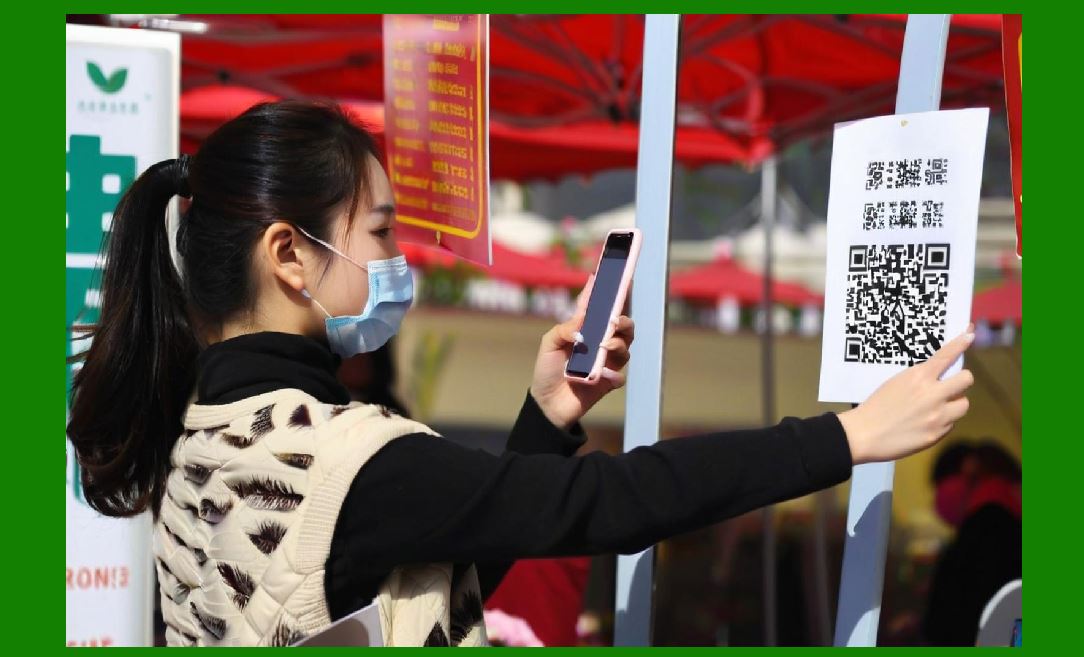
| 4. The Laser Scanner: Over a Watt and the Price of Speed and Range | The laser scanner draws the most power, often over a watt during a scan, because it must drive a laser diode and spin a motor simultaneously, and this high draw shapes its thermal design, its battery life, and its deployment constraints. | A laser scanner works by sweeping a focused laser beam across the barcode with a moving mirror. In most designs, the mirror is mounted on a small motor that spins a polygon or oscillates a mirror back and forth. The laser diode must be driven continuously while scanning, and the motor must be driven continuously as well, because stopping and starting a spinning motor quickly is difficult and wears the bearings. The combination of laser diode drive, motor drive, motor control electronics, photodetector and amplifier, and decoding electronics pushes the scan-time draw above one watt in many designs, and sometimes well above it. | This high draw has several consequences. First, heat: a laser scanner generates noticeable heat during continuous operation, which is why laser-based handheld scanners and fixed-mount scanners have metal housings, heat spreaders, or ventilation, and why some high-duty-cycle laser scanners are designed for intermittent rather than continuous use. Second, battery life: a battery-powered laser scanner must either use a larger battery, accept shorter runtime per charge, or rely on aggressive sleep modes between scans. Third, interface power: a laser scanner often cannot be powered from a low-power bus alone and may require a dedicated power supply or a powered interface, which complicates cabling and deployment compared with a CCD scanner. | The laser scanner's high power draw buys real capability. The laser beam can be focused to a small spot and swept across a wide depth of field, which gives laser scanners their characteristic long range and their ability to read barcodes at a distance and at awkward angles. The laser's narrow wavelength band and high brightness make it robust against ambient light and against low-contrast or distant labels. These capabilities are why laser scanners dominated long-range retail, warehouse, and industrial scanning for years, and why they remain in use where range and depth of field matter more than power efficiency. | 
| 5. Retail Point of Sale: Where Power Draw Shapes the Counter | In retail point of sale, power draw determines whether a scanner can run from the register's USB port, how often a cordless unit needs charging, and how much heat the checkout lane must tolerate. | Retail checkout is the most familiar scanner environment, and it illustrates the power trade-offs clearly. A supermarket checkout lane may run hundreds of scans per hour during peak periods, so the scanner's duty cycle is high. A laser-based bi-optic scanner embedded in the counter must run its motor and laser continuously during peak periods, which is why those units are typically powered from mains power and why they are designed with substantial thermal mass. A CCD-based handheld scanner at a boutique or convenience store, by contrast, scans intermittently, sleeps between scans, and can often run all day on a single charge or from a USB cable. | The practical consequences are visible to any shopper. Cordless handheld scanners in retail are almost always CCD or imaging based, because a laser-based cordless unit would drain its battery too quickly for a full shift. Counter-mounted laser scanners are almost always mains powered, because the power budget of a checkout lane can accommodate the draw and because the thermal design of a counter-mounted unit can dissipate the heat. And the trend toward imaging scanners in retail, which combine a camera sensor with illumination LEDs, reflects a power trade-off similar to CCD: moderate peak draw, aggressive sleep, and good enough range for the checkout lane. | Retail also illustrates the interface-power issue. A USB port can supply a limited amount of power, and a scanner that exceeds that budget needs an external supply or a powered hub. CCD scanners fit comfortably within USB power budgets; laser scanners often do not, especially if they are expected to run at high duty cycle. This single fact has influenced retail hardware architecture for years, pushing integrators toward CCD and imaging scanners for USB-powered lanes and reserving laser scanners for mains-powered or powered-interface installations. | 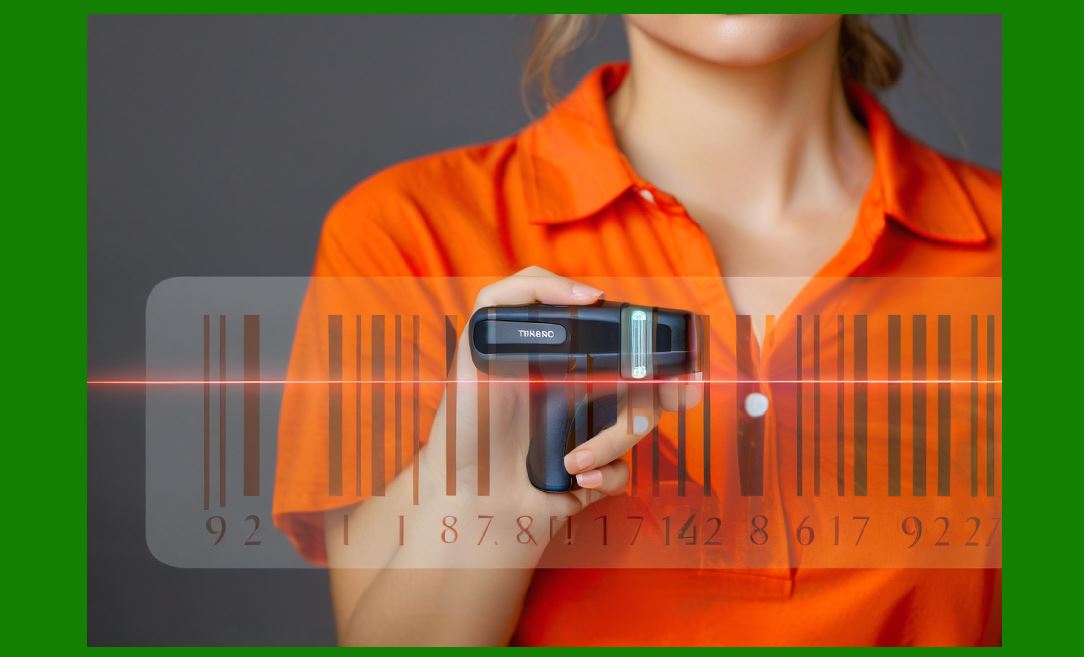
| 6. Warehousing and Logistics: Power Draw Versus Range and Runtime | In warehousing and logistics, power draw determines how long a handheld scanner lasts on a shift, whether a forklift-mounted scanner can be cable-powered, and how many scans a worker can perform before a battery swap. | Warehousing and logistics are demanding environments for scanners. Workers scan pallets, cartons, and shelf labels at varying distances, often in cold or dusty conditions, often for a full shift. The scanner must have enough range to read a label on a high shelf or a distant pallet, enough durability to survive drops and knocks, and enough battery life to last a shift or at least a substantial portion of it. | The power draw differences among technologies map directly onto these requirements. A laser scanner's long range and wide depth of field make it attractive for reading distant labels on high racks, but its over-one-watt draw during scanning limits battery life and generates heat, which is why many warehouse laser scanners are vehicle-mounted and cable-powered rather than handheld and battery-powered. A CCD or imaging scanner's lower peak draw and aggressive sleep modes make it attractive for handheld use, but its shorter range may require the worker to walk closer to the label, which costs time. The result is a common split: long-range laser scanners on forklifts and fixed mounts, and CCD or imaging scanners in workers' hands. | Battery life calculations make the difference concrete. A handheld scanner that draws hundreds of milliwatts during a scan and a few milliwatts when idle, scanning perhaps a few thousand times per shift, can run a full shift on a modest battery. A handheld scanner that draws over a watt during each scan, scanning the same number of times, may need a larger battery or a mid-shift battery swap, and the heat it generates in a sealed handheld housing must be managed. These considerations are why the warehouse industry has steadily moved toward imaging scanners for handheld use while retaining laser scanners for long-range and vehicle-mounted applications. | 
| 7. Healthcare: Low Power, Quiet Operation, and Battery Safety | In healthcare, low power draw matters because it enables small, sealed, battery-powered scanners that can be cleaned easily, run quietly, and be used at the bedside without tethering. | Healthcare scanning includes patient wristband scanning, medication labeling, specimen tracking, and supply management. The environment imposes constraints that go beyond the usual retail and logistics requirements: devices must be cleanable and often sealed against liquids, they must be quiet so as not to disturb patients, they must be safe in the presence of medical equipment, and they must be reliable at the bedside where a cable is inconvenient. | Low power draw helps on all of these fronts. A CCD or imaging scanner that draws hundreds of milliwatts during a scan and sleeps between scans can run a full shift on a small battery, which allows a compact, sealed, cordless design that is easy to wipe down. The absence of a spinning motor makes the device quiet, which matters in patient rooms and intensive care units. The lower heat generation simplifies sealing, because there is less heat to dissipate from a sealed housing. And the lower peak current draw reduces electrical noise and simplifies electromagnetic compatibility, which matters near sensitive medical equipment. | Laser scanners appear in healthcare too, mainly in fixed-mount or cart-mounted configurations where mains power is available and where long range helps with scanning items on a cart or a shelf. But the handheld, bedside, and point-of-care segments of healthcare have largely standardized on CCD and imaging scanners, and power draw is one of the main reasons. A nurse scanning a wristband at the bedside needs a device that is small, quiet, sealed, and long-running, and the power profile of a CCD or imaging scanner fits that need far better than the over-one-watt profile of a laser scanner. | 
| 8. Manufacturing and Shop Floor: Power Budgets on the Line | On the manufacturing floor, power draw determines whether a scanner can be powered over the same cable that carries data, how many scanners a single control cabinet can support, and how much heat the enclosure must handle. | Manufacturing and shop-floor scanning includes work-in-progress tracking, component verification, tool tracking, and quality inspection. Scanners are often mounted on fixtures, robots, or conveyors, and they are often integrated into control cabinets and industrial networks. In these settings, power draw is a system-design parameter rather than a user convenience. | A fixed-mount scanner powered over a data cable, such as a USB or Power over Ethernet link, must stay within the power budget of that link. CCD and imaging scanners, with their moderate peak draw and low idle draw, fit more easily within these budgets, which simplifies cabling and reduces the number of separate power supplies a control cabinet must contain. Laser scanners, with their over-one-watt draw and their need to run a motor continuously during scanning, often require a dedicated power supply or a powered interface, which adds cabling, cabinet space, and cost. | Thermal design on the shop floor reinforces the point. A sealed industrial enclosure that houses a scanner must dissipate the scanner's heat, and a laser scanner's higher draw means more heat to manage, which can require larger enclosures, heat sinks, or active cooling. A CCD or imaging scanner's lower draw allows a smaller, simpler, and more robust enclosure. In high-duty-cycle manufacturing lines where scanners run almost continuously, these differences compound: the laser scanner's continuous motor and laser draw becomes a continuous thermal load, while the CCD scanner's duty-cycled illumination keeps the average thermal load lower. | 
| 9. Field Service and Mobile Computing: Every Milliwatt Counts | For field service workers and mobile computing users, power draw is a direct determinant of how long a device runs in the field, where charging opportunities are scarce and a dead battery means a lost workday. | Field service, utility work, meter reading, and mobile computing put a premium on battery life. A technician in the field may work an eight- or ten-hour shift away from any charger, and every milliwatt saved by the scanner extends the runtime of the whole device. This is why mobile computing devices and rugged handhelds have overwhelmingly adopted CCD and imaging scanners: their low idle draw and moderate scan draw let the scanner share a battery with the display, radio, and processor without dominating the power budget. | The alternative is instructive. A laser scanner integrated into a battery-powered field device would draw over a watt during each scan and would need to run its motor and laser during every read, which would noticeably shorten runtime and generate heat in a sealed, rugged housing. Field devices that do use laser scanning, such as some long-range inventory devices, typically accept a larger battery and a shorter runtime, or they use the laser sparingly. The general trend in field service is clear: when battery life and device size matter, the scanner with the lowest practical power draw wins, and that has favored CCD and imaging technologies. | 
| 10. Kiosks, Self-Service, and Embedded Applications: Power in Unattended Systems | In kiosks and self-service systems, power draw affects heat, reliability, and the cost of running unattended devices that may operate for years with minimal maintenance. | Self-service kiosks, ticket readers, parcel lockers, and embedded identification systems often run unattended for long periods. In these applications, power draw matters for three reasons: heat, reliability, and operating cost. A kiosk enclosure is often sealed and sometimes outdoor-rated, so heat dissipation is a real constraint. A scanner that draws over a watt during continuous operation adds to the thermal load, which can require larger enclosures, fans, or thermal management. A scanner that draws hundreds of milliwatts during scans and sleeps between them is easier to integrate into a sealed, fanless kiosk. | Reliability also correlates with power draw and moving parts. A wand scanner with no moving parts and tens of milliwatts of draw is extremely reliable, though limited in capability. A CCD scanner with no moving parts and moderate draw is also highly reliable. A laser scanner with a spinning motor has a wear item, the motor and its bearings, and its higher draw adds thermal stress to the electronics. In unattended systems where a service call is expensive, these reliability differences matter, and they have pushed kiosk designers toward CCD and imaging scanners for most self-service applications. | 
| 11. Portable and Battery-Powered Data Collection: The Runtime Calculation | For portable data collection, the runtime calculation is simple arithmetic: the scanner's average draw, multiplied by its duty cycle, determines how much of the battery it consumes, and the technology with the lowest average draw wins. | Portable data collection devices, including inventory scanners, handheld terminals, and wearable scanners, live or die by battery life. The average power draw of the scanner is the product of its scan-time draw and its duty cycle plus its idle draw and its idle fraction. A wand scanner's tens of milliwatts and near-zero idle draw make it the most frugal, which is why wand readers persisted in portable data collection long after they fell out of favor elsewhere. A CCD scanner's hundreds of milliwatts during scans and low idle draw give it a good average, especially in intermittent use. A laser scanner's over-one-watt scan draw and its need to run a motor make its average draw the highest of the three, unless its duty cycle is very low. | This arithmetic explains a great deal of product history. Portable data collection devices in retail, healthcare, and field service converged on CCD and imaging scanners because their average draw allowed a full shift on a battery that a worker could comfortably carry. Laser scanners remained in portable use mainly where long range was essential and where the device could accommodate a larger battery or a lower duty cycle. Wearable scanners, which have very tight power and weight budgets, have overwhelmingly adopted low-power imaging and CCD designs. | 
| 12. The Interface Question: USB Power Budgets and Cabling | Power draw determines which interface a scanner can use, because USB, serial, and Power over Ethernet links each have a finite power budget that a scanner must respect. | The interface between a scanner and its host is not just a data path; it is also a power path, and every interface has a budget. A standard USB port supplies a limited amount of power, and a scanner that exceeds that budget must use an external supply, a powered hub, or a different interface. CCD scanners, with their moderate peak draw, typically fit within USB budgets, which is one reason USB CCD scanners are ubiquitous. Laser scanners, with their over-one-watt draw, often do not fit within an unpowered USB budget at high duty cycle, which is why many laser scanners ship with a Y-cable, an external power supply, or a powered interface. | Serial interfaces present a similar constraint. A legacy serial port supplies very little power, so a scanner powered from a serial port must be extremely frugal, which is a natural fit for a wand scanner and a poor fit for a laser scanner. Power over Ethernet supplies more power but still has a finite budget, and a laser scanner's draw must be counted against that budget alongside the host device's other loads. These interface constraints are a hidden but powerful force in scanner selection, and they consistently favor lower-power technologies in bus-powered and cable-powered installations. | 
| 13. Heat, Reliability, and Lifetime: The Thermal Cost of Power | Higher power draw becomes heat, and heat shortens electronic lifetimes, so the power differences among scanner technologies translate directly into reliability and lifetime differences. | Every milliwatt a scanner draws eventually becomes heat, and heat is the enemy of electronic reliability. A laser scanner that draws over a watt during scanning must dissipate that heat through its housing, and in a sealed handheld or fixed-mount unit the thermal path is limited. Elevated temperatures accelerate wear in electrolytic capacitors, degrade laser diode performance, and stress solder joints, all of which shorten the device's life. A CCD scanner's lower draw produces less heat, which allows a cooler, more reliable design. A wand scanner's tens of milliwatts produce almost no heat at all, which is one reason wand readers can last for decades in benign environments. | The motor is a separate reliability concern. A laser scanner's spinning motor is a mechanical wear item, and its bearings and bushings have a finite life. The motor also draws current continuously during scanning, which adds to the thermal load. A CCD scanner has no motor, so it avoids both the wear and the heat. This is a significant reason why CCD and imaging scanners have displaced laser scanners in many high-duty-cycle and sealed applications, and why laser scanners are often specified with duty-cycle limits. | 
| 14. The Trend Toward Imaging: A Power Story as Much as a Capability Story | The industry's shift from laser scanning to imaging scanning is often told as a capability story, but it is also a power story, because imaging scanners combine moderate draw, aggressive sleep, and no moving parts. | Imaging scanners, which use a two-dimensional sensor and illumination LEDs to capture an image and decode it in software, have largely displaced both laser and CCD scanners in many markets. The usual explanation emphasizes capability: imaging scanners can read two-dimensional codes, capture images, decode damaged labels, and support new use cases. But the power story is just as important. An imaging scanner draws a moderate amount during a scan, similar to or somewhat above a CCD scanner, sleeps aggressively between scans, and has no spinning motor, so its average draw and its thermal profile are attractive for battery-powered and sealed devices. It also avoids the laser scanner's motor wear and over-one-watt peak draw, which simplifies thermal and reliability design. | The power story helps explain the pace of the transition. In battery-powered handhelds, imaging scanners offered a better average draw than laser scanners and comparable capability, so the transition was rapid. In mains-powered fixed-mount long-range applications, where power is plentiful and range is paramount, laser scanners have persisted longer, because their over-one-watt draw is affordable when mains power is available and their range is hard to match. The pattern is consistent with the power hierarchy: the technology with the best average draw and the fewest moving parts tends to win wherever power, heat, or battery life is a constraint. | 
| 15. Practical Selection Guidance: Matching Power Profile to Application | Selecting a scanner is partly a matter of matching its power profile to the application's power budget, duty cycle, thermal limits, and battery constraints. | The practical guidance that follows from the power hierarchy is straightforward. For battery-powered handheld use with intermittent scanning, favor CCD or imaging scanners, whose moderate peak draw and low idle draw give the best average consumption and the longest runtime. For long-range or high-duty-cycle fixed-mount use with mains power, a laser scanner's over-one-watt draw is affordable and its range and depth of field are valuable. For the most extreme low-power and low-cost embedded applications, a wand scanner's tens of milliwatts and lack of moving parts remain attractive despite its limitations. For sealed, fanless, or unattended enclosures, favor technologies with low heat and no moving parts, which points to CCD, imaging, or wand designs. | The guidance also includes a warning about average versus peak. A scanner's peak draw during a scan is not the same as its average draw in use, and the average is what determines battery life and thermal load. A laser scanner with a low duty cycle may have an acceptable average draw, while a CCD scanner with a high duty cycle may have a higher average than its peak suggests. Integrators should estimate the duty cycle, multiply by the scan draw, add the idle draw times the idle fraction, and compare the result to the power budget. This simple arithmetic, applied to the power hierarchy of tens of milliwatts, hundreds of milliwatts, and over a watt, is the most reliable guide to scanner selection on power grounds. | 
| 16. Detailed Summary | The power hierarchy among barcode scanner technologies is clear and consequential: the wand scanner draws tens of milliwatts, the CCD scanner draws hundreds of milliwatts during a scan, and the laser scanner draws over a watt during a scan. Each figure follows from the technology's physics. The wand has no light source or motor and relies on the operator's hand motion, so its draw is minimal. The CCD scanner powers an LED array and a linear sensor during each scan, so its draw is moderate and its idle draw can be very low. The laser scanner powers a laser diode and a spinning motor, so its draw is high and its heat and wear are correspondingly greater. | These differences propagate into every application domain examined in this article. In retail point of sale, power draw determines whether a scanner can be USB-powered, how often a cordless unit needs charging, and how much heat the checkout lane must tolerate; CCD and imaging scanners dominate cordless and USB-powered roles, while laser scanners dominate mains-powered counter mounts. In warehousing and logistics, power draw determines shift-long battery life and vehicle-mount cabling; laser scanners serve long-range and vehicle-mounted roles, while CCD and imaging scanners serve handheld roles. In healthcare, low power enables small, sealed, quiet, battery-powered bedside scanners, which is why CCD and imaging designs dominate point-of-care use. In manufacturing, power draw sets the interface budget and the thermal load in sealed enclosures, favoring lower-power technologies for bus-powered and sealed installations. In field service and mobile computing, every milliwatt counts toward shift-long runtime, favoring CCD and imaging scanners. In kiosks and unattended systems, low power and no moving parts favor CCD, imaging, and wand designs for sealed, fanless enclosures. In portable data collection, the average draw arithmetic favors wand and CCD designs for the longest runtime. | The interface, thermal, and reliability consequences reinforce the same pattern. USB and serial power budgets favor lower-power scanners; laser scanners often need external or powered interfaces. Heat shortens electronic lifetimes and motor wear limits laser scanner duty cycles, favoring CCD, imaging, and wand designs in sealed and high-duty-cycle applications. The industry's shift toward imaging scanners is as much a power and reliability story as a capability story, and the persistence of laser scanners in long-range, mains-powered roles is explained by the same hierarchy. | The practical guidance is therefore simple. Estimate the duty cycle, compute the average draw from the scan draw and the idle draw, and compare it to the power budget and thermal limits of the application. Where battery life, heat, sealing, or bus power are constraints, favor the lower-power technologies: wand for the most frugal embedded uses, CCD and imaging for the broad middle of handheld, bedside, field, and kiosk applications. Where range, depth of field, and high-duty-cycle fixed-mount operation matter and mains power is available, the laser scanner's over-one-watt draw is a price worth paying. The hierarchy of tens of milliwatts, hundreds of milliwatts, and over a watt is not just a specification; it is a design compass for the entire field of barcode scanning. |
|
 cs@easiersoft.com