Article Summary: Power consumption in barcode scanning is not a trivial specification buried in a datasheet. It is a design constraint that determines whether a device can be wireless, how long it survives on a single charge, and whether it is practical to deploy hundreds of units across a facility without rewiring the building. The wand scanner, drawing only tens of milliwatts, sits at the lowest tier. The CCD scanner, consuming hundreds of milliwatts during active scanning, occupies the middle ground. The laser scanner, with its laser diode and spinning motor often pushing consumption past one watt during a scan, is the most power-hungry of the three. This article examines what those numbers mean in practice across retail, healthcare, logistics, manufacturing, and field service environments, showing how the seemingly simple question of power draw ripples through device design, user workflows, and total cost of ownership. |

|
65. Power Consumption Across Scanner Architectures: From Milliwatts to Watts and What It Means in the Field |
1. Introduction: Why Milliwatts and Watts Matter Beyond the Datasheet |
Power consumption is the hidden variable that shapes how, where, and whether a barcode scanner can be used. |
When an engineer selects a scan engine for a new product, the power specification rarely makes the headline. Resolution, scan rate, and depth of field tend to dominate the conversation. Yet power draw quietly determines the battery size, the thermal envelope, the enclosure material, and ultimately the user experience. A handheld scanner that drains its battery in the middle of a busy shift is not merely an inconvenience; it is a workflow failure that cascades through a retail queue, a hospital medication round, or a warehouse pick path. |
The three canonical architectures compared throughout this book sit at markedly different points on the power spectrum. The wand scanner, essentially a pen-shaped photodetector dragged across a label, consumes the least. The CCD scanner, which floods the barcode with light and captures a linear image with a sensor array, sits in the middle. The laser scanner, which sweeps a focused beam across the code using a rotating or oscillating mirror driven by a motor, consumes the most. These differences are not incremental. They span roughly two orders of magnitude, from tens of milliwatts to over a watt during active scanning. |
What follows explores how those raw numbers translate into real-world consequences. The goal is not to declare one technology superior. Rather, it is to show that the power hierarchy of wand, CCD, and laser maps onto distinct application domains, each with its own logic about when a milliwatt saved is worth a feature sacrificed, and when a watt spent is the price of reliability. |

|
2. The Wand Scanner: Tens of Milliwatts and the Discipline of Scarcity |
The wand scanner's extraordinary efficiency comes from having almost nothing to power: no motor, no illumination array, no complex processing. |
A wand scanner is, in essence, a light source and a photodetector in a pen-shaped housing. The user provides the mechanical motion, dragging the tip across the barcode at a relatively steady speed. The scanner does not need to illuminate the entire code at once. It does not need a motor to sweep a beam. It does not need a frame buffer to capture an image. It simply measures the reflected light as the bars and spaces pass beneath the aperture and converts that analog waveform into a digital signal. |
This architectural simplicity is the source of its power advantage. With no motor to spin and no LED array to drive at high current, a wand scanner can operate in the tens of milliwatts. In practical terms, that means a wand can be powered directly from a computer's USB port or from a small battery for an extended period without any thermal management at all. The device stays cool. The enclosure can be thin and lightweight. There is no fan, no heat sink, no venting. |

|
2.1 Retail Price Check and Inventory Audits |
In retail environments where scanning is occasional rather than continuous, the wand's low power draw enables devices that are always ready but rarely demanding. |
Consider the price verification task on a retail floor. An associate walks the aisles with a small handheld device, checking that shelf tags match the prices encoded in the barcode. The scanning itself is intermittent: perhaps a few dozen scans per hour, with long gaps between. In this scenario, a wand scanner's negligible power consumption means the device can remain powered on for an entire shift without any concern about battery depletion. The associate does not need to think about charging. The device does not need a sleep mode that introduces wake-up latency. It simply works when needed. |
The same logic applies to inventory audits in smaller retail settings. A store employee counting stock in a stockroom may scan a few hundred items over the course of an afternoon. A wand powered by a coin cell or a small rechargeable battery can handle this workload comfortably. The absence of a motor and high-intensity illumination means there are no moving parts to fail and no heat to dissipate, which contributes to the long service life that makes wands attractive for budget-conscious deployments . |

|
2.2 Library Cataloging and Archival Work |
Libraries were among the earliest adopters of wand scanners, and the power profile remains well matched to the task. |
A library cataloging station involves scanning book barcodes one at a time, often with the book resting on a desk and the wand drawn across the label by hand. The pace is deliberate. The scanner is tethered to a workstation. Power consumption is almost an afterthought because the device draws so little that it can be powered continuously from the computer's keyboard port or a USB connection without any measurable impact on the system's overall energy budget. |
What matters more in this context is the wand's ability to read barcodes printed on curved or irregular surfaces. A book spine, a media case, or a folder tab presents a barcode that is not perfectly flat. The wand's contact-based reading method, where the tip is held against or very near the surface, handles these geometries gracefully. The low power draw is simply a bonus that makes the device unobtrusive and reliable . |

|
2.3 Field Service and Mobile Data Collection with Minimal Power Budgets |
In field service applications where a technician may be away from a power source for days, the wand's efficiency becomes a survival requirement. |
A utility technician inspecting equipment in a remote location may need to scan asset tags or inventory labels as part of a maintenance log. The device used might be a ruggedized handheld computer with a scanning attachment, or a dedicated portable data terminal. If the scanning module draws only tens of milliwatts, the overall power budget can be allocated to the display, the wireless radio, and the processor rather than being squandered on a motorized scan engine. This can mean the difference between a device that lasts a full week in the field and one that needs recharging every night. |
The trade-off, of course, is that the user must physically swipe the wand across each barcode. In a field service context where the technician is already handling tools and inspecting equipment, this extra motion is often acceptable. The scanning task is not high-volume, and the labels are typically clean and well-printed. The wand's low power consumption fits a workflow where every milliwatt must justify itself. |

|
3. The CCD Scanner: Hundreds of Milliwatts and the Active Illumination Tax |
The CCD scanner's middle-tier power consumption reflects a fundamental architectural bargain: it replaces the user's hand motion with an electronic shutter and an illumination system. |
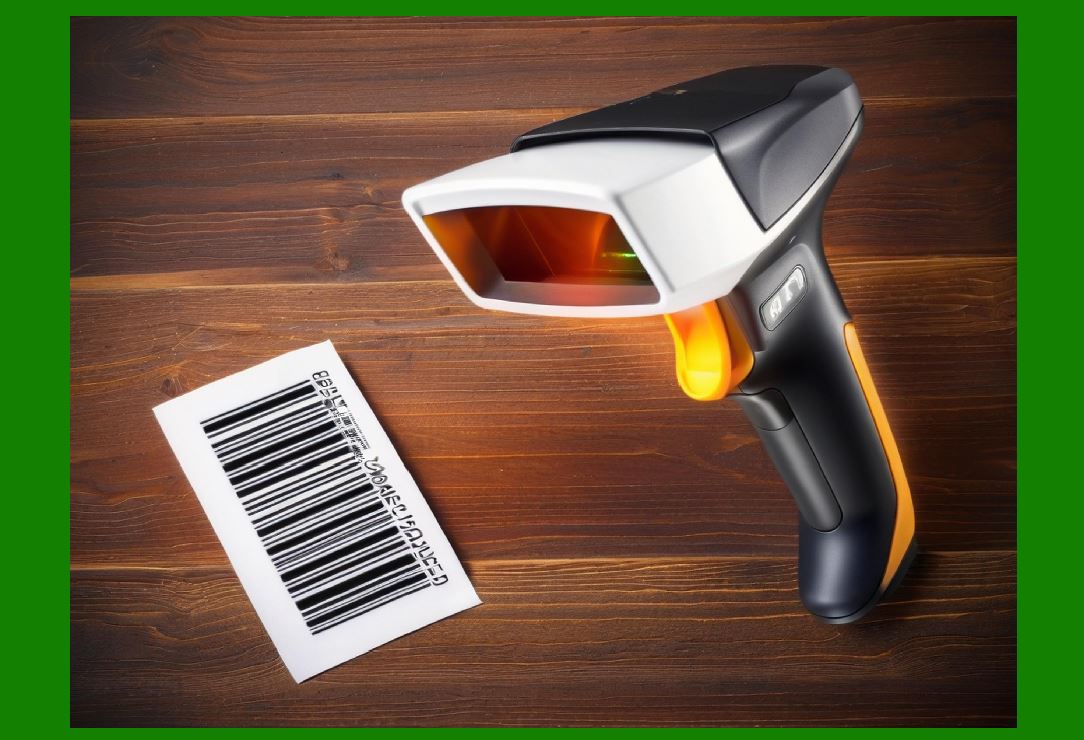
A CCD scanner works by flooding the barcode with light from an array of LEDs, then capturing the reflected light with a linear sensor. The sensor converts the optical pattern into an electrical signal, which is then digitized and decoded. During the brief moment of capture, the LEDs must be driven at sufficient brightness to overcome ambient light and produce a clean signal. The sensor and its supporting electronics must be active. The decoder must process the resulting waveform. |
All of this happens in a fraction of a second, but the current draw during that fraction is substantial compared to a wand. Typical CCD scan modules draw tens to over a hundred milliamperes during operation, with standby currents that can be reduced to a few milliamperes or even microamperes when the device is idle . The key phrase is 'during scan.' A CCD scanner that is not scanning can be remarkably frugal. The challenge is that in many applications, the scanner is scanning frequently, and the cumulative energy budget adds up. |
|
3.1 Retail Point of Sale: The Duty Cycle Problem |
At a busy checkout lane, the CCD scanner's power draw is less about raw consumption and more about how often the illumination fires. |
A cashier at a supermarket might scan several hundred items per hour during peak periods. Each scan triggers the LED illumination for perhaps a few tens of milliseconds. The scanner spends most of its time waiting, but the waiting periods are short. Over an eight-hour shift, the cumulative illumination time, sensor activity, and decoding effort translate into a meaningful energy expenditure. This is why retail-grade CCD scanners often incorporate sophisticated power management: they dim or extinguish the illumination when no barcode is present, they enter low-power states between scans, and they may use motion detection or object detection to wake only when an item is presented. |
The power advantage of CCD over laser in this environment is not necessarily dramatic in terms of peak draw. A CCD scanner might consume several hundred milliwatts during active scanning, while a laser scanner consumes over a watt. But the CCD scanner's ability to enter deep sleep between scans, and its lack of a continuously spinning motor, gives it an edge in average power consumption over a shift. For a cordless handheld scanner at a retail store, that edge translates directly into battery life. A CCD-based cordless scanner might last a full shift on a charge, whereas a laser-based equivalent might require a mid-shift battery swap or a larger, heavier battery pack . |

|
3.2 Healthcare: Medication Administration and Patient Identification |
In hospitals, CCD scanners balance the need for reliable reading with the imperative to minimize electrical infrastructure in patient care areas. |
A nurse administering medication scans the patient's wristband and the medication package at the bedside. The scanner is typically a cordless handheld device, often attached to a cart or worn on a lanyard. Battery life is critical because a dead scanner during a medication round is a patient safety issue, not just an inconvenience. The CCD scanner's moderate power draw, combined with aggressive sleep management, allows for a device that can operate through a full shift without recharging. |
The illumination from the CCD's LEDs also serves a secondary purpose in healthcare: it provides a visible indication that the scan is occurring, which can be reassuring to patients and helps the nurse confirm that the device is aimed correctly. The absence of a laser beam is sometimes preferred in clinical settings, where a visible red line dancing across a patient's arm or bedding might be perceived as less reassuring than a soft, diffuse light . |
The power consumption of the CCD scanner in this context is a manageable middle ground. It is high enough to require thoughtful battery design but low enough that a reasonably sized battery can support a full shift of intermittent scanning. The device does not need the bulky battery that a laser scanner would demand, nor does it impose the user-motion requirement of a wand. |

|
3.3 Light Industrial and Office Data Entry |
In back-office and light industrial settings, CCD scanners occupy a sweet spot between cost, capability, and electrical practicality. |
Consider a shipping clerk scanning outgoing parcels at a packing station. The scanner is stationary or handheld, connected to a PC. The volume is moderate: perhaps a few hundred parcels per day. A CCD scanner can handle this workload with ease, drawing power from the USB connection without any concern about battery life. The absence of a motor means the device is silent and has no wear components that degrade over time. The illumination is brief and directed, so there is no eye-safety concern and no need for the laser warning labels that accompany laser-based devices. |
The hundreds-of-milliwatts figure during scan is well within the USB power budget, and the scanner's ability to drop to a low-power state between scans keeps the average draw modest. For organizations deploying dozens of scanning stations, the aggregate power consumption is negligible compared to the computers themselves. The CCD scanner's power profile is simply not a constraint in this application. It is a mature, well-understood component that does its job without drawing attention to its electrical demands . |

|
4. The Laser Scanner: Over a Watt and the Price of Speed and Range |
The laser scanner's power consumption is dominated by two components that have no equivalent in wand or CCD designs: the laser diode and the scanning motor. |
A laser scanner generates a focused beam of coherent light and sweeps it across the barcode using a mirror mounted on a rotating polygon or an oscillating mechanism. The reflected light is detected by a photodiode, and the timing of the returns encodes the bar and space pattern. The motor must spin continuously or oscillate rapidly during operation. The laser diode must be driven at a current sufficient to produce a readable return signal. Neither of these loads can be made arbitrarily small without compromising the scanner's core function. |
A typical laser scan engine consumes on the order of one watt or more during active scanning. Some high-performance industrial models draw more. The motor alone can account for a significant fraction of that, especially in older designs where the polygon spins continuously regardless of whether a barcode is present. Modern laser engines often spin down the motor between scans or use duty-cycle control to reduce average power, but the peak and active-scan consumption remains high compared to CCD and wand alternatives. |
This has profound implications for device design. A cordless laser scanner needs a substantially larger battery than a comparable CCD device. It generates more heat, which must be managed through the housing design. The motor produces audible noise, which may be undesirable in quiet environments. The laser itself requires safety classification and labeling, adding regulatory overhead. None of these are disqualifying, but they are real costs that must be justified by the laser's advantages in range, speed, and depth of field. |

|
4.1 Warehousing and Distribution Centers: Throughput Justifies the Watts |
In a high-volume distribution center, the laser scanner's power draw is a rounding error compared to the value of scan speed and range. |
A warehouse picker scanning cases on a conveyor or items on a high rack needs a scanner that can read a barcode from a distance, often at an angle, and do so quickly. A laser scanner excels at this. Its focused beam maintains a small spot size over a long working range, allowing the user to scan a label on a pallet several feet away without climbing or reaching. The scan rate is high, and the depth of field is generous. |
The power consumption of the laser engine, while high in absolute terms, is irrelevant in a forklift-mounted or vehicle-mounted installation where the scanner draws from the vehicle's electrical system. Even in handheld cordless applications, the warehouse environment often provides opportunities for battery swapping or docking between shifts. A picker who scans thousands of items per shift values the laser's speed and range far more than the weight of a larger battery. The one-watt draw during scanning is a cost of doing business, and the business case for that cost is measured in labor productivity rather than milliwatt-hours . |
The motor noise, which might be objectionable in a library or a hospital, is inconsequential in a distribution center where conveyors, forklifts, and HVAC systems already fill the acoustic environment. The heat generated by the laser engine is dissipated into the same ambient air that surrounds the industrial equipment. The power profile of the laser scanner is matched to an environment where power is abundant and the demands on the scanner are extreme. |

|
4.2 Manufacturing and Production Lines: Reliability Over Efficiency |
On a factory floor, a scanner that fails to read a barcode stops the line; the energy cost of ensuring a first-read success is trivial by comparison. |
Manufacturing environments present barcodes on parts, subassemblies, and finished goods in conditions that range from pristine to atrocious. Labels may be oily, dusty, partially obscured, or printed on curved or reflective surfaces. The scanner must read them reliably, often at speed, often from a fixed position as the product moves past on a conveyor. A laser scanner's ability to maintain focus over a long range and to read through some level of contamination makes it a common choice for these applications. |
The power consumption of the laser engine, whether over one watt during scan or somewhat less with duty cycling, is a secondary concern. The scanner is typically mounted in a fixed position with a wired power connection. Even if the installation involves hundreds of scanners across a plant, the aggregate power draw is small compared to the machinery they support. The calculation is straightforward: a production line that costs thousands of dollars per hour to operate cannot afford the downtime caused by a scanner that misses a code. The laser scanner's power draw is the price of the reliability that keeps the line moving. |
The motor in the laser scanner does introduce a wear item. Over years of continuous operation, the bearings can degrade, and the motor may eventually fail. This is a maintenance consideration, not a power consideration, but it is part of the same architectural trade-off. The CCD scanner, with no moving parts, has a longer theoretical service life in a fixed-mount application. But in many manufacturing settings, the laser's range and speed advantages outweigh the maintenance interval . |

|
4.3 Outdoor and Harsh-Environment Logistics |
In outdoor yard management, port operations, and cold-storage logistics, the laser scanner's power profile is compatible with the harsh conditions and the available power infrastructure. |
A logistics worker in a rail yard or a port scanning containers and railcars needs a scanner that can handle distance, glare, and temperature extremes. The laser scanner's coherent beam can cut through some ambient light conditions that would overwhelm a CCD's LED illumination. Its long range allows scanning of container placards from ground level without climbing. The power consumption is high, but the device is often mounted on a vehicle or used with a high-capacity battery pack that is sized for the environment rather than for pocketability. |
In cold storage, where temperatures may be well below freezing, battery performance degrades. A laser scanner's higher power draw might seem like a disadvantage in this context, but the device is typically designed with heated optics or other accommodations for the cold. The battery is often a large pack carried in a warm location or connected to the vehicle's power. The one-watt scan engine is not the limiting factor in the power budget; the environmental protection systems are. |
The key insight here is that the laser scanner's power consumption is not inherently problematic. It is problematic only when it is mismatched to the application. In an environment where power is available and the scanning demands are severe, the laser's draw is a reasonable and well-understood cost. |

|
5. The Comparative Landscape in Practice: Matching Power to Purpose |
The power hierarchy of wand, CCD, and laser is not a ranking of quality but a map of suitability. |
When an organization selects a scanner, the decision should begin with the workflow rather than the datasheet. How many scans per shiftFrom what distanceIn what lighting conditionsIs the device cordlessHow often can batteries be changedWhat is the cost of a misreadThe answers to these questions point toward one architecture and away from others, and the power consumption follows as a consequence rather than a driver. |
A library that scans a few hundred books per day does not need a laser scanner, and the wand's tens of milliwatts are perfectly adequate. A hospital that scans wristbands and medication packages needs a cordless device with reliable reads and manageable battery life; the CCD's hundreds of milliwatts strike the right balance. A distribution center that scans thousands of cases per shift from varying distances needs the laser's range and speed, and the one-watt draw is absorbed into the operational budget without a second thought. |
The mistake that organizations sometimes make is to treat power consumption as a specification to be minimized without regard to context. A purchasing manager who selects the lowest-power device for a warehouse application may save on batteries but pay in slower scanning, more frequent re-scans, and frustrated workers. A facility manager who insists on a laser scanner for a quiet clinic reception desk may find that the motor noise and the higher battery weight are unnecessary burdens. The right question is not 'which scanner uses the least power' but 'which scanner's power profile matches the demands of the task' |

|
6. Detailed Summary: The Power Spectrum and Its Practical Consequences |
The following summary consolidates the relationships between scanner architecture, power consumption, and application suitability explored throughout this article. |
The wand scanner, operating in the tens of milliwatts, represents the minimum-power solution for barcode reading. Its efficiency derives from the absence of active illumination and moving parts. The user supplies the scan motion. This architecture is best suited to low-volume, contact-based scanning tasks where portability and battery longevity matter more than speed or standoff distance. Libraries, retail price checks, field data collection with minimal power budgets, and light office use are its natural habitats. The trade-off is user effort and the need for deliberate, controlled motion across each label. |
The CCD scanner, consuming hundreds of milliwatts during active scanning, occupies the middle tier. It replaces the wand's user-motion requirement with electronic capture and LED illumination. This makes it faster and more ergonomic for repetitive scanning, at the cost of higher peak power draw. Its ability to enter low-power standby states between scans makes it viable for cordless operation in retail, healthcare, and light industrial settings. It is the general-purpose workhorse of the barcode world, capable of handling moderate volumes with good reliability and reasonable battery life. Its lack of moving parts gives it a durability advantage over laser scanners in applications where the device is subject to vibration or where maintenance access is difficult. |
The laser scanner, often exceeding one watt during scanning, is the highest-power architecture. The laser diode and the scanning motor are the primary loads. This power profile is justified in applications where range, speed, and first-read reliability under adverse conditions are paramount. Warehousing, distribution, manufacturing lines, and outdoor logistics are the domains where the laser scanner's capabilities outweigh its energy cost. The device is typically deployed in environments where power is available or where battery capacity is not constrained by pocketability. The motor introduces a wear mechanism and audible noise, and the laser requires safety consideration, but these are accepted as part of the package that delivers superior scanning performance over distance and under challenging conditions. |
Across all three architectures, the practical consequence of power consumption is felt most acutely in cordless operation. A cordless wand can run for weeks on a small battery. A cordless CCD scanner can run for a shift or more on a moderate battery. A cordless laser scanner requires a larger battery and disciplined charging workflows. The design of the overall device, including battery size, charging infrastructure, and power management firmware, must be built around the scan engine's consumption profile. When the match between engine and application is correct, the power consumption fades into the background as an engineering detail. When the match is wrong, it becomes a visible and persistent operational problem. |

|
The final lesson is one of contextual engineering. The numbers matter, but they matter in relation to the task. A milliwatt saved in a library is a convenience. A watt spent in a warehouse is an investment. The barcode scanner, for all its apparent simplicity, embodies a design conversation about energy, ergonomics, and reliability that continues to evolve as new architectures and power management techniques emerge. |
 cs@easiersoft.com