Future Developments of Barcode Scan Technology |
1. Introduction |
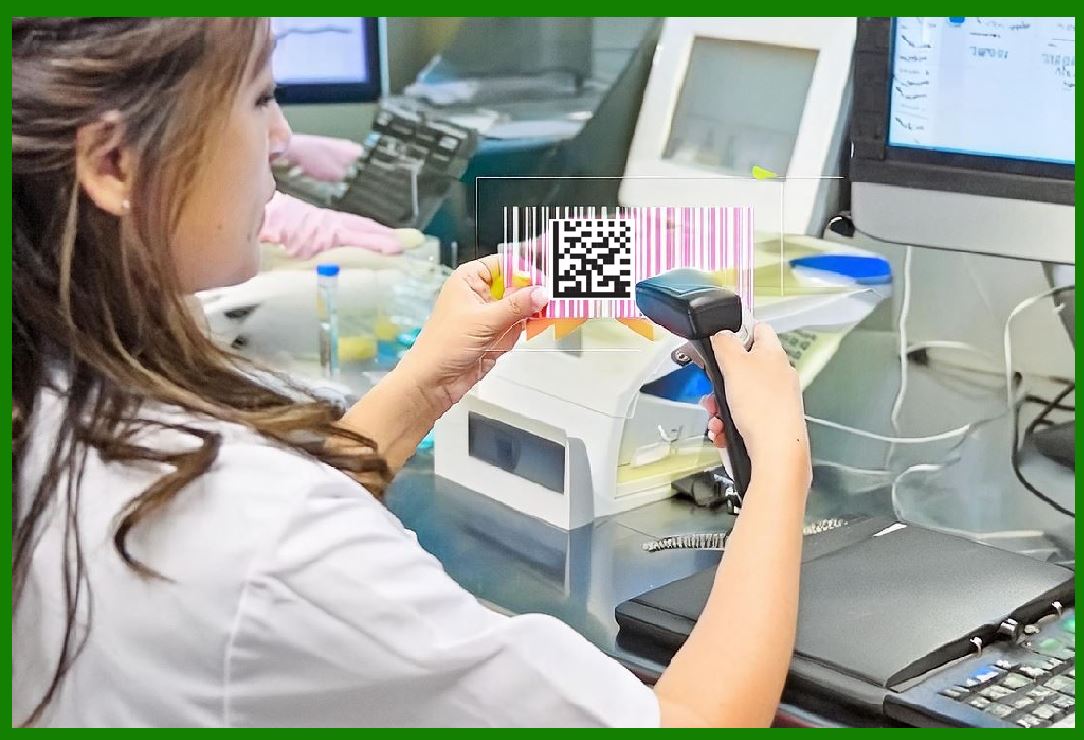
The field of barcode scanning technology is poised for significant evolution, driven by advancements in scanning capabilities, the integration of emerging technologies, and improvements in error correction techniques. This comprehensive analysis delves into the anticipated developments in barcode scanning technology, highlighting the key areas where progress is expected and the impact these advancements could have on various industries. |
|
2. Enhanced Scanning Capabilities |
2.1. Higher Resolution and Speed |
One of the most significant developments in barcode scanning technology is the improvement in scanning resolution and speed. Future scanners are expected to feature higher resolution sensors that can capture more detailed information from barcodes, even those with high-density or complex encoding schemes. This increased resolution will enable scanners to accurately read smaller barcodes and those printed on challenging surfaces, such as curved or reflective materials. |
In addition to higher resolution, scanning speed is anticipated to improve. Advances in processing power and algorithms will enable scanners to decode barcodes faster, reducing the time required for inventory management, checkout processes, and other applications. This enhancement will be particularly beneficial in high-volume environments, such as retail and logistics, where quick and accurate scanning is crucial. |
2.2. Multi-Dimensional Scanning |
Future barcode scanners will likely incorporate multi-dimensional scanning capabilities. Current scanners primarily read 1D and 2D barcodes, but advancements in scanning technology may allow for the recognition of 3D barcodes and other complex data formats. Multi-dimensional scanning can improve data density and error resilience, making it possible to encode more information in a single barcode. |
2.3. Improved Low-Light and Distance Performance |
Future scanners are expected to have improved performance in low-light conditions and when scanning from a distance. Enhanced optical sensors and advanced image processing techniques will enable scanners to capture and decode barcodes in various environmental conditions, including dimly lit areas or when the barcode is at an angle. This will improve the versatility and reliability of barcode scanning across different use cases. |

|
3. Integration with Emerging Technologies |
3.1. Augmented Reality (AR) |
The integration of augmented reality (AR) with barcode scanning technology represents a significant leap forward. AR technology can overlay digital information onto the physical world, providing users with contextual data about the scanned barcode. For example, an AR-enabled scanner could display product information, reviews, or usage instructions directly on a user's device screen as they scan an item. |
This integration can enhance user experiences in retail, logistics, and manufacturing by providing real-time, relevant information. In a retail setting, AR can offer detailed product descriptions and promotions, while in logistics, it can provide information about the status and location of packages. |
3.2. Internet of Things (IoT) |
The convergence of barcode scanning technology with the Internet of Things (IoT) will enable seamless data exchange and automation. IoT devices equipped with barcode scanners can communicate with other connected devices and systems to automate processes such as inventory management, asset tracking, and supply chain monitoring. |
For example, an IoT-enabled barcode scanner in a warehouse could automatically update inventory levels in a central database as items are scanned, triggering reordering processes or generating real-time reports. This integration will streamline operations and improve efficiency across various industries. |
3.3. Artificial Intelligence (AI) and Machine Learning |
Artificial intelligence (AI) and machine learning are expected to play a crucial role in the future of barcode scanning technology. AI algorithms can enhance the accuracy and speed of barcode recognition by learning from large datasets and adapting to new patterns and variations in barcodes. |
Machine learning models can be trained to recognize and decode barcodes with varying levels of quality, including those that are partially damaged or distorted. This capability will improve the robustness of barcode scanning systems and reduce the likelihood of errors, particularly in challenging environments. |
3.4. Blockchain Integration |
Blockchain technology can be integrated with barcode scanning to enhance data security and traceability. By recording barcode transactions on a blockchain, businesses can create a tamper-proof record of the movement and handling of products throughout the supply chain. |
This integration can improve transparency and accountability in industries such as pharmaceuticals and food safety, where tracking the provenance and authenticity of products is critical. Blockchain-based barcode systems can provide a secure and verifiable history of each item, helping to prevent fraud and ensure compliance with regulatory requirements. |

|
4. Improved Error Correction Techniques |
4.1. Advanced Error Detection and Correction Algorithms |
Future developments in barcode scanning technology will likely include advanced error detection and correction algorithms. These algorithms will be designed to identify and correct errors that occur during the scanning process, such as misreads or data corruption. |
Enhanced error correction techniques will improve the reliability of barcode scanning, especially in environments where barcodes may be damaged, obscured, or distorted. For example, new algorithms may use redundancy and error-correcting codes to recover missing or incorrect data, ensuring accurate and complete information is extracted from each scan. |
4.2. Redundancy and Fault Tolerance |
Incorporating redundancy and fault tolerance into barcode scanning systems can further enhance error resilience. Redundancy involves encoding additional information within the barcode to facilitate error recovery. Fault tolerance refers to the system's ability to continue functioning correctly even when some components or data are compromised. |
By implementing these techniques, barcode scanning technology can become more robust and less susceptible to errors caused by physical damage, poor printing quality, or other factors. This will be particularly valuable in critical applications where data integrity is essential, such as medical and financial sectors. |
4.3. Adaptive Error Correction |
Adaptive error correction techniques will allow barcode scanning systems to adjust their error correction strategies based on the specific characteristics of the barcode being scanned. For example, the system may dynamically select different error correction algorithms depending on factors such as barcode density, quality, and environmental conditions. |
This adaptability will improve the accuracy and efficiency of barcode scanning, making it possible to handle a wider range of barcode types and conditions. It will also reduce the need for manual intervention and minimize the impact of errors on the overall scanning process. |

|
5. Expanding Applications of Barcode Technology |
5.1. Healthcare and Pharmaceuticals |
The future of barcode scanning technology holds promise for expanding its applications in healthcare and pharmaceuticals. Enhanced scanning capabilities and improved error correction will contribute to more accurate and efficient tracking of medical supplies, medications, and patient information. |
Barcodes can be used to monitor the distribution and usage of pharmaceuticals, ensuring that drugs are correctly administered and reducing the risk of counterfeit products. In healthcare settings, barcode scanning can facilitate patient identification, medication management, and the tracking of medical equipment. |
5.2. Retail and E-Commerce |
In retail and e-commerce, advancements in barcode scanning technology will improve inventory management, checkout processes, and customer experiences. Enhanced scanning speed and accuracy will streamline operations, reduce wait times, and minimize errors at checkout. |
The integration of barcode scanning with AR and IoT will create new opportunities for personalized shopping experiences and automated inventory management. For example, AR-enabled barcode scanners can provide customers with product recommendations and reviews, while IoT-connected scanners can automate stock replenishment and supply chain management. |
5.3. Logistics and Supply Chain |
Barcode scanning technology will continue to play a critical role in logistics and supply chain management. Future developments will enhance the ability to track and monitor shipments, manage inventory, and optimize distribution processes. |
Advanced scanning capabilities and IoT integration will enable real-time visibility into the movement and status of goods, improving efficiency and reducing the risk of errors. Blockchain technology can also enhance traceability and transparency, providing a secure record of each item's journey through the supply chain. |
5.4. Manufacturing and Industrial Applications |
In manufacturing and industrial settings, barcode scanning technology will be used to improve quality control, asset management, and production efficiency. Enhanced scanning capabilities will facilitate the tracking of components and products throughout the production process, ensuring that each item meets quality standards and is correctly accounted for. |
Barcode technology will also support the automation of manufacturing processes, enabling real-time monitoring and control of equipment and inventory. The integration of AI and machine learning will further enhance the ability to detect defects, optimize production schedules, and improve overall operational performance. |

|
6. Conclusion |
The future of barcode scanning technology is marked by exciting advancements that will enhance scanning capabilities, integrate with emerging technologies, and improve error correction techniques. As barcode scanning continues to evolve, it will enable more efficient and accurate data capture across various industries, driving innovation and improving operational efficiency. |
Ongoing research and development efforts will address current limitations and expand the applications of barcode technology, creating new opportunities for businesses and consumers alike. With advancements in scanning resolution, speed, multi-dimensional capabilities, and the integration of technologies such as AR, IoT, AI, and blockchain, the future of barcode scanning holds great promise for transforming how we interact with and manage information. |

|
 cs@easiersoft.com