1. Overview of Ring Scanners |
1.1 Introduction to Ring Scanners |
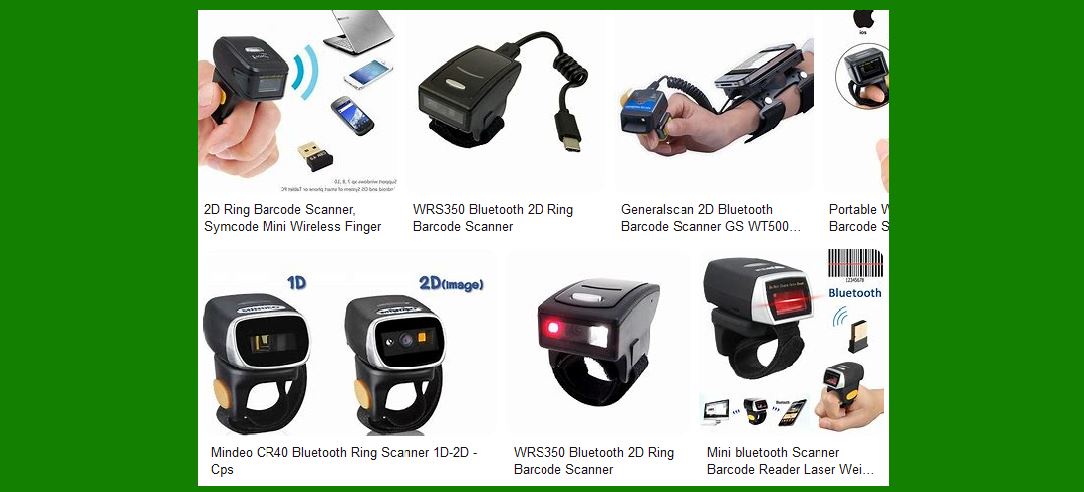
Ring scanners are a type of wearable barcode scanner designed to fit on a user's finger, allowing for hands-free operation. These devices are typically used in environments where workers need to scan items frequently while keeping their hands free for other tasks. The design of ring scanners makes them particularly useful in industries such as warehousing, logistics, retail, and manufacturing. |
1.2 Design and Components |
A typical ring scanner consists of a small scanning module attached to a ring that fits around the finger. The scanning module is connected to a base unit, which can be worn on the wrist or clipped to a belt. The base unit houses the battery and communication components, such as Bluetooth or Wi-Fi, which enable the scanner to transmit data to a host device like a computer or mobile terminal. |
1.3 Types of Ring Scanners |
There are various types of ring scanners available, each designed to meet specific needs. Some common types include: |
1D Ring Scanners: These scanners are designed to read linear barcodes, which are the most common type of barcode used in retail and logistics. 2D Ring Scanners: These scanners can read both linear and matrix barcodes, such as QR codes and Data Matrix codes, making them more versatile. Rugged Ring Scanners: Built to withstand harsh environments, these scanners are often used in industrial settings where durability is crucial. |
1.4 Technology and Functionality |
Ring scanners use laser or imaging technology to capture barcode data. Laser scanners emit a laser beam that reflects off the barcode, while imaging scanners capture an image of the barcode and decode it using software. The choice between laser and imaging technology depends on the specific application and the types of barcodes being scanned. |
|
2. Advantages of Ring Scanners |
2.1 Hands-Free Operation |
One of the primary advantages of ring scanners is their hands-free operation. By wearing the scanner on their finger, workers can scan items without having to pick up and put down a handheld scanner. This increases efficiency and reduces the risk of dropping or misplacing the scanner. |
2.2 Increased Productivity |
Ring scanners can significantly boost productivity in environments where speed and accuracy are critical. Workers can quickly scan items while performing other tasks, such as picking, packing, or sorting. This multitasking capability can lead to faster processing times and higher throughput. |
2.3 Ergonomic Design |
The ergonomic design of ring scanners helps reduce strain on workers' hands and wrists. Traditional handheld scanners can be cumbersome and tiring to use for extended periods, but ring scanners distribute the weight more evenly and allow for more natural hand movements. |
2.4 Enhanced Mobility |
Ring scanners offer greater mobility compared to traditional handheld scanners. Workers can move freely around the workspace without being tethered to a fixed scanning station. This is particularly beneficial in large warehouses or distribution centers where workers need to cover significant distances. |
2.5 Improved Accuracy |
By keeping both hands free, workers can handle items more securely and accurately. This reduces the likelihood of errors during the scanning process, such as misreads or missed scans. The ability to scan items quickly and accurately can also improve inventory management and order fulfillment processes. |
2.6 Integration with Other Systems |
Many ring scanners are designed to integrate seamlessly with other systems, such as warehouse management systems (WMS) or enterprise resource planning (ERP) systems. This integration allows for real-time data capture and updates, improving overall operational efficiency. |

|
3. Disadvantages of Ring Scanners |
3.1 Limited Battery Life |
One of the main disadvantages of ring scanners is their limited battery life. Because these devices are small and lightweight, they have smaller batteries compared to traditional handheld scanners. This can result in shorter operating times and the need for frequent recharging or battery replacement. |
3.2 Comfort and Fit |
While ring scanners are designed to be ergonomic, they may not be comfortable for all users. The fit of the ring can vary depending on the size and shape of the user's finger, and some users may find the device cumbersome or restrictive. Ensuring a proper fit is essential to maximize comfort and usability. |
3.3 Durability Concerns |
Although many ring scanners are built to be rugged, they may still be susceptible to damage from drops, impacts, or exposure to harsh environments. The small size of the scanning module can make it more vulnerable to wear and tear, and repairs or replacements can be costly. |
3.4 Limited Range |
The range of ring scanners can be limited by their communication technology. For example, Bluetooth-enabled ring scanners may have a shorter range compared to Wi-Fi-enabled devices. This can restrict the distance workers can move from the base unit or host device, potentially limiting their mobility. |
3.5 Compatibility Issues |
Ring scanners may not be compatible with all types of barcodes or scanning applications. For example, some models may struggle to read damaged or poorly printed barcodes, or they may not support certain barcode symbologies. Ensuring compatibility with the specific barcodes and applications used in the workplace is crucial. |
3.6 Cost Considerations |
Ring scanners can be more expensive than traditional handheld scanners, particularly for advanced models with additional features. The initial investment, along with ongoing maintenance and replacement costs, can be a significant consideration for businesses. |

|
4. Applications of Ring Scanners |
4.1 Warehousing and Logistics |
Ring scanners are widely used in warehousing and logistics environments for tasks such as picking, packing, and inventory management. Their hands-free operation allows workers to handle items more efficiently and accurately, improving overall productivity and reducing errors. |
4.2 Retail |
In retail settings, ring scanners are used for tasks such as stock replenishment, price checking, and point-of-sale transactions. The ability to scan items quickly and accurately helps streamline operations and enhance the customer experience. |
4.3 Manufacturing |
In manufacturing environments, ring scanners are used for tasks such as assembly line operations, quality control, and parts tracking. Their rugged design and hands-free operation make them ideal for use in demanding industrial settings. |
4.4 Healthcare |
Ring scanners are also used in healthcare settings for tasks such as patient identification, medication administration, and inventory management. Their hands-free operation allows healthcare workers to focus on patient care while ensuring accurate data capture. |
4.5 Field Service |
Field service technicians use ring scanners for tasks such as equipment maintenance, asset tracking, and inventory management. The mobility and hands-free operation of ring scanners make them ideal for use in the field, where technicians need to move freely and handle tools and equipment. |

|
5. Technical Specifications |
5.1 Scanning Technology |
Ring scanners use either laser or imaging technology to capture barcode data. Laser scanners are typically faster and more accurate for reading linear barcodes, while imaging scanners are more versatile and can read both linear and matrix barcodes. |
5.2 Communication Technology |
Ring scanners use various communication technologies to transmit data to a host device. Common options include Bluetooth, Wi-Fi, and USB. The choice of communication technology depends on the specific application and the range and speed requirements. |
5.3 Battery Life |
The battery life of ring scanners varies depending on the model and usage. Some models offer battery life of up to 10 hours, while others may need to be recharged more frequently. Battery life can be extended by using power-saving features and optimizing scanning settings. |
5.4 Durability |
Many ring scanners are designed to be rugged and durable, with features such as impact resistance, water resistance, and dust protection. These features make them suitable for use in harsh environments and help extend the lifespan of the device. |
5.5 Ergonomics |
The ergonomic design of ring scanners is crucial for ensuring user comfort and reducing strain. Features such as adjustable straps, lightweight materials, and balanced weight distribution help improve the overall user experience. |
5.6 Compatibility |
Ring scanners are compatible with various barcode symbologies, including 1D and 2D barcodes. Ensuring compatibility with the specific barcodes used in the workplace is essential for maximizing the effectiveness of the scanner. |

|
6. Future Trends and Developments |
6.1 Advancements in Scanning Technology |
Future developments in scanning technology are likely to focus on improving speed, accuracy, and versatility. Advances in imaging technology, for example, could enable ring scanners to read a wider range of barcodes and capture data more quickly and accurately. |
6.2 Integration with IoT and AI |
The integration of ring scanners with Internet of Things (IoT) and artificial intelligence (AI) technologies could open up new possibilities for data capture and analysis. For example, AI-powered ring scanners could automatically identify and correct errors, while IoT-enabled devices could provide real-time data on inventory levels and equipment status. |
6.3 Enhanced Ergonomics and Usability |
Future ring scanners are likely to feature enhanced ergonomic designs and improved usability. This could include features such as adjustable straps, lightweight materials, and intuitive user interfaces, making the devices more comfortable and easier to use. |
6.4 Increased Durability and Battery Life |
Advances in materials and battery technology could lead to ring scanners that are more durable and have longer battery life. This would reduce the need for frequent recharging and replacement, making the devices more cost-effective and reliable. |
6.5 Expanded Applications |
As ring scanners become more advanced and versatile, their applications are likely to expand into new industries and use cases. For example, ring scanners could be used in agriculture for crop tracking, in construction for materials management, or in hospitality for guest check-in and service. |

|
7. Conclusion |
Ring scanners offer a range of benefits, including hands-free operation, increased Work efficiency. |
 cs@easiersoft.com