ZXing (Zebra Crossing) Comprehensive Technical Analysis |
Part 1 of 17 |
1. Origins, Naming, and Historical Background of ZXing |
1.1 The meaning of Zebra Crossing* |
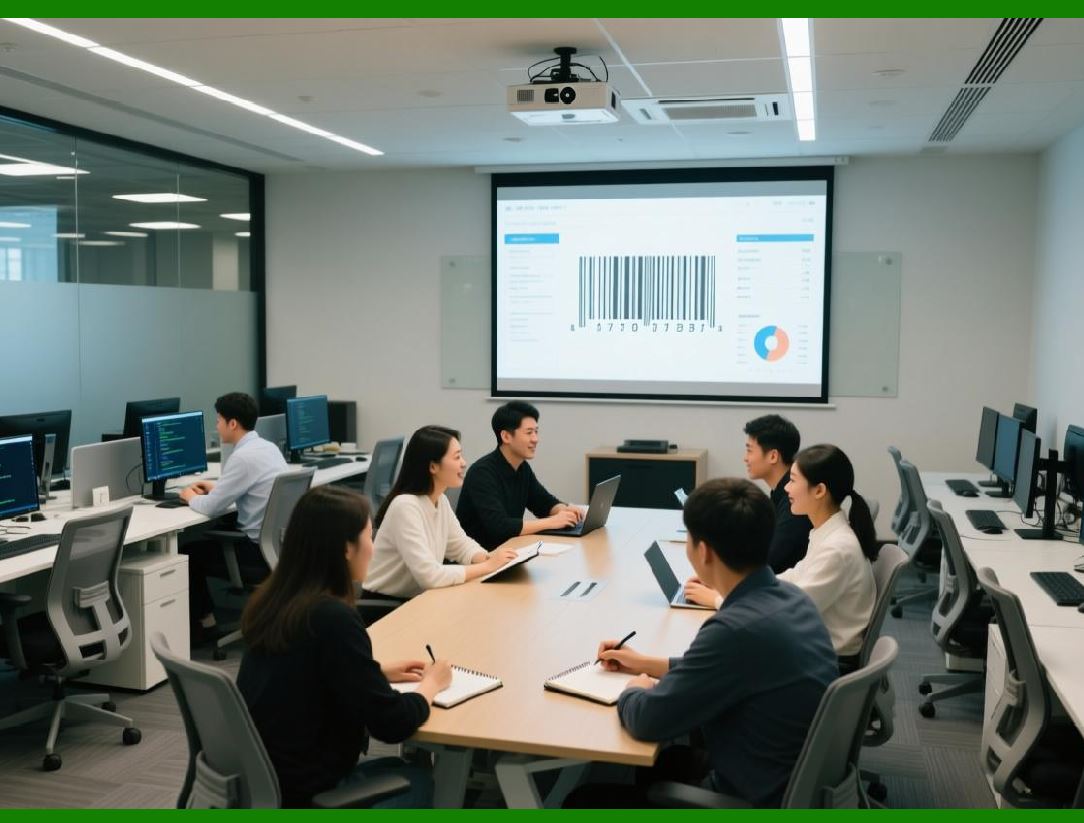
The name ZXing is short for Zebra Crossing, a metaphor derived from the alternating black-and-white stripes commonly seen in barcodes. The term Zebra crossingis also widely known in the United Kingdom as a pedestrian crossing marked by bold black and white stripes, making it an intuitive and memorable analogy for machine-readable optical patterns. |
This naming choice reflects the library original focus: |
* Processing high-contrast, striped visual patterns |
* Decoding information from optical symbols |
* Emphasizing simplicity and recognizability |
From its earliest stages, the name helped communicate the project purpose without technical jargon, contributing to its wide adoption and recognition among developers. |
|
1.2 Initial creation and motivation |
ZXing was originally created in the mid-2000s, during a period when camera-equipped mobile phones were becoming increasingly common but software ecosystems lacked robust barcode decoding solutions. |
At the time: |
* QR Code adoption was growing rapidly in Japan |
* Java ME (J2ME) was widely used for mobile applications |
* Commercial barcode SDKs were expensive, closed-source, and platform-locked |
The original motivation behind ZXing was to create: |
1. A free and open-source barcode decoding engine |
2. A solution that could run on resource-constrained devices |
3. A library that was portable across platforms and programming languages |
The project began as a Java-based implementation, leveraging Java portability and strong image-processing capabilities. |

|
1.3 Early focus on QR Code decoding |
ZXing early development strongly emphasized QR Code recognition, reflecting real-world demand at the time. QR Codes offered several advantages that made them ideal for early mobile scanning applications: |
* High data capacity |
* Strong error correction |
* Omni-directional scanning |
* Suitability for camera-based decoding |
Early ZXing releases focused on: |
* Locating QR Code finder patterns |
* Correcting perspective distortion |
* Applying Reed-Solomon error correction |
* Efficient binarization of grayscale images |
These early design decisions would later influence ZXing overall architecture and extensibility. |

|
1.4 Transition from experimental project to production library |
What began as an experimental Java project quickly evolved into a production-grade barcode library due to: |
* Rapid community adoption |
* Contributions from developers worldwide |
* Integration into early Android applications |
* Inclusion in academic and commercial projects |
As adoption increased, the project scope expanded to include: |
* Additional 2D symbologies |
* Linear (1D) barcode formats |
* Encoding (generation) capabilities |
* Performance optimizations for real-time scanning |
This transition marked ZXing evolution from a single-purpose decoder into a general-purpose barcode processing framework. |

|
1.5 Open-source philosophy and licensing |
ZXing has always been released under a permissive open-source license, allowing: |
* Commercial use |
* Modification |
* Redistribution |
* Integration into proprietary software |
This licensing approach played a major role in: |
* Encouraging widespread adoption |
* Enabling corporate use without legal friction |
* Facilitating academic research and experimentation |
* Supporting long-term sustainability through community contributions |
Unlike many barcode SDKs that impose per-device or per-scan fees, ZXing licensing model eliminated cost barriers entirely. |
|
1.6 Growth of a global developer community |
As ZXing matured, it attracted a diverse and international contributor base, including: |
* Mobile application developers |
* Embedded systems engineers |
* Computer vision researchers |
* Open-source enthusiasts |
* Enterprise software teams |
Community involvement led to: |
1. New barcode format implementations |
2. Language ports beyond Java |
3. Performance improvements |
4. Bug fixes for edge-case symbols |
5. Documentation and sample applications |
This community-driven development model ensured that ZXing remained relevant, adaptable, and technically robust over time. |

|
1.7 Position in the barcode software ecosystem |
By the early 2010s, ZXing had established itself as: |
* One of the most widely used open-source barcode libraries |
* A de-facto standard for QR Code scanning on Android |
* A reference implementation for academic studies |
* A foundation for many commercial scanning applications |
Its influence extended beyond direct usage: |
* Other libraries borrowed architectural concepts |
* ZXing code was studied in computer vision coursework |
* Developers used it as a baseline for performance comparison |
ZXing success demonstrated that open-source barcode software could compete with and outperform commercial alternatives. |

|
1.8 Long-term significance |
ZXing long-term importance lies not only in its codebase but also in its impact on: |
* Mobile computing adoption of 2D barcodes |
* Democratization of barcode technology |
* Standardization of decoding techniques |
* Cross-platform barcode interoperability |
Even as newer libraries emerge, ZXing remains: |
* Actively referenced |
* Widely deployed |
* Technically relevant |
* Architecturally instructive |

|
1.9 Summary of Part 1 |
In this first part, we established: |
1. The origin and meaning of the ZXing name |
2. The technological environment that led to its creation |
3. Its early focus on QR Code decoding |
4. Its evolution into a general-purpose barcode library |
5. The importance of open-source licensing |
6. The role of the global developer community |
7. ZXing position in the barcode software ecosystem |

|
Next up Part 2 will dive deeply into ZXing overall architecture and core design philosophy, including its modular structure, decoding pipeline, and abstraction layers. |
 cs@easiersoft.com