Design and Print Barcode Labels Using Excel |
Part 6: Advanced Label Standards, EAN/UPC Barcodes, and Compliance in Excel |
1. Introduction to Label Standards and Compliance |
In Part 5, we discussed industrial-scale printing using ZPL and thermal printers. While technical printing is essential, many industries require compliance with global barcode standards, especially for retail and trade. Labels must meet both format specifications and data accuracy requirements. |
This part focuses on: |
1. Understanding global barcode standards (GS1, EAN/UPC) |
2. Implementing EAN/UPC barcodes in Excel |
3. Ensuring compliance with retail and industry standards |
4. Data validation and error prevention |
5. Preparing labels for international trade |

|
2. Overview of Barcode Standards |
2.1 Why Standards Are Important |
Standards ensure: |
1. Scannability across devices |
2. Global interoperability |
3. Accurate inventory and tracking |
4. Compliance with retailers and logistics systems |
2.2 GS1 Organization |
GS1 is a global standardization body responsible for: |
1. Assigning unique company prefixes |
2. Defining barcode specifications |
3. Supporting supply chain efficiency |
2.3 Common Standardized Barcodes |
1. EAN-13 Global retail products |
2. UPC-A North American retail |
3. Code 128 Logistics and inventory |
4. ITF-14 Carton labeling |
5. GS1 DataMatrix Small items, healthcare |

|
3. EAN/UPC Barcodes Explained |
3.1 Structure of EAN-13 |
EAN-13 consists of 13 digits: |
1. Country code (first 2digits) |
2. Manufacturer code |
3. Product code |
4. Check digit |
Example: `6901234567892` |
3.2 Structure of UPC-A |
UPC-A has 12 digits: |
1. Manufacturer code |
2. Product code |
3. Check digit |
3.3 Check Digit Calculation |
Check digit ensures accuracy: |
1. Sum odd-position digits 3 |
2. Sum even-position digits |
3. Add both sums |
4. Find modulo 10 |
5. Subtract from 10 to get check digit |
3.4 Excel Formula for Check Digit |
For EAN-13 in column `A`: |
```id='6n4p6f' |
=MOD(10 - MOD(SUMPRODUCT(MID(A2,{1,3,5,7,9,11},1)*1*1 + MID(A2,{2,4,6,8,10,12},1)*3,10),10) |
``` |
This calculates the 13th digit. |
|
4. Generating EAN/UPC Barcodes in Excel |
4.1 Using Barcode Fonts |
1. Install EAN-13/UPC fonts |
2. Apply to formula-generated strings |
3. Add check digit automatically |
4.2 Formula Example |
For EAN-13: |
```id='2d7q9u' |
='*' & A2 & CalculateCheckDigit(A2) & '*' |
``` |
Note: `*` may be replaced by guard bars depending on font specification. |
4.3 Combining with Text Labels |
Add: |
1. Product name |
2. Price |
3. Batch or serial number |

|
5. Ensuring Retail Compliance |
5.1 GS1 Guidelines for Label Placement |
1. Horizontal placement preferred |
2. Quiet zones: 2mm |
3. No obstruction of bars |
4. Contrast: black bars on white background |
5.2 Minimum Size Requirements |
* EAN-13: 37.29 mm 25.93 mm (standard) |
* UPC-A: 37.29 mm 25.93 mm |
* Can be scaled proportionally for smaller items |
5.3 Barcode Orientation |
* Horizontal scanning is ideal |
* Vertical printing requires proper scaling |

|
6. Data Validation Techniques |
6.1 Avoiding Duplicate Codes |
1. Maintain master product list |
2. Use Excel conditional formatting to flag duplicates |
6.2 Verifying Check Digits |
1. Automated formulas |
2. Cross-check against ERP or GS1 database |
6.3 Handling Errors |
1. Alert system for invalid codes |
2. Conditional formatting for missing data |
3. Prevent printing if validation fails |

|
7. Generating ITF-14 Barcodes for Cartons |
7.1 Purpose of ITF-14 |
* Used on shipping cartons |
* Encodes the Global Trade Item Number (GTIN) |
7.2 Structure |
* 14 digits: 1 digit packaging indicator + 13-digit GTIN |
* Requires check digit calculation |
7.3 Excel Formula |
Same method as EAN-13, with packaging digit prepended. |
7.4 Barcode Font Application |
* Use ITF-14 font |
* Ensure proper size for scanning in logistics |

|
8. Integrating with Inventory Systems |
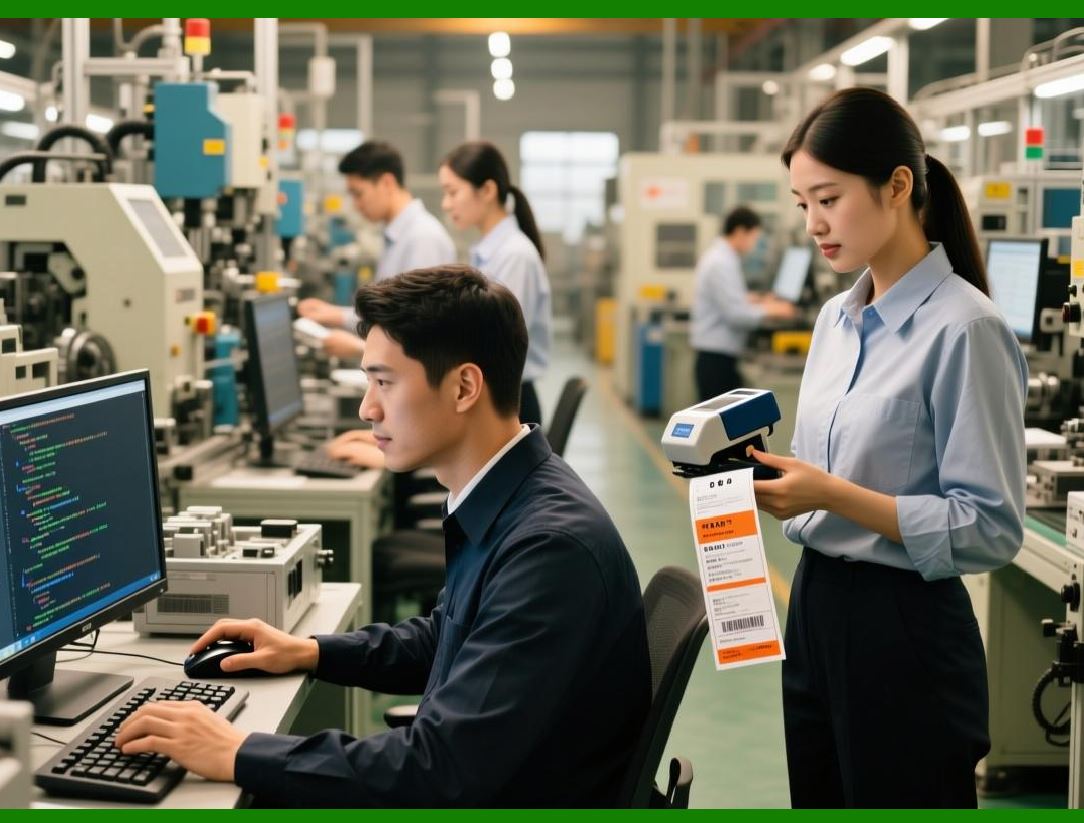
8.1 Data Flow |
1. Excel stores product info |
2. Barcode formulas generate code |
3. Labels printed |
4. Scanned into inventory software |
8.2 Benefits |
1. Faster stock taking |
2. Accurate product tracking |
3. Reduced human error |
|
9. International Trade Considerations |
9.1 Country Codes |
* First 2digits of EAN-13 indicate country of registration, not manufacturing country |
* Must comply with GS1 assignment rules |
9.2 Multi-Language Labels |
* Include human-readable product info |
* Use Unicode fonts if necessary |
* Ensure scanning zones are unobstructed |

|
10. Retail Compliance Best Practices |
1. Always generate check digit programmatically |
2. Print a sample batch for verification |
3. Use GS1-approved fonts for retail scanning |
4. Avoid manual edits to barcode data |

|
11. Automating Label Production in Excel |
11.1 Workflow Example |
1. Import product list |
2. Generate EAN-13 or UPC-A code |
3. Apply barcode font |
4. Format label template |
5. Export for printing |
11.2 VBA Automation |
* Generate codes |
* Validate check digits |
* Prepare ZPL or printing files |

|
12. Label Layout for Retail Packaging |
12.1 Design Considerations |
1. Barcode placement near bottom right or bottom center |
2. Avoid overlapping graphics |
3. Leave sufficient quiet zones |
12.2 Including Additional Information |
* Product name |
* Price |
* Batch or serial number |
* Optional QR Code for marketing |
|
13. Handling Multiple Barcode Types on a Single Label |
* EAN-13 for retail scanning |
* QR Code for website or product info |
* Serial or batch numbers for traceability |

|
14. Advanced Excel Formulas for Barcode Automation |
1. Concatenate product codes |
2. Automatically calculate check digits |
3. Conditional formatting for compliance |
Example: |
```id='4v9n5t' |
=IF(LEN(A2)=12, '*' & A2 & CalculateCheckDigit(A2) & '*', 'Invalid Code') |
``` |

|
15. Error Prevention in Mass Production |
1. Lock formula cells |
2. Use drop-down lists for product codes |
3. Validate input against master database |
|
16. Printing Compliance Labels |
16.1 Print Preview |
* Ensure proper scaling |
* Verify human-readable text |
* Check barcode placement |
16.2 Print Quality |
* Minimum 300 DPI |
* Avoid smudges |
* Use industrial printers if possible |

|
17. GS1 DataMatrix for Small Items |
* Use when label space is limited |
* Encode GTIN and batch/serial info |
* Image-based barcode required |

|
18. Label Verification |
1. Scan labels with handheld scanners |
2. Compare scanned value to Excel-generated code |
3. Record verification results |

|
19. Advantages of Excel-Based Standardized Labeling |
1. Centralized control |
2. Automated check digit calculation |
3. Supports global compliance |
4. Integrates with ERP and printing systems |

|
20. Conclusion of Part 6 |
In this part, we covered advanced barcode standards and compliance: |
1. GS1 and retail barcode requirements |
2. EAN-13, UPC-A, ITF-14, and DataMatrix |
3. Check digit calculation and validation |
4. Label design for retail and global trade |
5. Automation and error prevention strategies |

|
Next Step |
In Part 7, we will cover: |
* Integration of serial numbers and batch codes |
* Variable data printing (VDP) in Excel |
* Traceability labels for pharmaceuticals and logistics |
* Automation of dynamic datasets for large-scale production |
 cs@easiersoft.com