Part 9with clearly numbered main paragraphs and no tables or callout links. |
9. Advanced Barcode and Symbology Support in WaspLabeler |
9.1 Overview of Barcode Capabilities in WaspLabeler |
WaspLabeler is fundamentally built around barcode generation, and its barcode engine is one of its most mature and technically robust components. The software supports a wide range of linear (1D) and two-dimensional (2D) barcode symbologies, allowing it to serve diverse industries such as retail, logistics, healthcare, manufacturing, asset tracking, and compliance labeling. Rather than treating barcodes as static images, WaspLabeler treats them as structured, data-driven objects whose properties can be precisely controlled, validated, and dynamically generated. |
The barcode module is deeply integrated into the label design environment. Barcodes can be inserted as primary label elements, bound to data sources, and dynamically altered through serialization, formulas, or conditional logic. This design ensures that barcodes are not an afterthought but a core functional element within the labeling workflow. |

|
9.2 One-Dimensional (Linear) Barcode Symbologies |
WaspLabeler provides extensive support for traditional linear barcode symbologies that remain widely used in inventory management, warehousing, point-of-sale systems, and legacy enterprise environments. |
Commonly supported 1D barcode types include Code 39, Code 128, GS1-128 (formerly UCC/EAN-128), Interleaved 2 of 5, Standard 2 of 5, Codabar, Code 93, UPC-A, UPC-E, EAN-8, and EAN-13. Each symbology is implemented with strict adherence to its encoding rules, including character sets, check digit calculations, start and stop patterns, and quiet zone requirements. |
Users can configure barcode-specific parameters such as bar width, narrow-to-wide ratio, bearer bars, and checksum inclusion. For symbologies like Code 128 and GS1-128, WaspLabeler automatically manages subset switching and application identifiers, reducing the risk of encoding errors and ensuring compatibility with scanners and downstream systems. |

|
9.3 Two-Dimensional Barcode Symbologies |
In addition to linear codes, WaspLabeler supports a wide range of 2D barcode formats designed for higher data density and error correction. These symbologies are particularly valuable in environments where label space is limited or where data integrity is critical. |
Supported 2D formats typically include QR Code, Data Matrix, PDF417, Micro PDF417, and Aztec Code. Each of these symbologies offers different trade-offs between capacity, size, readability, and error tolerance, and WaspLabeler exposes configuration options that allow users to tailor each barcode to their application requirements. |
For example, QR Codes can be configured with different error correction levels, mask patterns, and encoding modes. Data Matrix codes can be optimized for square or rectangular shapes, and PDF417 codes can be tuned for row and column counts to balance size and scan reliability. |

|
9.4 GS1 Standards and Compliance Support |
A key strength of WaspLabeler is its support for GS1-compliant barcodes, which are essential for global supply chain interoperability. The software supports GS1-128, GS1 DataMatrix, and GS1 QR Code formats, enabling users to encode standardized identifiers such as GTINs, SSCCs, batch numbers, expiration dates, and serial numbers. |
WaspLabeler assists users by enforcing GS1 formatting rules and validating application identifier usage. This reduces the likelihood of non-compliant labels entering the supply chain, which can lead to costly rejections or scanning failures. |
For industries such as food distribution, pharmaceuticals, and healthcare, where GS1 compliance is mandatory or strongly recommended, this capability significantly enhances the reliability and regulatory readiness of the labeling process. |

|
9.5 Barcode Validation and Data Integrity Controls |
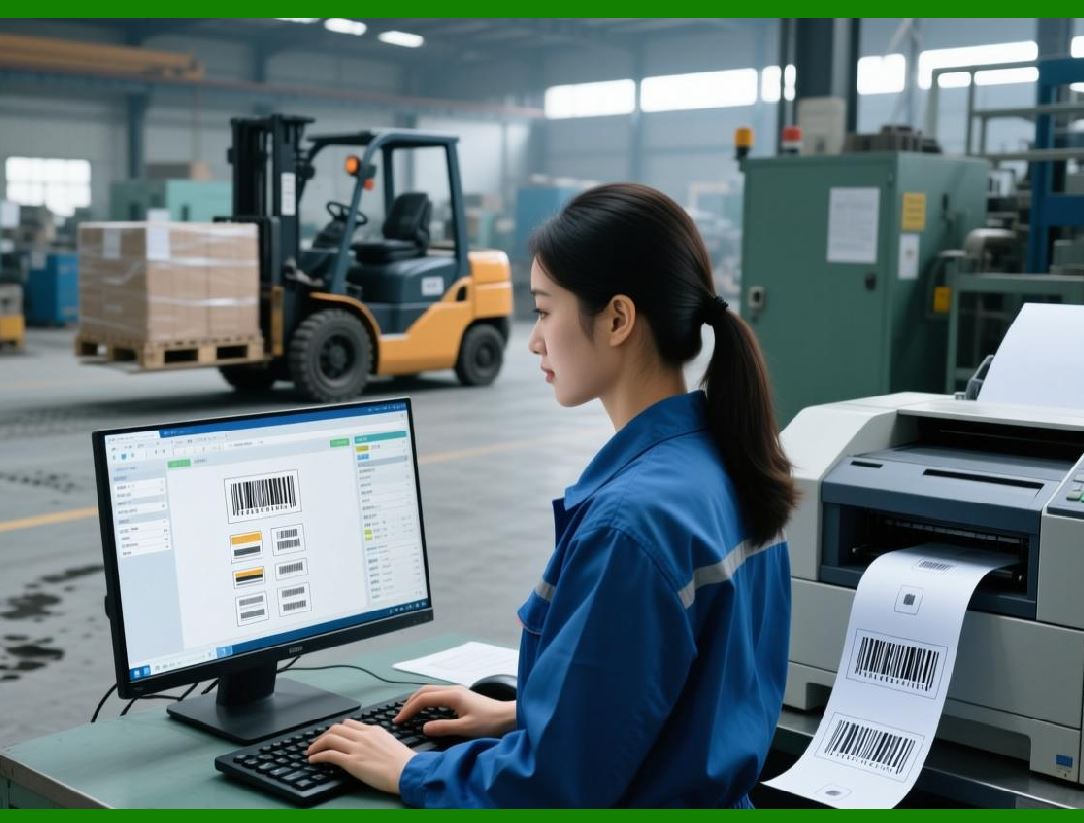
Barcode accuracy is critical, and WaspLabeler incorporates multiple layers of validation to ensure that barcodes encode data correctly. At the data-entry level, the software validates character sets and data length constraints for each symbology. For example, numeric-only symbologies will reject alphanumeric input, while fixed-length codes will enforce proper data size. |
Checksum calculations are handled automatically, eliminating manual errors. When barcodes are bound to external data sources, WaspLabeler validates incoming data in real time and can flag or skip records that do not meet encoding requirements. |
These validation mechanisms help prevent mislabeling, which can disrupt inventory systems, cause shipping errors, or compromise traceability in regulated industries. |
|
9.6 Human-Readable Text and Barcode Presentation |
WaspLabeler allows precise control over how barcodes are visually presented on the label. Users can enable or disable human-readable text, position it above or below the barcode, and select fonts, sizes, and spacing to match label design requirements. |
The software ensures that visual customization does not compromise scan performance by maintaining required quiet zones and minimum bar dimensions. This balance between aesthetic flexibility and technical correctness is essential for labels that must be both visually appealing and functionally reliable. |
For multilingual or international environments, human-readable text can be combined with localized fonts or multiple text fields to support diverse user bases. |

|
9.7 Dynamic Barcodes and Data Binding |
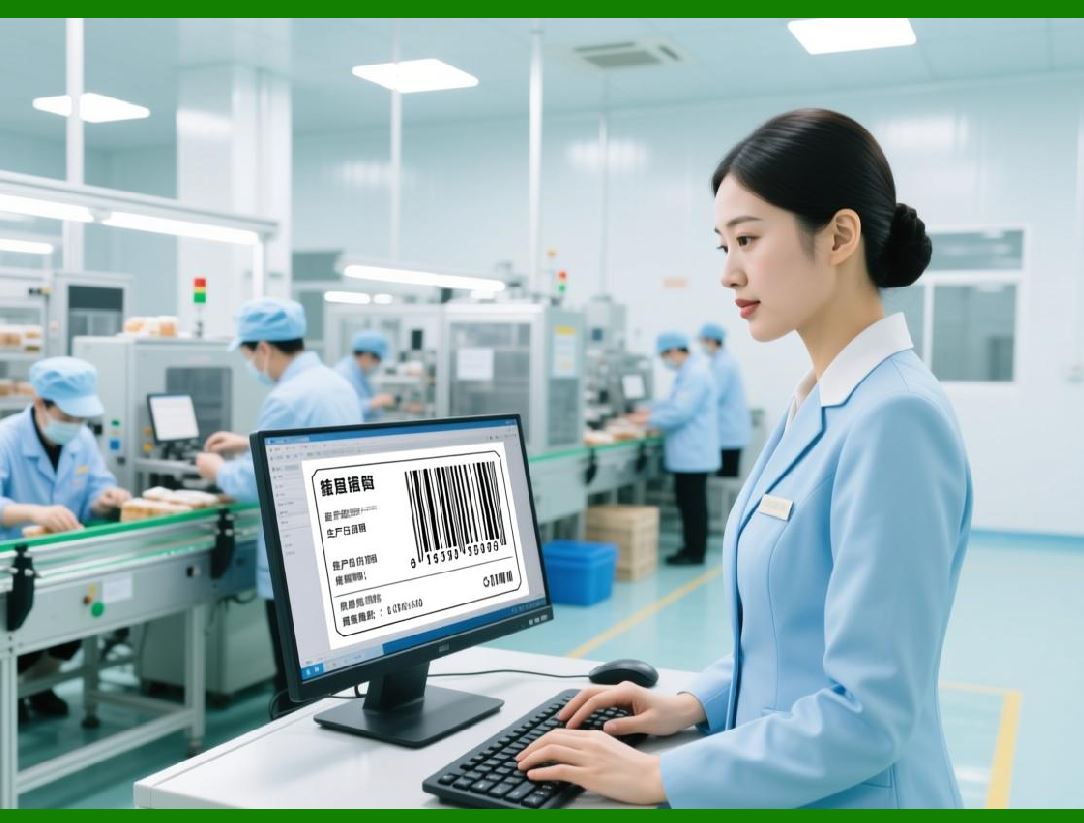
One of the most powerful barcode-related features in WaspLabeler is the ability to generate barcodes dynamically based on variable data. Barcodes can be bound to database fields, spreadsheet columns, or user input, allowing each printed label to contain unique barcode values. |
Dynamic barcode generation is often combined with serialization features, where each label increments a numeric or alphanumeric value automatically. This is particularly useful for asset tags, serial-numbered products, and traceability labels. |
Advanced users can apply formulas or concatenation rules to construct barcode values from multiple data fields, enabling sophisticated encoding scenarios without requiring external preprocessing. |
|
9.8 Print Optimization and Scanner Compatibility |
WaspLabeler barcode engine is optimized to produce high-quality output across a wide range of printers, including thermal transfer, direct thermal, laser, and inkjet devices. The software adjusts rendering parameters based on printer resolution to ensure that bar widths and module sizes are accurate at print time. |
This optimization is critical for maintaining scanner compatibility, especially in high-speed environments such as distribution centers and production lines. Labels printed with WaspLabeler are designed to scan reliably under varying lighting conditions, distances, and angles. |
The software printer-specific drivers and settings help ensure consistent barcode quality across different hardware models and manufacturers. |

|
9.9 Industry-Specific Barcode Use Cases |
WaspLabeler barcode capabilities are adaptable to a wide range of industry use cases. In retail, the focus is often on UPC and EAN codes for point-of-sale scanning. In logistics, Code 128 and GS1-128 are commonly used for shipment identification and tracking. |
Healthcare environments rely heavily on Data Matrix and GS1 DataMatrix for medication labeling, specimen tracking, and patient identification. Manufacturing applications may combine linear and 2D barcodes to support work-in-progress tracking, quality control, and serialization. |
By supporting this broad spectrum of use cases, WaspLabeler positions itself as a versatile labeling platform rather than a niche barcode generator. |

|
9.10 Strategic Importance of Barcode Support in WaspLabeler |
The depth and breadth of barcode support in WaspLabeler reflect the software role as a mission-critical tool within many organizations. Accurate barcode generation underpins automation, traceability, and data integrity across supply chains and internal operations. |
By integrating barcode standards, validation, dynamic data binding, and print optimization into a unified environment, WaspLabeler reduces complexity and minimizes the risk of errors. This holistic approach ensures that labels produced with the software are not only visually correct but also functionally dependable in real-world scanning environments. |
 cs@easiersoft.com