1. Introduction to AI-driven Contactless Barcode Scanning |
AI-driven contactless barcode scanning, particularly in combination with computer vision, has revolutionized the way industries handle inventory management, tracking, and data processing. This technology, supported by advances in artificial intelligence (AI), machine learning (ML), and computer vision, provides an efficient, accurate, and scalable solution for scanning barcodes over long distances, without requiring direct physical contact with the barcode. This capability has been especially beneficial in environments like warehouses, where drone-assisted inventory management is becoming increasingly common. |
Unlike traditional barcode scanning systems that rely on direct, short-range scanning, contactless barcode scanning can detect multiple barcodes simultaneously, even from a distance of several meters. This ability to scan multiple codes at once increases efficiency, reduces human error, and accelerates various workflows, including supply chain operations, asset tracking, and logistics. By combining the power of AI with computer vision, this system is able to identify, process, and decode barcodes from various angles and orientations, even in challenging environments with poor lighting or obstructed views. |

|
2. How AI-driven Contactless Barcode Scanning Works |
AI-driven contactless barcode scanning works by leveraging machine learning algorithms and computer vision techniques to automatically identify and decode barcodes from images or video feeds. The key steps involved in this process are outlined below: |
2.1 Image Capture and Preprocessing |
The first step in the process is the capturing of visual data. This can be done using a variety of devices such as drones, stationary cameras, or handheld scanners equipped with high-resolution cameras. These devices continuously capture video frames or still images of the environment where barcodes are located. |
Once an image is captured, the system performs preprocessing to enhance the quality of the image and make it suitable for analysis. This may involve techniques such as: |
Noise Reduction: Reducing background noise in the image, which can help enhance the visibility of barcodes. |
Edge Detection: Identifying the boundaries of objects and barcodes within the image, which helps the system distinguish between barcodes and other objects. |
Image Normalization: Adjusting the image to a uniform scale, orientation, and contrast, which aids in barcode recognition under various lighting conditions. |
2.2 Object Detection and Barcode Localization |
The next step involves detecting objects and localizing the barcodes within the image. This is where AI and computer vision come into play. Machine learning models, particularly deep learning-based object detection algorithms such as Convolutional Neural Networks (CNNs), are trained to identify barcode patterns in images. |
Barcode Localization: The algorithm scans the image for regions that contain potential barcode patterns. It then highlights these areas, creating bounding boxes around the detected barcodes. These boxes mark the location of each barcode, even if multiple barcodes appear in the same frame. |
Multi-code Detection: The AI system can detect and locate multiple barcodes simultaneously. This capability is critical in environments like warehouses or production lines where multiple items are often grouped together, and several barcodes need to be scanned in one go. Multi-code detection uses spatial recognition to identify different barcodes even when they are near each other, at different angles, or partially obscured. |
|
2.3 Barcode Decoding |
Once the barcodes are localized, the next step is decoding. AI-driven contactless barcode scanners use advanced algorithms to decode the barcode data from the image. There are several types of barcodes, such as 1D barcodes (e.g., UPC, EAN) and 2D barcodes (e.g., QR codes, DataMatrix), and each type has its specific decoding method. |
Algorithm Selection: The system selects the appropriate decoding algorithm based on the type of barcode it has detected. For example, a QR code will be decoded using a different method than a UPC barcode. |
Pattern Recognition: The AI system recognizes the specific pattern encoded in the barcode, whether it's a series of bars, squares, or dots, and extracts the data embedded within the pattern. Advanced techniques like Optical Character Recognition (OCR) and pattern matching allow the system to handle distorted, rotated, or skewed barcodes with ease. |
2.4 Post-Processing and Data Validation |
After decoding the barcode data, the system performs post-processing tasks to ensure the data is valid and ready for use. This may include: |
Error Correction: Many barcode systems, especially 2D barcodes, have built-in error correction capabilities that allow the scanner to recover missing or corrupted data. AI algorithms can detect when a barcode is not fully readable and attempt to fill in the gaps. |
Data Validation: The system checks the decoded data against a database to ensure its correctness. For example, it may verify whether the product or asset ID matches an existing record or inventory entry. |
|
3. The Role of AI and Machine Learning in Barcode Scanning |
AI and machine learning are integral to the functionality of contactless barcode scanning systems. These technologies enable the system to improve over time and adapt to new environments and challenges. Key AI components in contactless barcode scanning include: |
3.1 Deep Learning Models |
Deep learning algorithms, particularly CNNs, are the backbone of object detection and barcode localization. These models are trained on large datasets of barcode images, enabling them to recognize a wide range of barcode types and handle various environmental conditions. |
The models learn to detect barcodes from different angles, lighting conditions, and even when barcodes are partially damaged or obscured. The training process involves feeding the model a large number of labeled images, where each image is tagged with the correct barcode location and type. The model uses this data to learn the underlying patterns that correspond to different barcodes, allowing it to generalize and perform well on new, unseen images. |
3.2 Real-Time Decision Making |
AI algorithms can make real-time decisions based on the data received from the camera. For example, if a drone is scanning a warehouse for inventory, the AI system must quickly decide which barcodes to scan, whether any barcodes are missing or unreadable, and how to prioritize scanning in a cluttered environment. AI-driven systems can make these decisions in milliseconds, optimizing scanning efficiency and accuracy. |
3.3 Adaptive Learning and Improvement |
One of the most powerful aspects of AI-driven contactless barcode scanning is the ability for systems to adapt and improve over time. As the system encounters new environments, lighting conditions, and barcode types, it continues to learn and optimize its performance. This process is known as 'continuous learning' and ensures that the system becomes more efficient and accurate the longer it operates. |
Machine learning models can be retrained with new data to handle edge cases, such as barcodes that are difficult to scan or distorted due to damage. This allows AI systems to improve their robustness and reliability. |
|
4. Applications of AI-driven Contactless Barcode Scanning |
AI-driven contactless barcode scanning has numerous applications across various industries, transforming workflows and improving efficiency. Below are some of the most notable applications: |
4.1 Warehouse and Inventory Management |
In warehouse management, drones equipped with AI-driven barcode scanning systems can autonomously navigate the warehouse, scan barcodes on products or storage shelves, and update inventory data in real time. This contactless approach significantly reduces the time and labor required for manual stocktaking, improves inventory accuracy, and ensures faster response times to inventory discrepancies. |
Drones can be programmed to scan multiple barcodes from a distance while flying, making it possible to scan large areas in a short amount of time. AI-powered algorithms help identify and decode barcodes from various angles and positions, even if the barcodes are partially covered or worn out. |
4.2 Logistics and Supply Chain |
In logistics, contactless barcode scanning is essential for tracking shipments, verifying items at various checkpoints, and ensuring the integrity of packages. AI-powered barcode scanning systems can automate the scanning process in transit hubs, sorting facilities, and warehouses, improving the speed and accuracy of package sorting and delivery. |
The combination of AI and computer vision also allows logistics companies to scan barcodes from long distances, reducing the need for employees to manually handle packages and improving overall workflow efficiency. This technology enables real-time tracking of goods and facilitates predictive analytics for supply chain management. |
4.3 Drone-Assisted Inventory |
In large-scale facilities, such as distribution centers or warehouses, drones equipped with AI-driven contactless barcode scanning technology are increasingly used for inventory management. Drones can fly through aisles and corridors, scanning barcodes on packages, products, or pallets as they move around the facility. This process is much faster than traditional manual inventory checks, which can be labor-intensive and prone to human error. |
AI algorithms help the drone navigate autonomously, detect multiple barcodes in the same image, and accurately decode the data. This allows for real-time inventory updates and more precise tracking of stock levels. |
4.4 Retail and Point-of-Sale Systems |
In retail environments, AI-driven contactless barcode scanning can improve the checkout experience for customers. Self-checkout stations can be enhanced with contactless scanning technology, enabling customers to scan multiple items at once without needing to manually align the barcode with the scanner. |
Additionally, AI-powered systems can help retailers track inventory levels and restock shelves more efficiently by automatically detecting when items are running low and triggering reorder processes. The use of contactless scanning also reduces the need for physical interaction with devices, which is particularly useful in minimizing the spread of germs and viruses. |

|
5. Benefits of AI-driven Contactless Barcode Scanning |
The integration of AI and computer vision into barcode scanning offers several key benefits: |
5.1 Increased Efficiency |
AI-driven barcode scanning systems can process and decode multiple barcodes simultaneously, enabling faster workflows. Whether used in warehouses, logistics, or retail, this capability reduces the time spent manually scanning individual items and speeds up operations. |
5.2 Accuracy and Reliability |
AI systems can correct errors, such as misaligned or partially damaged barcodes, and ensure that the data being captured is accurate. Additionally |

|
What challenges will companies encounter when applying this AI-driven Contactless Barcode Scanning technology ? |
1. Integration with Existing Systems |
One of the primary challenges companies face when implementing AI-driven contactless barcode scanning is integrating this new technology with existing infrastructure. Many organizations already have established barcode scanning systems, software platforms, and databases in place. Adding AI-driven, contactless scanning technology often requires compatibility with these existing systems, which can lead to several issues: |
1.1 System Compatibility |
AI-powered barcode scanning often relies on newer software platforms, cloud computing systems, and databases that may not be compatible with older legacy systems. For example, existing inventory management software might not be able to process or interpret the more sophisticated data streams generated by AI-based barcode scanners. |
1.2 Cost of Integration |
Integrating AI-driven systems requires significant investment in software development, system upgrades, and potentially even hardware modifications. This process may involve consulting with external vendors, upgrading network infrastructure, or developing custom integration solutions to ensure the AI system works with existing systems, all of which can increase costs. |
1.3 Training and Adoption |
Employees may face a learning curve in adapting to the new technology. As AI-driven barcode scanning is often used with advanced drone systems or robotic automation, staff need to be trained to work with these tools. Resistance to change or a lack of technical knowledge could hinder successful adoption, especially in industries that are not already accustomed to high-tech solutions. |
|
2. Environmental and Physical Limitations |
AI-driven contactless barcode scanning systems, while powerful, are not immune to environmental challenges. The technology relies on high-quality imaging and precise detection capabilities, both of which can be compromised by certain conditions. |
2.1 Poor Lighting Conditions |
One of the biggest challenges for AI-driven barcode scanners is dealing with poor or inconsistent lighting. In environments like warehouses or distribution centers, lighting can often be dim or uneven, which affects the system's ability to capture clear images. While AI models can handle some degree of distortion or low-light conditions, consistently poor lighting can still reduce the accuracy and efficiency of barcode detection. |
2.2 Obstructions and Physical Interference |
AI-based contactless scanners need clear visibility of the barcodes to effectively decode them. However, barcodes can be blocked or obscured by other objects, dust, dirt, or even packaging materials. In a cluttered environment, barcodes may be partially visible or misaligned, which can confuse the AI system, leading to errors or missed scans. While AI models are designed to work around such challenges, they are not foolproof and may still struggle under extreme conditions. |
2.3 Distortion and Angle of View |
Contactless barcode scanning systems, especially those used with drones or mobile robots, need to handle barcodes that appear from different angles or positions. Distorted, rotated, or skewed barcodes can be difficult for both AI and traditional barcode scanners to read, requiring additional computational power and specialized algorithms to rectify these issues. |

|
3. Data Privacy and Security Concerns |
As AI-driven barcode scanning systems are often integrated with cloud-based platforms and databases, the security of the data being transmitted, processed, and stored becomes a critical concern. Companies need to ensure that customer data, inventory data, and other sensitive information are protected against breaches or unauthorized access. |
3.1 Data Encryption and Storage |
Since AI-based barcode scanning systems can involve real-time data collection and transmission to centralized databases, ensuring that sensitive information is securely encrypted during transmission is vital. Additionally, companies need to implement secure data storage practices to prevent unauthorized access or data leaks. |
3.2 GDPR and Regulatory Compliance |
In regions with stringent data privacy regulations, such as the European Union's General Data Protection Regulation (GDPR), companies must ensure that AI systems comply with all relevant laws regarding the collection, use, and storage of personal data. Non-compliance can lead to heavy fines and damage to the company's reputation. |

|
4. High Initial Investment and ROI Uncertainty |
While AI-driven contactless barcode scanning promises long-term efficiency and cost savings, the upfront investment required for implementation can be significant. Companies need to evaluate whether the benefits outweigh the initial costs, especially in industries where margins are tight. |
4.1 Initial Investment Costs |
The initial setup for AI-driven contactless barcode scanning includes costs related to acquiring advanced hardware (such as drones, cameras, and scanners), as well as software development, integration, and employee training. These expenses can add up quickly, and companies may need to secure significant capital investment. |
4.2 ROI and Value Realization |
It may take time to realize the return on investment (ROI) from AI-driven systems. While these technologies offer impressive potential for improving efficiency and reducing errors, companies must be patient in tracking the long-term benefits, such as reduced labor costs, fewer operational errors, and enhanced data accuracy. If these outcomes take longer to materialize than expected, it could lead to skepticism or reluctance to fully embrace the technology. |
4.3 Maintenance and Upkeep Costs |
AI-driven systems require ongoing maintenance and upgrades to ensure they remain effective and secure. As technology evolves, updates and new versions of AI models, scanning software, and hardware components may be necessary. This recurring cost can add to the total cost of ownership. |

|
5. Handling Complex or Unpredictable Scanning Environments |
In dynamic environments, such as distribution centers, retail stores, or warehouses, unexpected scenarios can arise that challenge the capabilities of AI-driven contactless barcode scanning systems. While these systems are designed to handle a wide range of situations, some environments may present particularly complex or unpredictable conditions. |
5.1 Variable Quality of Barcodes |
Barcodes, particularly 1D barcodes, can degrade over time due to wear, environmental exposure, or handling. In some industries, items are frequently handled, leading to smudged, faded, or scratched barcodes that can be difficult for both traditional and AI-driven scanners to read. While AI systems can incorporate error correction and pattern recognition techniques, extremely damaged barcodes may still pose a challenge. |
5.2 Diverse Barcode Types |
AI systems must be capable of recognizing a variety of barcode types, from simple 1D barcodes like UPC to more complex 2D barcodes like QR codes and DataMatrix codes. In environments where many different types of barcodes coexist, the system must be able to accurately identify and decode multiple formats simultaneously. This requires the AI system to be highly trained on a wide range of barcode types, which can increase the complexity of the implementation. |
|
6. Operational Challenges in Drone-Assisted Inventory |
When AI-driven barcode scanning is applied to drone-assisted inventory management, additional operational challenges arise, especially when drones are responsible for navigating large, complex spaces. |
6.1 Flight Stability and Navigation |
Drones used for inventory management must navigate narrow aisles, avoid obstacles, and maintain stable flight paths while scanning barcodes. Ensuring that drones can accurately scan barcodes without interference from other objects in the environment is a major challenge. Drones need to be equipped with advanced navigation and obstacle-avoidance systems to handle these tasks effectively. |
6.2 Battery Life and Charging Infrastructure |
Drones typically have limited battery life, which can constrain the amount of time they can operate before needing to return to a charging station. For large facilities, this can require careful planning to ensure that drones can cover the entire area without running out of battery power. The implementation of charging infrastructure and battery management systems adds complexity and cost. |
6.3 Environmental Conditions for Drones |
Drones are also susceptible to environmental factors, such as air currents, temperature fluctuations, and electromagnetic interference. In warehouses or distribution centers with high ceilings, for example, drafts from HVAC systems can affect drone flight stability. Ensuring that drones can function optimally in a wide range of environments requires addressing these external variables through robust hardware and software solutions. |
|
7. Ethical Considerations and Employee Impact |
The implementation of AI-driven systems, particularly in industries where automation replaces human labor, can raise ethical questions. Employees may feel threatened by the introduction of AI technology, fearing job displacement or reduced job security. |
7.1 Job Displacement Concerns |
In environments where automation, such as drone-assisted barcode scanning, reduces the need for human intervention, workers may worry about job losses. While AI can improve efficiency and safety, companies need to consider how they will retrain or redeploy employees whose roles are affected by automation. Balancing automation with workforce training and transition programs is essential for ensuring the ethical adoption of AI technology. |
7.2 Trust in AI Decisions |
As AI systems take on more decision-making functions, such as determining when and where to scan barcodes, there may be concerns about the transparency and accountability of AI decisions. Companies must ensure that their AI systems are explainable, meaning employees and stakeholders can understand how the system arrives at its conclusions. This is especially critical in industries where errors can have significant consequences. |

|
8. Conclusion |
While AI-driven contactless barcode scanning offers numerous advantages, such as increased efficiency, accuracy, and scalability, it also presents a series of challenges that companies must overcome to successfully implement this technology. From integration with legacy systems and environmental limitations to data privacy concerns and the high upfront costs, businesses must carefully evaluate these factors before making the leap. However, with the right strategies in place-such as thorough training, system optimization, and ongoing maintenance-companies can successfully harness the power of AI to transform their barcode scanning processes and gain a competitive edge in the marketplace. |
|
The main manufacturers of the AI-driven Contactless Barcode Scanning device. |
1. Zebra Technologies |
Zebra Technologies is one of the leading manufacturers of barcode scanning and data capture solutions, including AI-driven, contactless barcode scanning systems. Zebra's products are widely used across industries such as logistics, retail, and healthcare. The company has pioneered several advancements in AI-powered scanning technologies that enhance the accuracy and speed of barcode detection. |
Key Products: |
Zebra DS3600 Series: This series includes both handheld and fixed-mount scanners capable of scanning barcodes at long ranges. They incorporate advanced AI and machine learning algorithms to detect and decode barcodes from varying distances, angles, and lighting conditions. |
Zebra DS3678-HP: A high-performance industrial scanner that utilizes AI and computer vision to read barcodes in challenging environments such as warehouses and manufacturing floors. This model is particularly useful for contactless scanning in fast-paced environments. |
Zebra's scanners are renowned for their ability to handle multiple barcode types (1D, 2D, and even OCR codes) simultaneously, making them a top choice for industries looking for reliable AI-driven scanning solutions. |

|
2. Honeywell International Inc. |
Honeywell is a global leader in manufacturing advanced technology solutions, including AI-driven barcode scanners. Their products are used in a range of industries such as supply chain management, warehouse operations, and retail. Honeywell has developed AI-based barcode scanning solutions that improve the efficiency of both short-range and long-range barcode scanning. |
Key Products: |
Honeywell Xenon 1900g: This handheld scanner utilizes advanced image capture and AI algorithms to read barcodes from a distance. It is designed for both contact and contactless scanning and can decode 1D, 2D, and QR barcodes with high accuracy, even under challenging conditions such as low-light or damaged barcodes. |
Honeywell Vocollect Voice Technology: While not a traditional barcode scanner, Honeywell's voice-based AI technology, when integrated with barcode scanning systems, enables hands-free inventory management. This is particularly valuable in environments where employees need to operate drones or other robotic systems for inventory scanning. |
Honeywell's barcode scanning solutions are known for their robustness, user-friendly interface, and seamless integration with existing warehouse management systems (WMS). |
|
3. Datalogic |
Datalogic is a prominent player in the automatic data capture and industrial automation sectors. The company has developed a wide range of barcode scanning solutions, including AI-powered models that are capable of long-distance, contactless scanning. Datalogic's technology is widely used in retail, logistics, and manufacturing for its advanced features such as real-time data processing and high-speed barcode recognition. |
Key Products: |
Datalogic Gryphon 4500 Series: This series of handheld scanners uses AI and image processing to read both 1D and 2D barcodes. It's designed for high-volume scanning environments and can handle long-range, contactless barcode scanning with impressive speed and accuracy. |
Datalogic Magellan 9800i: A fixed-mount scanner, typically used in retail environments, that utilizes AI-driven technology for contactless barcode scanning in high-throughput scenarios. It is particularly good at scanning multiple barcodes simultaneously from a distance, making it ideal for applications such as self-checkout stations. |
Datalogic's systems are known for their high level of accuracy in decoding barcodes, even when they are damaged or poorly printed. |

|
4. Cognex Corporation |
Cognex is a leading provider of machine vision systems and barcode readers, with a strong focus on AI and computer vision for industrial applications. The company's AI-driven barcode scanning solutions are widely used in manufacturing, logistics, and warehouse automation for high-speed and high-accuracy barcode recognition. |
Key Products: |
Cognex DataMan 8600 Series: These are industrial-grade handheld barcode scanners that leverage AI to scan barcodes from longer distances. The system's computer vision algorithms can process complex images and multi-code environments, making it ideal for warehouse drone applications and assembly line scanning. |
Cognex In-Sight Vision Systems: Although primarily focused on vision-based quality control, the In-Sight systems can be integrated with AI-powered barcode readers for advanced scanning tasks in complex manufacturing environments. These systems use deep learning to handle multiple barcodes at once and adapt to various environmental conditions. |
Cognex's products are well-regarded for their precision and ability to handle high-volume scanning tasks, even in high-speed environments. |

|
5. Leuze Electronic |
Leuze Electronic is a leading manufacturer of industrial automation and barcode scanning technologies. The company specializes in optical sensors and scanning systems, incorporating AI and machine learning for enhanced barcode detection in difficult conditions. Their products are used in logistics, automotive, and manufacturing applications. |
Key Products: |
Leuze 2D Barcode Scanner (X Series): These scanners incorporate AI-based technology to handle long-range and contactless barcode scanning. The X series scanners are designed for industrial environments and feature deep learning algorithms that improve scanning accuracy, even in low-light or high-speed environments. |
Leuze Data Matrix Scanners: Leuze offers specialized barcode readers for 2D codes, such as DataMatrix and QR codes, which integrate AI to decode complex or damaged barcodes. These scanners are particularly useful in supply chain management and warehouse operations where fast and accurate barcode reading is required. |
Leuze's systems are optimized for harsh industrial environments, offering reliability and precision for demanding applications. |

|
6. SICK AG |
SICK is a global leader in sensor technology, including optical sensors and AI-powered barcode scanners. Their solutions are designed for a variety of industrial applications, from logistics to automotive production lines. SICK's AI-driven barcode scanners are used in environments where high performance, reliability, and speed are crucial. |
Key Products: |
SICK CLV650 Series: This fixed-mount laser scanner is designed for high-speed applications and features advanced AI algorithms to decode barcodes at long ranges. It is widely used in warehouse management systems (WMS) and automated sorting systems. |
SICK Lector 620/640: These intelligent vision sensors integrate AI-based decoding capabilities to read a wide range of barcode types in fast-paced environments. The Lector series is known for its ability to handle challenging scanning conditions, such as when barcodes are damaged or obscured. |
SICK's systems are highly flexible and can be customized for a wide range of industries, ensuring that AI-driven contactless barcode scanning can be tailored to the specific needs of a business. |
|
7. Vanderlande |
Vanderlande is a major supplier of automated material handling systems, including AI-driven barcode scanning solutions. Their products are often integrated into larger logistics systems, helping to optimize processes such as sorting, inventory tracking, and distribution in airports, warehouses, and parcel delivery centers. |
Key Products: |
Vanderlande Vision Systems: These systems combine computer vision and AI to provide contactless scanning and automatic data capture in high-speed sorting and distribution environments. The AI algorithms can detect and decode multiple barcodes simultaneously from a variety of angles and orientations. |
Vanderlande's technology is particularly effective in logistics and supply chain environments, where the ability to scan barcodes from long distances and at high speeds is essential. |

|
8. Panasonic |
Panasonic, a well-known manufacturer of industrial automation equipment, also offers AI-powered barcode scanning solutions. Panasonic's systems incorporate AI algorithms to enhance barcode reading performance in environments where quick and accurate scanning is essential. |
Key Products: |
Panasonic Toughbook Handheld Scanners: These rugged, AI-equipped scanners are designed for industrial use and can read barcodes in both short-range and long-range environments. They are used in a variety of sectors, including logistics, transportation, and field services, where contactless scanning is needed. |
Panasonic Barcode Readers: Panasonic's barcode readers integrate AI for image processing, helping to decode barcodes that may be damaged, poorly printed, or positioned at unconventional angles. |

|
9. Star Micronics |
Star Micronics is another key player in the barcode scanning and printing market, with a focus on point-of-sale (POS) and retail environments. They offer AI-powered solutions for scanning both 1D and 2D barcodes in contactless scenarios. |
Key Products: |
Star Micronics mC-Print3: This is a versatile POS printer and barcode scanning device that integrates AI for improving barcode reading performance. It's widely used in retail for quick, efficient, and contactless barcode scanning. |
Star Micronics TSP100III: Another retail-focused product, this thermal receipt printer comes with integrated barcode scanning capabilities, using AI-driven technology for improved accuracy and speed in reading codes. |
|
Conclusion |
The manufacturers listed above represent the forefront of AI-driven contactless barcode scanning technology. From Zebra Technologies' rugged industrial scanners to Cognex's advanced machine vision systems, these companies offer solutions that cater to a variety of industries, including logistics, manufacturing, retail, and healthcare. As demand for automation and AI-enhanced barcode scanning grows, these manufacturers continue to innovate, providing increasingly sophisticated systems that can handle complex scanning tasks across a wide range of environments. |
|
Practical Examples of AI-driven Contactless Barcode Scanning in Factories |
AI-driven contactless barcode scanning is revolutionizing manufacturing environments by improving operational efficiency, reducing errors, and increasing safety. The integration of AI allows for faster, more accurate data capture, even in challenging conditions such as varying distances, poor lighting, and complex environments. Below are several practical examples where AI-driven contactless barcode scanning is being used in factories to streamline operations: |
1. Warehouse Inventory Management |
In a factory setting, especially in large warehouses or production facilities, accurate inventory tracking is critical. AI-driven contactless barcode scanning can play a significant role in automating and optimizing inventory management by allowing fast, hands-free, and long-range barcode scanning. |
Example: |
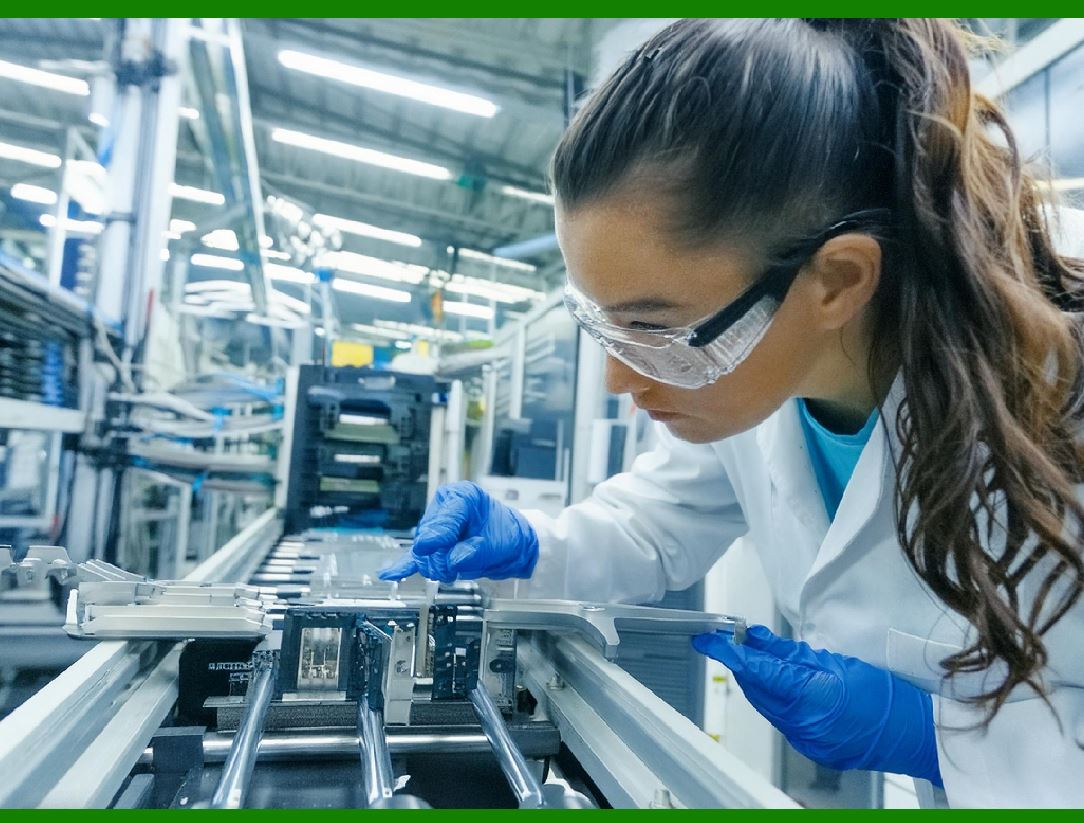
Automated Drone-Based Inventory Scanning: In large manufacturing facilities, drones equipped with AI-powered barcode scanners fly through the aisles of warehouses, scanning barcodes on inventory bins, pallets, or packages. These drones are designed to operate autonomously, scanning barcodes without human intervention, even from a distance. The AI system enables the drone to capture high-quality images of barcodes from multiple angles and adjust for poor lighting or any distortion caused by movement or obstruction. |
Benefits: The AI ensures that inventory data is updated in real-time, and drones can scan large areas quickly and efficiently. This reduces the need for manual stock counting, minimizes human error, and speeds up the overall inventory process. |
|
2. Production Line Tracking and Quality Control |
In many factories, products move through assembly lines, each step requiring a barcode scan to track progress, check quality, or trigger the next action in the workflow. AI-driven contactless barcode scanning ensures that these processes happen seamlessly, even in fast-paced and noisy environments. |
Example: |
Smart Conveyor Systems: In a factory producing automotive parts, products or components are placed on moving conveyors that pass through multiple scanning stations. AI-driven scanners mounted along the conveyor track scan barcodes on parts to verify each product's specifications, serial numbers, and compliance with quality standards. |
The scanners use AI algorithms to adjust to different orientations and scan barcodes in real-time as the items move. If a product is misaligned or a barcode is partially obscured, the AI system can still successfully decode the data, ensuring that no errors occur. The system automatically flags any discrepancies for immediate attention from the operator. |
Benefits: The AI-driven system increases the speed of quality control by performing scans faster than manual checks and ensures that each product is accounted for. It also reduces the likelihood of human error in tracking product quality and inventory during production. |
|
3. Automated Parts and Components Sorting |
Manufacturing environments, especially in industries like electronics or automotive production, often require the sorting of parts and components based on their specifications. AI-driven barcode scanning can automate this sorting process, improving efficiency and reducing the risk of human error. |
Example: |
AI-powered Sorting Stations: In a factory assembling smartphones, multiple parts (screens, batteries, processors) arrive on different pallets, each with a barcode attached. AI-driven contactless barcode scanners are installed at sorting stations where the system automatically scans and reads the barcodes. Based on the information captured, the AI system then directs the parts to the appropriate sorting bins for further processing. |
Benefits: This fully automated system speeds up the sorting process by eliminating the need for manual scanning or barcode identification. It also reduces the chances of mixing up parts, improving accuracy and reducing downtime caused by misplaced components. |
|
4. Supply Chain and Shipment Tracking |
AI-driven contactless barcode scanning can significantly enhance the tracking of products, materials, and goods as they move along the supply chain. This ensures real-time tracking of shipments and materials, leading to better coordination between factories, suppliers, and distribution centers. |
Example: |
AI-Enabled Shipment Verification: A factory that manufactures consumer goods integrates AI-powered barcode scanners into its shipping process. As finished goods are packed and prepared for shipment, the AI scanning system checks each barcode to verify that the correct items are in the correct package and ensure that each item matches the shipment manifest. |
The scanner reads the barcodes on the products and compares them with the order details in the company's inventory system. If a discrepancy is found (e.g., a product is missing or the wrong barcode is scanned), the system alerts the warehouse manager to resolve the issue before the package is shipped out. |
Benefits: AI-driven contactless scanning accelerates the verification process, reducing shipping errors and ensuring that customers receive the correct products on time. Additionally, it provides a real-time status update on the inventory and shipments, enhancing the overall transparency of the supply chain. |
|
5. Asset Management and Maintenance |
Factories rely on machinery and equipment to keep production running smoothly. Tracking maintenance schedules, managing spare parts, and ensuring that assets are functioning properly are all vital aspects of factory operations. AI-driven contactless barcode scanning can help monitor and manage equipment and assets more efficiently. |
Example: |
AI-Assisted Maintenance Tracking: In a manufacturing plant producing machinery, each piece of equipment is tagged with a barcode that contains essential maintenance information. AI-powered contactless scanners are used by maintenance workers to scan the barcodes on machinery and equipment during inspections or maintenance. |
The scanner reads the barcode and automatically retrieves maintenance history, usage data, and next scheduled service dates from the database. If the equipment is overdue for maintenance or if any issues are detected, the AI system sends alerts to maintenance teams or updates the work order system. |
Benefits: AI-driven barcode scanning streamlines the asset management process by reducing manual tracking and enabling proactive maintenance. This helps prevent unexpected breakdowns, minimizes downtime, and ensures that maintenance tasks are completed on time. |
|
6. Order Fulfillment and Packaging |
In factories that handle large-scale order fulfillment, such as e-commerce or consumer goods manufacturing, AI-driven barcode scanning helps automate the packing and shipping process, ensuring accuracy and efficiency. |
Example: |
Automated Packing Stations: In a factory that manufactures and ships customized clothing, AI-powered barcode scanning is used at the packing station to ensure that the correct items are packed in each order. Workers at the packing station scan the barcode of each item before placing it in the shipping box. |
The AI system checks the scanned barcode against the order details and verifies that the correct size, color, and quantity match the customer's order. If an error is detected, the system alerts the worker, ensuring that only correct and complete orders are shipped. |
Benefits: The AI-powered system reduces the risk of packing errors, speeds up the order fulfillment process, and ensures that customers receive the right products. This helps improve customer satisfaction and reduces returns due to incorrect orders. |
|
7. AI-Driven Material Flow Management |
In factories that rely on continuous production lines, managing the flow of raw materials and components can be a complex task. AI-driven contactless barcode scanning enables real-time tracking and management of material flow, ensuring that production lines run smoothly and without interruption. |
Example: |
AI-Enabled Material Handling Robots: In a factory producing plastic products, material handling robots equipped with AI-powered barcode scanners transport raw materials from storage areas to the production line. These robots scan the barcodes of material containers and verify their contents before bringing them to the appropriate assembly stations. |
The AI system ensures that materials are delivered in the right order and quantity, reducing the risk of delays or shortages. The robots can also handle materials at various distances and angles, adapting to different shelf heights or pallet placements. |
Benefits: This AI-driven system automates material handling, improving efficiency and reducing human labor requirements. It also minimizes the risk of errors in material allocation, ensuring that production continues without interruption due to material shortages or misplacements. |
|
8. Batch Control and Serialization in Pharmaceutical Manufacturing |
Pharmaceutical factories must follow strict guidelines for batch control and serialization to meet regulatory standards. AI-driven barcode scanning is used to automate the process of verifying the authenticity of pharmaceutical products and ensuring that every batch is correctly labeled and documented. |
Example: |
AI-Powered Serialization Scanning: In a pharmaceutical manufacturing plant, AI-based barcode scanners are used to read the serial numbers on drug packages and verify their authenticity. The barcode scanners check the serial numbers against a central database to confirm that each batch is properly documented and compliant with regulatory standards. |
AI algorithms can also detect counterfeit barcodes, read damaged labels, and ensure that each product is correctly packaged and labeled for shipment. |
Benefits: This system ensures full regulatory compliance with serialization requirements, prevents the distribution of counterfeit products, and improves traceability. It also speeds up the inspection process, allowing for greater throughput and reduced risk of human error. |
|
Conclusion |
AI-driven contactless barcode scanning has found multiple practical applications in factories, improving automation, reducing human errors, and enhancing overall operational efficiency. From inventory management and production line tracking to automated sorting and quality control, AI-powered systems are transforming how factories manage workflows, improve accuracy, and keep production running smoothly. By enabling real-time tracking, faster processing, and greater accuracy, these systems allow manufacturers to stay competitive in an increasingly fast-paced and data-driven industry. |
 cs@easiersoft.com