1. Historical Development of Code 128 |
1.1 Background of linear barcodes |
Linear barcodes emerged as one of the earliest forms of optically readable automatic identification technology. Their origin can be traced back to the mid-20th century when retail and industrial sectors needed an efficient method to automate the identification of products, logistics items, and assets. The principle of a linear barcode lies in encoding data as a series of bars and spaces of varying widths that optical scanners can detect and interpret. Early barcodes such as the UPC were optimized primarily for numeric data and limited to specific applications, particularly in retail point-of-sale systems. |
As global commerce expanded and industries outside retail demanded more flexible identification methods, limitations in early barcode systems became increasingly apparent. Organizations required symbols capable of encoding larger character sets, supporting variable data formats, and delivering higher information density. This need provided the impetus for the development of more advanced alphanumeric symbologies, culminating in the introduction of Code 128. |
|
1.2 Creation of Code 128 |
Code 128 was introduced in 1981 as a high-density, variable-length linear barcode symbology. The name ¡°128¡± refers to its capacity to encode the complete set of 128 ASCII characters, which substantially broadened the scope of data that could be represented in a single barcode. Code 128 was designed with a modular encoding system that uses three distinct character sets, labeled A, B, and C, allowing optimal data compaction depending on the content. |
The symbology was defined with several technical and practical advantages: |
Support for all ASCII characters |
Highly efficient encoding of numeric-only data |
Built-in mechanisms for switching between character sets |
Compact symbol structure that reduces label space requirements |
A mandatory check character that enhances data reliability |
Its versatility quickly made it a preferred choice in industrial labeling, shipping container identification, asset management, and other sectors requiring a robust encoding format. |
|
1.3 Evolution within standardization organizations |
After its introduction into commercial environments, Code 128 underwent standardization to ensure consistent usage and cross-industry interoperability. It was adopted into several major coding standards including: |
ISO/IEC 15417 specification for Code 128 |
GS1 standards for supply chain identification under the designation GS1-128 (formerly EAN-128) |
These standards defined printing tolerances, character encoding rules, data structuring guidance, and scanner compatibility expectations. As regulatory and traceability needs expanded worldwide, Code 128¡¯s conformance to global standards strengthened its role as a strategic identifier across multiple jurisdictions and industries. |

|
1.4 Introduction into logistics and industry |
Code 128 found immediate adoption in transportation, warehousing, and packaging systems where large volumes of variable data needed to be represented efficiently. Unlike retail-centric barcodes, Code 128¡¯s flexible data formatting enabled tracking numbers, lot identification, recipient addresses, expiration dates, and other operational data to be consolidated in a machine-readable format. |
|
2. Technical Architecture of Code 128 |
2.1 Symbol composition |
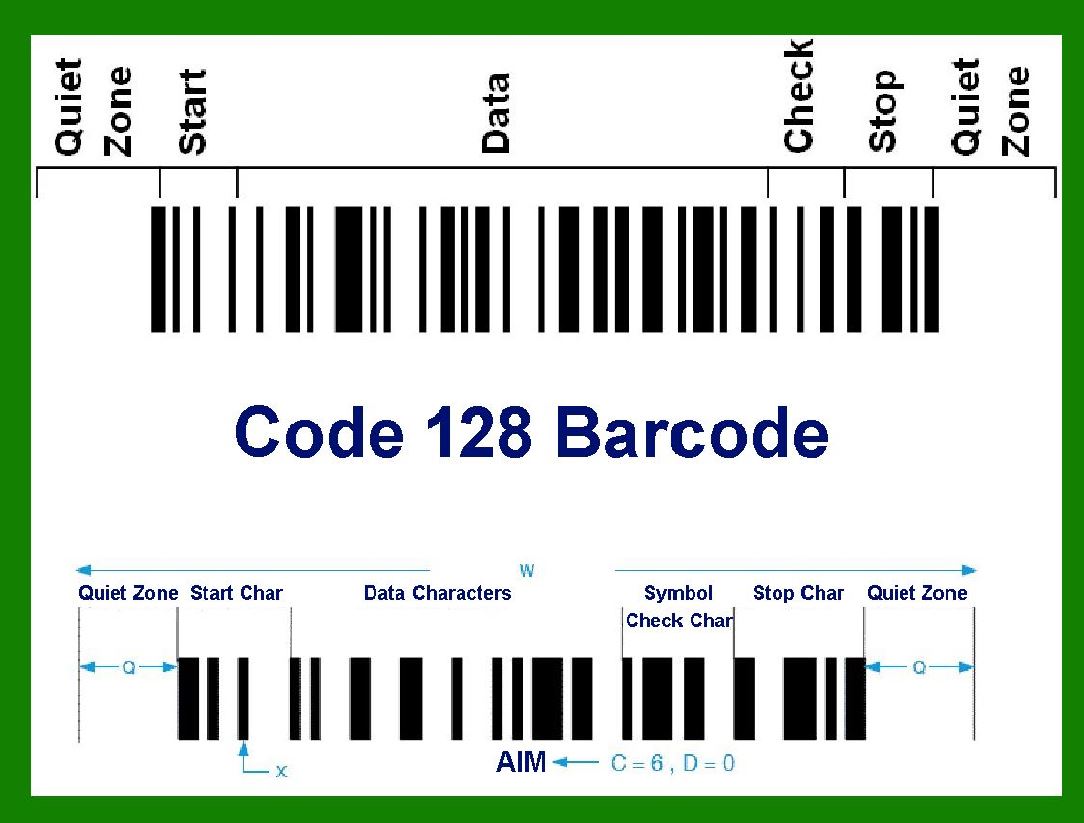
A Code 128 symbol is constructed entirely from patterns of vertical bars and spaces arranged in modules. Each encoded character is represented by 11 modules, including exactly three bars and three spaces. The widths of these elements vary, and the arrangement determines which character is being represented. |
The symbol includes the following major structural components: |
Quiet zone at the beginning and end |
Start character (Start A, Start B, or Start C) |
Encoded data characters |
A modulo-103 check character |
A stop character |
Terminating bar and quiet zone |
The inclusion of quiet zones helps scanners distinguish the barcode boundaries and reduces the chance of misreads. |
2.2 Character sets A, B, C |
Code 128 achieves its versatility through the use of three distinct character sets: |
Code Set A contains uppercase letters, numeric digits, and control characters |
Code Set B contains uppercase and lowercase letters, numeric digits, and common punctuation |
Code Set C encodes pairs of numeric digits from 00 to 99 with exceptional compaction |
The ability to choose between sets or switch among them allows adaptation to the actual data content, optimizing space and scan reliability. |
2.3 Modulo-103 check character calculation |
Every Code 128 symbol includes a check character for robustness and integrity verification. The value is calculated by applying a modulo-103 algorithm. Each character contributes a weighted value based on its position in the sequence. This checksum significantly reduces the risk of decoding errors that might otherwise arise from print imperfections, scanner limitations, or environmental interference. |
2.4 Start and stop characters |
The barcode must begin with one of three start characters corresponding to the character set used at the beginning. Changing data types within a barcode requires a designated function code, which instructs the scanner to interpret subsequent values using a different set. The stop character has a fixed pattern recognized universally by scanners, allowing proper termination of decoding. |
2.5 Quiet zones |
Quiet zones are blank margins on both sides of the barcode. Without these protected spaces, scanner sensors might interpret unrelated printing or graphical elements as part of the encoded data. The quiet zone must meet specific minimum width requirements based on module size to ensure optimal readability. |
2.6 Encoding capacity and density |
Code 128 is considered one of the highest-density linear barcode formats. Numeric-only strings, when encoded using Code Set C, yield exceptional information density because two digits are represented within one character structure. This makes Code 128 suitable for cases where label real estate is constrained, such as small products or narrow packaging edges. |
Data capacity is practically limited by: |
Label size |
Printer resolution |
Scanner precision |
Error margin required for operational resilience |
Still, Code 128 remains one of the most compact options among one-dimensional symbologies. |
2.7 Machine readability factors |
Scanners interpret Code 128 by measuring reflected light across the bar and space pattern. Machine readability is sensitive to: |
Contrast between bars and background |
Bar width accuracy |
Edge sharpness |
Surface gloss |
Curvature of the substrate |
Despite these variables, Code 128 maintains strong readability across diverse environments, particularly when printed with high-quality thermal transfer methods. |

|
3. Detailed Encoding Mechanism |
3.1 Encoding of alphanumeric symbols |
Each relevant character is mapped to one of the 106 encoded symbol possibilities (103 data characters plus start/stop characters). The mapping depends on the current character set. Control codes allow representation of invisible characters that trigger instructions within host systems, adding a layer of automation capability. |
3.2 Numeric compaction in Code 128C |
Code Set C offers the highest encoding efficiency by converting every two numerals into a single encoded value. This yields: |
Fifty percent reduction in symbol length for numeric strings |
Faster scanning due to fewer encoded characters |
Reduced noise sensitivity because of a more compact layout |
This feature is widely used in serialization, shipment identifiers, and traceable product labeling. |
3.3 Control characters and function codes |
Control characters, such as FNC1 through FNC4, facilitate structural commands inside the encoded sequence. These codes: |
Enable switching between Code Sets |
Support advanced system functions |
Allow embedding of GS1-compliant data prefixes |
Manage space-saving operations |
FNC1 in particular plays a critical role in GS1-128 applications, indicating that the following data conforms to structured identifiers used globally in supply chains. |
3.4 Switching between Code Sets |
Barcodes with mixed data types can switch sets mid-symbol. For instance: |
Numeric segments can utilize Code Set C |
Alphabetic sequences can revert to Code Set B |
Efficient switching design allows: |
Shorter labels |
Accurate representation of complex data formats |
Full ASCII coverage in a single symbol |
Practical encoding software automates set-selection optimization. |
3.5 Pattern structure of each symbol |
Every encoded element uses exactly 11 modules distributed across alternating bars and spaces. The ratio of narrow to wide modules determines the specific coded value. Symbology rules ensure: |
No symmetry that could confuse forward vs. reverse scans |
Continuous synchronization during reading |
High tolerance for minor distortion without data loss |
These attributes contribute to Code 128¡¯s reliability in industrial environments. |
3.6 Error resistance and print quality requirements |
Print verification standards define minimum grades for parameters including bar width deviation, reflectance, and quiet zone integrity. Although Code 128 has a robust decoding mechanism, compliance with standards such as those developed by GS1 and ISO ensures the barcode can be processed across the entire supply chain. |

|
4. GS1-128 (formerly EAN-128) |
4.1 Relationship between Code 128 and GS1-128 |
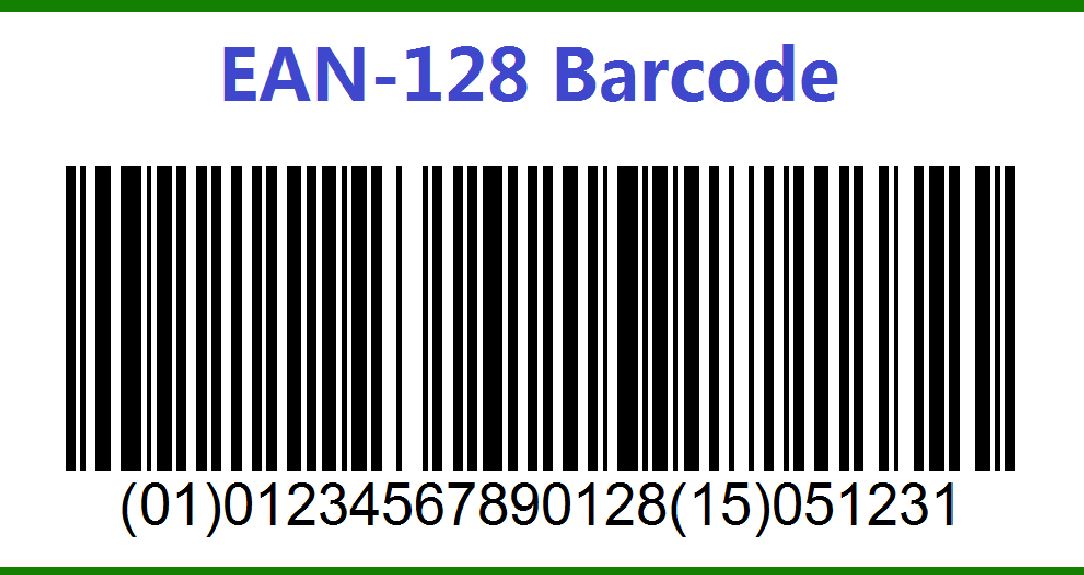
GS1-128 is not a different barcode symbology. It is a specific application standard that uses the Code 128 barcode structure to encode GS1-defined data elements. The term GS1-128 replaced the older designation EAN-128 to align with the global GS1 organization¡¯s branding and standards unification. |
The distinction is: |
Code 128 defines a barcode symbology |
GS1-128 defines data content and format rules applied within that symbology |
The structure of Code 128 is preserved entirely, including bars, spaces, start characters, stop characters, character sets, and checksum logic. |
4.2 Application identifiers (AIs) |
GS1-128 introduces Application Identifiers, abbreviated as AIs, to structure encoded data elements. Each AI is a prefix that specifies the meaning and format of the data that follows. Examples include: |
(01) Global Trade Item Number |
(10) Batch or lot number |
(17) Expiration date |
(21) Serial number |
(00) Serial Shipping Container Code |
AIs enhance supply chain automation by enabling machine systems to parse data with absolute clarity. |
4.3 Data structure standards within GS1-128 |
GS1-128 enforces formatting rules that guarantee: |
Standardized interpretation of data elements in any location |
Fully automated parsing by warehouse, retail, or government systems |
Support for fixed-length and variable-length fields |
Function code usage (typically FNC1) for delimiting variable data |
These rules enable global harmonization of business data exchange. |
4.4 Use in global trade numbering systems |
GS1-128 is widely adopted in: |
Worldwide logistics |
Retail and wholesale distribution |
Pharmaceutical serialization |
Food traceability |
Aerospace and defense supply chains |
Because GS1 identifiers such as GTIN and SSCC are universally recognized, the barcode forms a cornerstone of modern global trade. |
4.5 Serialization and traceability roles |
Strict regulatory environments amplified the importance of GS1-128. For example: |
Serialized product identification protects against counterfeiting |
Lot and expiration date encoding supports product recalls |
Carrier tracking codes enable real time item visibility |
These features fortify supply chain transparency and consumer safety. |
|
5. Printing Technology and Media Considerations |
5.1 Recommended label materials |
Code 128 requires a stable print surface for optimal readability. Common media include: |
Thermal transfer synthetic labels for durability |
Direct thermal labels for short lifecycle items |
Paper stock labels for controlled indoor environments |
Polyester and polypropylene for chemical or moisture exposure |
Selection depends on handling, lifecycle, and environmental requirements. |
5.2 Thermal transfer and direct thermal printing |
Thermal transfer printing delivers: |
Highest print quality and contrast |
Resistance to abrasion and chemical exposure |
Longer label lifetime |
Direct thermal printing offers: |
Lower cost and simpler hardware |
Faster printing speed |
Sensitivity to heat, UV, and friction |
Best suited for shipping labels and short term use |
Barcode scanners require high contrast to decode accurately, making thermal methods generally preferable. |
5.3 Precision requirements in bars and spaces |
Accurate bar width is essential because scanners measure reflected light transitions between bars and spaces. Important variables include: |
X dimension (minimum module width) |
Edge sharpness |
Uniformity of bar and space ratios |
Poor print quality may cause scanner recalculation errors leading to misreads. |
5.4 Environmental influences |
Environmental factors can degrade barcode performance: |
Humidity can blur direct thermal labels |
Temperature fluctuation can expand materials, altering bar width ratios |
Oil or dust contamination can reduce reflectance |
Chemical exposure can remove ink or coating |
Risk assessment determines correct material choices for harsh environments. |
5.5 Cost analysis |
Cost considerations include: |
Label substrate material cost |
Ribbon cost for thermal transfer |
Longevity of printed symbols |
Compliance and quality verification testing expenses |
In high volume logistics, even minor cost differences can significantly influence total operational expenditure. |
|
6. Decoding Technology |
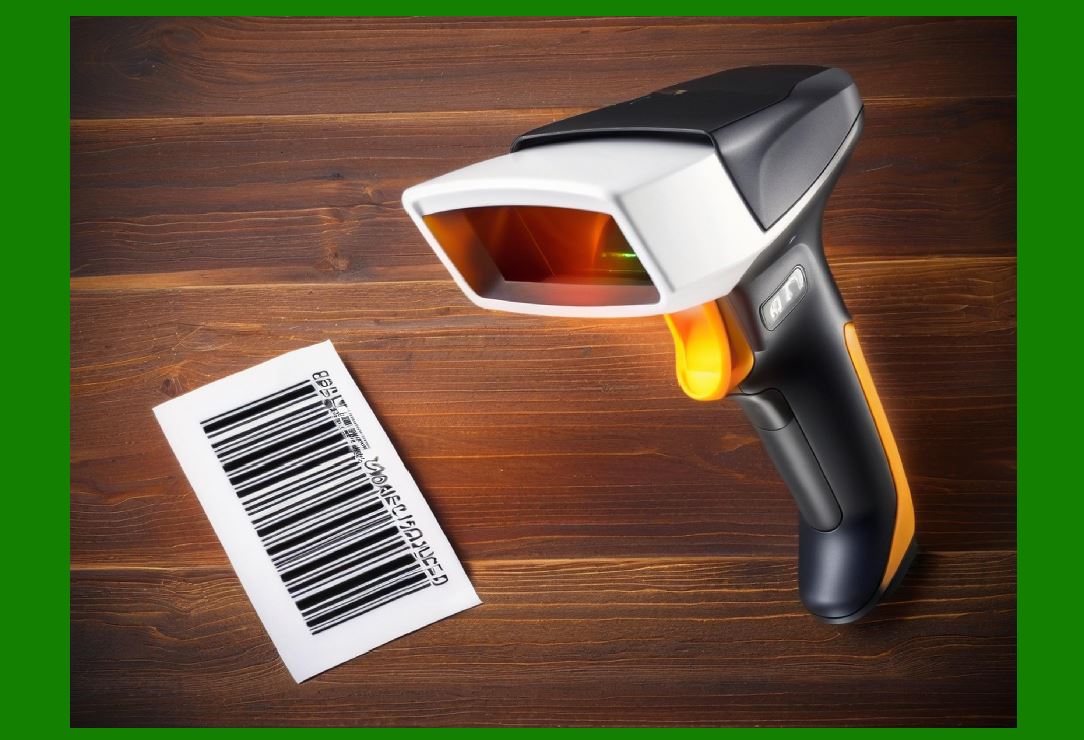
6.1 Laser scanners |
Laser-based devices remain popular for Code 128 due to: |
High read reliability |
Ability to scan from greater distances |
Support for moving object scanning |
Strong performance on curved or uneven surfaces |
They detect bars by sweeping a laser beam across the barcode surface. |
6.2 CCD scanners |
CCD (Charge Coupled Device) scanners: |
Capture barcode images with an array of light sensors |
Are preferred in compact and ruggedized environments |
Have no moving parts |
Perform well in handheld retail and healthcare settings |
Their broader field of view supports omnidirectional reading to a limited degree. |
6.3 CMOS camera-based imaging |
Modern imagers based on CMOS technology: |
Decode one dimensional and two dimensional symbols |
Enable mobile phone and smart device scanning |
Offer enhanced performance on damaged or poorly printed labels |
Capture additional metadata such as image evidence |
These scanners contribute to digital transformation in workflows. |
6.4 Impact of print quality on decode success |
Scanners reference verification parameters before approving a decode. The failure rate rises when: |
Bars become smudged or faded |
Quiet zones are obstructed |
Substrate is reflective or highly curved |
Label alignment deviates significantly |
Maintaining print quality protects throughput efficiency. |
6.5 Verification parameters and grading |
Formal verification processes evaluate: |
Contrast and reflectance |
Decodability |
Modulation |
Defects and blemish distribution |
Scoring systems based on ISO and GS1 standards ensure interoperability throughout the supply chain. |

|
7. Industrial Applications and Case Studies |
7.1 Overview of Code 128 application domains |
Code 128¡¯s flexibility and high density have made it the dominant linear barcode in many industrial contexts where variable data must be encoded efficiently. Sectors leveraging Code 128 include transportation and logistics, retail distribution, postal services, manufacturing automation, healthcare operations, and government-regulated supply chains. The symbology¡¯s support for full ASCII and compact numeric encoding provide a universal data vehicle compatible with software, hardware, and international operational requirements. |
7.2 Logistics and transportation industry |
Logistics systems use Code 128 extensively to encode: |
Shipment identifiers |
Container IDs |
Routing instructions |
Delivery confirmation references |
Return merchandise authorization data |
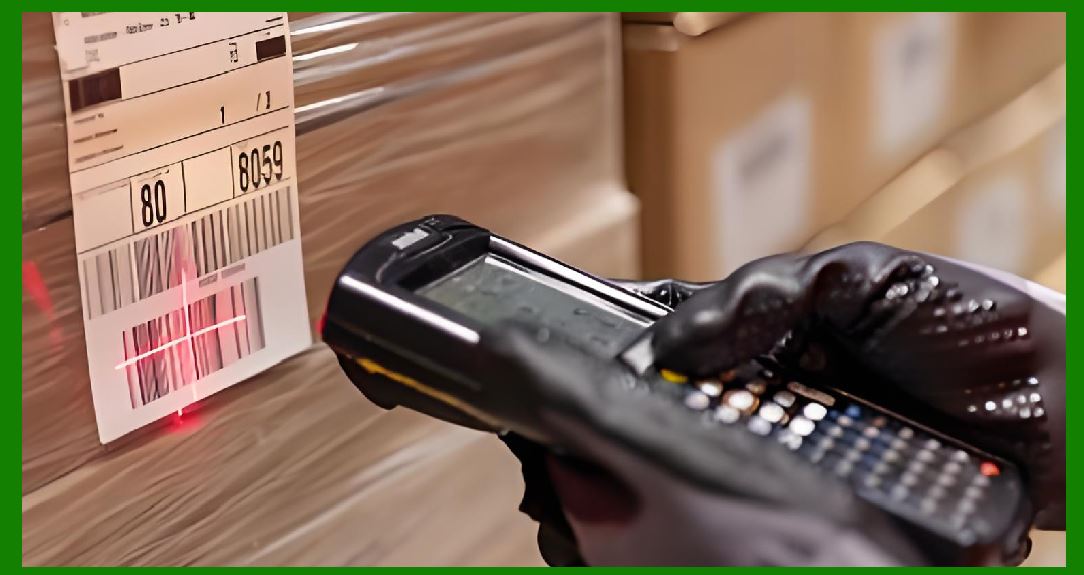
Carrier networks process immense barcode volumes daily under strict performance constraints. Code 128¡¯s efficient readability supports automated conveyor systems, high-speed scanning portals, and handheld devices used by couriers. The compact structure reduces label space on small parcels, while strong checksum validation ensures routing accuracy. |

|
7.3 Warehouse management and inventory automation |
Within warehouse operations, Code 128 facilitates: |
Real-time inventory tracking |
Location identification |
Asset movement auditing |
Picking and order fulfillment processes |
Cycle counting and stock replenishment |
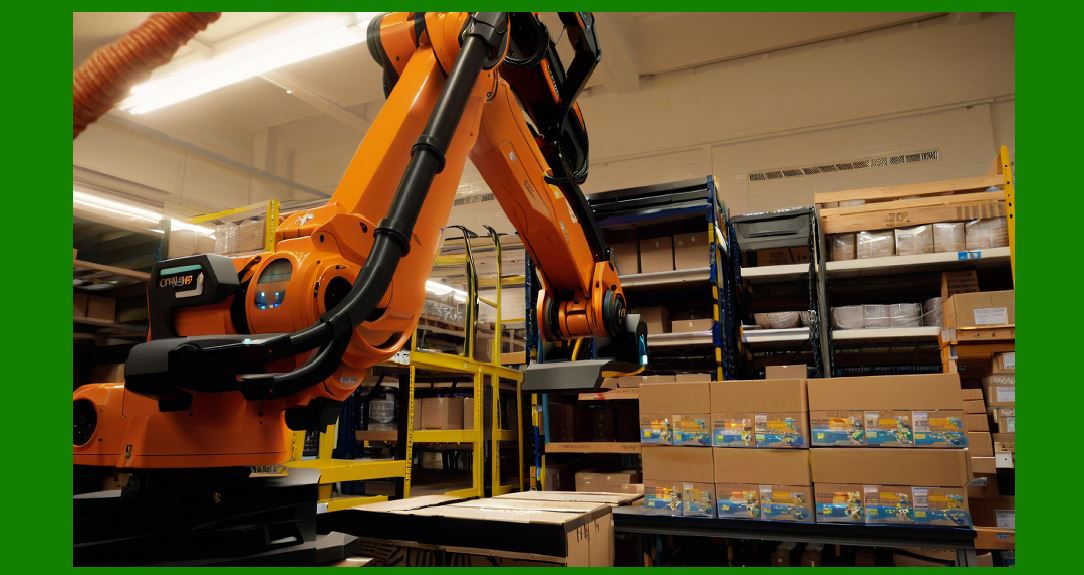
Forklift-mounted imagers and fixed-position scanners reduce human input errors. Using Code Set C for numeric SKU representation maximizes scanning speed and throughput. For serialized inventory, Code 128 provides unique identifiers enabling item-level traceability. |
7.4 Retail supply chain and distribution packaging |
Retail distribution centers label: |
Case packs |
Pallets |
Inner and outer cartons |
GS1-128 is specifically used for: |
Trade item identifiers |
Expiration management on perishable goods |
Lot number traceability for regulatory compliance |
This ensures that upstream supply chain data aligns seamlessly with point-of-sale systems, enabling recall readiness and improved waste management. |

|
7.5 Postal and courier services |
Postal agencies globally have adopted Code 128 for: |
Mailpiece tracking |
Sorting machine routing codes |
Customs and destination identifiers |
Delivery confirmation scans |
High speed sorting lines require linear symbologies with strong error detection. Code 128 provides the robustness needed to handle variable substrate quality and mechanical handling stresses. |
7.6 Pharmaceutical and healthcare compliance |
Healthcare facilities and pharmaceutical manufacturers rely on Code 128 for: |
Unit-level dose tracking |
Medication administration accuracy |
Blood product identification |
Implantable device traceability |
Anti-counterfeit safeguards |
Regulations often mandate serialization, lot traceability, and expiry encoding. Code 128¡¯s capacity supports these requirements without forcing label redesign. |

|
7.7 Manufacturing process control |
Manufacturers use Code 128 throughout: |
Work-in-progress tracking |
Part serialization |
Component traceability |
Quality assurance data collection |
Applying the barcode at multiple production stages increases transparency, supports lean methods, and allows defect root cause analysis. |
7.8 Aerospace and defense |
These sectors require: |
Strict configuration control |
Unique part identification |
Long-term durability under extreme conditions |
Special label materials and high-contrast printing protect data integrity. Scanning history supports crash investigations, part lifing programs, and compliance audits. Code 128 fulfills these operational mandates while integrating with existing enterprise resource planning systems. |

|
7.9 Government, taxation, and compliance tracking |
Governments leverage Code 128 for: |
Restricted product tracking |
Excise taxation |
Controlled substance management |
National identification labeling mandates |
Its compatibility with secure data structures helps monitor regulated goods and maintain public safety. |
7.10 Event ticketing and access control |
Event operators and venue managers use Code 128 for: |
Seat assignment validation |
Anti-reuse safeguards |
Rapid access line flow |
Automated attendance verification |
Scanners integrate with digital identity systems to detect fraud or duplication. |

|
7.11 Automotive and heavy equipment production |
The automotive sector uses Code 128 to trace: |
Engine and transmission assemblies |
VIN related parts |
Service and warranty histories |
Component traceability mitigates recall risk and facilitates after-market service logistics. |
7.12 Food and beverage traceability |
Perishable goods require upstream tracking for: |
Source identification |
Cold chain integrity |
Contamination response |
Regulatory documentation |
GS1-128 labeling supports full farm-to-table traceability, improving consumer confidence and public health responses. |

|
7.13 Electronics industry serialization |
Consumer electronics manufacturers encode: |
Model and batch numbers |
Unique device identifiers |
Warranty references |
Security verification data |
Serialization supports theft deterrence and authorized repair validation. |

|
8. Comparison with Other Barcodes |
8.1 Comparison with Code 39 |
Code 128 offers: |
Higher data density |
Wider character support (full ASCII vs. 43 characters) |
Mandatory checksum increasing integrity |
Code 39 is still used where simplicity takes precedence, but Code 128 is preferred for modern industrial automation. |
8.2 Comparison with Interleaved 2 of 5 |
Interleaved 2 of 5 is numeric only and lacks inherent error checking. Code 128 outperforms it in: |
Accuracy |
Security |
Encoding flexibility |
Standardization under GS1 |
For mission critical tracking, Code 128¡¯s integrity makes it superior. |

|
8.3 Comparison with UPC/EAN retail barcodes |
UPC/EAN are: |
Retail-specific |
Limited to numeric product identifiers |
Fixed length |
Code 128: |
Encodes variable-length data |
Carries supplemental operational information |
Provides dynamic applicability beyond retail point-of-sale |
Both coexist, each solving a distinct need. |
8.4 Comparison with PDF417 |
PDF417 is a stacked two-dimensional linear barcode. It: |
Encodes thousands of characters |
Supports ECC error correction |
Remains readable even when partially damaged |
However: |
It occupies more space |
Scanning equipment requirements are higher |
Code 128 remains optimal for compact linear-only requirements. |

|
8.5 Comparison with Data Matrix and QR Code |
Data Matrix and QR Code provide: |
Significantly larger data capacity |
Strong error correction capabilities |
Omnidirectional imaging-based scanning |
Nevertheless: |
Adoption requires imagers instead of traditional laser scanners |
Printed symbol footprint is different |
Transition costs may be substantial |
Code 128 maintains dominance in environments that: |
Prefer existing scan infrastructure |
Require compatibility with legacy systems |
Need linear labels for regulatory compliance such as pallet edges |
8.6 Future coexistence landscape |
All symbologies evolve. Code 128 will remain relevant where: |
Linear barcodes are mandatory for labeling standards |
Low-cost scanning hardware remains essential |
Numeric serialization is prevalent |
High speed scanning on conveyors is needed |
Hybrid deployments where both linear and matrix codes appear on products will continue to increase efficiency without forcing full format migration. |

|
9. Data Capacity, Encoding Limits, and Performance Curves |
9.1 Overview of theoretical symbol capacity |
Code 128 has no fixed maximum data length. Its capacity depends entirely on: |
Available label space |
Printing resolution |
Scanning environment |
Operational performance requirements |
This flexible data length property enables adaptive deployment for small components, medium cartons, or pallet labels. |
9.2 Physical size considerations and scaling |
Barcode dimensions are influenced by: |
The X-dimension (narrow bar width) |
Required quiet zones |
Bar height |
Number of encoded characters |
Printing technology resolution (particularly dots per inch) |
Increasing encoded characters expands symbol width linearly. Operational tradeoffs must balance density versus scannability. |

|
9.3 Throughput performance relative to length |
Longer Code 128 barcodes can reduce: |
Decode speed |
First-pass read rates on high-speed scanners |
Logistics engineers model these constraints to ensure conveyor systems maintain desired parcels-per-hour throughput. |
9.4 Optimal data compaction strategies |
Switching between Code Sets A, B, and C allows engineers to compress data efficiently: |
Code Set C handles paired numeric digits for maximum density |
Switching codes only when necessary protects throughput |
Function codes support special contexts without breaking format |
Efficient encoding techniques preserve high density with minimal readability tradeoffs. |

|
9.5 Printing resolution requirements |
Typical minimum DPI thresholds: |
203 DPI: Standard logistics labels |
300 DPI: Higher precision requirements |
600+ DPI: Small components or extreme density scenarios |
Higher DPI allows tighter X-dimensions and more compact symbols while preserving scanning reliability. |
9.6 Substrate influence on data density |
Rough or glossy surfaces may: |
Scatter light inconsistently |
Reduce contrast |
Deform bars when printed |
These effects restrict density and scanner tolerance, encouraging the selection of specialized materials when using minimal margins. |
|
9.7 Scaling for long distance scanning |
Industrial portals and warehouse gates require: |
Taller bar heights for directional coverage |
Wider bars for long-range readability |
Human factors also apply, such as ergonomic scanner use at packing stations. |

|
10. Security and Error Prevention Mechanisms |
10.1 Role of the modulo-103 checksum |
Code 128 includes a mandatory checksum character calculated from: |
Start code value |
Weighted sum of all data characters |
Modulo base value of 103 |
This ensures: |
Single character substitutions are detectable |
Most common errors are eliminated at decode time |
Checksum integrity is enforced by scanner firmware without human action. |
10.2 Guarding against misreads |
Noise during scanning may distort reflected signals. Code 128 protects against: |
Bar width distortion |
Partial symbol damage |
Misalignment during scanning |
Label wrinkles or curvature |
Combined design elements significantly reduce the chance of accidental misinterpretation. |
10.3 Mitigating human-generated encoding errors |
Barcode management software enforces: |
Valid character set usage |
Accurate selection of code sets |
Proper checksum calculation |
Quiet zone protection |
Professionally integrated systems reduce reliance on operator skill. |
10.4 Support for structured compliance labels |
When deployed as GS1-128, additional safeguards appear: |
Application Identifier rules |
Decimal precision control for units of measure |
Serialization for counterfeit deterrence |
These coding rules allow digital auditing to detect anomalies in product movement. |
10.5 Integration with digital security technologies |
Enterprises combine Code 128 with: |
Databases storing scan histories |
Encrypted identifiers for controlled goods |
Cloud-based validation workflows |
Code 128 thus becomes a bridge between physical assets and cybersecurity systems. |

|
11. Economic Impact and ROI Contributions |
11.1 Direct productivity improvements |
Barcode automation reduces: |
Manual recording effort |
Data entry errors |
Inventory discrepancies |
Time spent verifying product identity |
Organizations often report substantial operational labor savings. |
11.2 Enhanced supply chain responsiveness |
Traceability compresses: |
Recall cycle times |
Disruption impact |
Customer fulfillment delays |
Access to real time status information strengthens decision making and coordination. |
11.3 Waste reduction in retail logistics |
Efficient identification supports: |
Accurate expiration-based rotation |
Better demand planning |
Minimization of perishable waste |
This provides both financial gains and sustainability improvements. |

|
11.4 Higher quality customer experiences |
Fast and accurate service benefits: |
Inventory availability |
Delivery tracking visibility |
Faster returns processing |
Competitive advantage often follows improved flow of products and information. |
11.5 Lower error-induced financial risks |
Barcode traceability reduces: |
Compliance incident penalties |
Warranty liability from mis-identified products |
Lost inventory from misplacement or theft |
The cost avoidance component of ROI is significant in regulated industries. |
11.6 Technology investment scaling benefits |
Code 128 deployments evolve: |
Across systems and locations |
Without changing label format |
While maintaining backward compatibility |
 cs@easiersoft.com