1. Concept and Definition |
1.1 Flexible Curved Noodle Shape Code Recognition Technology (often abbreviated as FNSCR or informally referred to as Noodle Code) is a form of visual information encoding that uses curved, flexible, noodle-like graphical elements rather than the rigid straight lines or square modules found in traditional barcodes or matrix codes. Its primary innovation lies in its ability to retain readability even when printed or projected on flexible, deformable, or irregular surfaces such as fabric, rubber, plastic packaging, or human skin. |
1.2 Unlike one-dimensional barcodes, which rely on the linear alignment of black and white stripes, or two-dimensional matrix codes such as QR Code and Data Matrix that depend on orthogonal alignment of square cells, the Noodle Shape Code represents data through curvilinear geometry¡ªcontinuous or segmented curves that can bend, stretch, or compress without losing their topological meaning. |
1.3 The recognition system is based on shape geometry, curvature invariance, and contour topology rather than pixel-by-pixel positional stability. This allows the system to operate under complex distortions, making it suitable for next-generation flexible electronics, wearable devices, soft robotics, and packaging that experiences dynamic deformation during use. |

|
2. Historical Background and Theoretical Foundation |
2.1 The conceptual roots of the Noodle Shape Code can be traced to biologically inspired visual recognition and topological data representation, which emerged from research in computational vision, robotics, and deformable pattern analysis during the late 20th and early 21st centuries. |
2.2 Traditional barcodes and 2D codes assume planar geometry, where scanner alignment and lighting are controlled. However, when researchers began to explore embedded identification for flexible and non-flat surfaces, a new class of encodings was required that could tolerate geometric warping while maintaining data integrity. |
2.3 The ¡°noodle¡± metaphor comes from the appearance of the encoding elements¡ªlong, thin, and curvy segments whose relative bending, orientation, and connection topology carry information. Early experiments were inspired by active contour models (¡°snakes¡±) in image analysis, which detect and track deformable shapes in images. |
2.4 The foundation of FNSCR rests on differential geometry and topological data encoding, in which curvature, torsion, and relative connectivity of continuous curves encode digital or analog information. The recognition algorithm does not depend solely on pixel coordinates but on invariant descriptors such as normalized arc length, shape signature functions, and curvature histograms. |
|
3. Structure of the Noodle-Shaped Encoding Elements |
3.1 A Noodle Code symbol typically consists of one or more continuous curve segments, each representing a bit sequence or numerical value through their shape attributes¡ªincluding curvature amplitude, directionality, angular modulation, and segment interconnection. |
3.2 The ¡°noodles¡± are not random squiggles; they are mathematically generated curves derived from a base function set. For example, each noodle can be modeled using a parametric spline function, where the control points or curvature function coefficients correspond to data bits. |
3.3 The geometry of each noodle follows the equation: |
r(t) = (x(t), y(t)) = ¦² (a_i * B_i(t)), |
where B_i(t) represents the basis spline function, and coefficients a_i encode binary or multi-level values. |
3.4 Depending on design, the code may use uniform curvature modulation (encoding by degree of bend), phase encoding (encoding by relative direction change), or length quantization (encoding by noodle length ratios). Multiple noodles may be arranged in a bundle, similar to a plate of noodles, with each noodle contributing to the total data capacity. |
3.5 The code includes an anchor region or reference frame, often composed of a distinct closed loop or thicker noodle that establishes spatial orientation. This helps the recognition system normalize scaling, rotation, and bending before decoding. |
3.6 Unlike rigid codes, the Noodle Code can be printed in continuous-tone ink, conductive material, or even embossed texture¡ªsince its readability depends on shape continuity rather than color contrast alone. |
|
4. Encoding Principles |
4.1 The encoding process begins by mapping digital information (binary data, ASCII characters, or numerical identifiers) into a geometric representation using a shape dictionary. |
4.2 Each data unit (e.g., 8 bits) corresponds to a shape pattern primitive, such as a sinusoidal wave of certain frequency, amplitude, and phase. A sequence of such primitives is connected smoothly to form one noodle line. |
4.3 To ensure continuity and smoothness, the encoding uses Bezier or B-spline interpolation, preserving differentiability of the curve. This prevents sudden corners or breaks that might confuse recognition algorithms. |
4.4 The code structure is divided into segments: |
- Reference noodles define boundaries or alignment. |
- Data noodles carry the encoded content. |
- Parity noodles provide redundancy for error correction. |
4.5 Data noodles may be modulated by curvature, meaning that binary ¡®0¡¯ corresponds to a smaller radius of curvature, and binary ¡®1¡¯ corresponds to a larger or opposite curvature direction. Alternatively, curvature frequency modulation can be applied¡ªsimilar to frequency modulation in signal processing. |
4.6 The system also supports multi-layer or color-coded encoding, where different color noodles represent separate data channels, increasing density. |
4.7 Encoding software ensures that generated noodle paths avoid overlapping or excessive bending beyond physical printing resolution limits. Smooth geometric transitions guarantee both visual aesthetic and scanning reliability. |

|
5. Decoding and Recognition Process |
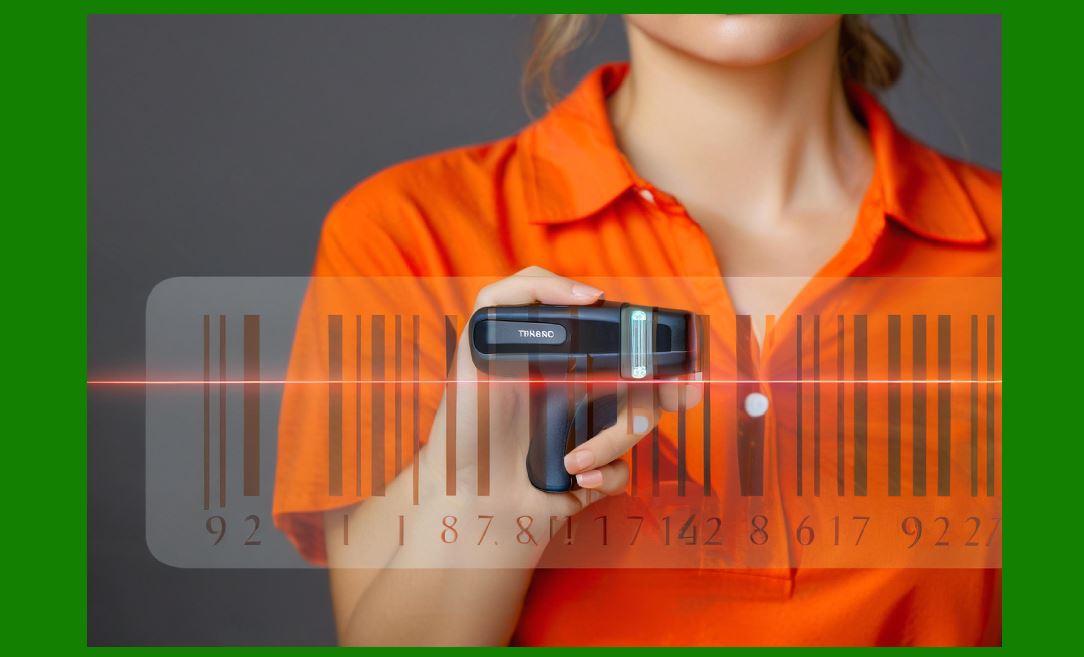
5.1 Recognition begins with image capture using a standard optical sensor¡ªsuch as a camera or scanner. Unlike QR codes that require high-contrast rectangular grids, Noodle Codes can be read from curved or irregular surfaces. |
5.2 The decoding pipeline consists of: |
1. Preprocessing and contour extraction. |
2. Curve tracing and skeletonization. |
3. Normalization using reference noodles. |
4. Feature extraction of curvature descriptors. |
5. Pattern matching or statistical decoding. |
6. Error correction and data reconstruction. |
5.3 Contour extraction uses adaptive edge detection (Canny or Sobel filters), followed by vectorization that represents noodle paths as parametric polylines. |
5.4 Skeletonization reduces the noodle¡¯s width to a centerline while retaining curvature information. This allows shape analysis independent of thickness or illumination. |
5.5 Normalization corrects scale, orientation, and bending using reference noodles or fiducial landmarks. For instance, the algorithm may align the longest closed noodle to a canonical circle or ellipse, then transform all other noodles relative to this normalized frame. |
5.6 The recognition algorithm computes a curvature signature along the arc-length parameter. By comparing this curvature function to a database of known encodings, data bits are reconstructed. |
5.7 The decoding may use dynamic time warping (DTW) or Fourier shape descriptors to tolerate deformation and stretching, ensuring that even distorted noodles yield accurate data recovery. |
|
6. Mathematical Modeling and Shape Representation |
6.1 The core mathematical foundation lies in differential geometry, particularly the curvature function ¦Ê(s), where s is the normalized arc length. |
6.2 Each noodle¡¯s shape can be expressed as a curvature signal: |
¦Ê(s) = f(data_bits, modulation_parameters). |
6.3 The code recognition system then reconstructs this curvature function from image coordinates and compares it to the dictionary of predefined curvature patterns. |
6.4 The system is topology-preserving, meaning that even if local curvature changes slightly due to noise or distortion, the global sequence of curvature maxima and minima defines the same bit pattern. |
6.5 The mathematical representation also supports affine and projective invariance, allowing recognition under perspective distortion (when viewed at an angle). |
6.6 The relationship between curvature and data encoding can be generalized as a modulation function: |
Data = Quantize[ (1/¦Ð) ¡Ò ¦Ê(s) ds ], |
which integrates curvature over arc segments to derive discrete values. |
6.7 To enhance robustness, statistical smoothing and polynomial fitting are applied to filter out scanning noise before decoding. |

|
7. Adaptation to Flexible and Deformable Surfaces |
7.1 A key strength of Noodle Code is its flexibility¡ªboth physically and computationally. When printed on soft or elastic materials, such as latex gloves, fabrics, or plastic pouches, the noodles deform with the surface but retain relative curvature topology. |
7.2 The recognition algorithm applies elastic shape matching, which models the surface deformation as a two-dimensional vector field and compensates for local stretching before decoding. |
7.3 This technology is highly relevant for wearable devices, where identifiers must remain readable even when attached to bending joints or moving fabrics. |
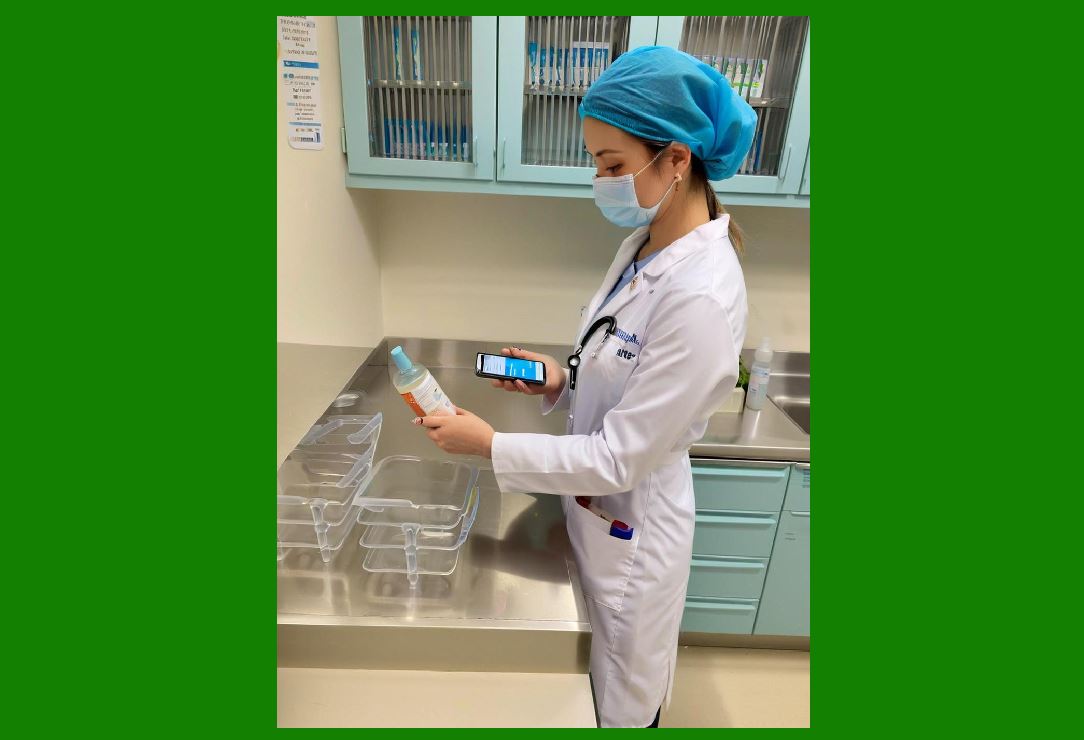
7.4 On curved containers (e.g., bottles or tubes), traditional codes suffer from perspective and cylindrical distortion. Noodle Codes, however, maintain readability because curvature modulation naturally maps to the surface curvature. |
7.5 Advanced implementations use fiducial noodles¡ªspecially shaped reference curves whose known geometry helps reconstruct the 3D deformation model of the surface. Once deformation is estimated, the system can apply inverse transformation to flatten the code virtually before decoding. |
7.6 In some experimental prototypes, Noodle Codes have been successfully read on balloon-like surfaces stretched up to 150% of their original area, proving remarkable tolerance to geometric strain. |
|
8. Imaging, Lighting, and Optical Detection |
8.1 Recognition depends on accurate imaging, but Noodle Codes are inherently contrast-tolerant. Since decoding relies on contour shape, even low-contrast conditions can yield usable results if edge gradients are detectable. |
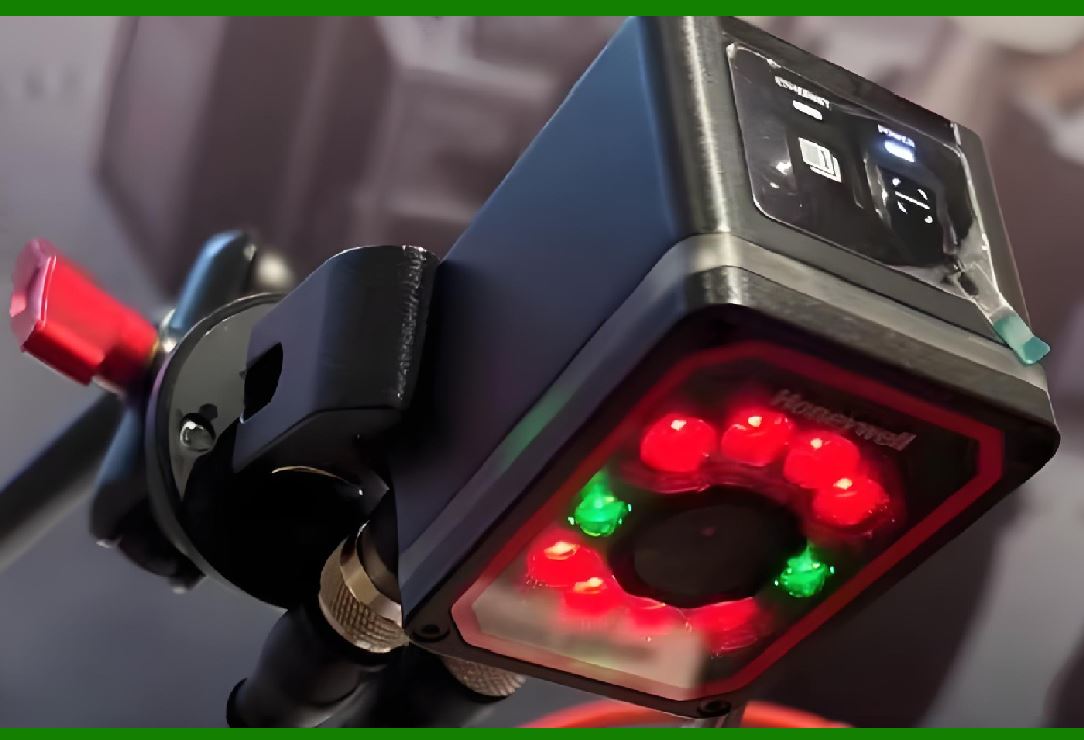
8.2 The optical capture system may employ polarized lighting to reduce glare on glossy or curved materials. Infrared or ultraviolet imaging can also be used when noodles are printed in special inks invisible to the naked eye. |
8.3 In industrial environments, multi-angle cameras can capture 3D geometry, allowing shape reconstruction using stereo vision or structured light. The resulting surface model aids in geometric correction before decoding. |
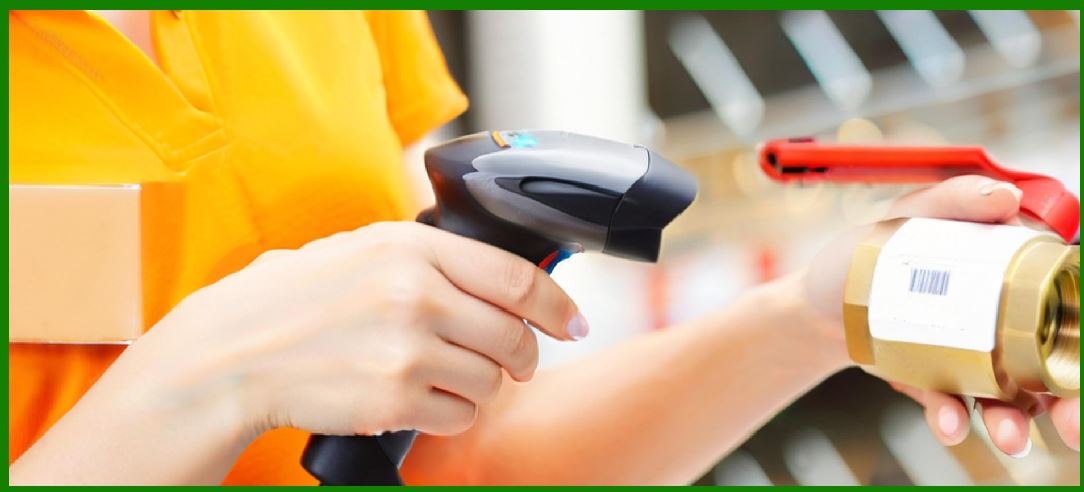
8.4 Mobile phones can easily serve as readers, provided that the recognition app includes curvature-based extraction algorithms instead of relying on square pattern detection (as in QR scanning). |
8.5 Some designs include embedded fiducial dots or anchors that assist autofocus and camera alignment, especially under dynamic conditions. |
|
9. Error Correction and Robustness |
9.1 Like digital barcodes, Noodle Codes employ error correction mechanisms to recover from partial occlusion, noise, or deformation. |
9.2 The most common approach uses redundant curvature modulation, where each data segment is encoded across multiple noodles. The system then applies a majority voting or weighted averaging scheme to reconstruct the intended bit sequence. |
9.3 For higher reliability, Reed¨CSolomon or convolutional coding is applied at the data layer, independent of geometric representation. Even if a portion of a noodle is unreadable, redundancy in curvature sequence allows recovery. |
9.4 Geometric error correction involves fitting the observed shape to the nearest valid curve in the predefined dictionary. The distance metric in shape space serves as a measure of confidence. |
9.5 The decoder may also use Bayesian inference, where multiple curvature hypotheses are evaluated, and the most probable data sequence is chosen based on statistical likelihood. |
9.6 Practical experiments show that FNSCR can tolerate up to 30¨C40% geometric distortion and 25% partial occlusion, outperforming rigid codes on flexible substrates. |
|
10. Applications |
10.1 Packaging Industry: Ideal for food wrappers, flexible pouches, and shrink sleeves, where standard barcodes fail due to curvature and wrinkling. |
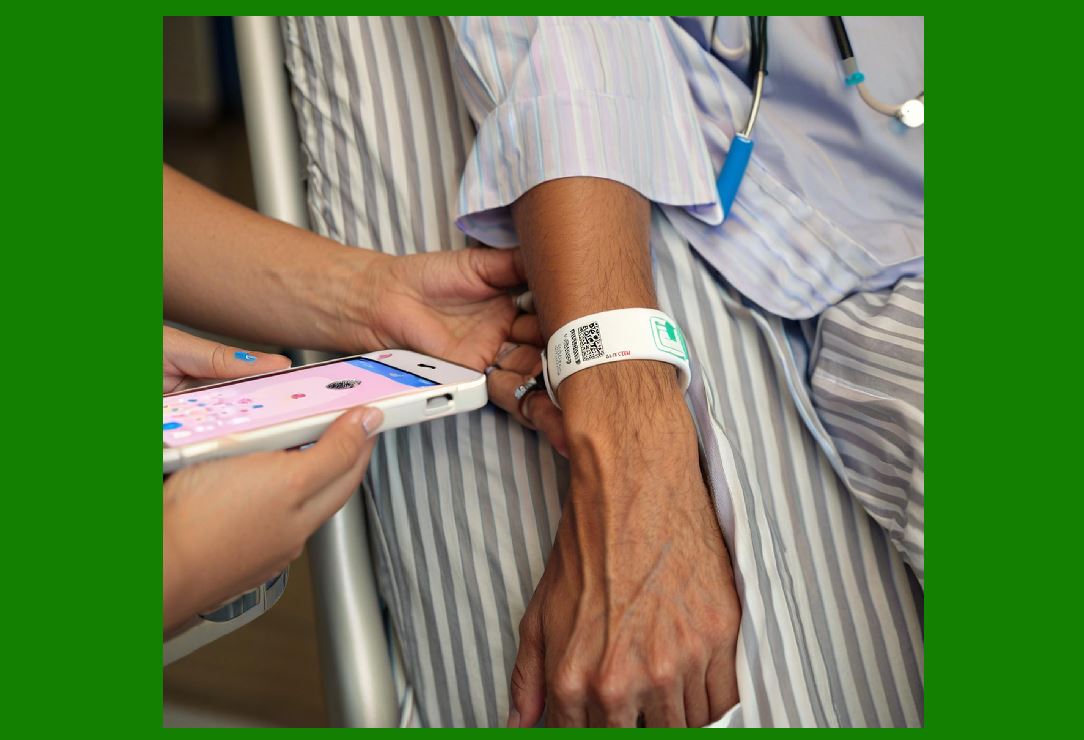
10.2 Wearable Technology: Can be embedded in textiles or printed on skin patches for patient tracking, biometric sensors, or event admission systems. |
10.3 Soft Robotics: Enables labeling and control signal encoding directly on deformable robotic surfaces. |
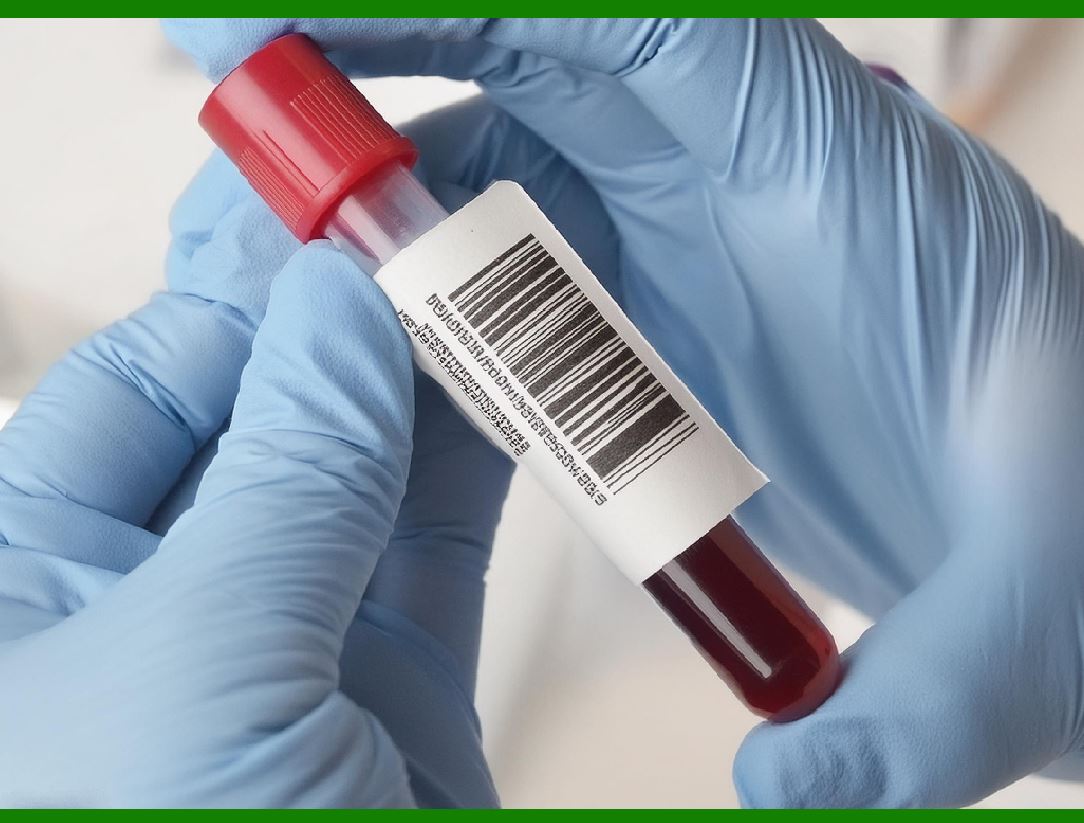
10.4 Medical Devices: Sterile flexible labels on catheters, tubes, or surgical gloves benefit from this deformation-tolerant code. |
10.5 Smart Fabrics and Clothing: Invisible noodle codes printed using conductive or fluorescent ink can store manufacturing and authenticity data. |
10.6 Artistic and Creative Industries: The organic, flowing shapes integrate visually with artistic designs, offering aesthetically pleasing data embedding. |
10.7 Industrial Maintenance: Printed on flexible hoses or cables to track usage, replacement dates, or origin information. |
10.8 Augmented Reality (AR): Curved codes can serve as markers recognized by AR systems, even on irregular surfaces. |
|
11. Advantages and Limitations |
11.1 Advantages: |
1. Exceptional tolerance to bending, stretching, and surface deformation. |
2. Aesthetically integrated appearance, blending with product design. |
3. Multi-modal readability (visible, infrared, or texture-based). |
4. High adaptability to non-planar and flexible substrates. |
5. Encodes continuous or analog information if needed. |
11.2 Limitations: |
1. Lower raw data density compared with QR or Data Matrix. |
2. Higher computational complexity in recognition. |
3. Need for specialized software and machine learning models. |
4. Sensitive to severe smearing or complete noodle breakage. |
5. Standardization is still emerging, with no universal format yet. |
12. Future Development and Research Directions |
12.1 Researchers are working to integrate machine learning-based recognition using convolutional neural networks trained on synthetic noodle datasets, enabling real-time decoding under extreme deformation. |
12.2 Another promising direction is 3D printable noodle codes, embedded directly into materials, where depth or surface relief carries encoded data. |
12.3 The technology could evolve into a hybrid between structural coloration patterns and curved information channels, merging aesthetics and function. |
12.4 A potential future standard, sometimes referred to as FNSC-1 (Flexible Noodle Shape Code Specification), may define parameters such as curvature frequency limits, reference frame topology, and error correction structure. |
12.5 Integration with RFID or NFC tags can combine optical and electronic identification, allowing redundancy across modalities. |
12.6 With advances in soft material science, the Noodle Code may become a key part of the Internet of Soft Things (IoST), where every flexible object carries embedded identity and data traceability. |
12.7 Experimental results suggest that with optimized curvature modulation and AI-based decoding, data densities approaching that of QR Code v10 can be achieved while maintaining high flexibility. |
|
13. Summary of Core Principles |
13.1 The Flexible Curved Noodle Shape Code represents a paradigm shift from discrete square modules to continuous curved geometry. |
13.2 Its recognition system focuses on curvature invariance, topological robustness, and elastic decoding, making it suitable for environments where planar stability cannot be guaranteed. |
13.3 The technology blends mathematical rigor, biological inspiration, and modern computer vision to produce a versatile and resilient form of visual data encoding. |
13.4 It is not merely an aesthetic alternative to barcodes but a functional evolution tailored for the flexible, deformable, and dynamic materials of the 21st century. |
 cs@easiersoft.com