1. Introduction to the 2D Barcode |
1.1. Definition and Overview |
The 2D barcode, also known as a two-dimensional barcode, is a graphical representation of data that extends in both horizontal and vertical directions. Unlike traditional 1D barcodes, which encode data in a series of parallel lines, 2D barcodes use patterns of squares, dots, or other geometric shapes to encode information. This allows them to store significantly more data than their 1D counterparts. Common types of 2D barcodes include QR codes, Data Matrix codes, and PDF417 codes. |
1.2. Historical Context |
The development of 2D barcodes emerged from the need for more sophisticated data encoding and retrieval systems. In the late 20th century, industries faced growing demands for higher data capacity, greater reliability, and faster data processing. Traditional 1D barcodes, while revolutionary at their inception, had limitations in terms of data capacity and error correction. This spurred the development of 2D barcodes to address these shortcomings and to support the increasingly complex needs of various sectors. |
|
2. The Limitations of 1D Barcodes |
2.1. Capacity Constraints |
1D barcodes, such as UPC (Universal Product Code) and EAN (European Article Number), encode data in a linear format. This design limits the amount of information that can be stored, typically to a few dozen characters. For instance, a standard UPC code encodes only 12 numerical digits. This restriction posed challenges as businesses sought ways to encode more information in a single scan. |
2.2. Error Correction |
Error correction in 1D barcodes is relatively basic. While techniques such as check digits can help detect errors, they offer limited correction capabilities. In cases where barcodes are damaged or misprinted, scanning errors can occur, leading to potential misreads and data integrity issues. |
2.3. Data Retrieval Efficiency |
1D barcodes require precise alignment and orientation for accurate scanning. If a barcode is partially obscured, damaged, or misaligned, it can be difficult for scanners to read the data. This inefficiency becomes problematic in fast-paced environments where quick and accurate data retrieval is essential. |
|
3. The Emergence of 2D Barcodes |
3.1. Increased Data Capacity |
One of the primary motivations behind the invention of 2D barcodes was to address the data capacity limitations of 1D barcodes. 2D barcodes can store hundreds to thousands of characters of data, depending on the type of 2D barcode and its specific encoding scheme. For example, a QR code can hold up to 7,089 numeric characters or 4,296 alphanumeric characters. |
3.2. Enhanced Error Correction |
2D barcodes incorporate advanced error correction algorithms that allow them to recover data even if parts of the code are damaged or obscured. For instance, QR codes use the Reed-Solomon error correction technique, which can correct up to 30% of the code's data if it is corrupted or missing. This robust error correction capability ensures greater reliability in various scanning conditions. |
3.3. Improved Scanning Flexibility |
Unlike 1D barcodes, which require precise alignment, 2D barcodes can be scanned from any angle and can tolerate some degree of distortion. This flexibility is particularly valuable in environments where items may be scanned quickly or where barcodes might be partially obscured or damaged. For example, QR codes can be scanned from different orientations, making them more versatile for consumer and industrial applications. |

|
4. Practical Applications of 2D Barcodes |
4.1. Retail and Inventory Management |
In the retail sector, 2D barcodes have revolutionized inventory management and checkout processes. QR codes and Data Matrix codes are often used to encode product information, promotional offers, and even customer feedback surveys. For instance, a retail store might use QR codes on product labels to provide customers with additional product details or access to special discounts. |
4.2. Healthcare and Pharmaceuticals |
The healthcare industry has adopted 2D barcodes for tracking medications, patient records, and medical equipment. Data Matrix codes are frequently used in pharmaceutical packaging to ensure accurate drug identification and prevent counterfeiting. For example, the Data Matrix code on a medication bottle can contain detailed information about the drug, including its expiration date and lot number, which is crucial for ensuring patient safety. |
4.3. Logistics and Supply Chain |
In logistics and supply chain management, 2D barcodes enhance tracking and traceability of shipments and inventory. QR codes and PDF417 codes are used to encode shipping labels, tracking numbers, and other critical information. This allows for more efficient handling and tracking of goods throughout the supply chain. For example, a PDF417 barcode on a shipping container can store detailed information about the contents, destination, and handling instructions, facilitating smoother operations and reducing errors. |
4.4. Public Information and Marketing |
2D barcodes have also been utilized in marketing and public information campaigns. QR codes, in particular, are frequently used in advertisements, product packaging, and promotional materials to direct consumers to websites, social media profiles, or special offers. For instance, a magazine ad might include a QR code that, when scanned, takes the user to a landing page with exclusive content or a discount coupon. |

|
5. The Technology Behind 2D Barcodes |
5.1. Encoding and Decoding |
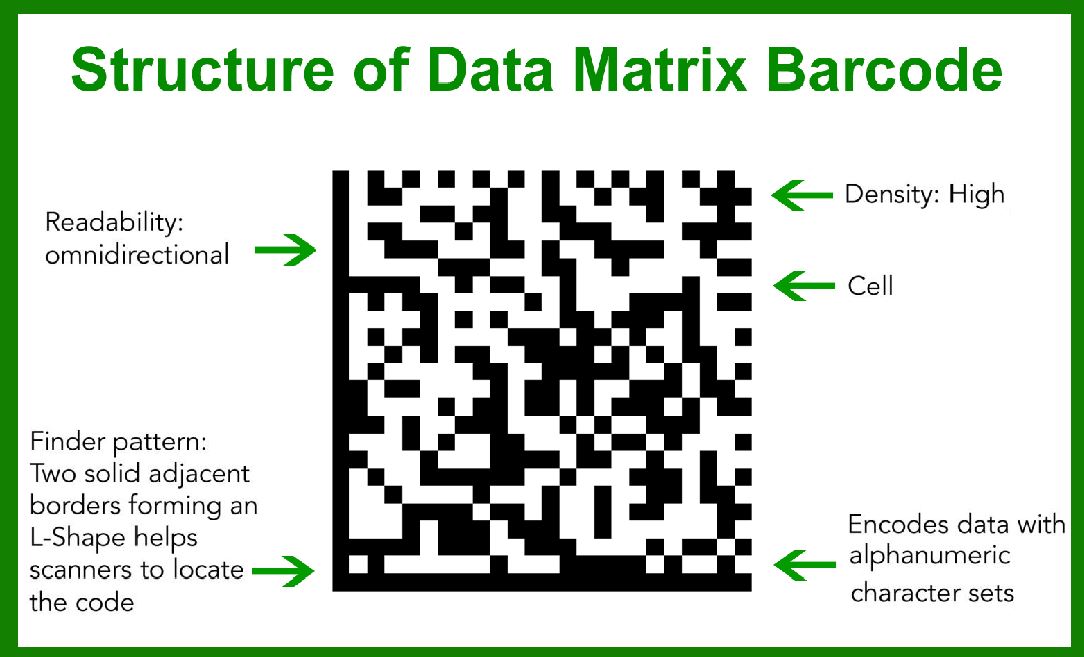
2D barcodes use various encoding schemes to convert data into graphical patterns. Each type of 2D barcode has its own encoding rules and data structures. For example, QR codes use a combination of black and white squares arranged in a grid pattern, while Data Matrix codes use a series of dots and squares. Decoding involves analyzing the patterns and translating them back into the original data using algorithms specific to each barcode type. |
5.2. Error Correction Algorithms |
Advanced error correction algorithms are a key feature of 2D barcodes. Techniques such as Reed-Solomon error correction and error correction codewords enable 2D barcodes to recover data even if parts of the code are damaged or unreadable. This ensures greater reliability and robustness in various conditions. For example, a QR code with a partially obscured section can still be read and decoded accurately due to its error correction capabilities. |
5.3. Data Structure and Symbology |
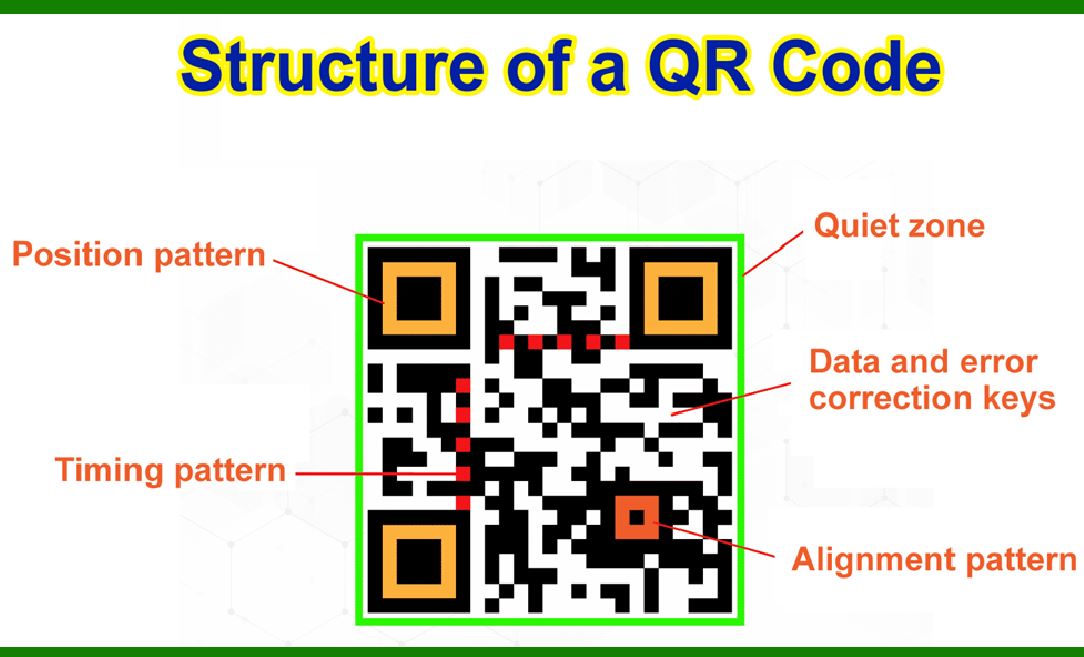
Different 2D barcodes use unique data structures and symbologies to represent encoded information. QR codes, for example, use a combination of position markers, alignment patterns, and timing patterns to encode and decode data. Data Matrix codes, on the other hand, use a matrix of square modules to represent information. Understanding these structures is essential for designing and implementing effective 2D barcode systems. |

|
6. The Impact of 2D Barcodes on Industries |
6.1. Retail and Consumer Experience |
The adoption of 2D barcodes has significantly improved the retail and consumer experience. QR codes on product packaging and advertisements allow consumers to access additional information and interact with brands in new ways. This enhanced engagement has led to increased customer satisfaction and loyalty. |
6.2. Operational Efficiency |
In various industries, 2D barcodes have streamlined operations and improved efficiency. By automating data capture and retrieval processes, businesses can reduce errors, save time, and enhance productivity. For example, the use of QR codes for inventory management reduces manual data entry and improves accuracy. |
6.3. Data Security and Compliance |
2D barcodes also play a role in data security and compliance. In the healthcare and pharmaceutical industries, for instance, 2D barcodes help ensure the accuracy and traceability of products, reducing the risk of counterfeiting and ensuring regulatory compliance. This is crucial for maintaining the integrity of the supply chain and protecting consumer safety. |

|
7. Future Trends and Innovations |
7.1. Integration with Mobile Technology |
The integration of 2D barcodes with mobile technology continues to evolve. With the widespread use of smartphones and mobile apps, QR codes and other 2D barcodes are increasingly used for mobile payments, ticketing, and authentication. This trend is likely to continue as mobile technology advances and new applications emerge. |
7.2. Enhanced Data Capabilities |
Future developments in 2D barcode technology may focus on enhancing data capabilities and functionality. This includes increasing storage capacity, improving error correction, and enabling more complex data structures. Innovations in encoding and decoding techniques could further expand the potential applications of 2D barcodes. |
7.3. Integration with IoT and Smart Devices |
The integration of 2D barcodes with Internet of Things (IoT) and smart devices is an area of growing interest. 2D barcodes could be used to facilitate communication between devices, track asset locations, and enable automated processes in smart environments. This integration has the potential to revolutionize industries by enabling more efficient and interconnected systems. |

|
8. Conclusion |
8.1. Summary of Key Points |
The invention of the 2D barcode addressed several limitations of 1D barcodes, including data capacity, error correction, and scanning flexibility. The development of 2D barcodes has had a significant impact on various industries, improving operational efficiency, enhancing consumer experiences, and supporting data security and compliance. |
8.2. The Ongoing Evolution |
As technology continues to advance, 2D barcodes will likely evolve to meet new challenges and opportunities. Innovations in data encoding, error correction, and integration with emerging technologies will shape the future of 2D barcodes and their applications. |
8.3. Final Thoughts |
The creation of 2D barcodes represents a significant advancement in data encoding technology. By addressing the limitations of 1D barcodes and providing new capabilities, 2D barcodes have transformed how information is captured, stored, and utilized across various sectors. Their continued evolution will likely bring new possibilities and applications, further enhancing their value and impact. |

|
 cs@easiersoft.com