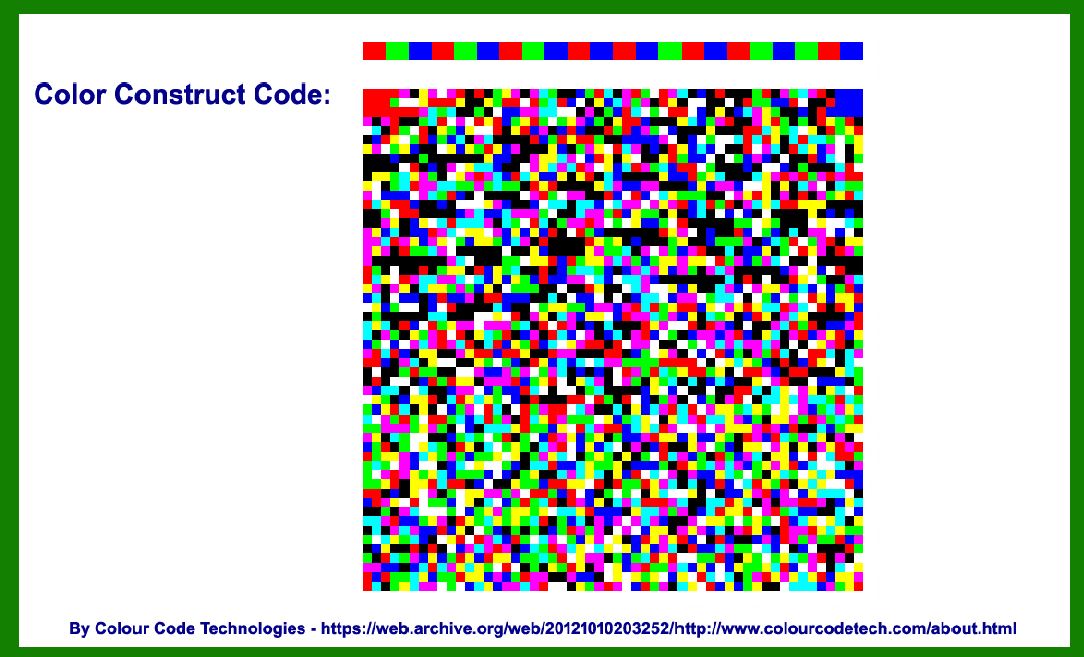
Color Construct Code (CCC) is an innovative barcode technology developed by HP Inc., designed to encode data using color and pattern variations. |
Unlike traditional black-and-white barcodes, CCC leverages color to increase data capacity and enhance visual recognition. This technology finds applications across various industries, including packaging, logistics, marketing, and more. Let's delve into a detailed exploration of CCC, its principles, applications, advantages, and implementation scenarios. |
|
Introduction to Color Construct Code (CCC) |
Color Construct Code, often abbreviated as CCC, represents a paradigm shift in barcode technology by incorporating color as a fundamental encoding element. Developed by HP Inc., CCC offers several distinct advantages over traditional monochrome barcodes, particularly in terms of data density, robustness, and visual appeal. The core principle of CCC lies in its ability to encode information not just through the width and spacing of bars, as in traditional barcodes, but also through color and pattern variations within those bars. |

|
Principles of Color Construct Code |
1.Color Encoding: CCC encodes data by varying the colors within predefined patterns. Different colors represent different data elements or values, allowing for a more efficient use of space and increased data capacity compared to monochrome barcodes. 2.Pattern Recognition: The patterns within CCC bars are designed to be easily recognizable by both human and machine vision systems. These patterns not only enhance the visual appeal but also facilitate accurate decoding across different environments. 3.Data Capacity: By using color and pattern variations, CCC can store significantly more data than traditional barcodes of similar size. This increased data capacity makes CCC suitable for applications requiring extensive data storage in a compact format. 4.Durability and Robustness: CCC's use of multiple color channels can enhance barcode durability and robustness. It can withstand certain types of damage or environmental conditions that might affect traditional barcodes, ensuring reliable data capture and readability. |

|
Applications of Color Construct Code |
1. Retail and Consumer Goods |
CCC is increasingly being adopted in retail and consumer goods industries for product tracking, inventory management, and supply chain logistics. Its ability to encode extensive product information in a small space makes it ideal for labeling and tracking individual items through the distribution process. |
Inventory Management: Retailers use CCC to manage inventory more efficiently, tracking products from warehouses to store shelves. The barcode's ability to encode product details helps streamline stock replenishment and reduce inventory discrepancies. Anti-counterfeiting: CCC can be used to authenticate products and combat counterfeiting. By encoding unique identifiers and authenticity markers, manufacturers can verify product integrity and protect their brand reputation. |
2. Packaging and Labeling |
In packaging applications, CCC offers advantages in both aesthetic appeal and functional performance. It allows brands to integrate barcodes seamlessly into product packaging while enhancing brand identity and consumer engagement. |
Brand Promotion: CCC enables brands to incorporate colorful, visually appealing barcodes into packaging designs. This not only serves functional purposes but also enhances product aesthetics and brand recognition on retail shelves. Supply Chain Traceability: Manufacturers use CCC to encode batch numbers, expiration dates, and other critical supply chain information directly onto product packaging. This facilitates traceability and ensures compliance with regulatory requirements. |
3. Healthcare and Pharmaceuticals |
In the healthcare sector, CCC plays a crucial role in improving patient safety, medication management, and regulatory compliance. Its ability to encode detailed information in a compact format supports various applications within hospitals, pharmacies, and pharmaceutical manufacturing. |
Medication Tracking: Pharmacies use CCC to label medications with dosage information, patient instructions, and expiration dates. This helps healthcare providers ensure accurate medication administration and reduce medication errors. Clinical Trials: CCC can encode patient identifiers and study protocols in clinical trial materials. Its capacity to store complex data sets enables researchers to track and manage study samples, ensuring data integrity and regulatory compliance. |
4. Marketing and Advertising |
CCC offers unique opportunities for marketers and advertisers to engage consumers through interactive and visually compelling campaigns. By embedding colorful barcodes into advertisements, promotional materials, and digital content, brands can drive customer interaction and measure campaign effectiveness. |
Interactive Content: Marketers use CCC to link printed materials, such as posters or product packaging, to digital content via QR codes or URLs encoded within colorful barcodes. This seamless integration enhances consumer engagement and facilitates direct response marketing strategies. Event Ticketing: CCC can encode event details and ticket information on admission tickets or promotional flyers. This simplifies event management and enhances attendee experience by providing quick access to event schedules, venue maps, and special offers. |
5. Automotive and Manufacturing |
In automotive and manufacturing industries, CCC supports production processes, inventory tracking, and quality control initiatives. Its ability to encode part numbers, manufacturing dates, and assembly instructions facilitates efficient workflow management and product traceability. |
Parts Identification: Automotive manufacturers use CCC to label components with unique identifiers and manufacturing details. This simplifies inventory management, improves parts traceability, and supports recall management initiatives. Quality Assurance: CCC can encode quality control data and inspection results directly onto manufactured parts or assembly components. This ensures compliance with industry standards and facilitates product traceability throughout the supply chain. |

|
Advantages of Color Construct Code |
1.Enhanced Data Capacity: CCC can encode significantly more data than traditional barcodes, making it suitable for applications requiring extensive information storage in limited space. 2.Visual Appeal: The use of color and pattern variations enhances barcode visibility and aesthetic integration into product packaging and marketing materials. 3.Versatility: CCC supports multiple encoding formats, including alphanumeric characters, binary data, and URLs, enabling diverse application scenarios across different industries. 4.Robustness: CCC's use of multiple color channels enhances barcode durability and readability in various lighting conditions and environments. 5.Security Features: CCC can incorporate encryption and authentication features to enhance data security and protect against counterfeit products or unauthorized access. |

|
Implementation and Integration |
Implementing CCC involves several key considerations, including barcode design, data encoding standards, printing methods, and scanning technologies. Manufacturers and service providers offer specialized software tools and printing solutions tailored to CCC requirements, ensuring optimal performance and compatibility with existing barcode scanning systems. |
Barcode Design: Designing CCC barcodes involves selecting appropriate color combinations, defining pattern structures, and optimizing barcode size and placement for specific application requirements. Data Encoding: CCC supports various data encoding formats, including ASCII characters, binary data, and structured data sets, enabling flexible integration with enterprise systems and digital platforms. Printing and Scanning: Printing CCC barcodes requires high-resolution color printers capable of accurately reproducing color and pattern details. Barcode scanners equipped with color imaging sensors are essential for decoding CCC barcodes reliably in real-world environments. |

|
Future Trends and Innovations |
The adoption of CCC continues to evolve with advancements in printing technology, machine vision, and data analytics. Future innovations may include enhanced security features, real-time data synchronization, and integration with Internet of Things (IoT) platforms for smart manufacturing and supply chain optimization. |
IoT Integration: CCC-enabled devices and sensors can communicate data directly to cloud-based platforms, facilitating real-time inventory management, predictive maintenance, and supply chain analytics. Augmented Reality: CCC barcodes may integrate with augmented reality (AR) applications to provide interactive user experiences, product information overlays, and virtual product demonstrations. Machine Learning: Machine learning algorithms can analyze CCC barcode data patterns to optimize printing parameters, enhance barcode recognition accuracy, and detect anomalies in manufacturing processes. |

|
Conclusion |
Color Construct Code (CCC) represents a transformative advancement in barcode technology, leveraging color and pattern variations to encode extensive data in a compact, visually appealing format. From retail and healthcare to manufacturing and advertising, CCC offers versatile applications that enhance product traceability, consumer engagement, and operational efficiency across diverse industries. As technology continues to evolve, CCC is poised to play a pivotal role in shaping the future of digital data encoding and visual information communication. |
 cs@easiersoft.com