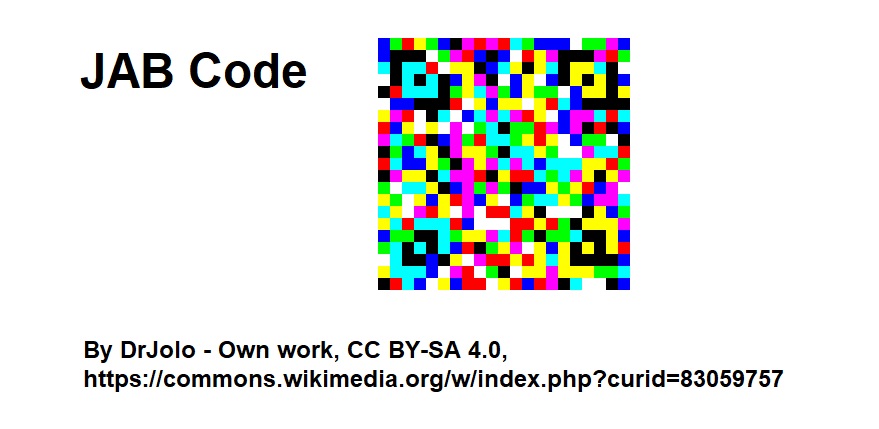
The JAB Code, or Just Another Barcode, is a colored 2D barcode that has gained attention for its unique properties and applications. Developed by the Japan Auto-ID Laboratory Ltd., it offers distinct advantages over traditional black-and-white barcodes. Below is a detailed exploration of its technology, features, and diverse range of applications. |
|
Introduction to JAB Code |
Technology Overview |
The JAB Code is a type of 2D barcode characterized by its use of color and grid pattern encoding. Unlike conventional barcodes that rely on black and white patterns for data representation, JAB Code utilizes a combination of colors to store information. This approach allows for higher data density and enhanced error correction capabilities compared to traditional barcode formats. |
Development and Standardization |
The development of JAB Code began in the early 2000s, driven by the need for a barcode system that could accommodate more information and be easily readable across various digital devices. Over time, it has been standardized to ensure compatibility and reliability in different industries and applications. |

|
Technical Specifications of JAB Code |
Encoding Structure |
JAB Code uses a grid-based structure where data is encoded in color patterns within a defined grid matrix. Each grid cell can represent multiple bits of data, allowing for efficient encoding of alphanumeric characters, symbols, and binary data. The color variations within the grid matrix are crucial for both data storage and error correction. |
Color Palette and Data Capacity |
The choice of colors in JAB Code is not arbitrary; it is based on a predefined color palette that balances visual clarity with data encoding efficiency. Typically, JAB Code supports up to 16 million colors, ensuring robust data capacity suitable for various applications ranging from consumer products to industrial logistics. |
Error Correction |
One of the significant advantages of JAB Code is its built-in error correction capabilities. By leveraging the redundancy in color patterns, JAB Code can detect and correct errors caused by printing imperfections, environmental factors, or partial obstruction of the barcode. This ensures reliable data capture even under less-than-ideal conditions. |

|
Applications of JAB Code |
Consumer Products and Retail |
In the retail sector, JAB Code finds application in product packaging and inventory management. Its ability to store product information, expiration dates, batch numbers, and promotional details in a compact format makes it invaluable for enhancing supply chain efficiency and consumer safety. |
Healthcare and Pharmaceuticals |
In healthcare, JAB Code supports the tracking and authentication of pharmaceutical products. By encoding unique identifiers and dosage information, it helps combat counterfeit drugs and ensures medication safety from manufacturing to patient administration. |
Logistics and Asset Tracking |
JAB Code's robust data capacity and error correction make it ideal for logistics and asset tracking applications. It enables seamless tracking of shipments, warehouse inventory management, and asset identification across global supply chains. The ability to encode extensive metadata ensures transparency and accountability in logistics operations. |
Entertainment and Ticketing |
The entertainment industry utilizes JAB Code for ticketing and event management. By embedding ticket details, seating information, and security features within the barcode, organizers can streamline access control, prevent fraud, and enhance the overall attendee experience. |
Government and Identification |
Governments leverage JAB Code for secure document issuance, including passports, driver's licenses, and national IDs. Its ability to store biometric data, personal information, and cryptographic keys enhances document security and facilitates reliable identity verification processes. |
Automotive and Manufacturing |
In automotive and manufacturing sectors, JAB Code supports traceability and quality control. By encoding production details, part specifications, and maintenance records, it enables efficient recall management, product authentication, and compliance with regulatory standards. |

|
Advantages of JAB Code |
Enhanced Data Security |
JAB Code enhances data security through advanced encryption techniques and tamper-evident features. By encoding sensitive information and implementing digital signatures, it safeguards data integrity and mitigates risks associated with unauthorized access or tampering. |
Scalability and Integration |
JAB Code's scalability allows it to accommodate evolving data requirements and integrate seamlessly with existing IT systems. Whether deployed in retail POS systems or industrial IoT platforms, it supports interoperability and facilitates real-time data exchange across diverse applications. |
Sustainability and Eco-Friendliness |
The adoption of JAB Code promotes sustainability by reducing paper consumption and minimizing environmental impact. Its compact size and digital nature align with green initiatives aimed at optimizing resource utilization and promoting eco-friendly practices in packaging and logistics. |

|
Challenges and Considerations |
Adoption and Infrastructure |
Widespread adoption of JAB Code requires investment in infrastructure, including compatible scanners, printers, and software solutions. Organizations must assess the cost-benefit ratio and operational feasibility before transitioning from traditional barcode systems. |
Standardization and Interoperability |
Ensuring interoperability across different industries and geographic regions necessitates standardization of encoding protocols and data formatting. Collaboration among stakeholders is essential to harmonize implementation guidelines and facilitate global deployment. |

|
Future Outlook and Innovation |
Integration with IoT and AI |
The convergence of JAB Code with IoT devices and artificial intelligence presents opportunities for real-time data analytics and predictive insights. By leveraging sensor data and machine learning algorithms, organizations can optimize supply chain efficiency and enhance decision-making processes. |
Augmented Reality and Interactive Experiences |
JAB Code's integration with augmented reality technologies enables interactive consumer experiences and immersive content delivery. From product demonstrations to virtual shopping environments, it enriches engagement and fosters brand loyalty through personalized interactions. |

|
Conclusion |
In conclusion, JAB Code represents a significant advancement in barcode technology, offering enhanced data capacity, error correction, and security features through its use of color and grid-based encoding. Its diverse applications span across industries such as retail, healthcare, logistics, and entertainment, driving operational efficiency, consumer safety, and regulatory compliance. As technology continues to evolve, the integration of JAB Code with IoT, AI, and augmented reality holds promise for unlocking new opportunities in data-driven innovation and digital transformation. |
This detailed exploration underscores the transformative potential of JAB Code in shaping the future of barcode technology and its pivotal role in enabling smarter, more connected ecosystems globally. |
 cs@easiersoft.com