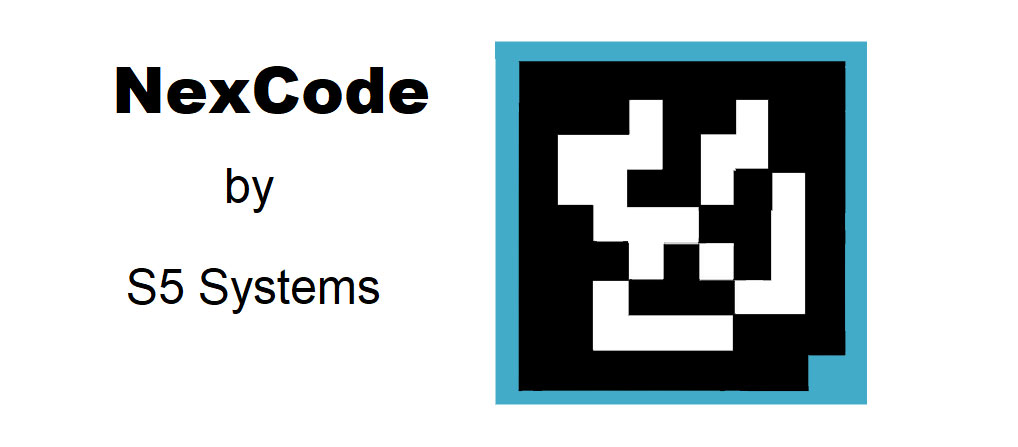
NexCode, developed by S5 Systems, represents a cutting-edge advancement in barcode technology, known for its robustness and versatility in various applications. This detailed description will delve into the components, structures, and functionalities of NexCode, providing a comprehensive understanding of its design principles and practical implementations. |
|
Introduction to NexCode |
NexCode is a 2D barcode technology developed by S5 Systems, designed to encode and decode information efficiently across different industries and applications. It builds upon the foundation of traditional barcode systems while integrating advanced features to enhance data capacity, security, and readability. The technology is optimized for use in diverse environments, from retail and logistics to healthcare and government sectors, where reliable and secure data transmission is essential. |

|
Components of NexCode |
1. Encoding Scheme |
NexCode utilizes a sophisticated encoding scheme that allows it to store significant amounts of data within a compact graphical representation. Unlike traditional linear barcodes that encode data linearly, NexCode employs a matrix-based approach, organizing information in a grid pattern. This grid structure enables the barcode to accommodate both alphanumeric and binary data formats efficiently. |
2. Error Correction Capability |
One of the standout features of NexCode is its robust error correction capability. Error correction codes (ECC) are embedded within the barcode to ensure data integrity even when the code is partially obscured, damaged, or distorted. This feature enhances reliability in scanning and decoding, making NexCode suitable for applications where environmental conditions may affect barcode readability. |
3. Scalability |
NexCode is designed with scalability in mind, capable of accommodating varying data sizes and resolutions. This scalability makes it adaptable to different printing and scanning technologies, from high-resolution industrial printers to smartphone cameras. The barcode's structure allows it to maintain readability across different sizes and formats, ensuring compatibility across a wide range of devices and systems. |

|
4. Security Features |
In addition to data capacity and error correction, NexCode integrates advanced security features to protect encoded information. Encryption algorithms may be applied to sensitive data within the barcode, ensuring that only authorized parties can access and decode critical information. This makes NexCode suitable for applications requiring secure data transmission, such as payment systems, identity verification, and sensitive document handling. |
5. Compatibility |
NexCode is designed to be compatible with existing barcode standards and infrastructure, facilitating seamless integration into established workflows and systems. This compatibility extends to both hardware and software components, allowing organizations to adopt NexCode without requiring significant changes to their current operational processes. The barcode's design ensures interoperability with scanners, printers, and software applications commonly used in industries where barcode technology is prevalent. |

|
Structures of NexCode |
1. Grid Pattern |
At its core, NexCode utilizes a grid-based pattern to organize data. The barcode is structured as a matrix of modules, where each module represents a binary or alphanumeric value. This grid pattern allows for efficient encoding and decoding of information, leveraging spatial organization to maximize data density while maintaining readability. |
2. Quiet Zones |
Like most barcode systems, NexCode incorporates quiet zones around its perimeter to ensure accurate scanning and decoding. Quiet zones are blank spaces that surround the barcode, separating it from any adjacent graphics or text. These zones help barcode scanners distinguish the barcode from its surroundings, reducing the likelihood of misreads and ensuring reliable data capture. |
3. Timing Patterns |
Within the grid structure of NexCode, timing patterns are embedded to define the boundaries of individual modules and rows. Timing patterns consist of alternating black and white modules arranged in specific sequences, which barcode scanners use to synchronize their reading process. By detecting these timing patterns, scanners can accurately interpret the data encoded within the barcode, regardless of its orientation or alignment during scanning. |

|
4. Alignment Patterns |
Alignment patterns within NexCode serve a similar purpose to timing patterns but are specifically designed to facilitate accurate scanning at different distances and angles. These patterns consist of predefined configurations of modules strategically placed within the barcode grid. By detecting alignment patterns, scanners can adjust their focus and orientation to optimize reading accuracy, particularly useful in applications where barcode scanning occurs under variable conditions. |
5. Data Modules |
Data modules represent the fundamental units of information encoded within NexCode. Each module within the grid corresponds to a binary digit (bit) or a character in alphanumeric encoding. The arrangement and configuration of these modules determine the content and structure of the encoded data, ranging from simple identifiers to complex datasets. NexCode's design allows for efficient packing of data into these modules, optimizing data density without compromising readability. |

|
Functionalities of NexCode |
1. Data Storage Capacity |
NexCode offers significant data storage capacity compared to traditional barcode systems. By leveraging its matrix-based structure and efficient encoding scheme, NexCode can store extensive datasets within a relatively small graphical footprint. This capability makes it suitable for applications requiring the storage of detailed information, such as product specifications, inventory records, and multimedia content references. |
2. High-Speed Scanning |
Despite its enhanced data capacity, NexCode supports high-speed scanning and decoding processes. Modern barcode scanners equipped with image processing capabilities can rapidly capture and interpret NexCode barcodes, even in dynamic environments where scanning conditions may vary. This high-speed functionality enhances operational efficiency in industries reliant on rapid data capture, such as logistics, manufacturing, and retail. |
3. Adaptability to Printing Technologies |
NexCode is compatible with a wide range of printing technologies, including thermal printers, laser printers, and inkjet printers. Its grid-based structure and scalable design ensure that barcodes printed using different technologies maintain consistent readability and accuracy. This adaptability allows organizations to choose printing methods based on their specific requirements, without compromising barcode performance or data integrity. |

|
4. Integration with Mobile Devices |
NexCode is designed to integrate seamlessly with mobile devices equipped with camera-based barcode scanning capabilities. By leveraging smartphone cameras and specialized barcode scanning applications, users can decode NexCode barcodes directly from digital displays or printed materials. This functionality enhances accessibility and convenience in consumer-facing applications, such as mobile payments, digital ticketing, and interactive marketing campaigns. |
5. Customization Options |
S5 Systems provides customization options for NexCode to accommodate specific industry requirements and application scenarios. Organizations can tailor NexCode barcodes by adjusting data encoding parameters, error correction levels, and security features to align with their operational needs. This flexibility ensures that NexCode remains adaptable to diverse use cases, ranging from inventory management and asset tracking to healthcare data integration and supply chain logistics. |

|
Applications of NexCode |
1. Retail and Consumer Goods |
In retail environments, NexCode facilitates efficient inventory management, product authentication, and supply chain traceability. Retailers can encode detailed product information, pricing data, and promotional offers within NexCode barcodes, enabling seamless scanning and real-time updates at point-of-sale terminals. Consumers benefit from enhanced product visibility and interactive shopping experiences through smartphone-enabled barcode scanning applications. |
2. Healthcare and Pharmaceuticals |
In the healthcare sector, NexCode supports accurate patient identification, medication tracking, and medical record management. Healthcare providers can encode patient demographics, treatment protocols, and pharmaceutical information within NexCode barcodes embedded on wristbands, medication packaging, and medical devices. This enables healthcare professionals to access critical information rapidly and securely, improving patient safety and operational efficiency. |
3. Logistics and Supply Chain Management |
NexCode plays a pivotal role in logistics and supply chain management by enabling end-to-end visibility, inventory optimization, and shipment tracking. Logistics operators utilize NexCode barcodes to encode shipment details, routing instructions, and handling requirements on packages and pallets. Automated scanning and data capture streamline warehouse operations, transportation logistics, and delivery processes, enhancing overall supply chain efficiency and customer satisfaction. |

|
4. Government and Public Sector |
Government agencies leverage NexCode for identity verification, document authentication, and regulatory compliance across various administrative functions. NexCode barcodes embedded in identification cards, passports, and official documents encode biographical data, digital signatures, and security features to prevent counterfeiting and fraud. Public sector entities benefit from enhanced data security, interoperability, and citizen service delivery through standardized barcode encoding and decoding technologies. |
5. Financial Services and Payment Systems |
In financial services, NexCode supports secure transaction processing, mobile payments, and digital wallet applications. Financial institutions encode account information, transaction details, and cryptographic keys within NexCode barcodes displayed on payment cards, electronic receipts, and mobile devices. Enhanced security features, such as encryption and digital signatures, protect sensitive financial data during transactions, ensuring compliance with regulatory standards and safeguarding consumer privacy. |

|
Conclusion |
NexCode, developed by S5 Systems, represents a state-of-the-art 2D barcode technology characterized by its robustness, versatility, and advanced functionality. By leveraging a matrix-based encoding scheme, robust error correction capabilities, and adaptive design principles, NexCode offers significant advantages in data storage capacity, scanning speed, and application flexibility across diverse industries. From retail and healthcare to logistics and government sectors, NexCode facilitates efficient data encoding, secure information exchange, and seamless integration with existing operational workflows. As barcode technology continues to evolve, NexCode remains at the forefront, driving innovation in data management, supply chain optimization, and digital transformation initiatives globally. |
 cs@easiersoft.com