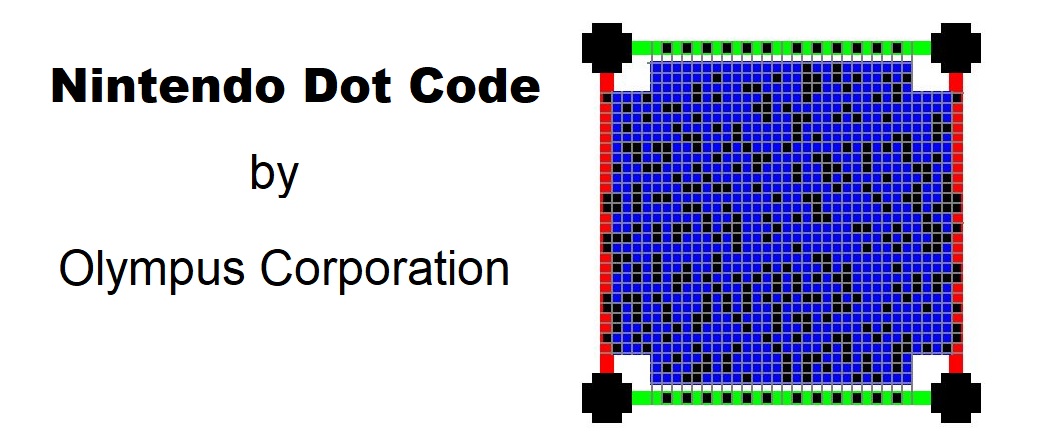
Nintendo's Dot Code, officially known as Nintendo Optical Disc (NOD) code, is a proprietary barcode system developed by Nintendo. Introduced primarily for use with their optical discs, such as those used in the Nintendo GameCube and Wii consoles, the Dot Code plays a crucial role in encoding data essential for authentication, identification, and possibly other purposes related to Nintendo's gaming ecosystem. Here's an in-depth exploration of its components and structures: |
|
Introduction to Nintendo Dot Code |
Nintendo Dot Code, often abbreviated as NOD code, represents a specialized form of barcode designed to be read by specific hardware developed by Nintendo. It serves several critical functions within Nintendo's gaming platforms, including game authentication, region coding, and potentially other metadata storage related to game titles, updates, or other system-level information. |

|
Components of Nintendo Dot Code |
1.Basic Structure: The Dot Code resembles a standard barcode in appearance but is distinct in its encoding scheme and usage. It consists of a series of dots arranged in a grid pattern, typically on the inner ring of a Nintendo optical disc. 2.Grid Pattern: The Dot Code grid is organized into rows and columns, with each dot representing a binary state (black or white). The arrangement and density of these dots encode specific information readable by compatible Nintendo hardware. 3.Error Correction: Like other barcode systems, Dot Code employs error correction techniques to ensure reliable data retrieval even in the presence of minor physical damage or degradation of the disc surface. |

|
Encoding Scheme |
1.Binary Representation: Each dot in the grid corresponds to a binary digit (bit), where black may represent '1' and white '0', or vice versa. This binary data is interpreted by Nintendo's proprietary hardware to extract meaningful information. 2.Data Types: The Dot Code likely encodes various types of data pertinent to Nintendo's needs, such as game title, region code, version information, or unique identifiers for anti-piracy measures. |

|
Technical Specifications |
1.Dot Density and Size: The specific dimensions and density of the dots are critical to the code's effectiveness. Details such as dot size, grid spacing, and overall physical dimensions influence readability and data capacity. 2.Readability: Nintendo hardware, equipped with appropriate sensors and decoding algorithms, reads Dot Code data reliably across varying environmental conditions and disc conditions. |

|
Applications and Use Cases |
1.Game Authentication: Dot Code likely includes essential data to authenticate the legitimacy of Nintendo game discs, ensuring that only authorized discs can be played on Nintendo consoles. 2.Region Coding: The Dot Code may encode region-specific information, enabling Nintendo consoles to enforce regional lockout policies, restricting gameplay to designated regions. 3.Metadata Storage: Beyond basic authentication, Dot Code could store additional metadata related to game updates, patches, or other system-level information critical to maintaining console functionality and security. |

|
Comparison with Other Barcodes |
1.Unique Design: Unlike traditional linear barcodes or 2D matrix codes like QR codes, Nintendo Dot Code is tailored specifically to Nintendo's hardware and software ecosystem, emphasizing security and reliability over universal readability. 2.Purpose-Built: The design of Dot Code reflects Nintendo's priorities in protecting intellectual property, maintaining software integrity, and controlling distribution channels for their gaming products. |

|
Future Developments and Evolution |
1.Adaptation to New Platforms: As Nintendo continues to innovate with new console generations and digital distribution platforms, the role and design of Dot Code may evolve to meet changing requirements in gaming technology and security. 2.Integration with Digital Services: With the shift towards digital distribution and online connectivity, Dot Code could potentially play a role in authenticating digital content and ensuring secure transactions within Nintendo's digital ecosystem. |

|
Conclusion |
Nintendo Dot Code represents a specialized barcode system integral to the functionality and security of Nintendo's gaming platforms. Its unique design, encoding scheme, and application-specific focus distinguish it from conventional barcode technologies, underscoring its role in safeguarding Nintendo's intellectual property and enhancing user experience through reliable data authentication and management. |
This detailed examination provides insight into the components, structures, and applications of Nintendo Dot Code, highlighting its importance within the broader context of Nintendo's gaming ecosystem and technological innovations. |
 cs@easiersoft.com