Application Examples of Farmacode (Code 32) |
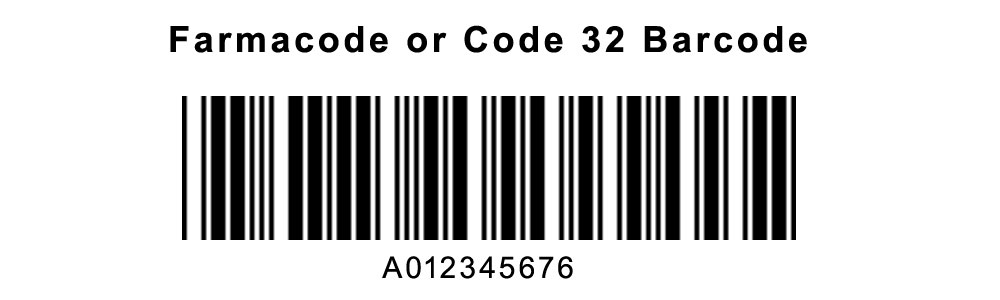
Farmacode, also known as Code 32, is a barcode symbology derived from Code 39, specifically designed for the pharmaceutical industry. The Farmacode barcode typically encodes a 7-character string (6 digits and 1 check character), and it is primarily used in Italy for drug identification. Below are detailed application examples of Farmacode, illustrating its utility in the pharmaceutical sector: |
|
1. Pharmaceutical Packaging |
1.1 Identification of Medication Packages |
Pharmaceutical manufacturers use Farmacode to label individual medication packages. Each package is assigned a unique identifier encoded in the Farmacode, which includes crucial information about the drug, such as its name, dosage, and batch number. This identifier helps pharmacies and healthcare providers quickly verify and track medications. Example: A box of prescription pills for hypertension treatment is labeled with a Farmacode. When a pharmacist scans the barcode, the system retrieves information about the medication, including the manufacturer, dosage instructions, and expiration date, ensuring that the correct medication is dispensed to the patient. |
1.2 Anti-Counterfeiting Measures |
Farmacode is also employed as part of anti-counterfeiting strategies. By providing a unique and verifiable code on each package, manufacturers can authenticate their products, ensuring that only genuine medications reach consumers. This helps in maintaining the integrity of the pharmaceutical supply chain. Example: A high-value cancer treatment drug is packaged with a Farmacode. Healthcare providers can scan the barcode to verify its authenticity through a central database. Any discrepancy in the code indicates potential tampering or counterfeiting, prompting further investigation. |

|
2. Inventory Management |
2.1 Stock Control in Pharmacies |
Pharmacies utilize Farmacode to manage their inventory efficiently. The barcode allows for quick and accurate recording of incoming and outgoing stock, ensuring that inventory levels are maintained, and stockouts are avoided. It also aids in managing the expiration dates of medications, reducing waste. Example: A pharmacy receives a shipment of various medications, each labeled with a Farmacode. As each package is scanned into the inventory system, the system logs the quantity and expiration date, automatically alerting staff when stocks are low or when products are nearing their expiration date. |
2.2 Automated Dispensing Systems |
In some advanced pharmacy settings, automated dispensing systems use Farmacode to identify and dispense medications. These systems ensure that patients receive the correct medication and dosage, improving accuracy and efficiency in medication dispensing. Example: A hospital pharmacy employs an automated dispensing system that reads Farmacode labels on medication packages. When a prescription is entered into the system, the machine retrieves the corresponding medication based on the barcode, ensuring accurate dispensing and minimizing human error. |

|
3. Regulatory Compliance |
3.1 Tracking and Reporting |
Pharmaceutical companies are required to comply with stringent regulations regarding drug tracking and reporting. Farmacode facilitates this by providing a standardized method of identifying and recording drug information, ensuring compliance with regulatory requirements. Example: A pharmaceutical company exports medications to different countries, each package labeled with a Farmacode. The company uses the barcode to track the distribution of its products and generate reports for regulatory authorities, demonstrating compliance with international drug safety standards. |
3.2 Recall Management |
In the event of a drug recall, Farmacode enables quick identification and retrieval of affected products. By scanning the barcode, companies can trace the distribution of specific batches and remove them from the market efficiently, minimizing the risk to public health. Example: A pharmaceutical company discovers a manufacturing defect in a batch of medication. Using the Farmacode on each package, the company identifies all distributed units of the defective batch and coordinates with pharmacies to recall the products promptly, ensuring patient safety. |

|
4. Patient Safety |
4.1 Reducing Medication Errors |
Farmacode helps reduce medication errors by ensuring that the correct drug is administered to the right patient. Healthcare providers can scan the barcode to verify medication details before administration, preventing potentially harmful mistakes. Example: A nurse in a hospital scans the Farmacode on a medication package before administering it to a patient. The barcode system cross-references the medication with the patient's prescription, confirming that the right drug and dosage are being given, thus preventing medication errors. |
4.2 Ensuring Medication Adherence |
Pharmacies and healthcare providers use Farmacode to monitor and encourage patient adherence to prescribed medication regimens. By tracking the dispensing of medications, healthcare professionals can follow up with patients who may be at risk of non-adherence. Example: A chronic disease management program tracks patient adherence to medication through Farmacode. Each time a patient refills their prescription, the barcode is scanned, and the data is recorded. Healthcare providers can review this information and intervene if a patient is not refilling their medication on time, promoting better health outcomes. |

|
5. Clinical Trials |
5.1 Tracking Medication in Clinical Trials |
Farmacode is used in clinical trials to track the distribution and use of investigational drugs. This ensures accurate documentation of which patients receive the medication and facilitates the monitoring of drug efficacy and safety. Example: A clinical trial for a new diabetes medication uses Farmacode to label each package of the investigational drug. Researchers scan the barcode to record which patients receive the medication and monitor their responses, ensuring precise data collection and analysis. |
5.2 Preventing Cross-Contamination |
In clinical trials involving multiple drugs, Farmacode helps prevent cross-contamination and ensures that participants receive the correct medication. Each drug is labeled with a unique barcode, reducing the risk of mix-ups. Example: A multi-center clinical trial tests two different formulations of a drug. Each formulation is labeled with a distinct Farmacode. When distributing the medication, researchers scan the barcode to ensure the correct formulation is given to the appropriate patient group, maintaining the integrity of the trial. |

|
6. Hospital Pharmacies |
6.1 Managing Medication Supply |
Hospital pharmacies use Farmacode to manage their medication supply, ensuring that drugs are stocked and readily available for patient care. The barcode aids in tracking inventory levels and managing restocking processes. Example: A hospital pharmacy maintains its medication inventory using Farmacode. Each time a medication is dispensed or received, the barcode is scanned, updating the inventory system in real-time. This ensures that the pharmacy has an accurate count of available medications and can reorder supplies as needed. |
6.2 Facilitating Bedside Medication Administration |
In hospital settings, Farmacode is used to verify medications at the patient's bedside. This process, known as barcode medication administration (BCMA), reduces errors and enhances patient safety by ensuring the correct medication is given at the right time. Example: A nurse uses a handheld scanner to read the Farmacode on a medication package at a patient's bedside. The barcode system confirms that the medication matches the patient's electronic health record (EHR), ensuring accurate and timely administration. |

|
7. Specialty Pharmacies |
7.1 Handling Complex Medication Regimens |
Specialty pharmacies, which deal with complex and high-cost medications, use Farmacode to manage these specialized drugs. The barcode helps track inventory, monitor patient adherence, and ensure proper handling of sensitive medications. Example: A specialty pharmacy provides medications for patients with rare genetic disorders. Each medication package is labeled with a Farmacode, allowing the pharmacy to track dispensing, monitor patient usage, and ensure the medications are stored and handled according to specific requirements. |
7.2 Coordinating Care |
Farmacode enables specialty pharmacies to coordinate care with healthcare providers, ensuring that patients receive comprehensive support. The barcode system facilitates communication between the pharmacy, doctors, and patients, improving overall treatment outcomes. Example: A specialty pharmacy works with oncologists to manage chemotherapy medications. Each chemotherapy drug is labeled with a Farmacode, enabling the pharmacy to track which patients receive specific treatments. The pharmacy coordinates with oncologists to monitor patient progress and adjust treatment plans as necessary. |

|
8. Pharmaceutical Manufacturing |
8.1 Quality Control |
During the manufacturing process, Farmacode is used to ensure quality control by tracking each batch of medication. This allows manufacturers to monitor production processes and identify any issues that may arise, ensuring that only high-quality products reach the market. Example: A pharmaceutical manufacturing plant uses Farmacode to label each batch of pain relief medication. The barcode system tracks the production process, from raw materials to finished product, ensuring that all quality control measures are met and any deviations are promptly addressed. |
8.2 Batch Traceability |
Farmacode provides manufacturers with batch traceability, enabling them to trace the history of a product batch from production to distribution. This is essential for managing recalls and ensuring accountability within the supply chain. Example: A manufacturer of over-the-counter cold medication uses Farmacode to label each production batch. If a batch is found to have a defect, the company can trace the entire distribution network using the barcode, identifying all affected products and coordinating a recall efficiently. |

|
9. Wholesalers and Distributors |
9.1 Streamlining Distribution |
Wholesalers and distributors use Farmacode to streamline the distribution process, ensuring that medications are accurately tracked and delivered to pharmacies and healthcare facilities. The barcode system enhances the efficiency and accuracy of inventory management and order fulfillment. Example: A pharmaceutical distributor uses Farmacode to manage its warehouse inventory. Each medication package is scanned into the system upon arrival and again when shipped to customers. This ensures that orders are fulfilled accurately and inventory levels are maintained. |
9.2 Ensuring Supply Chain Integrity |
Farmacode helps wholesalers and distributors maintain the integrity of the pharmaceutical supply chain by providing a verifiable trail for each product. This reduces the risk of counterfeit drugs entering the supply chain and ensures that only legitimate products are distributed. Example: A wholesaler distributes medications to pharmacies across the region. Each package is labeled with a Farmacode, allowing the wholesaler to verify the origin and authenticity of the products before distribution. This helps prevent counterfeit medications from reaching pharmacies and patients. |

|
10. Point of Sale (POS) Systems |
10.1 Enhancing Retail Pharmacy Operations |
Retail pharmacies use Farmacode at the point of sale to enhance operations, ensuring accurate pricing and inventory updates. The barcode allows for quick scanning and checkout, improving the customer experience and reducing errors. Example: A retail pharmacy uses Farmacode at the checkout counter. When a customer purchases medication, the pharmacist scans the barcode, which updates the inventory system and processes the sale. This ensures accurate record-keeping and efficient customer service. |
10.2 Loyalty Programs and Patient Tracking |
Retail pharmacies integrate Farmacode with loyalty programs and patient tracking systems. This enables pharmacies to offer personalized services and track patient purchases, promoting medication adherence and customer loyalty. Example: A retail pharmacy chain offers a loyalty program that tracks customer purchases through Farmacode. When a customer buys medication, the barcode is scanned, and points are added to their loyalty account. The pharmacy can also use this data to send reminders for prescription refills, enhancing patient adherence. |

|
11. Home Healthcare |
11.1 Monitoring Medication Usage |
Home healthcare providers use Farmacode to monitor medication usage among patients receiving care at home. This ensures that patients adhere to their prescribed treatment regimens and helps caregivers track medication administration. Example: A home healthcare nurse visits a patient with chronic heart disease. The nurse scans the Farmacode on the patient's medication packages to record each administration, ensuring that the patient takes their medication as prescribed and allowing for accurate record-keeping. |
11.2 Telehealth Integration |
Farmacode is integrated with telehealth platforms to support remote monitoring of medication adherence. Patients can scan their medication barcodes at home, and the data is transmitted to healthcare providers for review and intervention if needed. Example: A patient with diabetes participates in a telehealth program. They use a smartphone app to scan the Farmacode on their insulin pen each time they take a dose. The app transmits the data to their healthcare provider, who monitors the patient's adherence and adjusts the treatment plan as necessary. |

|
12. Public Health Initiatives |
12.1 Vaccination Campaigns |
Public health authorities use Farmacode to manage and track vaccination campaigns. The barcode helps record which individuals receive vaccines, ensuring accurate documentation and monitoring of vaccine coverage. Example: A national vaccination campaign for influenza uses Farmacode to label each vaccine dose. Healthcare workers scan the barcode when administering the vaccine, creating a digital record that tracks coverage and identifies populations that may need additional outreach. |
12.2 Monitoring Drug Distribution in Epidemics |
During epidemics, Farmacode is used to track the distribution of critical medications, ensuring that they reach affected areas quickly and efficiently. This helps public health officials manage the distribution of limited resources and respond effectively to health crises. Example: During an outbreak of a novel infectious disease, public health authorities distribute antiviral medications labeled with Farmacode. The barcode system tracks the distribution and usage of the drugs, allowing authorities to monitor treatment efforts and adjust strategies as needed. |

|
13. Research and Development |
13.1 Tracking Experimental Drugs |
In pharmaceutical research and development, Farmacode is used to track experimental drugs during clinical trials and laboratory testing. This ensures accurate documentation of drug usage and facilitates data collection for research purposes. Example: A pharmaceutical company conducts research on a new antibiotic. Each experimental batch is labeled with a Farmacode, allowing researchers to track its distribution to different laboratories and clinical trial sites. This ensures accurate data collection and analysis of the drug's effectiveness. |
13.2 Ensuring Data Integrity |
Farmacode helps maintain data integrity in research by providing a consistent and reliable method of identifying and tracking drugs. This is crucial for ensuring that research results are accurate and reproducible. Example: A university research lab studies the effects of various compounds on cancer cells. Each compound is labeled with a Farmacode, ensuring that all data related to the compound is accurately recorded and traceable. This helps maintain the integrity of the research and supports reproducible results. |

|
14. Pharmaceutical Retailers |
14.1 Enhancing Customer Service |
Pharmaceutical retailers use Farmacode to enhance customer service by providing accurate information about medications. Retail staff can quickly retrieve drug details, including usage instructions and potential side effects, improving the customer experience. Example: A customer at a pharmaceutical retail store inquires about a specific allergy medication. The staff scans the Farmacode on the medication package to access detailed information about the drug, including its ingredients and recommended dosage, providing the customer with reliable guidance. |
14.2 Managing Prescription Refills |
Pharmaceutical retailers use Farmacode to manage prescription refills efficiently. The barcode system tracks customer prescriptions, ensuring timely refills and improving medication adherence. Example: A retail pharmacy manages customer prescriptions using Farmacode. When a prescription is due for a refill, the system generates a reminder for the customer, ensuring they receive their medication on time. This helps improve adherence to treatment plans and enhances customer satisfaction. |

|
Farmacode (Code 32) plays a crucial role in various aspects of the pharmaceutical industry, from manufacturing and distribution to patient care and regulatory compliance. Its applications ensure accurate tracking, enhance patient safety, and improve overall efficiency in managing medications. By providing unique and verifiable identifiers for pharmaceutical products, Farmacode supports the integrity and reliability of the entire pharmaceutical supply chain. |
 cs@easiersoft.com