Farmacode, also known as Code 32, is a specialized 2D barcode primarily used in the pharmaceutical industry for the encoding and tracking of medications and related products. | Developed to meet specific regulatory and logistical needs within healthcare, Farmacode provides a robust solution for encoding large amounts of data in a compact format. Here's a comprehensive exploration of Farmacode, covering its technology, standards, applications, advantages, and considerations. | 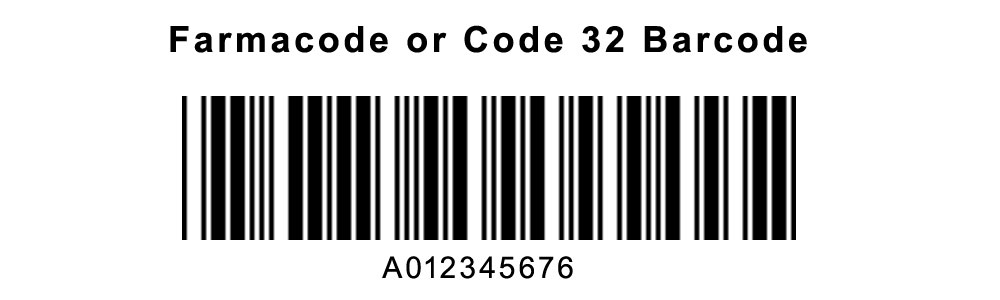
| Introduction to Farmacode (Code 32) | Farmacode, designated as Code 32 by GS1, is a type of 2D barcode developed to address the unique requirements of pharmaceutical products. Unlike traditional linear barcodes, 2D barcodes like Farmacode can store significantly more data, including product information, batch numbers, expiration dates, and more, in a smaller physical space. This capability makes them invaluable for ensuring accurate tracking, reducing errors in medication administration, and improving overall supply chain efficiency in the pharmaceutical sector. | Technology Overview | 1.Encoding Structure: Farmacode utilizes a matrix or stacked symbol format to encode data. It consists of patterns of black and white squares arranged in a grid, where data is encoded both horizontally and vertically, allowing for high-density information storage. 2.Data Capacity: One of the primary advantages of Farmacode is its high data capacity. It can store up to several hundred alphanumeric characters, making it suitable for encoding extensive product information, including dosage, manufacturer details, regulatory information, and more. 3.Error Correction: To ensure reliability in reading despite potential printing or scanning imperfections, Farmacode incorporates error correction algorithms. These algorithms enable the barcode to recover data even if parts of the code are damaged or obscured, which is critical in environments where barcode legibility may be compromised. 4.Printing and Scanning: Farmacode can be printed on various surfaces using standard printing technologies, including direct marking methods such as laser engraving or inkjet printing. It is designed to be reliably scanned using handheld or fixed-position barcode scanners commonly found in pharmaceutical manufacturing facilities, warehouses, and healthcare settings. | 
| Standards and Specifications | 1.GS1 Standards: Farmacode adheres to GS1 standards, ensuring interoperability and compatibility with global supply chain systems. GS1 standards specify the structure, encoding rules, and symbology specifications that Farmacode must follow to ensure consistency and reliability across different applications and regions. 2.Regulatory Compliance: In addition to GS1 standards, Farmacode must comply with regulatory requirements specific to pharmaceuticals and healthcare. These regulations often mandate the inclusion of certain information such as National Drug Code (NDC), batch or lot numbers, expiration dates, and serial numbers to facilitate traceability and regulatory compliance. | 
| Applications of Farmacode | 1.Supply Chain Management: Farmacode plays a crucial role in supply chain management within the pharmaceutical industry. It enables accurate tracking of medications from manufacturing facilities to distribution centers, pharmacies, and ultimately to patients. This traceability helps prevent counterfeit drugs, manage recalls efficiently, and ensure adherence to regulatory standards. 2.Patient Safety: By encoding detailed product information, Farmacode supports patient safety initiatives. Healthcare providers can verify medication authenticity, dosage instructions, and expiry dates before administering drugs to patients, reducing the risk of medication errors and improving patient outcomes. 3.Inventory Management: Farmacode facilitates real-time inventory management by providing accurate data on stock levels, expiration dates, and usage patterns. This information enables pharmaceutical companies and healthcare providers to optimize inventory levels, reduce waste, and ensure timely replenishment of essential medications. 4.Clinical Trials: In clinical research, Farmacode assists in tracking investigational drugs, ensuring compliance with study protocols, and documenting drug administration accurately. It simplifies data capture during clinical trials, enhancing efficiency and reliability in research environments. | 
| Advantages of Farmacode | 1.Data Density: Farmacode can store significantly more data than traditional linear barcodes, accommodating complex information requirements in pharmaceutical applications. 2.Reliability: Error correction capabilities make Farmacode resilient to printing and scanning errors, ensuring high read rates and minimizing data inaccuracies. 3.Regulatory Compliance: By adhering to GS1 and industry-specific standards, Farmacode supports compliance with regulatory requirements, facilitating international trade and regulatory reporting. 4.Enhanced Traceability: Farmacode enables end-to-end traceability of pharmaceutical products, enhancing supply chain visibility and responsiveness to recalls or quality issues. | 
| Considerations and Challenges | 1.Printing Quality: Achieving high print quality is essential for Farmacode readability. Poor print contrast or printing defects can hinder barcode scanning accuracy, leading to operational inefficiencies. 2.Integration Complexity: Integrating Farmacode into existing IT systems and workflows requires coordination between pharmaceutical manufacturers, supply chain partners, and healthcare providers. Compatibility with enterprise resource planning (ERP) systems and electronic health record (EHR) systems may necessitate customized solutions and implementation support. 3.Security and Privacy: As with any technology storing sensitive information, ensuring data security and protecting patient privacy are critical considerations when implementing Farmacode systems. Robust data encryption, access controls, and compliance with data protection regulations (e.g., GDPR, HIPAA) are essential safeguards. | 
| Future Directions | 1.Advancements in Technology: Continued advancements in barcode technology, including improvements in data capacity, printing techniques, and scanning capabilities, are expected to further enhance the effectiveness and adoption of Farmacode in pharmaceutical and healthcare applications. 2.Interoperability: Efforts to enhance interoperability between different barcode systems and IT platforms will facilitate seamless data exchange and integration across global supply chains and healthcare networks. 3.IoT and Track-and-Trace: Integration with Internet of Things (IoT) devices and track-and-trace technologies holds promise for enhancing real-time visibility, predictive analytics, and proactive management of pharmaceutical supply chains and patient care. | 
| Conclusion | Farmacode, or Code 32, represents a critical advancement in barcode technology tailored specifically for the pharmaceutical industry. By enabling comprehensive data encoding, robust error correction, and compliance with global standards, Farmacode supports enhanced supply chain management, patient safety, and regulatory compliance. As pharmaceutical companies and healthcare providers continue to adopt digital solutions for improved efficiency and patient care, Farmacode remains pivotal in driving innovation and ensuring the integrity and safety of medications worldwide. |
|
 cs@easiersoft.com