Application Examples of Codablock Barcodes in Healthcare |
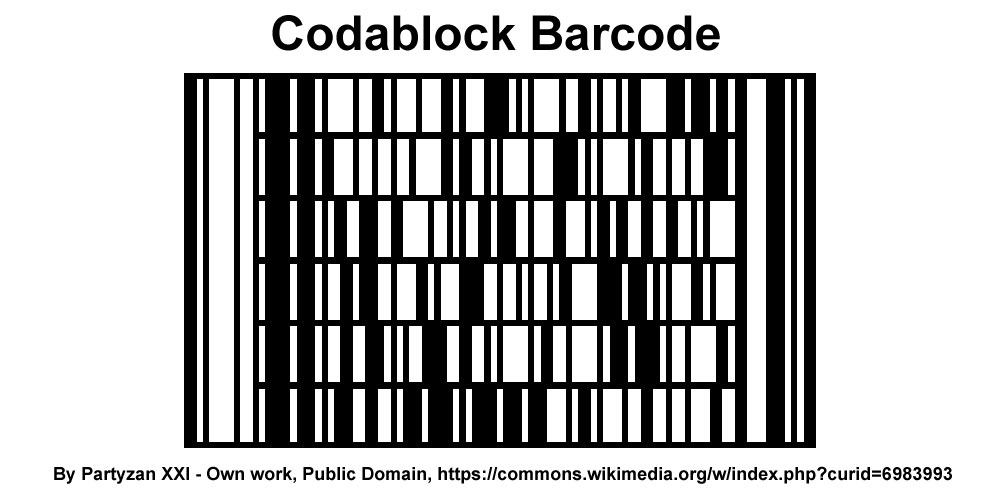
Codablock barcodes, a variant of the Codabar family, are utilized in various healthcare applications due to their efficiency in encoding large amounts of data and their adaptability to different environments. Below are detailed examples of how Codablock barcodes are applied in the healthcare sector: |
|
1. Patient Identification and Records Management |
Codablock barcodes are commonly used for patient identification and records management within hospitals and clinics. These barcodes are employed on wristbands, patient charts, and medical records to ensure accurate identification and streamline patient information management. |
1.1 Wristbands: In many healthcare facilities, patients are issued wristbands with Codablock barcodes upon admission. These wristbands contain encoded information such as the patient's name, date of birth, and medical record number. By scanning the wristband, healthcare providers can quickly access the patient's medical history, current medications, and other relevant details, minimizing the risk of errors and improving the efficiency of patient care. |
1.2 Medical Records: Codablock barcodes are also used on physical medical records and charts. Each record is labeled with a Codablock barcode that encodes patient-specific information and record identifiers. Scanning these barcodes allows for quick retrieval of patient records from electronic health systems, facilitating accurate and timely data entry and updates. |

|
2. Medication Management and Administration |
In the realm of medication management, Codablock barcodes play a crucial role in ensuring the correct administration of medications to patients. |
2.1 Medication Labels: Pharmaceuticals and other medical supplies are often labeled with Codablock barcodes that encode essential information such as the drug's name, dosage, expiration date, and lot number. This information helps prevent medication errors by allowing healthcare providers to verify the medication details before administration. Scanners used at medication stations read the Codablock barcode to cross-check with the patient's medication orders, ensuring accuracy in dispensing. |
2.2 Automated Dispensing Systems: Codablock barcodes are integrated into automated dispensing systems in pharmacies and hospitals. These systems use barcode scanners to verify and track medications as they are dispensed, ensuring that the correct drug is given to the right patient in the correct dosage. The use of Codablock barcodes in this context helps reduce human error and increase the efficiency of medication dispensing processes. |

|
3. Specimen Tracking and Laboratory Management |
Specimen tracking is a critical aspect of laboratory management, and Codablock barcodes are extensively used to improve accuracy and efficiency in this area. |
3.1 Sample Containers: In clinical laboratories, Codablock barcodes are used to label specimen containers such as blood vials, urine samples, and tissue samples. Each container is marked with a Codablock barcode that encodes patient information, sample type, and collection details. Scanning the barcode ensures that specimens are correctly matched to patient records and test orders, reducing the risk of mix-ups and errors. |
3.2 Laboratory Information Systems (LIS): Codablock barcodes are also employed within laboratory information systems to track and manage specimens throughout the testing process. As specimens move through different stages of analysis, their Codablock barcodes are scanned to update their status and location within the LIS. This tracking helps maintain the integrity of the testing process and ensures accurate reporting of results. |

|
4. Medical Equipment and Asset Management |
Healthcare facilities use Codablock barcodes for managing medical equipment and assets to ensure proper tracking, maintenance, and utilization. |
4.1 Equipment Labels: Medical equipment such as infusion pumps, diagnostic machines, and surgical instruments are often tagged with Codablock barcodes. These barcodes encode information about the equipment's serial number, maintenance schedule, and service history. Scanning the barcode allows facility staff to quickly access and update equipment records, schedule maintenance, and track equipment usage. |
4.2 Asset Tracking: Codablock barcodes are used in asset tracking systems to monitor the location and status of medical equipment and other assets within a healthcare facility. By scanning Codablock barcodes on assets, staff can ensure that equipment is properly accounted for, minimize loss or theft, and streamline inventory management processes. |

|
5. Patient and Staff Safety |
Ensuring patient and staff safety is a paramount concern in healthcare, and Codablock barcodes contribute to this goal by supporting various safety initiatives. |
5.1 Blood Transfusion Safety: Codablock barcodes are used in blood transfusion processes to ensure the correct matching of blood products with patients. Blood bags and related documentation are labeled with Codablock barcodes that encode donor information, blood type, and expiration date. Scanning these barcodes at the bedside confirms that the blood product matches the patient's blood type and transfusion orders, reducing the risk of transfusion reactions and enhancing patient safety. |
5.2 Staff Access Control: Healthcare facilities use Codablock barcodes on staff identification badges to control access to restricted areas and sensitive information. Barcodes on badges encode staff credentials and access levels, and scanning these badges at access points ensures that only authorized personnel can enter specific areas or access certain systems. |

|
6. Clinical Trials and Research |
Codablock barcodes are employed in clinical trials and research studies to manage and track various aspects of the research process. |
6.1 Study Participant Tracking: In clinical trials, Codablock barcodes are used to label participant records and study materials. Participants may receive study-specific identification cards or wristbands with Codablock barcodes that encode their unique study identifiers. Scanning these barcodes helps researchers track participant enrollment, adherence to study protocols, and collection of data. |
6.2 Sample Management: Codablock barcodes are used to label research samples, such as biological specimens and experimental materials. Each sample is assigned a Codablock barcode that encodes information about the sample's origin, handling instructions, and study parameters. Scanning the barcode ensures accurate tracking of samples throughout the research process and facilitates data management and analysis. |

|
7. Inventory and Supply Chain Management |
Effective inventory and supply chain management are essential for the smooth operation of healthcare facilities, and Codablock barcodes are used to enhance these processes. |
7.1 Medical Supplies: Codablock barcodes are used on medical supplies and consumables to manage inventory and streamline ordering processes. Each item in the supply chain is labeled with a Codablock barcode that encodes information about the product, such as its name, quantity, and expiration date. Scanning the barcode during inventory checks helps ensure accurate stock levels, reduce overstocking or shortages, and facilitate reordering. |
7.2 Order Fulfillment: In healthcare supply chains, Codablock barcodes are used to track and manage the fulfillment of orders from suppliers to healthcare facilities. Scanning Codablock barcodes on shipping labels and packages allows for accurate tracking of shipments, verification of received items, and updating of inventory records. |

|
8. Emergency Response and Disaster Preparedness |
In emergency response and disaster preparedness scenarios, Codablock barcodes provide crucial support for managing resources and coordinating efforts. |
8.1 Emergency Supplies: Codablock barcodes are used to label emergency supplies and equipment, such as medical kits, pharmaceuticals, and disaster relief materials. Each item is tagged with a Codablock barcode that encodes information about the supply's contents, usage instructions, and expiration date. Scanning the barcode ensures that emergency responders have access to up-to-date information and can quickly locate and deploy necessary resources. |
8.2 Disaster Response Tracking: During disaster response operations, Codablock barcodes are used to track and manage resources, personnel, and patient information. Barcodes on equipment, supplies, and personnel identification tags help coordinate efforts, ensure efficient use of resources, and maintain accurate records of activities and outcomes. |

|
9. Education and Training |
Codablock barcodes are utilized in education and training programs within healthcare settings to enhance learning and practice. |
9.1 Training Materials: Codablock barcodes are used to label training materials, such as manuals, simulation equipment, and educational resources. Each item is assigned a Codablock barcode that encodes information about the material's content, version, and usage guidelines. Scanning the barcode during training sessions helps ensure that participants have access to the correct materials and up-to-date information. |
9.2 Simulation Exercises: In medical simulation exercises, Codablock barcodes are used to track and manage simulation scenarios and equipment. Barcodes on simulation devices and patient mannequins encode information about the scenario parameters, patient profiles, and equipment settings. Scanning the barcodes helps facilitators manage simulations effectively and ensure that exercises are conducted according to predefined protocols. |

|
Conclusion |
Codablock barcodes offer significant advantages in healthcare applications due to their capacity for encoding large amounts of data and their adaptability to various environments. From patient identification and medication management to specimen tracking and emergency response, Codablock barcodes contribute to enhancing accuracy, efficiency, and safety in healthcare settings. Their versatility makes them a valuable tool for improving various aspects of healthcare operations and ensuring better patient care and resource management. |
 cs@easiersoft.com