1. Introduction to Code 16K Barcode Applications |
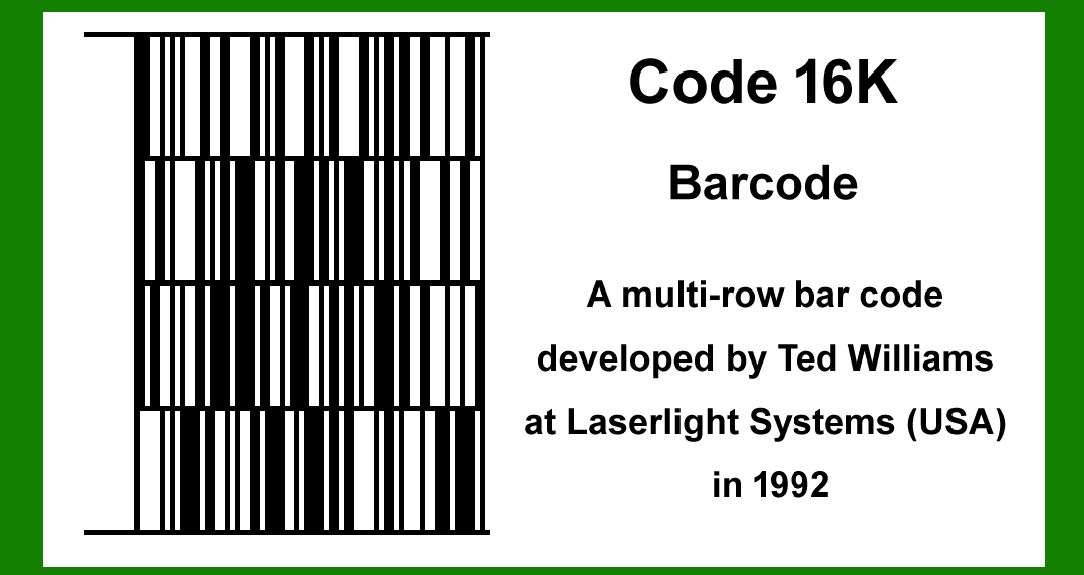
The Code 16K barcode is known for its capability to encode a significant amount of data within a relatively small space. This characteristic makes it suitable for various applications where detailed information needs to be stored and retrieved efficiently. Below are some notable examples of how the Code 16K barcode is utilized in different industries and contexts. |
|
2. Pharmaceutical Industry |
2.1. Drug Packaging and Tracking The pharmaceutical industry frequently uses Code 16K barcodes for packaging and tracking purposes. Due to the high data capacity, Code 16K barcodes can encode extensive information such as batch numbers, expiry dates, and unique serial numbers. For instance, a pharmaceutical company might use Code 16K barcodes on blister packs to store detailed product information, including drug composition and manufacturer details. This ensures precise tracking and verification of drugs throughout the supply chain, enhancing safety and compliance with regulations. |
2.2. Patient Medication Records Hospitals and clinics use Code 16K barcodes on medication labels to store detailed patient information and medication instructions. This approach helps in reducing medication errors by providing healthcare professionals with instant access to a patient's complete medication history and dosage information. For example, a hospital might place a Code 16K barcode on a patient's medication bottle, which, when scanned, retrieves a comprehensive record of the patient's prescribed medications, allergies, and previous adverse reactions. |

|
3. Retail Industry |
3.1. High-Value Product Identification In the retail sector, especially for high-value or luxury items, Code 16K barcodes are employed to store detailed product information, including specifications, origin, and authenticity certificates. For example, a high-end watch retailer might use Code 16K barcodes on their product packaging to provide detailed information about the watch's model, features, and warranty terms. This not only aids in inventory management but also enhances customer trust by offering comprehensive product details at the point of sale. |
3.2. Supply Chain Management Retailers use Code 16K barcodes to improve supply chain efficiency. The barcode's ability to hold substantial data allows retailers to encode information about inventory levels, shipment tracking, and product returns. For example, a supermarket chain might use Code 16K barcodes on pallets of goods to track their movement from the warehouse to individual stores. The barcode might contain data on the shipment's origin, expected delivery date, and contents, facilitating better coordination and management of inventory. |

|
4. Healthcare Sector |
4.1. Medical Equipment Tracking Code 16K barcodes are employed to track medical equipment within hospitals and clinics. Due to their large data capacity, these barcodes can store detailed information about the equipment's maintenance history, service schedules, and usage records. For instance, a hospital might place Code 16K barcodes on MRI machines to keep a comprehensive log of their maintenance, calibration, and repair activities. This helps in ensuring that the equipment remains in optimal working condition and complies with regulatory standards. |
4.2. Laboratory Sample Identification In medical laboratories, Code 16K barcodes are used to label samples with detailed information, including patient identifiers, sample types, and test instructions. For example, a blood sample might be tagged with a Code 16K barcode that encodes not only the patient's ID but also information about the type of test requested and any specific handling instructions. This reduces the risk of errors and ensures that samples are correctly processed and analyzed. |
|
5. Manufacturing Industry |
5.1. Product Serialization Manufacturers use Code 16K barcodes for product serialization, which involves assigning a unique identifier to each product unit. This practice is common in industries where tracking individual products is crucial, such as in electronics or automotive manufacturing. For instance, an electronics manufacturer might use Code 16K barcodes to serialize each unit of a consumer gadget, encoding information such as the product's model number, production date, and unique serial number. This facilitates better quality control and helps in managing product recalls if necessary. |
5.2. Parts and Components Tracking In the manufacturing process, Code 16K barcodes are used to track parts and components throughout the production line. For example, an automotive manufacturer might apply Code 16K barcodes to various components of a vehicle, encoding information about the part's specifications, supplier details, and production lot. This helps in tracking the components' journey from suppliers to the final assembly, ensuring that all parts meet quality standards and can be traced if issues arise. |

|
6. Library and Archival Systems |
6.1. Book and Document Cataloging Libraries and archival institutions utilize Code 16K barcodes for cataloging books and documents. The high data capacity allows these barcodes to store detailed bibliographic information, including author names, publication dates, and unique identifiers. For example, a library might use Code 16K barcodes on book spines to encode the book's catalog number, title, and author, making it easier to track and retrieve items from the collection. |
6.2. Archive Record Management Archival systems use Code 16K barcodes to manage and organize records efficiently. For instance, an archival repository might use Code 16K barcodes on boxes of historical documents to encode information about the contents, archival location, and access restrictions. This system facilitates easy retrieval and ensures that the archived materials are accurately documented and preserved. |
|
7. Transportation and Logistics |
7.1. Cargo Tracking In the transportation and logistics sector, Code 16K barcodes are used for tracking cargo and shipments. The barcode's ability to store extensive information makes it ideal for encoding details about the cargo's origin, destination, and handling instructions. For example, a logistics company might use Code 16K barcodes on shipping containers to track their journey from the point of origin to the final destination, including intermediate stops and handling procedures. |
7.2. Vehicle Maintenance Records Code 16K barcodes are also used to maintain records for transportation vehicles. For instance, a fleet management company might apply Code 16K barcodes to the vehicles in their fleet, encoding information about maintenance schedules, repair history, and inspection results. This helps in ensuring that the vehicles are well-maintained and compliant with safety regulations. |

|
8. Education Sector |
8.1. Student and Faculty ID Cards Educational institutions use Code 16K barcodes on ID cards for students and faculty members. The high data capacity allows these barcodes to store a variety of information, including personal details, course enrollments, and access privileges. For example, a university might issue ID cards with Code 16K barcodes to students, encoding their name, student ID number, and course registration details. This facilitates easy access to campus facilities and streamlines administrative processes. |
8.2. Textbook and Resource Management In schools and universities, Code 16K barcodes are used to manage textbooks and educational resources. For example, a school library might use Code 16K barcodes on textbooks to store detailed information about the book's title, author, edition, and borrowing history. This helps in managing the library's collection and tracking the circulation of books among students and faculty. |

|
9. Entertainment and Media |
9.1. Event Ticketing In the entertainment industry, Code 16K barcodes are used for event ticketing. The barcode's capacity to store detailed information allows it to encode not only the ticket holder's details but also information about the event, seat number, and access privileges. For instance, a concert promoter might issue tickets with Code 16K barcodes that include the event's date, time, and venue, as well as the ticket holder's seating assignment and special access instructions. |
9.2. Media Asset Management Code 16K barcodes are used in media asset management to track and catalog media files. For example, a film studio might use Code 16K barcodes on film reels or digital storage devices to encode information about the content, production date, and version. This facilitates efficient management and retrieval of media assets during production and post-production processes. |

|
10. Government and Public Services |
10.1. Identity Verification Government agencies use Code 16K barcodes for identity verification on official documents such as passports and driver's licenses. The barcode can store comprehensive information, including personal details, biometric data, and document issuance details. For example, a passport may include a Code 16K barcode that encodes the holder's name, nationality, passport number, and biometric information, helping to streamline border control and authentication processes. |
10.2. Public Health Records In public health services, Code 16K barcodes are used to manage health records and vaccination information. For example, a vaccination record might include a Code 16K barcode that stores detailed information about the patient's vaccination history, including vaccine types, administration dates, and healthcare provider details. This aids in maintaining accurate health records and facilitating public health monitoring and reporting. |

|
11. Aerospace and Defense |
11.1. Equipment and Parts Tracking In the aerospace and defense industries, Code 16K barcodes are used to track equipment and parts. The barcode's ability to hold detailed information makes it ideal for encoding specifications, maintenance schedules, and inventory levels. For example, a defense contractor might use Code 16K barcodes on aircraft components to track their production history, installation details, and maintenance activities. |
11.2. Mission Data Management Code 16K barcodes are used to manage mission data and logistics in defense operations. For example, military personnel might use Code 16K barcodes to encode detailed information about mission equipment, supplies, and operational instructions. This helps in organizing and retrieving critical data quickly and efficiently during missions. |

|
12. Energy Sector |
12.1. Equipment Maintenance Records In the energy sector, Code 16K barcodes are employed to maintain records for equipment used in power generation and distribution. For example, a power plant might use Code 16K barcodes on generators and turbines to encode information about their maintenance schedules, performance data, and operational history. This ensures that equipment is regularly serviced and remains in optimal working condition. |
12.2. Asset Management Code 16K barcodes are used for asset management in the energy industry. For example, a utility company might use Code 16K barcodes on transformers and other infrastructure to track their location, condition, and usage. This helps in managing assets effectively and planning maintenance and replacement schedules. |

|
13. Food and Beverage Industry |
13.1. Quality Control In the food and beverage industry, Code 16K barcodes are used for quality control and traceability. For example, a food manufacturer might use Code 16K barcodes on product packaging to store detailed information about the product's ingredients, production date, and quality assurance tests. This helps in ensuring that products meet safety standards and facilitates traceability in case of recalls. |
13.2. Supply Chain Traceability Code 16K barcodes are used to enhance supply chain traceability in the food and beverage sector. For example, a wine producer might use Code 16K barcodes on bottles to encode information about the wine's origin, production process, and distribution history. This helps in tracking the wine from production to retail, ensuring its authenticity and quality. |

|
Each of these examples demonstrates how the Code 16K barcode's large data capacity can be leveraged across various industries to improve efficiency, accuracy, and traceability in a range of applications. |
 cs@easiersoft.com