1. Introduction to KarTrak ACI Barcode |
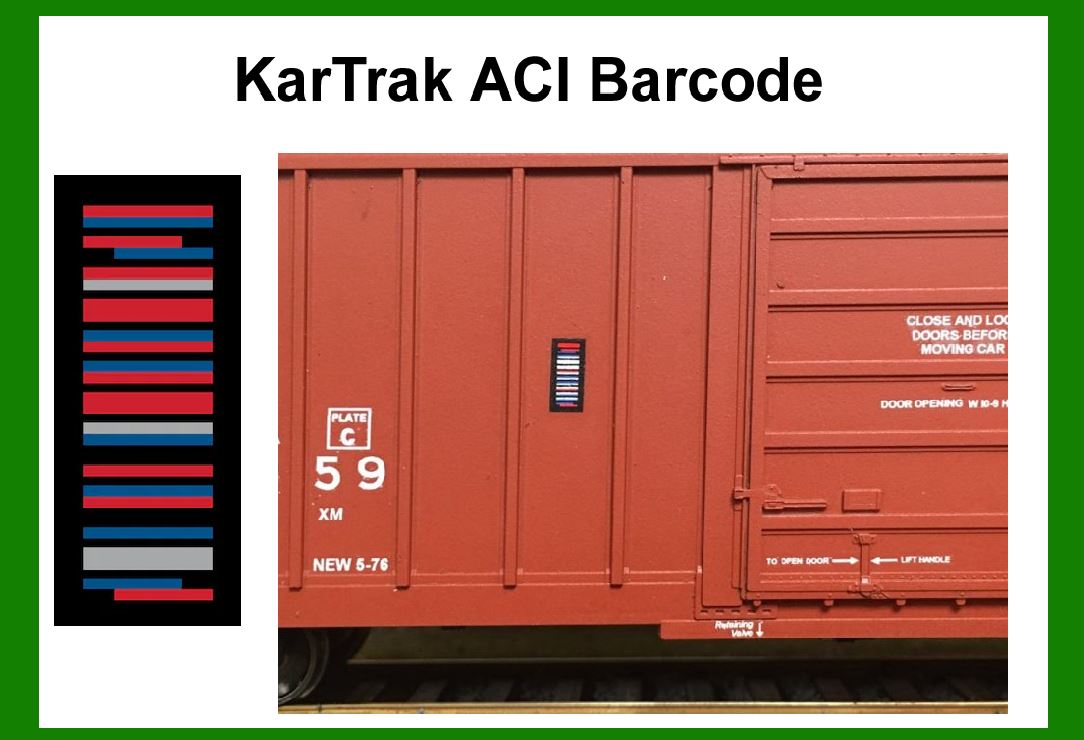
The KarTrak ACI (Automatic Car Identification) barcode was developed in the late 1960s and early 1970s as a method for identifying and tracking railroad rolling stock in North America. This barcode technology was pivotal in transforming the rail industry's ability to monitor and manage freight cars efficiently. While the system itself was eventually phased out, its application examples during its operational period provide valuable insights into the importance and functionality of automated identification in the rail sector. |
|
2. Historical Context of KarTrak ACI |
KarTrak ACI barcodes were introduced to address the growing need for a reliable and automated method of identifying freight cars on the extensive North American rail network. Before the advent of KarTrak, railroads relied on manual record-keeping, which was prone to errors and inefficiencies. The introduction of KarTrak revolutionized the industry by enabling automatic data capture and processing, leading to more accurate and efficient rail operations. |
3. Basic Functionality and Components |
KarTrak ACI barcodes comprised a series of colored stripes placed on the sides of rail cars. These stripes represented a unique identification code that could be read by trackside scanners equipped with light sources and photodetectors. The system encoded information about the car, such as its ownership, type, and unique serial number. This automated method allowed for real-time tracking and management of railcar movements across the network. |
|
4. Example 1: Freight Car Identification |
One of the primary applications of KarTrak ACI barcodes was the identification of freight cars. Each car was assigned a unique barcode that facilitated its tracking as it traveled across various railroads. For example, a hopper car carrying grain from the Midwest to a port on the East Coast could be monitored throughout its journey. As the car passed through different yards and interchanges, trackside scanners would capture its barcode and update the central database, providing real-time visibility into its location and status. |
5. Example 2: Maintenance and Asset Management |
KarTrak ACI barcodes were also instrumental in the maintenance and asset management of railroad rolling stock. Railroads could keep detailed records of each car's maintenance history, including inspections, repairs, and overhauls. For instance, a boxcar with a history of brake issues could be easily identified and flagged for maintenance before it became a safety hazard. The ability to track maintenance activities using the barcodes helped ensure that cars were serviced on schedule, reducing the likelihood of mechanical failures and improving overall safety. |

|
6. Example 3: Interchange Tracking |
Railcars often travel across multiple railroads during their journey from origin to destination. KarTrak ACI barcodes facilitated the tracking of cars as they moved between different railroads, a process known as interchange tracking. For example, a tank car transporting chemicals from a plant in Texas to a manufacturing facility in Canada might pass through several railroad networks. Each time the car changed hands, the KarTrak system would record the interchange event, ensuring that both the originating and receiving railroads had accurate records of the car's movement. This capability streamlined billing and operational coordination between different rail companies. |
7. Example 4: Inventory Management |
Managing the inventory of rolling stock is crucial for railroads to optimize their operations and meet customer demands. KarTrak ACI barcodes enabled railroads to maintain an accurate inventory of their fleet. For example, a railroad company managing a fleet of thousands of cars could use the barcodes to quickly identify which cars were available for new shipments and which were in use. This information was vital for planning and scheduling purposes, ensuring that the right type of car was available when and where it was needed. |

|
8. Example 5: Load Tracking and Cargo Security |
KarTrak ACI barcodes played a significant role in load tracking and cargo security. By associating each car's barcode with its cargo manifest, railroads could monitor the movement of goods in real-time. For example, a gondola car loaded with steel beams destined for a construction site could be tracked from the moment it was loaded until it reached its final destination. In case of theft or tampering, the system could quickly identify the last known location of the car, aiding in recovery efforts and improving cargo security. |
9. Example 6: Integration with Yard Management Systems |
Rail yards are busy hubs where cars are sorted, assembled into trains, and dispatched to their next destinations. KarTrak ACI barcodes were integrated with yard management systems to enhance operational efficiency. For example, when a train arrived at a yard, the trackside scanners would read the barcodes of each car, and the yard management system would use this data to generate switching orders. This automation reduced the manual effort required to identify and sort cars, speeding up yard operations and reducing dwell times. |

|
10. Example 7: Billing and Revenue Management |
Accurate billing is critical for the financial health of railroads. KarTrak ACI barcodes helped ensure that railroads could accurately bill customers for the transportation services provided. For instance, a company shipping coal in unit trains could be billed based on the precise number of carloads delivered, as recorded by the KarTrak system. This accuracy minimized billing disputes and ensured that railroads were compensated fairly for their services. |
11. Example 8: Regulatory Compliance and Reporting |
Regulatory compliance is an important aspect of railroad operations. KarTrak ACI barcodes aided in compliance with various regulations and reporting requirements. For example, railroads transporting hazardous materials had to adhere to strict tracking and reporting standards. The KarTrak system provided the necessary data to comply with these regulations, ensuring that the locations and movements of hazardous material cars were accurately recorded and reported to the appropriate authorities. |

|
12. Example 9: Accident Investigation and Analysis |
In the event of a rail accident, having accurate information about the involved cars is crucial for investigation and analysis. KarTrak ACI barcodes provided detailed records of car movements and histories. For instance, if a derailment occurred, investigators could use the barcode data to reconstruct the sequence of events leading up to the accident. This information was valuable for identifying root causes, determining liability, and implementing measures to prevent future incidents. |
13. Example 10: Historical Data Analysis and Planning |
The data collected by KarTrak ACI barcodes over time was a valuable resource for historical analysis and planning. Railroads could analyze trends in car usage, maintenance needs, and operational efficiency. For example, by examining historical data, a railroad might identify a pattern of frequent repairs needed for a specific type of car, prompting a review of its design or maintenance practices. This data-driven approach to planning helped railroads optimize their operations and make informed decisions. |

|
14. Example 11: Fleet Optimization and Utilization |
Optimizing the utilization of the rolling stock fleet is crucial for maximizing efficiency and profitability. KarTrak ACI barcodes enabled railroads to monitor the usage patterns of their cars. For instance, a railroad could identify underutilized cars and redeploy them to areas with higher demand. Conversely, it could also recognize cars that were frequently out of service for repairs and prioritize their replacement. This level of insight helped railroads achieve better fleet utilization and minimize idle time. |
15. Example 12: Cross-Border Transportation Management |
Railroads in North America often operate across international borders, necessitating coordination between different countries' rail networks. KarTrak ACI barcodes facilitated cross-border transportation management. For example, a grain train traveling from the United States to Mexico would be tracked seamlessly across the border, ensuring that both countries' railroads had accurate and up-to-date information about the train's location and status. This capability improved operational coordination and reduced delays at border crossings. |

|
16. Example 13: Customer Service and Shipment Tracking |
Providing customers with accurate and timely information about their shipments is crucial for customer satisfaction. KarTrak ACI barcodes enabled railroads to offer better customer service by providing real-time shipment tracking. For example, a manufacturer waiting for a delivery of raw materials could use the tracking data to anticipate the arrival of their shipment and plan their production schedule accordingly. This transparency improved customer relationships and enhanced the overall service experience. |
17. Example 14: Equipment Leasing and Management |
Railroads often lease cars from equipment leasing companies. KarTrak ACI barcodes simplified the management of leased equipment. For instance, a railroad leasing a fleet of tank cars could track the usage and location of each leased car accurately. This information was critical for billing purposes, ensuring that leasing agreements were honored, and that lessees were billed appropriately for the usage of the equipment. |

|
18. Example 15: Terminal and Port Operations |
Rail terminals and ports are critical nodes in the supply chain, where rail and maritime transportation intersect. KarTrak ACI barcodes were used to streamline terminal and port operations. For example, a container arriving at a port by rail could be tracked using its barcode, ensuring that it was quickly and accurately matched with the corresponding shipping container. This efficiency reduced turnaround times and improved the flow of goods through these important hubs. |
19. Example 16: Environmental and Emissions Tracking |
With increasing focus on environmental sustainability, railroads need to monitor and report their emissions accurately. KarTrak ACI barcodes provided data that could be used to estimate the environmental impact of rail operations. For example, by tracking the movement and utilization of diesel-powered freight cars, railroads could estimate fuel consumption and associated emissions. This information was valuable for reporting purposes and for developing strategies to reduce the environmental footprint of rail transportation. |

|
20. Example 17: Emergency Response and Safety Management |
In the event of an emergency, such as a derailment or hazardous material spill, having accurate information about the involved cars is crucial for effective response. KarTrak ACI barcodes provided emergency responders with quick access to detailed information about the contents and characteristics of each car. For example, if a train carrying hazardous chemicals derailed, responders could use the barcode data to identify the specific chemicals involved and take appropriate safety measures to protect themselves and the public. |
21. Example 18: Collaboration with Other Transportation Modes |
Intermodal transportation involves the movement of goods using multiple modes of transportation, such as rail, truck, and ship. KarTrak ACI barcodes facilitated collaboration between different transportation modes. For example, a container loaded onto a train at an inland terminal could be tracked using its barcode until it was transferred to a truck for final delivery. This seamless integration improved the efficiency and reliability of intermodal transportation, making it a more attractive option for shippers. |

|
22. Example 19: Seasonal and Demand-Driven Operations |
Railroads often experience seasonal fluctuations in demand, requiring flexible and responsive operations. KarTrak ACI barcodes helped railroads manage these fluctuations effectively. For instance, during the harvest season, a railroad might see a surge in demand for grain cars. By tracking the availability and utilization of its fleet, the railroad could quickly allocate additional cars to meet the increased demand, ensuring timely transportation of agricultural products. |
23. Example 20: Data-Driven Decision Making |
The wealth of data generated by KarTrak ACI barcodes enabled railroads to adopt a data-driven approach to decision making. For example, by analyzing barcode data, a railroad could identify trends in car utilization, maintenance needs, and operational performance. This data-driven insight allowed railroads to make informed decisions about investments, operational improvements, and strategic initiatives, ultimately enhancing their efficiency and competitiveness. |

|
24. Example 21: Enhanced Operational Efficiency |
KarTrak ACI barcodes contributed to enhanced operational efficiency by automating many aspects of railcar tracking and management. For example, the ability to automatically capture and process car identification data reduced the need for manual data entry and minimized errors. This automation streamlined operations, reduced administrative overhead, and allowed railroads to focus more on their core activities of moving goods and providing transportation services. |
25. Example 22: Future Innovations and Legacy Impact |
While the KarTrak ACI system itself is no longer in use, its legacy continues to influence modern railcar tracking technologies. The lessons learned from KarTrak's implementation and operation have informed the development of more advanced and reliable identification systems, such as RFID and GPS tracking. For example, modern RFID tags on railcars build on the principles of automated identification pioneered by KarTrak, offering even greater accuracy, reliability, and functionality. |

|
26. Conclusion |
In summary, the KarTrak ACI barcode system was a groundbreaking technology that revolutionized the identification and tracking of railroad rolling stock in North America. Its applications spanned a wide range of operational areas, from freight car identification and maintenance management to inventory control and regulatory compliance. By providing accurate, real-time data about railcar movements and status, KarTrak enabled railroads to operate more efficiently, safely, and effectively. The examples highlighted in this detailed exploration demonstrate the far-reaching impact of KarTrak on the rail industry and its enduring legacy in the field of automated identification and tracking. |
 cs@easiersoft.com