To fully describe the encoding of the RM4SCC (Royal Mail 4-State Customer Code) barcode, let's delve into its structure, encoding rules, and how it represents alphanumeric characters. RM4SCC is a barcode symbology used primarily by Royal Mail and other postal services for encoding addresses on mail items. It allows for efficient sorting and delivery of mail through automated processes. Below, I'll detail the encoding process step by step. | 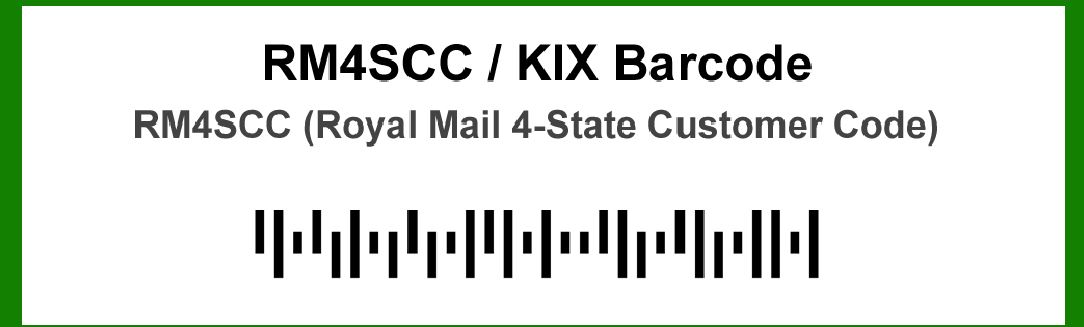
| Structure of RM4SCC Barcode | RM4SCC is a 4-state barcode, which means it encodes information using four different types of bars and spaces. These bars and spaces can be either full bars (black) or half bars (white), arranged in specific patterns to encode characters. The barcode consists of: | Ascender bars (full bars) Descender bars (full bars) Tracker bars (half bars) Base bars (half bars) | These elements combine to form distinctive patterns that represent alphanumeric characters, allowing the barcode to encode data efficiently while remaining compact. | 
| Encoding Rules | Character Set | RM4SCC encodes characters from the following set: | Alphanumeric characters (A-Z, 0-9) | Encoding Process | 1.Character Mapping: Each alphanumeric character is mapped to a unique pattern of bars and spaces. This mapping is predefined and consistent across all RM4SCC implementations. 2.Start and Stop Sentinels: The barcode begins and ends with special sentinel bars that indicate the start and end of the encoded data. 3.Checksum Calculation: RM4SCC uses a checksum mechanism to ensure data integrity. The checksum is calculated based on the encoded characters and appended to the end of the barcode. 4.Encoding Patterns: Each character (including the checksum) is encoded using a specific combination of ascender, descender, tracker, and base bars. These bars are arranged vertically within a cell structure to form the barcode. | 
| Example of Encoding | Let's encode the alphanumeric string 'A1B2C' using RM4SCC: | 1.Character Mapping: | A = Ascender, Ascender, Tracker, Base, Ascender (example pattern) 1 = Ascender, Base, Ascender, Tracker, Ascender (example pattern) B = Ascender, Ascender, Tracker, Base, Base (example pattern) 2 = Ascender, Base, Ascender, Base, Ascender (example pattern) C = Ascender, Ascender, Base, Tracker, Ascender (example pattern) | 2.Encode the String: | Start Sentinel: Indicates the beginning of the barcode. Encode 'A': Ascender, Ascender, Tracker, Base, Ascender Encode '1': Ascender, Base, Ascender, Tracker, Ascender Encode 'B': Ascender, Ascender, Tracker, Base, Base Encode '2': Ascender, Base, Ascender, Base, Ascender Encode 'C': Ascender, Ascender, Base, Tracker, Ascender Checksum Calculation: Based on the encoded characters (not shown in detail here). | 3.Stop Sentinel: Indicates the end of the barcode. | 
| Conclusion | RM4SCC's encoding process involves mapping each alphanumeric character to a specific pattern of bars and spaces, which are arranged vertically within a cell structure. The barcode starts with a start sentinel, encodes the data characters and checksum, and ends with a stop sentinel. This method allows for efficient encoding and decoding of alphanumeric data, making it suitable for automated sorting and delivery processes used by postal services like Royal Mail. | 
|
|
 cs@easiersoft.com