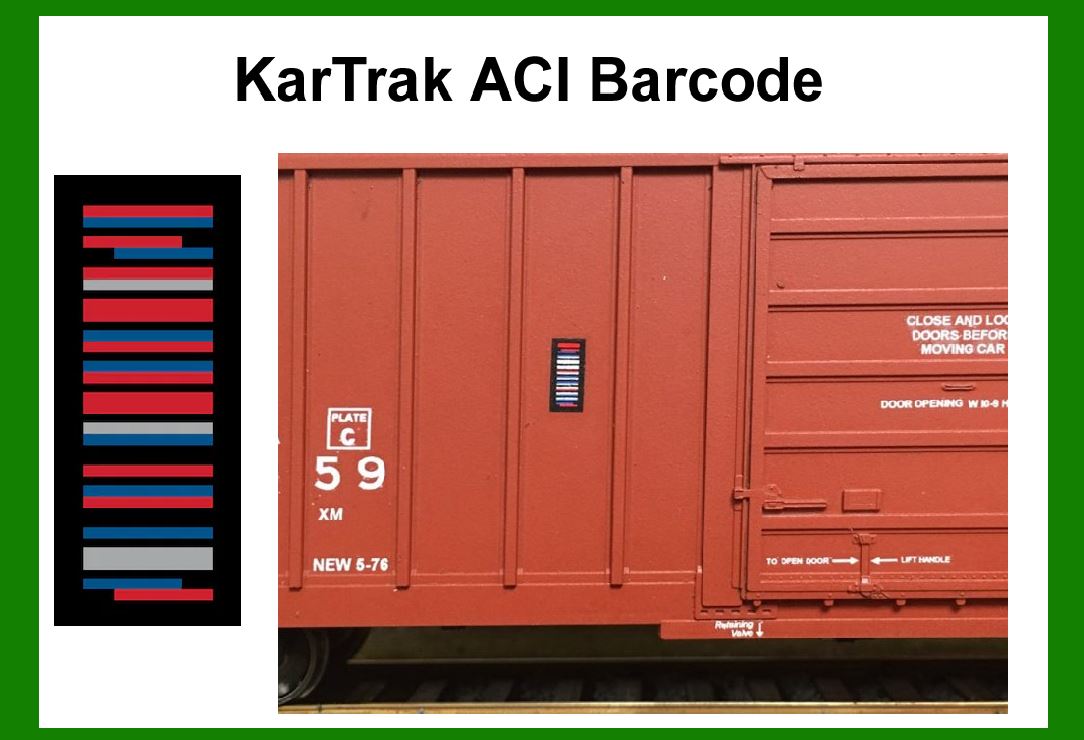
The KarTrak Automatic Car Identification (ACI) system was a pioneering barcode technology used extensively in North America for identifying and tracking railroad rolling stock. |
Developed in the 1960s, KarTrak ACI barcodes played a crucial role in automating and improving the efficiency of freight car management across the railway industry. Here's a detailed exploration of the KarTrak ACI barcode system: |
|
1. Introduction to KarTrak ACI Barcode System |
The KarTrak ACI system was developed by the Association of American Railroads (AAR) and introduced in the mid-1960s. Its primary purpose was to automate the identification and tracking of railroad rolling equipment, such as freight cars and locomotives. This system aimed to replace the labor-intensive manual methods of identification with automated data capture using barcodes. |
|
2. Barcode Technology Used |
The KarTrak ACI system utilized a specific type of barcode technology designed to withstand the harsh environmental conditions typical of railroad operations. The barcodes were typically printed on metal plates or tags that were affixed to the rolling stock. |

|
3. Structure and Encoding |
The barcode structure of KarTrak ACI typically consisted of a series of vertical bars of varying widths. Each barcode represented a unique identifier for a specific piece of rolling stock. The encoding scheme was designed to ensure robustness and reliability in the challenging conditions of railroad operations, including exposure to weather, dirt, and mechanical wear. |

|
4. Deployment and Implementation |
KarTrak ACI barcodes were deployed extensively across North American railways, including major freight carriers and rail yards. The system required the installation of barcode readers at strategic points along rail networks, such as classification yards, interchange points, and maintenance facilities. |

|
5. Functionality and Data Capture |
The primary function of the KarTrak ACI system was to automatically identify and track railroad rolling stock as they moved through the rail network. When a barcode-equipped freight car or locomotive passed a barcode reader, the system would capture the unique identifier encoded in the barcode. This information was then transmitted to centralized computer systems for real-time tracking and management. |
|
6. Advantages of KarTrak ACI |
Automation: Reduced reliance on manual record-keeping and identification processes, leading to improved operational efficiency. Accuracy: Enhanced accuracy in tracking and managing rolling stock, minimizing errors associated with manual data entry. Cost Efficiency: Lowered operational costs by streamlining logistics and inventory management processes. Interoperability: Standardized system adopted across multiple railroads, facilitating seamless interchange of rolling stock. |
|
7. Challenges and Limitations |
Maintenance: Required regular maintenance of barcode readers and tags due to exposure to harsh environmental conditions. Compatibility: Ensuring compatibility and interoperability across different generations of barcode readers and equipment. Data Security: Addressing concerns related to data security and integrity, particularly with the transition to digital systems. |

|
8. Legacy and Transition |
Over time, advancements in technology and logistics management led to the evolution of railroad asset tracking systems beyond KarTrak ACI. Modern systems now integrate RFID (Radio Frequency Identification) and GPS (Global Positioning System) technologies for enhanced real-time tracking and data analytics capabilities. |
|
9. Conclusion |
The KarTrak ACI barcode system represented a significant advancement in the automation of railroad rolling stock identification and tracking. It revolutionized the efficiency and reliability of freight car management across North American railways, setting a precedent for subsequent developments in logistics and supply chain management technologies. |
By leveraging barcode technology, the KarTrak ACI system contributed to the modernization of railroad operations, improving safety, efficiency, and service reliability in the transportation of goods by rail. |
This detailed overview highlights the foundational role of KarTrak ACI barcodes in the history of railroad logistics and underscores their enduring legacy in the evolution of transportation technologies. |
 cs@easiersoft.com