Barcode Technology

Barcode History

Barcode Label Paper

Barcode Printer

Barcode Application

Inventory Management

AI Barcode QRCode

Barcode Scanner

Barcode Software

Barcode Software B

Barcode Software C

Barcode Software D

Barcode Software E

New Technology A

New Technology B

Robot Technology

Barcode Types

Barcode Types B

Barcode Types C

Barcode Types D

Barcode Types E

Barcode Types F

Electronic Technology

Psychology at Work

Barcode Technology and Barcode Software Related   <<< Back to Directory <<<

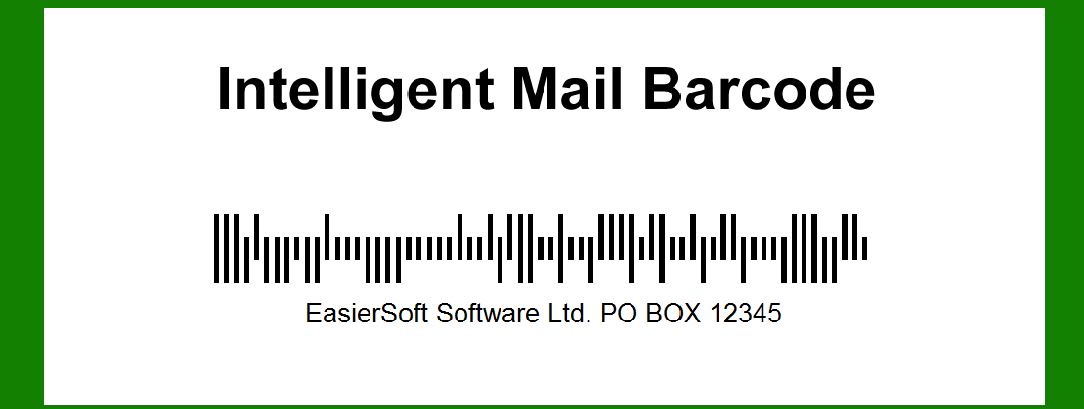
Structures of Intelligent Mail barcode

The Intelligent Mail Barcode (IMb) is a unique and versatile barcode system primarily used by the United States Postal Service (USPS) for sorting and tracking mail. It incorporates several components and structures that enable comprehensive tracking and efficient mail processing. Below is a detailed description of each component and structure of the Intelligent Mail Barcode:

1. Barcode Identifier

Purpose: Identifies the type of barcode used, distinguishing it from other barcode formats.

Format: A single-digit numeric value ranging from 0 to 4.

Example: The barcode identifier '4' indicates an Intelligent Mail Barcode used for tray or container labels.

2. Service Type Identifier (STID)

Purpose: Specifies the type of service or application for which the barcode is intended (e.g., First-Class Mail, Standard Mail).

Format: A three-digit numeric code.

Example: The STID '201' represents First-Class Mail.

3. Mailer Identifier

Purpose: Identifies the specific mailer or sender of the mailpiece.

Format: A six- or nine-digit numeric code assigned by USPS.

Example: A mailer identifier might be '123456' or '123456789'.

4. Serial Number

Purpose: Provides a unique identifier for each mailpiece within the mailing.

Format: A numeric sequence that ranges in length depending on the application and mail volume.

Example: Sequential numbers like '000001', '000002', etc., are used to distinguish individual mailpieces.

5. Routing Code

Purpose: Encodes information about the destination of the mailpiece.

Format: Variable length, up to 11 digits.

Example: Includes ZIP Code, ZIP+4 Code, delivery point, or other routing information depending on the specific requirements of the mailpiece.

6. Barcode ID (Optional)

Purpose: Used in conjuction with other components to provide additional functionality, such as sorting or tracking.

Format: 2-digit numeric code.

Example: The optional barcode identifier '20' can represent the presence of additional tracking or sorting information.

7. IMb Tracing

Purpose: Facilitates tracking of mailpieces throughout the USPS mail processing network.

Format: Unique 20-digit number used in conjunction with the barcode to provide detailed tracking data.

Example: A typical IMb tracing number might be '12345678901234567890'.

8. Data Field Identifier (Optional)

Purpose: Identifies specific data fields within the barcode.

Format: Variable length, alphanumeric.

Example: Data field identifiers may include codes such as 'N', 'O', or 'T' to indicate special services or content types.

9. Barcode Content Identifier (Optional)

Purpose: Specifies the type of information encoded within the barcode.

Format: Numeric or alphanumeric.

Example: Codes like '2D' or '3D' may indicate the presence of additional dimensional data within the barcode.

Structure of the Intelligent Mail Barcode (IMb):

Barcode Format: The IMb can be printed in four distinct formats: Basic, Full, Tracing, and Routing. Each format accommodates different levels of information and functionality, ranging from basic tracking to detailed routing and tracing capabilities.

Encoding Methods: IMb utilizes a combination of 65 bars and spaces to encode data. These bars and spaces are grouped into sections that correspond to different components of the barcode, such as the Barcode Identifier, Service Type Identifier, Mailer Identifier, and Serial Number.

Printing Considerations: To ensure accurate scanning and processing by USPS equipment, the IMb must be printed with high precision and within specified size and placement guidelines. Variations in print quality or incorrect formatting can affect readability and processing efficiency.

Usage Examples: IMb is used extensively for bulk mailings, allowing businesses and organizations to track large volumes of mail throughout the postal system. It supports automated sorting, delivery tracking, and delivery confirmation services offered by USPS.

In conclusion, the Intelligent Mail Barcode (IMb) is a sophisticated barcode system designed to enhance the efficiency and accuracy of mail processing and tracking within the United States Postal Service. Its components and structures allow for detailed encoding of sender information, mailpiece characteristics, and destination routing, facilitating reliable and efficient mail delivery services.


EasierSoft Barcode Label Design & Bulk Printing Software

---- Use Excel Data to Batch Print Barcodes on Label Sheets or Roll Labels  

---- How to use this barcode software

Download:  Free Barcode Software + Barcode Label Designer

Download Free Barcode Software at Softonic

     Download at CNET

Once you obtain a GS1/UPC/EAN barcode, or other barcode type and QR code, you can use our free software to batch print barcode labels onto Roll label paper using a professional label printer, or to batch print barcodes onto Avery 5160 label sheets using a regular laser or inkjet printer. Our software has free and paid versions.

The free version fully meets your needs for batch printing GS1/UPC/EAN barcodes. The paid version can import data from Excel and databases to batch print barcode labels with different values.

How to Start

Input Data

Import Excel Data

Print Barcode

Barcode Format

Label Designer

All Screen Shot

Export Barcode Image

Save Template

Output Word Excel

How to Use & FAQ:

Generate ISBN barcode

Predefined label templates

Printing setup

Save settings

Serial number generator

The supported barcode types

Load Excel data (pro)

Manually copy data from Excel files

Filter some data for printing

Edit imported barcode data

Input data (Pro)

Label Designer

Edit data in Label designer

Label Designer - Add new label

Label Designer - Printing

Set the barcode label format to be printed

Other Barcode Label Format Settings

Barcode types supported by this program

Barcode Label Font Settings

Configuring the Barcode Print Rotation

Text Alignment for Barcode Labels

Automatically Adjusting Barcode Width

Text Beneath the Barcode

Configuring Barcode Size

Auto Calculate the Barcode Size

Export Barcode images

Export Barcode Image Format

File Names for Exported Barcode

Resolution of Exported Barcode Images

Fixed Folder for Exporting Barcode

Default Barcode Image Export Format

Print bulk barcodes quickly

Print barcodes to Avery 5160 label

How to bulk Barcode Printing

Sample - Avery 5162 (2x7) Label Sheet

Example: Print barcodes to 5*3cm roll

Example: Print barcodes to 5161 label

Example: Print barcodes to 5162 label

Example: Print barcodes to 5163 label

Example: Print barcodes to 5164 label

Example: Print portrait orientation 5164

Example: Print barcodes to 5167 label

Example: Print barcodes to 5168 label

Example: Print portrait orientation 5168

Example: Print barcodes to 5169 label

Example: Print barcodes to 5660 label

Example: Print barcodes to 5661 label

Example: Print barcodes to 5662 label

Example: Print barcodes to 5663 label

Example: Print barcodes to 5664 label

Highlights

Excel integration: Import data directly from Excel to generate and print barcodes in bulk.

Label designer: Create complex labels with multiple barcodes, text, logos, and shapes.

Batch printing: Print thousands of barcodes at once using standard inkjet/laser printers or professional barcode printers.


Flexible editions:

Standard Edition: Simple batch printing with Excel data.

Professional Edition: Adds command-line automation for workflow integration.

Label Designer Edition: Advanced design features for complex labels.


Why Choose Our Barcode Solutions?

Cost-effective: Free online generator and permanent free desktop version available.

Easy to use: No technical expertise required—just input data and print.

Versatile: Supports nearly all 1D and 2D barcode types, including QR codes.

Trusted: Recommended by CNET and widely downloaded by users worldwide.


Suitable Use Cases

Small businesses and startups needing quick barcode labels for products.

Retailers and online sellers managing inventory with batch barcode printing.

Manufacturers requiring sequential or custom barcode labels for packaging.

Educational and testing environments where barcodes are used for tracking.


CONTACT

cs@easiersoft.com

If you have any question, please feel free to email us.


https://free-barcode.com


<<< Back to Directory <<<     Barcode Generator     Barcode Freeware     Privacy Policy