Cauzin Softstrip 2D Barcode: Encoding Methods and Data Representation |
1. Data Types and Formats Supported by Softstrip 2D Barcode |
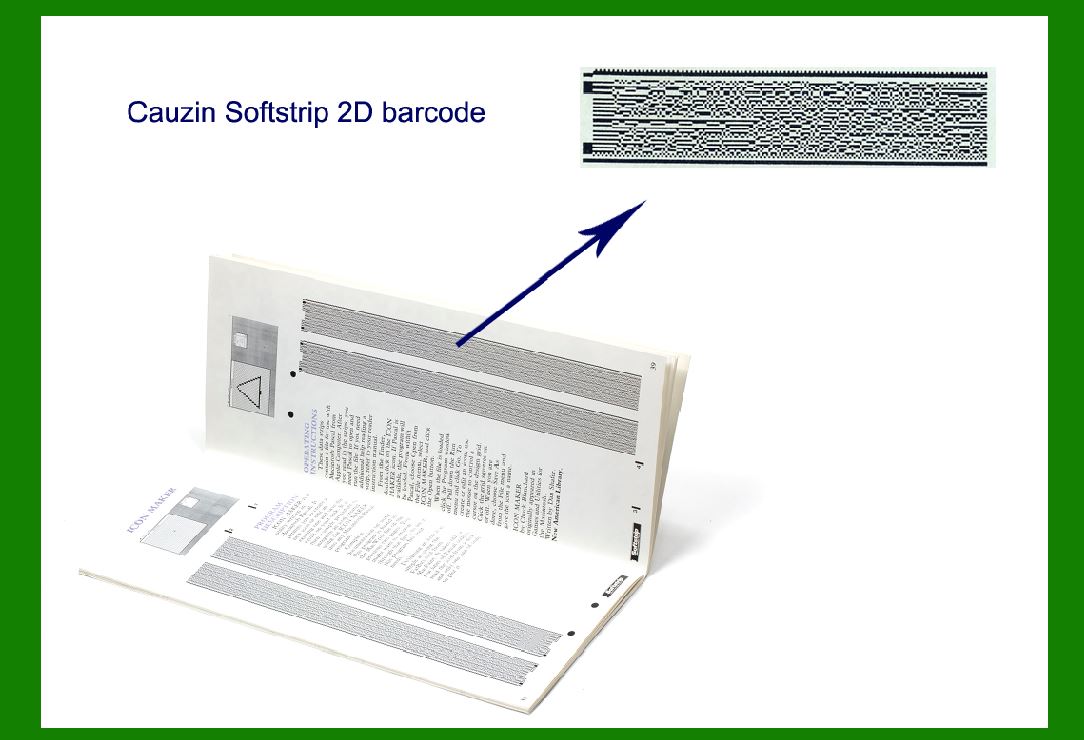
The Cauzin Softstrip 2D barcode, developed by Cauzin Systems, is designed to store a wide variety of data types in a highly efficient and compact format. Unlike traditional linear barcodes, the Softstrip barcode can handle complex data structures in two-dimensional space. This section explores the types of data that can be encoded within a Softstrip 2D barcode. |
1.1 Text and Numeric Data |
Softstrip 2D barcodes can encode alphanumeric characters, including letters (both uppercase and lowercase), digits, and common symbols. This allows for the encoding of a range of textual data, such as product identifiers, serial numbers, and custom descriptions. |
1.2 Binary Data |
The barcode can also encode raw binary data. This is especially useful in contexts where file encoding is necessary, such as for digital content storage or secure information transmission. |
1.3 Extended Characters and Unicode Support |
Softstrip supports Unicode encoding, enabling the barcode to store characters from a wide range of languages, including non-Latin scripts. This feature is essential for international applications, as it allows for the representation of languages such as Chinese, Arabic, and Cyrillic in the same barcode. |
|
1.4 Structured Data Formats |
The barcode can handle structured data formats, such as JSON, XML, and CSV. This is particularly useful in applications that require complex data storage, such as configuration files or real-time data streaming in IoT systems. |
1.5 Embedded Multimedia Information |
Advanced Softstrip implementations allow the embedding of multimedia data, such as images, audio files, or videos. These can be referenced as binary objects within the barcode, enabling dynamic multimedia applications. |
1.6 Time-Series and Geospatial Data |
Some implementations of Softstrip barcode technology include support for encoding geospatial data (latitude, longitude, altitude) and time-series data (timestamps and sensor readings), making it useful in logistics, tracking, and environmental monitoring. |
|
2. Error Detection and Correction Mechanisms |
Error detection and correction are critical features of any barcode system, ensuring the integrity of the encoded data during scanning, even in less-than-ideal conditions. Softstrip 2D barcode employs several sophisticated mechanisms for detecting and correcting errors. |
2.1 Error Detection Algorithms |
The Softstrip 2D barcode uses multiple error detection algorithms to check for inconsistencies in the encoded data. One common method is the use of cyclic redundancy check (CRC), which adds a checksum value to the data. This value is verified when the barcode is scanned, ensuring that the data has not been corrupted. |
2.2 Error Correction Mechanisms |
To ensure robustness, Softstrip barcodes implement forward error correction (FEC). This technique enables the recovery of lost or corrupted data through the inclusion of redundant data. The system uses Reed-Solomon codes, a widely adopted error-correction method, to identify and correct errors in real-time, even when parts of the barcode are damaged or obscured. |
2.3 Redundancy and Data Replication |
In high-security applications, the Softstrip barcode can include redundancy by encoding the same data in multiple parts of the barcode. This enables the retrieval of the original data even if parts of the barcode are unreadable, increasing reliability in harsh environments. |
|
2.4 Dynamic Error Handling |
Softstrip barcodes use dynamic error handling protocols to adapt to various scanning conditions. If one segment of the barcode is damaged or unreadable, the system can attempt to scan alternative segments or request a re-scan. This ensures a high level of reliability even in suboptimal scanning conditions. |
2.5 Recovery from Physical Degradation |
In addition to traditional error correction methods, Softstrip barcodes can be printed using special inks or materials that enhance resilience to physical degradation, such as fading, smearing, or wear over time. This extends the lifespan of the barcode in use cases such as outdoor tracking, inventory management, and other long-term applications. |
|
3. How Information is Stored and Extracted |
Information in the Cauzin Softstrip 2D barcode is stored using a highly structured, modular approach. The following sections detail how information is organized, stored, and extracted during barcode creation and scanning. |
3.1 Data Matrix Encoding |
The barcode uses a data matrix encoding scheme where the information is encoded into small, square-shaped cells arranged in a 2D grid. Each cell represents a bit of data, with multiple cells forming a complete data set. The grid size can vary, depending on the amount of data to be encoded, and it allows for high-density information storage. |
3.2 Modular Data Segmentation |
Softstrip barcode technology divides information into distinct modules. These modules include header information, which contains metadata such as the encoding method, and payload data, which includes the actual encoded information. The modular structure allows for flexible data representation and easy extraction, making it efficient in terms of both storage and retrieval. |
3.3 Data Compression |
Data stored within the Softstrip barcode can be compressed using advanced algorithms like Huffman coding or LZW compression. Compression reduces the overall data footprint, allowing for more information to be stored in a smaller physical area. This is particularly useful for applications that require high data density, such as inventory management, logistics, or secure document management. |
|
3.4 Data Extraction Process |
When the barcode is scanned, the scanner extracts the encoded data by interpreting the grid of cells. Each cell is assessed for its brightness or color, which is then converted back into binary data. Advanced scanners equipped with high-resolution imaging sensors can quickly decode large volumes of data from the barcode, even when the barcode is partially obscured or degraded. |
3.5 Real-Time Data Synchronization |
In certain applications, the data encoded in the Softstrip barcode can be synchronized with a cloud database or a local server in real time. This synchronization ensures that the extracted data is always up-to-date and can be used for real-time decision-making, such as in supply chain or logistics tracking. |
3.6 Automatic Data Parsing |
Once the data is extracted from the barcode, it is parsed based on its predefined format. This parsing process involves interpreting the data structure, such as identifying JSON objects or separating fields in a CSV file. Automated systems can parse and process this data without human intervention, allowing for seamless integration into existing workflows. |
|
4. Security Features and Encryption in Cauzin Softstrip Barcode |
Security is a major concern for modern barcode systems, especially in sectors such as finance, healthcare, and logistics. The Softstrip 2D barcode includes several advanced security features to ensure the confidentiality, integrity, and authenticity of the data. |
4.1 Encryption of Encoded Data |
Softstrip barcodes support end-to-end encryption using industry-standard cryptographic algorithms such as AES (Advanced Encryption Standard) and RSA. Before encoding data, it is encrypted with a secret key, ensuring that even if the barcode is intercepted during transmission, the data remains secure and inaccessible without the decryption key. |
4.2 Authentication and Digital Signatures |
To ensure the authenticity of the data encoded in the barcode, Softstrip can incorporate digital signatures. These signatures are created using a public-key cryptographic system, allowing the recipient to verify that the barcode's data has not been tampered with during transmission. Digital signatures also provide non-repudiation, ensuring that the source of the data cannot deny its involvement. |
4.3 Data Integrity Checks |
In addition to encryption, Softstrip barcodes incorporate hashing algorithms such as SHA-256 to ensure the integrity of the data. When the barcode is scanned, the extracted data is hashed, and the resulting hash value is compared to the stored hash value. If the values do not match, it indicates that the data has been tampered with, triggering an alert. |
|
4.4 Dynamic Access Control |
Softstrip technology supports dynamic access control for data stored in the barcode. For example, access to sensitive data can be restricted based on the user's role or privileges. This feature ensures that only authorized personnel can decrypt or access the data, making it particularly useful in secure environments such as healthcare or banking. |
4.5 Tamper-Proof Materials |
To further enhance security, Softstrip barcodes can be printed using special tamper-evident materials. These materials display visible signs of tampering, such as ink smudges or changes in color, when attempts are made to alter the barcode physically. |
4.6 Watermarking and Anti-Counterfeit Features |
To prevent counterfeiting, Softstrip barcodes can include hidden watermarks that are only visible under specific conditions, such as under ultraviolet (UV) light. This adds an extra layer of security, ensuring that the barcode is genuine and not a counterfeit. |
4.7 Biometric Integration |
Some advanced implementations of Softstrip barcodes allow integration with biometric systems. For example, a barcode might encode not only product information but also the biometric data of an individual, such as a fingerprint or iris scan. This dual-factor authentication approach significantly strengthens security for high-risk applications. |
 cs@easiersoft.com