1. Advancements in Softstrip 2D Barcode Technology |
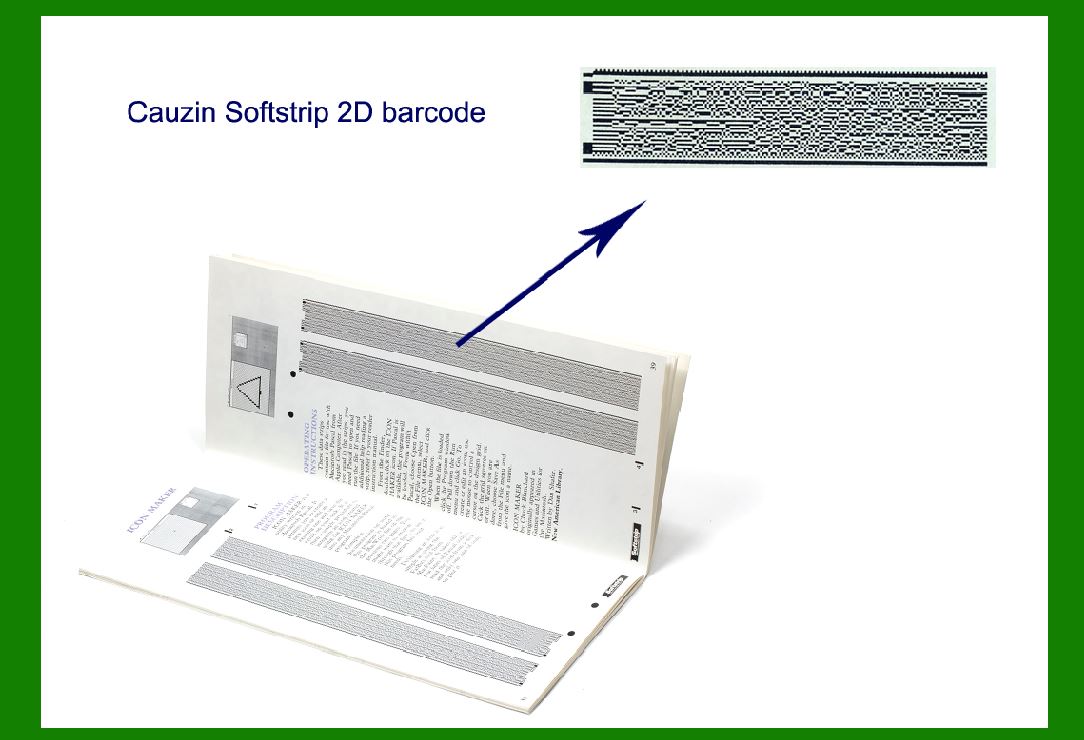
The Cauzin Softstrip 2D barcode has seen significant progress since its introduction, as it evolved to meet new demands in the fields of logistics, supply chain management, and consumer applications. This type of barcode, often used for direct marking of products, has garnered attention for its ability to adapt to various materials and environments, particularly where durability is a key concern. |
1.1. Miniaturization and Increased Density |
One of the most significant advancements in Softstrip 2D barcode technology is the reduction in size while maintaining or increasing data density. Early implementations of Softstrip barcodes required larger spaces for encoding data, but newer versions can encode larger volumes of information within smaller spaces. This is particularly useful in industries such as pharmaceuticals, where small packages demand precise and compact labeling solutions. As barcode symbology improves, the ability to store more data in less space allows for enhanced efficiency in product packaging and inventory management. |
1.2. Enhanced Error Correction |
Error correction algorithms have seen significant improvements over time, especially in applications where the barcode is exposed to physical stress, abrasion, or environmental factors. Enhanced Reed-Solomon error correction is now a standard feature, allowing Softstrip barcodes to maintain their integrity even when partially damaged. This improvement makes the technology ideal for environments such as industrial warehouses, where goods are subjected to frequent handling and wear. |
|
1.3. Material Adaptability and Durability |
Another breakthrough in Softstrip 2D barcode technology is its ability to adhere to and perform reliably on various materials and surfaces, including flexible and deformable substrates. For example, printed Softstrip barcodes can now be applied on deformable gloves, clothing, and other textile-based products, making it a viable solution for industries like healthcare, logistics, and fashion. With increased flexibility, the barcodes also benefit from coatings or treatment technologies that ensure longevity even when exposed to moisture, temperature extremes, and chemicals. |
1.4. Mobile Device Scanning and Accuracy |
As smartphone cameras and scanning apps have become more powerful, Softstrip 2D barcodes have been optimized for mobile device reading. Improvements in digital imaging technology, including focus enhancement and real-time decoding, have made it possible to scan Softstrip barcodes at greater angles and distances. This is especially useful in situations where the barcode is on a moving object, such as cargo or moving machinery in industrial settings. |
1.5. Self-Assembly and Smart Labels |
Another promising advancement in Softstrip 2D barcode technology is its potential integration with smart label systems that can dynamically change or update the information they contain. Through the use of materials like electronic ink and printed circuits, future Softstrip barcodes could function not only as data carriers but also as part of a larger Internet of Things (IoT) system. These 'smart' barcodes would be capable of self-assembly, adjusting their information dynamically based on environmental inputs, such as temperature, humidity, or location, offering unprecedented levels of automation and traceability. |

|
2. Integration with New Technologies (AI, Blockchain, etc.) |
As Softstrip 2D barcodes evolve, the integration of advanced technologies like Artificial Intelligence (AI) and Blockchain into their systems offers exciting new possibilities. These technologies promise to enhance the functionality and security of Softstrip barcodes, opening up avenues for innovations across various industries. |
2.1. Artificial Intelligence for Predictive Analytics and Optimization |
AI can significantly enhance the usability of Softstrip barcodes by providing predictive analytics for inventory management, logistics, and supply chain forecasting. Through machine learning algorithms, AI systems can analyze data collected from Softstrip barcodes to predict trends, such as changes in demand, supply chain disruptions, and inventory needs. For instance, a smart warehouse system using Softstrip barcodes could predict stock shortages before they occur by analyzing historical data and current trends. |
Furthermore, AI can be used to improve the accuracy of barcode scanning through image recognition and pattern recognition technologies. In crowded environments, AI-powered scanners could improve the precision of decoding Softstrip barcodes even if they are partially obscured or damaged. |
2.2. Blockchain for Enhanced Traceability and Security |
The integration of Blockchain technology with Softstrip 2D barcodes could provide a significant boost to product traceability and security. Blockchain's decentralized nature offers improved security and transparency for every product marked with a Softstrip barcode. By linking each barcode to a secure blockchain ledger, stakeholders in the supply chain-from manufacturers to consumers-could access immutable records of product origins, conditions during transit, and any other relevant metadata. |
For instance, in the pharmaceutical industry, Softstrip barcodes could ensure that a product's journey from manufacturer to pharmacy is fully documented and protected from counterfeiting. Each scan of the barcode would update a blockchain ledger, ensuring transparency and enabling stakeholders to confirm the authenticity and history of the product. |
2.3. IoT Integration for Real-Time Data Updates |
As part of the Internet of Things (IoT) ecosystem, Softstrip barcodes could be equipped with sensors that continuously collect and report data. This would enable real-time updates, such as temperature monitoring for perishable goods or location tracking for high-value items. The integration of IoT technology could be particularly beneficial in industries like healthcare, where ensuring the proper storage conditions for medicines and vaccines is critical. |
For example, a shipment of temperature-sensitive pharmaceuticals could carry a Softstrip barcode embedded with sensors that monitor the temperature in real-time. This data could then be uploaded to a cloud-based system, where stakeholders can monitor it, ensuring that the product was never exposed to conditions that could affect its efficacy. |

|
3. Potential for Use in Emerging Markets |
The rise of emerging markets, particularly in regions such as Asia, Africa, and Latin America, has created new opportunities for the adoption of advanced technologies, including Softstrip 2D barcodes. As industries in these regions grow, there is increasing demand for efficient product tracking, secure identification, and cost-effective labeling solutions, making Softstrip barcodes an ideal fit. |
3.1. Affordable Solutions for Low-Cost Manufacturing |
In many emerging markets, low-cost manufacturing is a major driving force behind economic growth. Softstrip 2D barcodes, due to their low production cost, can help manufacturers in these regions implement efficient tracking and quality control measures without significant investment in more expensive technologies. Softstrip barcodes are also adaptable to a wide range of materials, meaning they can be easily applied to products from various industries, including textiles, agriculture, and electronics. |
3.2. Improved Logistics and Supply Chain Management |
Emerging markets often face significant logistical challenges, such as poor infrastructure, weak regulatory frameworks, and high levels of informality in supply chains. Softstrip 2D barcodes could help streamline operations by providing real-time tracking and digital inventory management capabilities. In areas with limited access to traditional barcode scanning infrastructure, mobile phone-based scanning systems that read Softstrip barcodes could provide a low-cost and scalable solution for supply chain management. |
3.3. Mobile Adoption and Smartphone Integration |
In many emerging markets, mobile phone penetration is increasing at a rapid pace, and smartphone-based scanning solutions could be a key driver for the adoption of Softstrip 2D barcodes. These markets are often more agile in adopting mobile-based solutions than in developed countries, and Softstrip barcodes could be an ideal match for mobile-first economies where consumers and businesses are increasingly reliant on smartphones for everyday transactions and activities. |
3.4. Digital Payment and Financial Inclusion |
In markets with low levels of banking infrastructure, Softstrip barcodes could be used to support mobile payments and financial inclusion initiatives. By enabling secure, low-cost transactions via Softstrip barcodes linked to digital wallets or mobile banking systems, these barcodes could become an integral part of efforts to provide financial services to underserved populations. |

|
4. Research and Development Trends |
The R&D landscape for Softstrip 2D barcode technology is characterized by a strong focus on improving scalability, usability, and integration with other technologies. Key trends in this space include: |
4.1. Advancements in Printing Technologies |
As printing technologies evolve, Softstrip barcodes are becoming more adaptable to different printing methods, including flexographic printing, laser marking, and 3D printing. Research into advanced ink formulations and printing precision is helping to increase the longevity and legibility of Softstrip barcodes on various materials, including non-traditional substrates like fabric and wood. |
4.2. Standardization and Regulatory Developments |
As Softstrip 2D barcodes gain traction in global markets, efforts are underway to standardize the technology across different industries. ISO standards for Softstrip barcode formats, as well as regional regulations governing labeling, will play a crucial role in shaping the future of the technology. Research into global interoperability is critical to ensuring that Softstrip barcodes can function seamlessly across various markets and sectors. |
4.3. Integration with Augmented Reality (AR) |
Augmented reality (AR) is another area of active research, with the potential to revolutionize how Softstrip 2D barcodes are used. AR-enabled devices could be used to overlay digital information onto products marked with Softstrip barcodes, allowing consumers to access enhanced product details, reviews, or other interactive experiences. This could be particularly useful in retail and education sectors, where product engagement and customer experience are key drivers of success. |

|
This is just a part of the detailed explanation of Cauzin Softstrip 2D Barcode: Future Directions and Innovations. |
 cs@easiersoft.com