1. Standardization Efforts for Cauzin Softstrip 2D Barcode |
The Cauzin Softstrip 2D barcode is a relatively recent innovation in the world of barcode technology, characterized by its flexible format, which allows for significant adaptability in various industrial applications. The effort toward standardizing this barcode type has been a key focus since its inception, and as of today, several initiatives are underway to ensure its wide acceptance and universal applicability. |
1.1 Early Development and Standardization Initiatives |
The initial focus of standardizing the Cauzin Softstrip revolved around the recognition of its unique properties, especially its ability to maintain readability across flexible, deformable, or contoured surfaces. Early standards development was largely driven by its usage in industries requiring robust identification capabilities on products with unusual shapes, such as pharmaceutical packaging and textiles. |
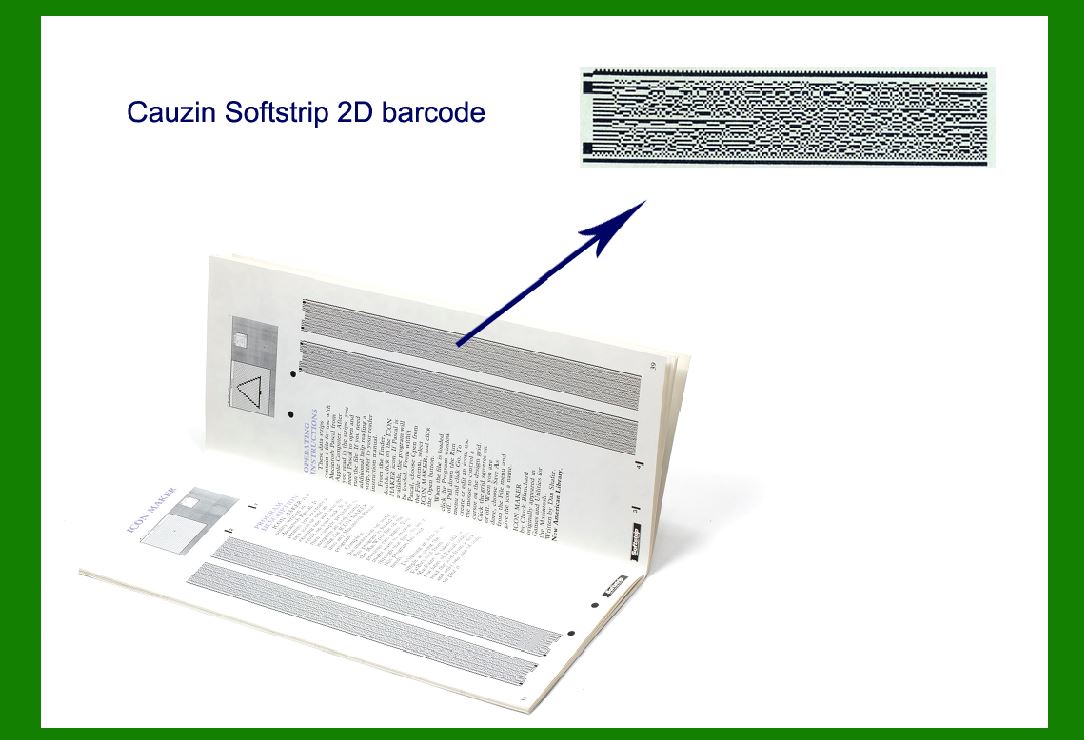
|
1.2 Involvement of Key Standards Bodies |
Cauzin Softstrip has attracted attention from several well-established standards organizations, such as the International Organization for Standardization (ISO), International Electrotechnical Commission (IEC), and the European Telecommunications Standards Institute (ETSI). These bodies have worked together to assess and integrate the technology into existing barcode frameworks. In particular, the Softstrip's ability to withstand physical deformation prompted the creation of specific guidelines for its encoding, placement, and decoding. |
The process began with collaborations with organizations like GS1, which set up initiatives to examine the barcode's versatility in supply chains, particularly in the healthcare sector. The barcode's adaptability for use on pharmaceutical packaging led to the early inclusion of Softstrip in regulatory discussions, especially in terms of global supply chain traceability. |
1.3 Compatibility with Existing Barcode Standards |
A major effort in standardization was to ensure that Cauzin Softstrip was compatible with other prevalent 2D barcode formats, such as QR codes and Data Matrix codes. As part of this, technical specifications were published to outline how Cauzin Softstrip could be integrated into existing scanner systems while maintaining backward compatibility with other barcode technologies. |
1.4 Ongoing Developments and Adoption |
Currently, organizations like ISO/IEC JTC1 are working on refining and updating the specific coding schemes and symbology to ensure that the Cauzin Softstrip 2D barcode adheres to globally recognized standards for quality and performance. A major part of this ongoing development is to make the barcode universally recognizable, readable, and decodable across various industries and geographical regions. |

|
2. Global Adoption and Market Penetration |
The adoption of the Cauzin Softstrip 2D barcode has been gradual but steadily increasing in certain niche sectors. Its adoption curve follows the pattern seen in other specialized barcode systems, where it begins in sectors with a specific need and eventually spreads as its advantages become clearer. |
2.1 Industry-Specific Adoption |
A significant driver for Cauzin Softstrip's market penetration has been its suitability for industries such as pharmaceuticals, textiles, automotive, and consumer electronics. For example, the pharmaceutical industry, where traceability of medication from manufacturer to distributor to retail is critical, has seen the integration of Softstrip technology. Its ability to maintain scannability despite being on flexible or deformed surfaces allows it to be used on vials, blister packs, and stretch-wrapped packages-all of which may be subject to physical strain during handling and transport. |
The textile industry has also contributed to the barcode's spread, as it provides a robust and flexible solution for tracking clothing and fabric products. The ability to encode product information, manufacturing location, and batch number makes it a great choice for garment manufacturers and retailers. |
2.2 Regional Market Penetration |
North America, Europe, and Asia have been the early adopters of the Cauzin Softstrip, but its reach has expanded beyond these regions as manufacturers recognize its unique capabilities. The pharmaceutical sector in Europe and North America has been particularly receptive, in part due to stringent regulations requiring tamper-proof and easily traceable packaging for medications. |
The Asia-Pacific region has also been a key market, particularly in countries with a rapidly growing manufacturing sector like China and India. These regions are adopting the technology in their efforts to improve supply chain transparency, reduce counterfeiting, and improve product authentication. |
2.3 Competitive Market Dynamics |
While Cauzin Softstrip has found niches in several markets, it faces competition from other well-established 2D barcode technologies. Companies in industries such as pharmaceuticals, automotive, and logistics have a wide range of barcode choices, from QR codes and Data Matrix to PDF417 and MaxiCode. Despite this, Softstrip's unique design and physical adaptability are increasingly gaining favor in situations where other 2D barcodes would fail, particularly on flexible packaging and labels. |

|
3. Regulatory Considerations and Compliance |
The Cauzin Softstrip 2D barcode, like all barcode technologies, must adhere to a range of regulatory standards. Regulatory bodies, especially in industries such as healthcare and food safety, play a vital role in defining how this barcode is used and integrated into global systems. |
3.1 Healthcare and Pharmaceutical Regulation |
One of the most significant regulatory considerations for the Cauzin Softstrip is its use in the pharmaceutical industry, where the barcode is often used to track drugs from manufacturer to consumer. Governments and regulatory bodies like the U.S. Food and Drug Administration (FDA) and the European Medicines Agency (EMA) have set strict guidelines for packaging and labeling in the healthcare sector, and Cauzin Softstrip has been incorporated into these frameworks for ensuring drug traceability. |
The Drug Supply Chain Security Act (DSCSA) in the U.S. and the Falsified Medicines Directive (FMD) in Europe both mandate that pharmaceutical products be traceable through the entire supply chain. Softstrip's ability to maintain its readability in harsh conditions, such as on deformable surfaces, makes it an ideal candidate for these kinds of applications. |
3.2 Regulatory Compliance for Food Safety and Other Consumer Goods |
Similarly, the food safety industry has shown interest in Cauzin Softstrip due to its traceability capabilities. Regulatory bodies like the U.S. Food and Drug Administration (FDA) and the European Food Safety Authority (EFSA) have introduced guidelines for labeling and tracking food products, ensuring transparency and safety throughout the supply chain. |
3.3 Environmental and Sustainability Concerns |
In recent years, there has been an increasing focus on sustainability in packaging and labeling. Barcode technologies, including Cauzin Softstrip, must meet environmental regulations regarding material use and recyclability. Efforts to create eco-friendly barcode materials and printing methods are ongoing to meet these growing demands for sustainability in industries across the globe. |

|
4. Comparison with Other Barcode Standards |
When comparing Cauzin Softstrip to other popular 2D barcode formats such as QR codes, Data Matrix, and PDF417, several key differences emerge that highlight its potential advantages in certain applications, as well as areas where it may face limitations. |
4.1 Cauzin Softstrip vs QR Code |
While QR codes are known for their high data storage capacity and wide usage, they are not particularly suited for flexible or deformable surfaces. Cauzin Softstrip, on the other hand, was designed with these challenges in mind. While QR codes are optimal for marketing, mobile apps, and static print applications, Softstrip is geared more towards industries requiring durability under physical stress, such as pharmaceutical packaging and automotive parts. |
4.2 Cauzin Softstrip vs Data Matrix |
The Data Matrix barcode is another widely adopted 2D barcode known for its high data density and use in industrial applications, particularly in the aerospace, electronics, and pharmaceutical industries. Both Data Matrix and Cauzin Softstrip share the commonality of being able to encode large amounts of data in small spaces. However, Cauzin Softstrip's unique ability to adapt to deformable surfaces gives it a specific edge over Data Matrix when physical flexibility is crucial. |
4.3 Cauzin Softstrip vs PDF417 |
PDF417, a linear 2D barcode format, is often used in transportation, logistics, and government-issued documents like IDs and licenses. Although it offers high data capacity and error correction features, Cauzin Softstrip surpasses it in terms of flexibility and applicability to dynamic and deformable environments. In applications where barcode placement is non-traditional or subject to significant handling, Softstrip provides a more reliable option. |
 cs@easiersoft.com