Challenges and Limitations of ColorCode Barcodes |
1. Introduction to ColorCode Technology |
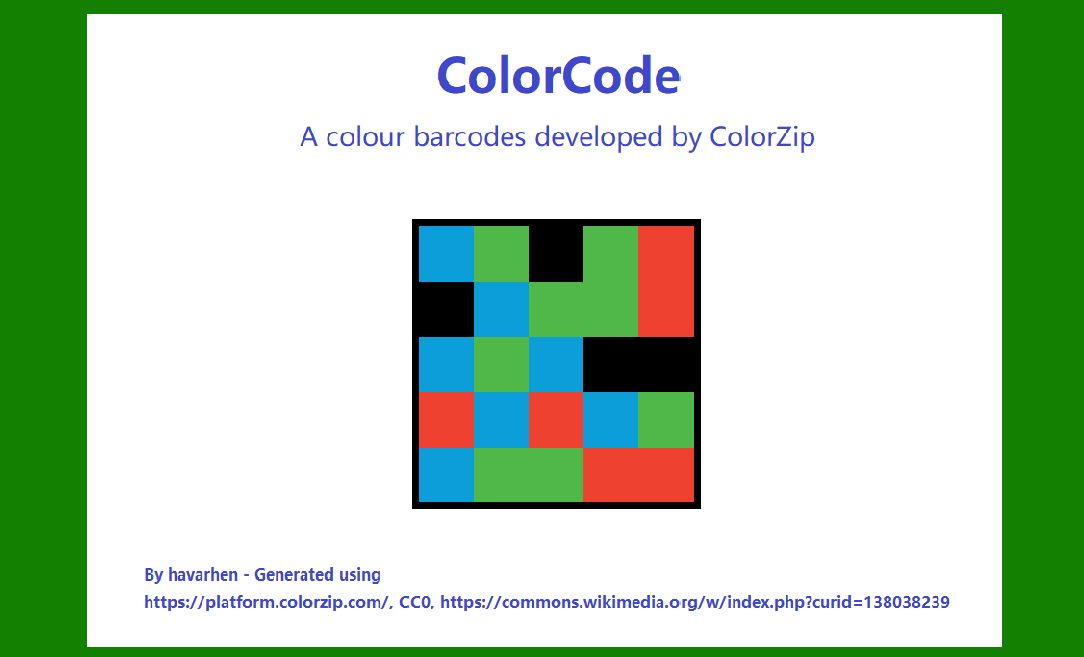
ColorCode is a type of two-dimensional (2D) barcode technology that uses color to encode data, making it distinct from traditional black-and-white barcodes. By leveraging different colors to represent encoded information, ColorCode increases the amount of data that can be stored and allows for a more visually appealing design. However, while it offers many advantages, it also introduces a variety of challenges and limitations that hinder its universal adoption. |
|
2. Compatibility Issues |
2.1 Limited Support for ColorCode by Existing Scanners |
One of the primary challenges ColorCode faces is the limited compatibility with existing barcode scanners, particularly older models. Barcode scanners, especially legacy systems, are generally optimized to read monochrome barcodes such as UPC, EAN, or even QR codes. These scanners do not have the necessary technology to accurately interpret color variations, which are fundamental to ColorCode's functionality. |
As a result, businesses and industries looking to adopt ColorCode are often confronted with the need to invest in new scanning devices that are capable of distinguishing color variations. This additional cost can deter smaller businesses or those operating in sectors with tight margins from making the switch to ColorCode, despite its advantages. |
2.2 Mobile Devices and Camera Integration |
Modern smartphones with high-resolution cameras and advanced processing power can generally handle ColorCode barcodes. However, not all mobile devices are designed to read ColorCode effectively. Some older smartphones or devices with lower-quality cameras may struggle to accurately interpret ColorCode data due to their inability to detect and distinguish between the wide range of colors used. |
Moreover, different mobile operating systems and applications may have varying levels of support for ColorCode. While popular apps like Google Lens and certain barcode scanners may support ColorCode, there's no guarantee that all applications will provide seamless integration, which can lead to inconsistent user experiences across different platforms. |

|
3. Color Sensitivity Issues |
3.1 Lighting Conditions and Environmental Variability |
ColorCode's performance is heavily dependent on environmental conditions, particularly lighting. In traditional black-and-white barcodes, high contrast between the dark bars and light spaces ensures readability even in less-than-ideal conditions. However, with ColorCode, the scanner's ability to accurately detect and decode the color patterns is significantly influenced by the lighting conditions. If the environment is poorly lit, or if there are shadows or reflections that obscure the color patterns, the scanner may fail to detect the barcode altogether. |
Additionally, ColorCode barcodes may suffer from problems in areas with inconsistent natural light or harsh artificial lighting, as the color recognition algorithms may become confused by the varying wavelengths of light. For example, a barcode displayed on a bright, reflective surface may not be readable at all under intense lighting conditions. |
3.2 Screen Calibration and Display Variations |
Another limitation arises when ColorCode barcodes are displayed on screens, such as those on mobile devices or monitors. The accuracy of color rendering on these screens can be highly variable depending on the quality of the screen and its calibration. Some screens, especially those with lower color accuracy or those that have been poorly calibrated, may not display the exact colors required for proper scanning. |
The inconsistency in color display can lead to scenarios where ColorCode barcodes that appear perfectly clear on one device may appear faded or miscolored on another, further complicating the reliability of the barcode. |
3.3 Printing Variability |
When ColorCode barcodes are printed on physical materials, such as packaging or promotional materials, there are additional challenges related to the accuracy of color reproduction. Printer technology, ink quality, and even the type of paper used can all affect how accurately the colors are represented in the final print. |
Inconsistent color reproduction can cause ColorCode barcodes to become unreadable, especially if the printed barcode deviates from the intended color scheme. If the colors are too faint or the contrast is insufficient, the barcode may be misinterpreted by scanners, leading to errors or failures in the decoding process. |

|
4. Color Contrast and Hue Selection |
4.1 Importance of Sufficient Contrast |
For ColorCode to be effectively scanned, the chosen colors must provide sufficient contrast to ensure that the barcode elements can be distinguished by scanners or cameras. Unlike traditional barcodes, which rely on stark contrasts between black and white, ColorCode barcodes must be designed with careful attention to the selection of hues and saturation levels. If the colors used in the barcode are too similar in hue or saturation, it can result in a barcode that is difficult or impossible for scanners to read. |
For example, using two colors that are close in shade, such as light blue and light green, can cause significant problems for color-detection systems. In these cases, the scanner may fail to recognize the individual elements of the ColorCode, or the system may misinterpret the barcode entirely. |
4.2 Selection of Colors with a Wide Color Gamut |
The design of ColorCode barcodes requires a selection of colors that not only contrast well with each other but also fall within the color gamut that can be accurately detected by scanners. Certain colors, such as very dark shades or extremely light colors, may be difficult for scanners to detect reliably. Additionally, certain color combinations may be problematic due to common issues with human vision, such as color blindness. |
When designing ColorCode barcodes, it's crucial to take into account the potential for color deficiencies in both scanners and human vision. The absence of clear guidelines for which colors are optimal for barcode design may lead to inconsistent performance across different applications and use cases. |

|
5. Data Density and Storage Capacity |
5.1 Complex Data Encoding |
ColorCode has the potential to store more data than traditional barcodes by using colors to represent multiple data points. However, as the data density increases, the complexity of the barcode also rises. This increased complexity can cause several problems, particularly when it comes to the readability and decoding speed of the barcode. |
Scanners and mobile devices may struggle with high-density ColorCode barcodes, especially if the colors are densely packed or if the barcode is very small in size. The higher the data density, the more likely it is that small variations in color or contrast will lead to errors in scanning or decoding, making it essential to strike a balance between data storage capacity and readability. |
5.2 Limited Space for Large Data Sets |
Despite ColorCode's ability to store more data than traditional barcodes, the space available for storing large data sets may still be limited by the physical dimensions of the barcode. As the data requirements grow, the barcode may need to be enlarged, which in turn may impact its usability and effectiveness. Larger ColorCode barcodes may become harder to display on small screens or be impractical for certain applications where space is at a premium. |

|
6. User Experience and Accessibility |
6.1 Scanner and App Availability |
The widespread adoption of ColorCode is limited not only by the technical constraints of scanners but also by the availability of mobile apps and tools that support it. While ColorCode is supported by some third-party barcode scanning applications, it is not yet universally recognized across all devices and systems. |
The user experience can also vary significantly depending on the scanning app or device. Some apps may fail to properly decode ColorCode under certain conditions, such as poor lighting, low resolution, or inaccurate color display. As a result, users may experience frustration when attempting to scan ColorCode barcodes, which could limit their willingness to adopt this technology. |
6.2 Consumer Education and Adoption |
Another challenge ColorCode faces is the need for consumer education. Unlike traditional barcodes, which are widely understood and used by consumers, ColorCode requires users to familiarize themselves with a new way of interacting with barcodes. This may involve training users to recognize and scan ColorCode barcodes, as well as explaining the advantages of using this technology over more common barcode formats. |
Without proper consumer education and awareness, ColorCode may struggle to achieve widespread adoption, as users may not understand the benefits or even recognize the barcode when encountering it. |

|
7. Cost and Implementation Challenges |
7.1 Cost of Transitioning from Traditional Barcodes |
One of the most significant barriers to the adoption of ColorCode barcodes is the cost associated with transitioning from traditional barcode systems. Businesses that are already heavily invested in existing systems, including barcode scanners, printers, and software, may find it financially prohibitive to upgrade to ColorCode-compatible systems. This cost may include purchasing new scanners or mobile devices, updating software to handle ColorCode data, and investing in specialized printing equipment capable of rendering the necessary colors. |
The transition cost can be a major deterrent for industries where cost efficiency and the ability to scale rapidly are crucial. This becomes especially problematic in industries such as retail or logistics, where infrastructure is often already in place, and the cost of changing existing systems can outweigh the perceived benefits of adopting a more complex barcode technology. |
7.2 Printing and Ink Costs |
The introduction of ColorCode may also lead to an increase in the cost of printing barcodes. Unlike traditional barcodes that typically require only black ink on a white background, ColorCode requires the use of multiple colors, which could significantly raise the cost of printing, especially when high-quality inks are necessary to ensure accurate color reproduction. This may not only increase the overall cost per unit but also complicate the logistics of printing and maintaining color calibration. |
For example, printing facilities may need to invest in high-resolution color printers capable of rendering fine color details with a high degree of accuracy, which may not be feasible for all businesses, particularly those with smaller production volumes. Additionally, in regions where the availability of specialized printing equipment is limited, ColorCode adoption may be further constrained by the increased cost of color ink, printer maintenance, and color matching. |
7.3 Training and Support |
Adopting ColorCode barcodes also requires specialized training for staff to ensure that the new system is implemented smoothly. Employees who are accustomed to working with traditional black-and-white barcodes may need to be retrained on how to use new equipment, troubleshoot scanning errors, and understand the nuances of working with color-based technology. |
In industries with large numbers of staff or high employee turnover, this training can be time-consuming and costly. Furthermore, there may be challenges in providing adequate customer support to handle issues related to ColorCode scanning, especially if these problems are specific to environmental factors or scanner compatibility. |

|
8. Interference with Existing Systems |
8.1 Integration with Legacy Systems |
ColorCode barcodes pose a challenge when it comes to integration with legacy systems, especially in industries where large-scale, complex IT infrastructures are in place. Older systems that rely on traditional barcodes may not have the necessary capabilities to decode or interpret ColorCode data, creating a significant hurdle for businesses that want to adopt ColorCode without overhauling their entire infrastructure. |
For instance, supply chain and inventory management systems that were designed around UPC, EAN, or QR codes might struggle to adapt to the new format, requiring costly updates to software and hardware. Even more sophisticated systems, such as Enterprise Resource Planning (ERP) software, may need modifications to support the new data structures associated with ColorCode. |
8.2 Compatibility with Automated Systems |
Many industries, such as manufacturing and logistics, rely on automated systems for tasks such as sorting, packaging, and shipping. These systems often use barcode scanners to automate product identification and tracking. The introduction of ColorCode in such settings presents a challenge because many of these automated systems were not designed to recognize color-based barcodes. |
Without significant modifications to existing infrastructure, such as replacing scanners or redesigning the entire process flow, businesses may struggle to integrate ColorCode into their automated operations, reducing the overall efficiency of their workflows. This creates a significant barrier to adoption for industries heavily reliant on automated systems. |

|
9. Privacy and Security Concerns |
9.1 Potential for Data Interception and Hacking |
One of the benefits of ColorCode is its ability to encode more data in a smaller physical space, which could make it useful for a range of applications that require higher levels of data encryption. However, this increased data density can also raise security concerns. If sensitive information is encoded in a ColorCode, there's a risk that unauthorized parties could intercept and decode it. |
Traditional black-and-white barcodes are typically less prone to such security risks because they carry much less information. By contrast, ColorCode's increased data density means that larger chunks of sensitive information could be stored within the barcode, raising the possibility of exposure if appropriate encryption or security measures are not implemented. As the popularity of ColorCode increases, there may be concerns over data breaches, particularly if the technology is used in sensitive industries such as healthcare, finance, or government. |
9.2 Privacy Concerns with Color Tracking |
In some cases, ColorCode technology could be used to track users or products without their knowledge, raising privacy concerns. For instance, businesses could embed ColorCode barcodes in products or advertisements, which consumers may scan without fully understanding the implications. If proper consent mechanisms are not in place, this could result in violations of user privacy. |
Additionally, ColorCode's potential for use in advertising and marketing could lead to concerns about how companies collect, store, and use data from consumers. In an age of increasing scrutiny over data privacy, businesses adopting ColorCode need to ensure that they comply with privacy regulations and clearly communicate the purpose and use of the data encoded in the barcode. |

|
10. Lack of Universal Standardization |
10.1 Variability in Implementation and Design |
While ColorCode is a promising technology, it lacks a single, universally accepted standard for its implementation. Various companies and developers may create their own versions of ColorCode, with differing specifications regarding color schemes, encoding methods, and error correction protocols. |
This variability in design and implementation can lead to compatibility issues across different systems and applications, making it harder for businesses to rely on ColorCode as a universal barcode solution. Without standardization, it becomes difficult to guarantee that ColorCode barcodes created in one environment will work in another, leading to issues with data integrity, cross-platform compatibility, and general usability. |
10.2 Absence of Regulatory Guidelines |
Unlike traditional barcode formats such as QR codes or UPC barcodes, which are governed by well-established standards, ColorCode lacks regulatory oversight and widely accepted guidelines. This absence of a formal framework creates uncertainty for companies looking to implement ColorCode technology, especially in industries with strict regulatory requirements. |
For example, in healthcare or food safety sectors, where barcode technology must comply with regulatory standards for traceability and safety, the lack of a universally recognized standard for ColorCode could hinder its adoption. Without formal standards in place, companies may hesitate to adopt ColorCode for fear of non-compliance or incompatibility with industry regulations. |

|
11. Limited Industry Adoption and Consumer Awareness |
11.1 Slow Adoption Across Sectors |
Despite the potential advantages of ColorCode, its adoption across industries has been slow compared to more established barcode technologies like QR codes or UPC/EAN barcodes. This slow adoption can be attributed to the various challenges mentioned earlier, such as compatibility, cost, and complexity of integration. |
As a result, ColorCode remains a niche technology, primarily used in specific applications where its high data density and color capabilities are particularly beneficial. The lack of widespread industry adoption limits the ability of ColorCode to gain traction in mass-market applications, meaning that businesses and consumers may remain unaware of the technology's potential benefits. |
11.2 Consumer Education and Perception |
Consumer understanding and familiarity with ColorCode is another barrier to its adoption. While QR codes are ubiquitous and widely recognized by consumers, ColorCode remains relatively unknown. For widespread consumer adoption, there needs to be a concerted effort to educate users on how to scan and interpret ColorCode barcodes. This educational process can be time-consuming and costly for businesses, especially when they already rely on other barcode technologies that are more familiar to consumers. |
Moreover, consumers may be hesitant to adopt ColorCode technology due to the perceived complexity and unfamiliarity. Without clear guidance on how to interact with ColorCode barcodes, consumers may prefer to stick with the more straightforward QR codes, which are universally accepted and widely understood. |

|
12. Impact on Sustainability and Environmental Concerns |
12.1 Increased Material Consumption |
ColorCode technology, while offering many benefits in terms of data storage capacity and visual appeal, can also contribute to increased material consumption. Unlike traditional black-and-white barcodes, which generally require only simple ink or toner, ColorCode barcodes demand the use of multiple colors, which in turn requires additional resources, including specialized inks, color printers, and potentially more complex manufacturing processes. |
From an environmental sustainability perspective, the increased demand for ink and specialized materials could have a larger carbon footprint. Additionally, more complex production processes may require additional energy and water resources. While individual ColorCode barcodes may not significantly contribute to environmental damage, widespread adoption could amplify these concerns, especially in industries where high-volume printing is required. |
12.2 Paper Waste and Recycling Challenges |
In industries where ColorCode is used in labeling products or packaging, there is also the issue of paper waste and the recyclability of the materials used. Traditional barcode labels are typically simple and easy to recycle, as they consist of a limited amount of black ink on a white surface. However, ColorCode labels may present more challenges for recycling facilities, especially if they are printed using non-standard materials or require the use of specialized inks that are not widely recyclable. |
The introduction of ColorCode could thus result in more complex waste management issues, especially for companies that produce high volumes of printed barcodes. For businesses focused on sustainability, the shift to ColorCode may raise concerns about the environmental impact of these changes and whether the benefits in terms of data storage and efficiency outweigh the environmental costs. |
12.3 Consumer Awareness of Eco-friendly Barcodes |
As sustainability becomes a growing priority for businesses and consumers alike, there may be concerns regarding the long-term environmental impact of ColorCode's use. Many companies are moving toward using eco-friendly materials and processes, such as biodegradable inks, recycled paper, and sustainable packaging. However, the adoption of ColorCode, which may not be as easily recyclable as traditional barcodes, could conflict with these eco-conscious goals. |
This brings up the question of whether ColorCode could ever become part of a broader sustainability initiative, or whether it will remain a niche technology that is somewhat at odds with the principles of environmentally responsible production. Without clear strategies to address these concerns, ColorCode adoption may be limited in certain industries that prioritize sustainability in their operations. |

|
13. Internationalization and Multinational Use |
13.1 Variability Across Regional Markets |
ColorCode, like many other advanced technologies, faces challenges in terms of internationalization and the ability to be used consistently across different markets. Countries and regions often have specific barcode standards and regulations that companies must adhere to when implementing barcode technologies. |
For instance, the European Union, United States, and Asia all have their own barcode regulations and requirements, particularly when it comes to product labeling, transportation logistics, and supply chain tracking. If ColorCode is not universally accepted or recognized in these regions, businesses could face difficulties when attempting to expand their operations internationally. Additionally, the technology could face regulatory hurdles, especially if national agencies or industries do not officially recognize ColorCode as a valid or compliant format. |
As a result, ColorCode may encounter challenges in penetrating global markets, especially if businesses in specific regions are not yet familiar with the technology or there are no international standards in place for its use. |
13.2 Language and Symbolic Limitations |
ColorCode barcodes rely heavily on visual design elements, including color schemes and patterns, which may face limitations in terms of linguistic and symbolic interpretations in different regions. For example, color associations can vary significantly across cultures; a color that is considered meaningful or appealing in one country may have a negative or undesirable connotation in another. |
Moreover, in markets with large numbers of visually impaired or colorblind consumers, the use of color as the primary method of encoding information could create accessibility challenges. For example, colorblind individuals may struggle to differentiate between similar shades used in ColorCode barcodes, making it difficult for them to interact with products or services that use this technology. |
If ColorCode barcodes are to be adopted on a global scale, it will be crucial for designers and developers to account for these cultural and symbolic variations in color perception, as well as ensure that accessibility is considered to prevent alienating certain groups of consumers. |

|
14. Technological Evolution and Future Trends |
14.1 Advancements in Scanning Technology |
One of the most significant factors that could mitigate some of the current limitations of ColorCode is advancements in scanning technology. As both consumer-grade and industrial-grade scanners improve in terms of resolution, color detection capabilities, and processing power, the challenges related to ColorCode's reliance on color accuracy could be reduced. |
For example, some modern barcode scanners and mobile phone cameras already feature enhanced color-detection algorithms that could make ColorCode more viable in the future. As the hardware and software used for scanning and interpreting ColorCode evolve, the technology's limitations-such as lighting sensitivity, environmental interference, and color accuracy-may become less of an issue. |
However, this would require industry-wide shifts and cooperation between scanner manufacturers, software developers, and end-users to ensure that future scanners are optimized for ColorCode's specific requirements. |
14.2 Potential for Integration with Emerging Technologies |
ColorCode also holds the potential for integration with emerging technologies such as augmented reality (AR), virtual reality (VR), and the Internet of Things (IoT). For instance, in an AR or VR environment, ColorCode barcodes could be used to provide contextual, interactive information to users based on the color data encoded in the barcode. |
In the IoT landscape, ColorCode could be integrated into a network of smart devices to enable dynamic interactions. For example, a ColorCode barcode could trigger an IoT-enabled sensor or device to initiate a particular action when scanned. Such integration with cutting-edge technologies could create new use cases for ColorCode, expanding its potential and helping to overcome some of the current limitations, such as compatibility with legacy systems and devices. |
However, widespread adoption of ColorCode within these future technologies will still depend on overcoming some of the limitations outlined earlier, such as standardization and universal scanner compatibility. |

|
15. Case Studies of Industries and Use Cases for ColorCode |
15.1 Retail and Consumer Goods |
In the retail and consumer goods sector, ColorCode has shown potential for providing enhanced product information and improving the overall shopping experience. For example, ColorCode could be used to store detailed product descriptions, price comparisons, and promotional offers that can be scanned by customers directly using their smartphones. |
However, this technology's limited compatibility with older scanners and the need for investment in new hardware could slow adoption in smaller retailers or those with limited budgets. Larger retailers, on the other hand, may benefit from the ability to provide rich multimedia content via ColorCode, such as promotional videos, customer reviews, or detailed product specifications. |
Despite these advantages, the slower adoption of ColorCode due to the complexity and cost involved may limit its overall impact in the retail sector, especially when compared to the more widely accepted QR code. |
15.2 Logistics and Supply Chain Management |
In logistics and supply chain management, ColorCode barcodes could provide an advanced way to track goods and shipments with higher data capacity, potentially improving efficiency and reducing human error. However, the cost of implementing ColorCode in this sector would be substantial, especially given the need for updated scanners, software, and staff training. |
Moreover, integration with existing systems, such as Enterprise Resource Planning (ERP) software, would require significant effort and could create delays in the implementation process. The challenges associated with color detection and environmental factors (e.g., lighting in warehouses or shipping docks) could further complicate the use of ColorCode in logistics. |
Despite these challenges, ColorCode's increased data storage capacity could be an advantage in industries that require large amounts of information to be encoded in a small space, such as pharmaceuticals or electronics. |
 cs@easiersoft.com