Chapter 63: The 'Code-less' Future - Visual Recognition |
Summary in Brief |
This chapter explores the emerging paradigm of visual recognition---a machine vision approach that identifies products not by scanning a printed code but by perceiving their intrinsic visual characteristics: shape, color, texture, packaging design, and other physical attributes. While traditional barcodes like Code 39 have served as the backbone of automatic identification for decades, advances in artificial intelligence and deep learning are enabling systems that can recognize objects with human-like visual understanding. This technology, known as instance-level recognition or visual similarity matching, promises to transform industries by eliminating the need for explicit labels in certain applications. |
We will examine how visual recognition works, its practical applications across multiple sectors, and how it compares to the established Code 39 barcode standard. Understanding Code 39's technical characteristics---its strengths, limitations, and the specific environments where it excels---provides essential context for appreciating both the promise and the challenges of a code-less future. |

|
1. Introduction: The End of the Label |
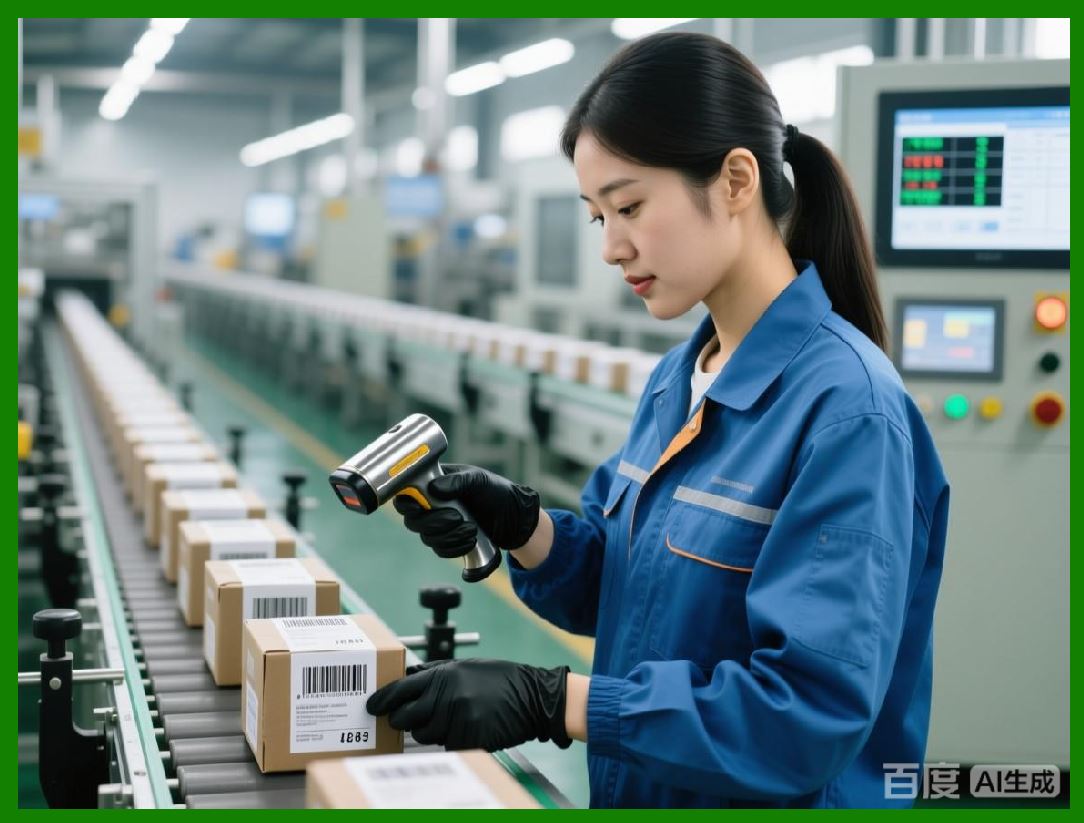
For over half a century, the humble barcode has been the silent workhorse of modern commerce. From the first pack of chewing gum scanned in a Ohio supermarket in 1974 to the billions of items tracked through global supply chains today, the barcode has provided a simple, reliable, and inexpensive way to identify objects. The premise is elegant: encode a unique identifier into a pattern of black and white stripes, print it on a label, and let machines read it with a beam of light. |
This system has been extraordinarily successful. It has enabled just-in-time manufacturing, revolutionized retail inventory management, and made global logistics possible. Yet, for all its achievements, the barcode has a fundamental limitation: it is a proxy. The machine does not actually see the product; it only reads the label. If the label is missing, damaged, obscured, or simply absent, the system fails. |
What if machines could truly seeWhat if a camera could look at an object and identify it the way a human does---by its shape, its color, its texture, its brand, or even its subtle visual quirksThis is the promise of visual recognition, an approach powered by recent breakthroughs in artificial intelligence, particularly in the field of computer vision. |
Visual recognition, often referred to as 'instance-level recognition' or 'visual similarity search,' aims to identify specific objects---not just categories like 'chair' or 'apple,' but particular product SKUs like 'Heinz Tomato Ketchup 500ml bottle' or 'Coca-Cola 330ml can.' It does this by analyzing the visual features of the object itself and matching them against a database of known product images. For some applications, this technology could make explicit coding systems entirely unnecessary, creating a 'code-less' future where the object itself is its own identifier. |
This chapter will explore the foundations, applications, and implications of this transition. We will begin by understanding the mechanics of visual recognition, then survey its use across diverse industries, and finally place it in the context of the traditional barcode, using the widely deployed Code 39 symbology as a reference point for comparison. |
|
2. How Visual Recognition Works: Teaching Machines to See |
Visual recognition in the modern era is powered by deep learning, a subset of artificial intelligence that uses artificial neural networks to learn patterns from vast amounts of data. While traditional computer vision relied on handcrafted rules to detect edges or corners, deep learning systems learn these features automatically by being shown thousands or millions of labeled images. |
The Core Process: From Pixels to Embeddings |
The typical visual recognition pipeline involves several key stages: |
1. Image Capture: A camera---whether a fixed security camera, a smartphone, or a specialized machine vision system---captures an image of the target object. |
2. Object Detection and Segmentation: The system must first locate the object of interest within the image. This is often complicated by cluttered backgrounds, partial occlusions, or poor lighting. Advanced detection algorithms can identify regions of interest, and segmentation techniques can separate individual objects even when they overlap or are stacked together . In retail environments, for example, a system might need to isolate a specific shampoo bottle from a shelf crowded with dozens of similar products . |
3. Feature Extraction: The isolated image of the object is passed through a neural network, often a type known as a convolutional neural network (CNN) or a more advanced foundation model like DINOv2. The network processes the pixels and converts them into a mathematical representation known as an embedding---a high-dimensional vector of numbers that summarizes the visual characteristics of the object . This embedding captures information about the object's shape, color, texture, edges, patterns, and other visual details. Critically, the network learns to generate embeddings that are similar for images of the same product and different for images of different products . |
4. Similarity Matching: The embedding generated from the captured image is then compared against a database of embeddings for known products. This database, known as a vector database, allows for extremely fast similarity searches. The system calculates the 'distance' between the query embedding and the embeddings in the database, returning the closest matches . If the closest match is within a defined threshold of similarity, the system identifies the object. |
The Role of Training and Benchmarks |
The accuracy of a visual recognition system depends heavily on the quality and diversity of the data used to train its neural networks. Training requires massive datasets of labeled images showing products from multiple angles, under varying lighting conditions, and in different states of packaging. The recently developed Visual Product Search Benchmark provides a structured framework for evaluating and comparing the performance of different visual embedding models on fine-grained instance-level retrieval tasks, with a particular focus on industrial applications . These benchmarks use specialized datasets like ILIAS (Instance-Level Image retrieval At Scale) to test a model's ability to recognize particular objects in real-world scenarios . |
Key Technical Challenges |
Despite remarkable progress, visual recognition faces several significant challenges: |
The Domain Gap: There is often a large difference between the high-quality, studio-lit, front-facing 'packshot' images in a manufacturer's catalog and the real-world images captured in a dimly lit warehouse or a cluttered supermarket shelf . Real-world images may be blurry, low-resolution, rotated, or partially obscured. Bridging this 'catalog-to-real' gap is an active area of research . |
Fine-Grained Discrimination: Visual recognition systems must distinguish between products that look extremely similar---for example, different flavors of the same brand of yogurt or the same product sold in slightly different package sizes. This fine-grained discrimination requires the model to learn very subtle differences in visual features. |
Handling Packaging Changes: Product packaging changes frequently, with new designs, promotional editions, or seasonal variations. A visual recognition system must either be continuously retrained or be robust enough to recognize a product despite surface-level changes. |
Computational Cost: Training and running large visual recognition models can be computationally expensive, requiring powerful GPU-based hardware. While research is progressing on deploying these models on low-cost edge devices for real-time processing , it remains a barrier for some applications . |

|
3. Applications Across Industries: The Code-Less Revolution in Action |
Visual recognition is not a futuristic concept; it is already being deployed across numerous industries, often supplementing or, in some cases, beginning to replace traditional barcode systems. The following sections provide a detailed look at these applications. |
3.1. Retail: The Frictionless Shopping Experience |
Retail is perhaps the most visible arena for the deployment of visual recognition. The technology is being used to transform both the checkout process and the in-store shopping experience. |
Self-Checkout and Loss Prevention: One of the most promising applications is in self-checkout systems. Traditional self-checkout relies on customers scanning barcodes, which is prone to errors---missed scans, double scans, or intentional or unintentional omissions. AI-powered visual recognition systems can serve as an additional layer of verification . Cameras positioned above the checkout area can analyze items as they are placed in the bagging area, comparing the visual appearance of the items against the list of scanned products. If an item is moved to the bagging area but not scanned, the system can flag the discrepancy and alert the customer or staff . This acts as a powerful loss-prevention tool . |
Smart Shopping Carts: Companies like Shopic are developing 'smart carts' equipped with cameras and AI vision platforms . As a customer places an item in the cart, the system automatically recognizes it and adds it to a digital shopping list. When an item is removed, it is automatically deleted from the cart. This eliminates the need for any manual scanning, creating a truly seamless 'grab and go' experience . |
Fresh Produce Identification: Barcodes are notoriously impractical for loose produce like fruits and vegetables. While many supermarkets use scales with picture-based lookup systems, these are limited to generic categories. Visual recognition can identify specific varieties of apples, tomatoes, or other produce by analyzing their shape, color, and surface texture, allowing for more accurate and automated checkout . |
Planogram Compliance and Shelf Management: Visual recognition can be used to monitor store shelves automatically. By analyzing shelf images, the system can verify that products are placed in their correct locations (planogram compliance), identify out-of-stock items, and detect misplaced products . This can dramatically improve inventory management and reduce the manual labor required for shelf audits. |
Cosmetics and Fine-Grained Recognition: The cosmetics industry presents a particularly challenging case for visual recognition. Products often come in similar shapes and sizes, with packaging design being the primary differentiator. A recent study developed a two-stage system for cosmetic product classification that first uses instance segmentation to separate overlapping products on a display and then classifies the individual items . By using data augmentation techniques like random masking to reduce reliance on prominent logos and enhance the learning of fine-grained visual details, the system achieved a segmentation accuracy of 96% and a classification accuracy of over 98% on a dataset of 231 products from 9 brands . This demonstrates the feasibility of highly accurate visual recognition even in complex retail environments. |
|
3.2. Logistics and Warehousing: Beyond the Label |
In the high-volume, fast-paced world of logistics and warehousing, the speed and reliability of identification are paramount. While barcodes remain ubiquitous, visual recognition offers new possibilities. |
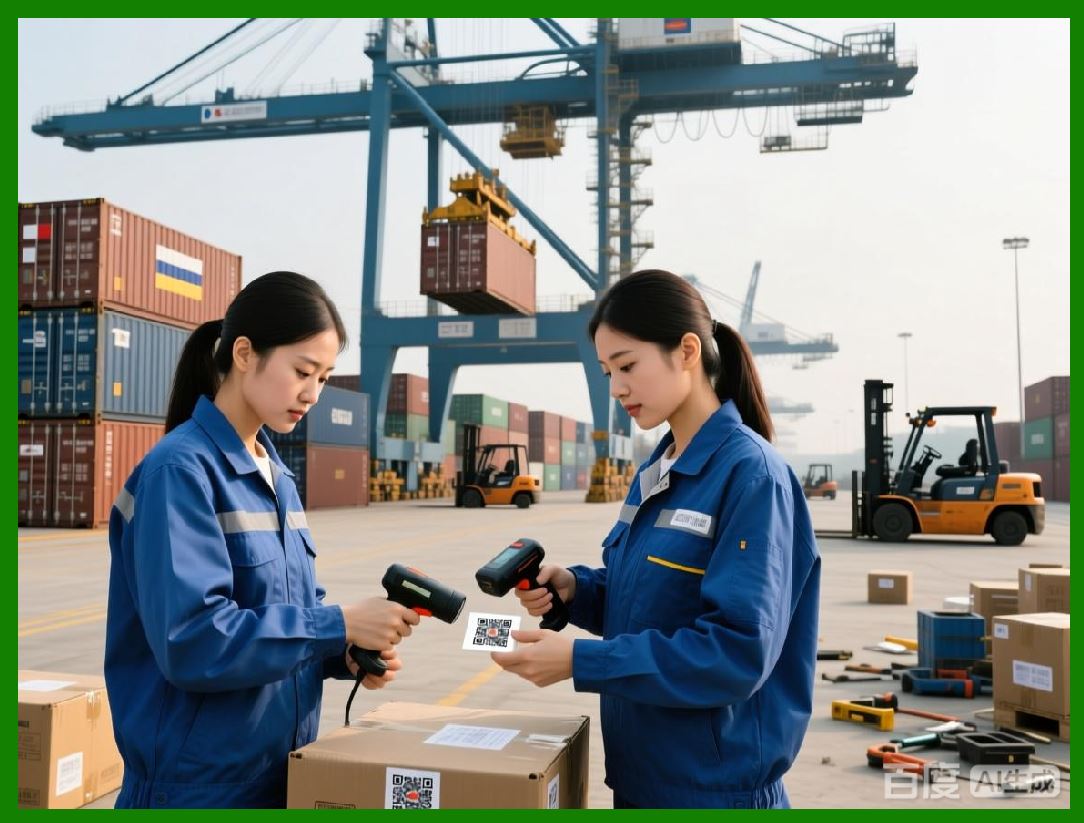
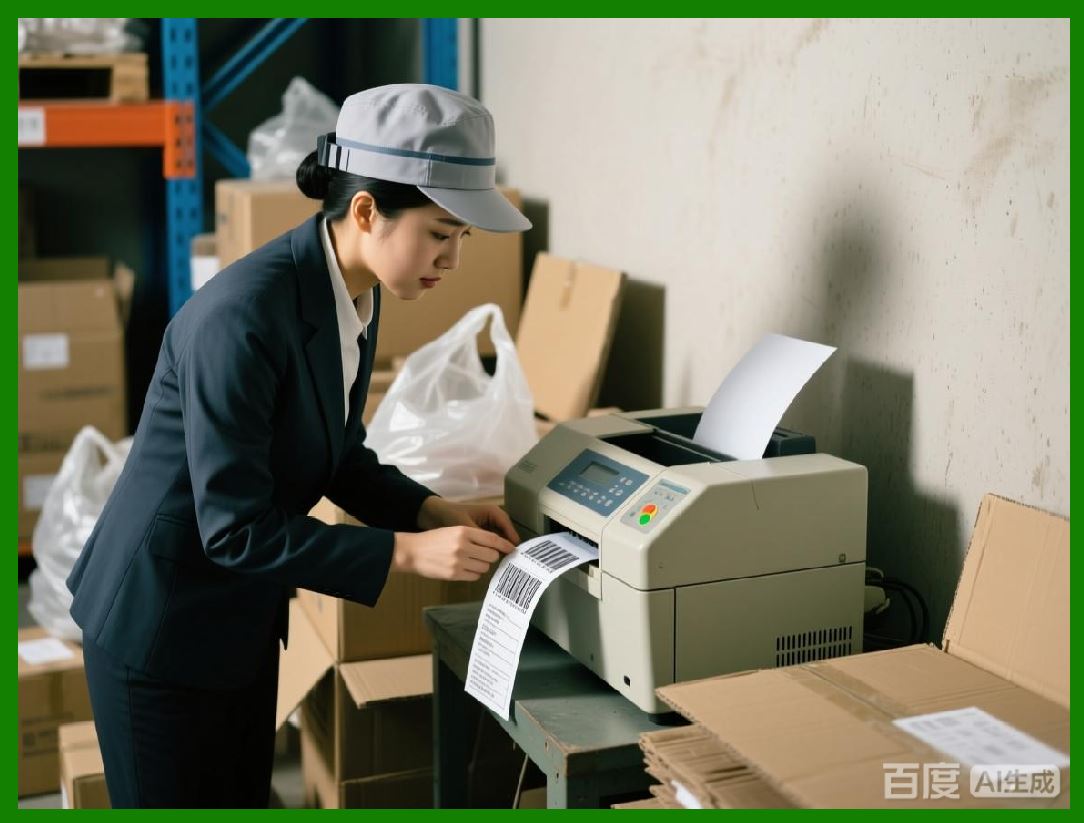
Direct Carton Identification: In many large-scale warehouse operations, cartons are marked with printed text identifiers (e.g., serial numbers or batch codes) in addition to, or sometimes instead of, barcodes . However, traditional optical character recognition (OCR) systems can be unreliable under challenging real-world conditions. Recent research has focused on developing deployment-oriented vision-based OCR systems specifically designed for direct carton identifier recognition without relying on barcode labels . These systems integrate established OCR techniques with domain-specific adaptation, orientation handling, and pattern-based filtering to reliably read identifiers even when the region of interest is not perfectly aligned with the camera . Critically, these systems are designed to run on low-cost edge hardware, making them practical for large-scale deployment in cost-sensitive retail supply chains . |
Robotic Picking and Sorting: In automated warehouses, robots equipped with cameras and visual recognition capabilities can identify items directly, without needing to scan a barcode. This is particularly valuable for picking items of varying shapes and sizes that are not easily oriented for barcode scanning. A robot can visually identify a specific product from a bin of mixed items, pick it up, and place it in the correct order. This multi-modal recognition, combining vision with other sensing technologies, is an active area of research in robotics . |
Returns Processing: Returned goods present a significant challenge for logistics. Items may arrive without their original packaging or with damaged labels. Visual recognition can identify the product from its physical characteristics, allowing it to be processed and restocked or disposed of appropriately without needing a readable barcode. |
|
3.3. Manufacturing and Quality Control |
In manufacturing, visual recognition extends beyond simple identification to include sophisticated quality inspection. |
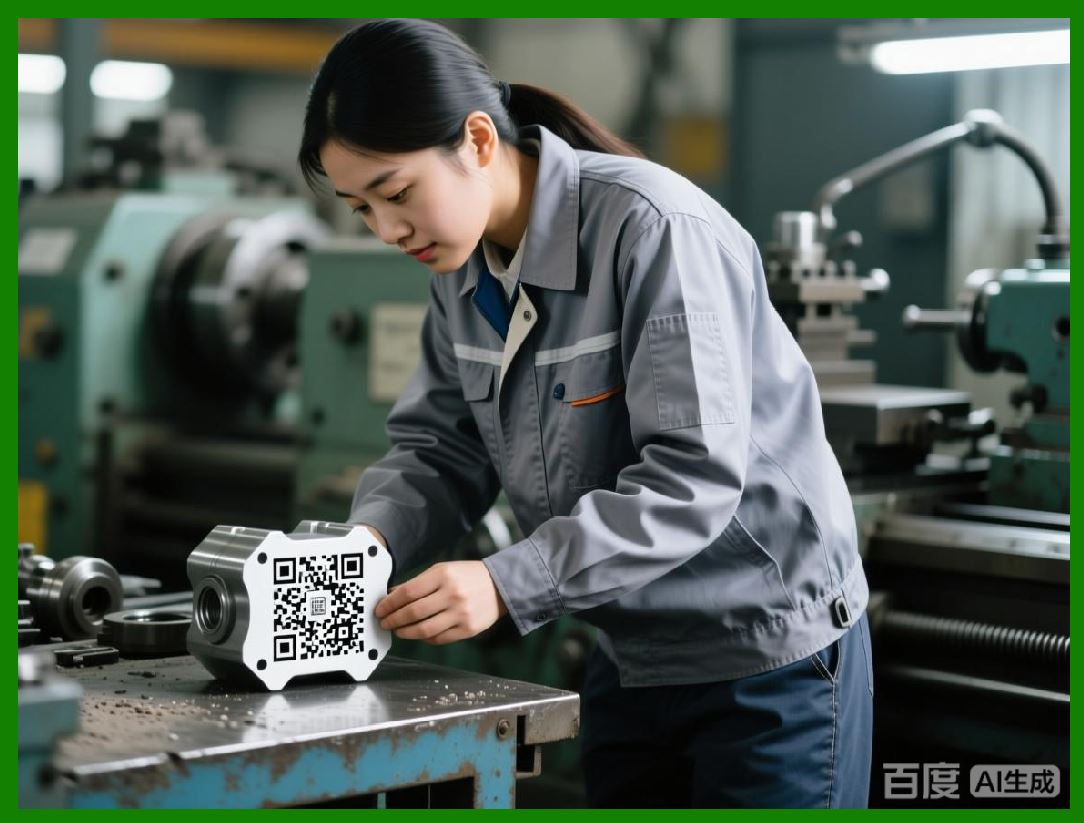
In-Process Component Identification: During assembly, components that lack pre-printed labels can be visually identified to ensure the correct part is being used at the right stage of production. This can prevent costly assembly errors. |
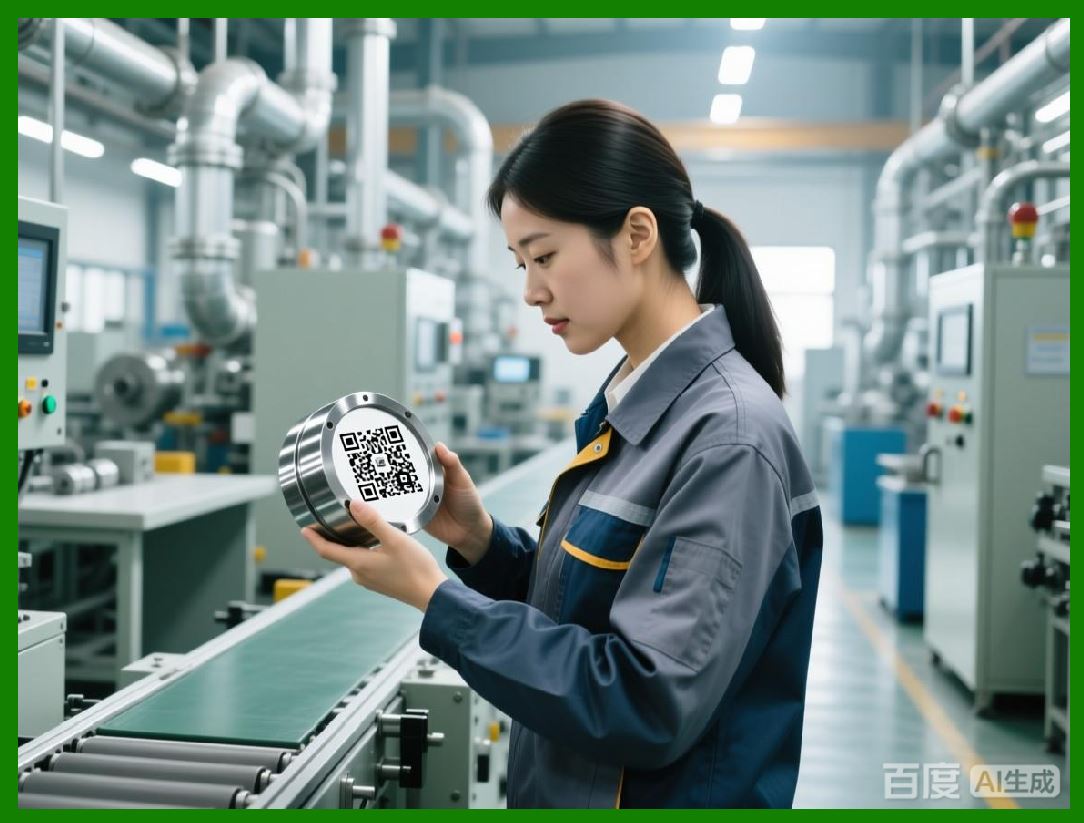
Defect Detection and Classification: By analyzing the visual features of a manufactured item, AI systems can not only identify it but also inspect it for defects. This combines the tasks of identification and quality control into a single step. For example, a system might identify a specific automotive part and simultaneously check for scratches, cracks, or dimensional inconsistencies. |
Asset Tracking Without Tags: In some industrial environments, applying barcode labels to every asset is impractical. Tools, equipment, and components can be tracked by their visual fingerprint---their unique combination of shape, wear patterns, or other distinctive markings. |
|
3.4. Healthcare: Patient Safety and Inventory |
The healthcare sector demands extremely high accuracy and reliability in identification, as errors can have life-or-death consequences. |
Medication Verification: Visual recognition systems can be used to verify medications. A nurse or pharmacist can use a camera to capture an image of a pill or a medication vial, and the system can confirm that it matches the prescribed medication, reducing the risk of dispensing errors. This is particularly useful when dealing with look-alike or sound-alike medications. |
Surgical Instrument Tracking: Surgical instrument trays often contain dozens of different tools that must be sterilized and tracked. Visual recognition can be used to identify each instrument after cleaning, ensuring that the tray is complete and that all instruments have been properly processed. |
Patient Identification: While barcoded wristbands are standard, visual recognition of a patient's face (or other biometric features) provides a non-contact, hands-free alternative for confirming identity, potentially reducing infection risks and streamlining workflows. |

|
3.5. Mobile Consumer Applications |
Visual recognition has also found its way into consumer applications through smartphones. |
Visual Product Search: Using a smartphone camera, a consumer can take a picture of a product and instantly search for it online to compare prices, read reviews, or find more information. Google Lens and Amazon's 'showrooming' feature are prominent examples. This is a form of instance-level image retrieval that bridges the physical and digital worlds . |
Nutritional Information and Allergen Alerts: Apps can use visual recognition to identify food products from their packaging and instantly retrieve nutritional information or allergen warnings, providing a valuable service to health-conscious consumers or those with food allergies. |
Home Inventory and Insurance: Users can photograph their possessions to create a home inventory for insurance purposes. The app can automatically identify and categorize items, noting their make, model, and approximate value. |
|
4. The Code 39 Barcode: A Reference Point |
To fully appreciate the significance of visual recognition, it is useful to understand the capabilities and limitations of the technologies it is poised to complement or replace. Code 39, one of the oldest and most widely used barcode symbologies, serves as an excellent reference point. |
4.1. Technical Characteristics of Code 39 |
Developed by Intermec in 1974, Code 39, also known as Code 3 of 9, was the first barcode symbology to encode alphanumeric characters . Its name derives from its encoding structure: each character is represented by a pattern of nine elements (five bars and four spaces), of which three are wide and the remaining six are narrow . |
The key technical characteristics of Code 39 include: |
Character Set: Standard Code 39 supports 43 characters: the digits 0-9, uppercase letters A-Z, and seven special characters (-, ., $, /, +, %, and space) . An extended version, Code 39 Extended or Full ASCII Code 39, uses two-character combinations to represent the full 128-character ASCII set, including lowercase letters and control characters . |
Variable Length: Code 39 barcodes can encode a variable number of characters, with no theoretical upper limit. However, practical constraints, such as the physical space available for printing and the scanner's field of view, limit most implementations to between 20 and 50 characters . |
Self-Checking: One of Code 39's most important features is that it is self-checking . The code's design is such that a single print error (e.g., a wide bar printed as a narrow bar) is highly unlikely to result in a valid but incorrect character being decoded. This inherent error resistance reduces the need for a mandatory check digit . |
Start and Stop Characters: Every Code 39 barcode is bookended by a special start and stop character, which is typically the asterisk (*) . This tells the scanner where the barcode begins and ends, enabling bidirectional scanning (the barcode can be read from either direction). |
Bidirectional Scanning: Code 39 is designed to be read from left to right or right to left, making it faster and more convenient for scanning in many applications . |
Optional Check Digit: While not required, a modulo 43 check digit can be added to improve data integrity in applications where it is critical . |
Low Data Density: Code 39 has a relatively low data density compared to more modern symbologies like Code 128 or Code 93 . Because each character is represented by 9 elements, and because it requires a narrow inter-character gap, the resulting barcode can be quite long, even for short messages. This makes it less suitable for applications where label space is limited . |
Printing and Scanning Requirements: Code 39 is relatively easy to print on a wide variety of media using standard printers. However, reliable scanning requires attention to print quality. The narrow bar width (known as the X-dimension) must be at least 0.191 mm, and 0.33 mm is recommended for optimal performance . The quiet zones (the blank margins on either side of the barcode) must be at least 10 times the X-dimension . Adequate contrast between bars and background is essential . |

|
4.2. Strengths and Limitations in Practical Application |
The technical characteristics of Code 39 directly influence where and how it is applied. |
Strengths: |
* Simplicity and Reliability: Code 39's simple encoding scheme makes it easy to generate and decode . Its self-checking nature ensures a high degree of reliability, making it a solid workhorse for many applications. |
* Wide Support: Code 39 is one of the most universally supported barcode symbologies. Almost all barcode scanners, including older laser scanners, can read it . |
* Alphanumeric Capability: As the first alphanumeric barcode, Code 39 is a good choice when the data to be encoded includes letters in addition to numbers, which is common in asset tracking and identification systems . |
Limitations: |
* Large Physical Size: The low data density means Code 39 barcodes can be physically large. For example, a Code 39 barcode encoding a 10-character identifier with a 0.33mm X-dimension would require approximately 53mm of width, plus additional space for quiet zones . This can be impractical for small items or where labels are constrained. |
* Limited Character Set (Standard): The standard version only supports uppercase letters. Encoding lowercase letters requires the Extended version, which significantly increases the barcode's length. |
* No Mandatory Check Digit: While the self-checking feature is a strength, the optional nature of the check digit means that data integrity is not as robust as in symbologies that mandate a check digit. |
|
4.3. Code 39 in the Age of Visual Recognition |
Code 39 is most prevalent in sectors that value simplicity, reliability, and wide compatibility over high data density. It is frequently found in: |
* Government and Defense: The U.S. Department of Defense has historically mandated Code 39 (via the LOGMARS standard) for logistics marking . |
* Automotive: Used for vehicle identification numbers (VINs) and parts labeling . |
* Manufacturing: Widely used for asset tracking and work-in-progress labeling . |
* Healthcare: Used for patient identification and specimen tracking (via HIBCC standards) . |
* Education and Libraries: Often used for library books and other assets . |
Its continued dominance in these sectors demonstrates that for many applications, the 'old' technology is not necessarily obsolete. Code 39 is cheap, proven, and supported by vast installed infrastructure. |
However, in the new applications where visual recognition shines---frictionless checkout, real-time shelf monitoring, direct carton identification, and consumer product search---the limitations of Code 39 become apparent. These applications require a different kind of 'intelligence'---the ability to understand and identify products in the real world without a perfect, printed label. Visual recognition offers a path to this capability, but it comes with its own set of trade-offs. |
|
5. Visual Recognition vs. Barcodes: A Comparative Analysis |
The relationship between visual recognition and barcodes is not necessarily one of replacement, but of complementarity. Each has distinct strengths and weaknesses that make it more suitable for specific applications. |
| Feature | Barcode (e.g., Code 39) | Visual Recognition | |
| Identification Basis | Requires a printed, machine-readable label on the object. | Uses the object's intrinsic visual features (shape, color, texture). | |
| Human Readability | Limited; requires training to read and interpret the code. | Highly intuitive; aligns with human visual perception. | |
| Infrastructure Cost | Low initial cost for printing and scanning; established infrastructure. | Higher initial cost; requires cameras, computing power, and AI model training. | |
| Data Capacity | Limited; encodes only a simple ID number that links to a database. | Potentially 'unlimited'; can identify specific attributes directly from appearance. | |
| Reliability | Extremely reliable in ideal conditions (clean labels, good lighting). | Dependent on image quality and training; can be affected by occlusions and packaging changes. | |
| Scalability | Highly scalable and standardized. | Scalable but requires ongoing data management and model retraining. | |
| Interaction | Active scanning required (user must aim scanner at label). | Passive or automatic recognition possible (cameras 'see' and identify). | |
| Handling of Damaged/ Missing Labels | Poor; requires replacement. | Good; can often identify objects even with damaged or missing labels. | |
| Real-World Robustness | Vulnerable to physical damage, dirt, or occlusion of the label. | More robust in cluttered or dynamic environments. | |
|
6. Challenges and the Path Forward |
The 'code-less' future is not an inevitability, and significant hurdles remain before visual recognition can match the ubiquity and reliability of barcodes. |
Cost and Scalability: Deploying a visual recognition system at the scale of the global barcode infrastructure is a monumental task. It requires extensive hardware (cameras, servers, or edge devices), continuous software development, and vast datasets for training and maintenance. The cost and complexity are likely to keep barcodes viable for many decades to come, particularly in low-margin, high-volume applications. |
Data Privacy: Visual recognition, especially in retail, raises significant privacy concerns. Cameras are inherently more intrusive than a laser scanner. Systems must be designed with privacy in mind, perhaps by processing data locally or by anonymizing captured images. |
The Moving Target of Packaging: The world of consumer goods is characterized by constant change---seasonal packaging, limited-edition runs, packaging redesigns. A visual recognition system must be updated continuously to stay current, whereas a barcode is agnostic to the packaging's design. |
Edge Cases: Visual recognition systems, while powerful, will never be perfect. They can be fooled by adversarial examples, confused by look-alike products, or fail under extreme lighting or occlusion. These failure modes are different from but analogous to the failures of barcode systems (e.g., a torn or smudged label). A future identification system may need to be multi-modal, combining visual recognition with barcodes, RFID, and other sensing technologies for maximum reliability. |
|
7. Conclusion: A Detailed Summary |
The rise of visual recognition marks a significant evolution in machine vision, moving from symbolic, label-based identification to a more intuitive, perceptual understanding of the physical world. This chapter has explored the technology's foundations, its diverse applications, and its relationship to the established barcode standard, represented by Code 39. |
The Shift from Symbol to Substance: Traditional identification, epitomized by Code 39, relies on assigning a symbolic representation to an object. The system reads the symbol, not the object. Visual recognition inverts this paradigm: the object itself becomes the identifier. By leveraging deep learning and massive datasets, machines can now 'see' and recognize the intricate visual details---shape, color, texture, and pattern---that distinguish one product from another. This shift represents a fundamental change in the relationship between the physical and digital worlds. |
Code 39 as the Anchor: Code 39's enduring presence in industry, government, and healthcare serves as a testament to the power of a simple, reliable, and universally supported standard. Its technical characteristics---its self-checking nature, alphanumeric capability, and wide compatibility---have made it a cornerstone of identification for decades. However, its limitations in data density, physical size, and label dependency also highlight the specific needs that visual recognition can address. It provides a clear benchmark for the new technology to surpass in terms of flexibility and intelligence. |
The Multi-Front Application Landscape: Visual recognition is not a laboratory curiosity; it is a practical tool being deployed across numerous industries. |
* In retail, it is creating frictionless shopping experiences through smart carts, automated checkout, and loss prevention, while also enabling more sophisticated shelf management. |
* In logistics and warehousing, it is enabling direct carton identification without barcodes and facilitating robotic automation in increasingly complex environments. |
* In manufacturing, it is combining identification with quality inspection for more streamlined production. |
* In healthcare, it is enhancing patient safety through medication verification and surgical instrument tracking. |
* In the consumer space, it is empowering shoppers with visual search tools and smart home applications. |
Each of these applications demonstrates that visual recognition is already solving real problems that barcodes cannot adequately address, particularly in environments where the object itself is variable, unlabeled, or dynamic. |
|
The Future is Hybrid, Not Code-Less: The phrase 'code-less future' is something of a misnomer. The future is not about the elimination of barcodes, but about the expansion of identification capabilities. Barcodes excel at what they do: providing a cheap, reliable, and scalable way to link a unique ID to a database record. Visual recognition excels at understanding what an object is, independent of a label. The most powerful and robust identification systems of the future will likely be hybrid, combining the strengths of both . A smart checkout system, for example, might use a barcode for a quick and reliable primary scan, with visual recognition acting as a secondary check for loss prevention and for identifying items without barcodes. |
The Challenge of Implementation: The path to widespread adoption of visual recognition is not without its challenges. High computational costs, the need for vast and current training datasets, the 'catalog-to-real' domain gap, and significant privacy concerns all need to be addressed. However, the rapid pace of AI research is actively tackling these issues, with progress in efficient model architectures, self-supervised learning, and edge computing bringing practical deployment closer to reality. |
The Enduring Value of Understanding: While the technology is complex, the underlying principle is simple and profound: true machine vision is about understanding the world, not just reading its labels. As machine vision continues to evolve, the ability to perceive and interpret the visual richness of physical objects will open up new possibilities that extend far beyond simple identification, leading to a future where machines interact with the world with a level of perception that is currently the exclusive domain of humans. The code will not disappear overnight, but it will increasingly be complemented by a more capable, intelligent, and perceptive form of machine vision. |
 cs@easiersoft.com