Chapter 67: Real-Time Object Tracking |
Short Summary: This chapter explores the combination of machine vision and SLAM (Simultaneous Localization and Mapping) to create a 'digital twin' of a warehouse, enabling the tracking of every item's exact 3D position. It begins by explaining how this technology moves beyond traditional barcode reading to provide a continuous, spatial understanding of inventory. The chapter then details the technical characteristics of the foundational Code 39 barcode, highlighting how its specific attributes---such as its alphanumeric capacity, self-checking nature, and low data density---have influenced its widespread adoption and application across various industries, from defense and automotive to healthcare and logistics. Finally, it showcases a wide array of real-world applications that demonstrate the transformative power of this technology across multiple sectors. |
|
Introduction: The Evolution from Code Reading to Spatial Awareness |
For decades, the primary role of barcodes in warehousing and logistics was straightforward: they served as a key to a database. Scanning a barcode provided an identifier, which a computer system would then use to look up information about that item---its product name, its price, or its supposed location. This system, while revolutionary at its inception, had a fundamental limitation: it told you *what* something was, but it couldn't tell you *where* it was in a physical sense, beyond a pre-assigned bin or shelf section. A box on a shelf, a pallet on the floor, and a parcel on a conveyor belt were all simply data points to be logged when scanned. |
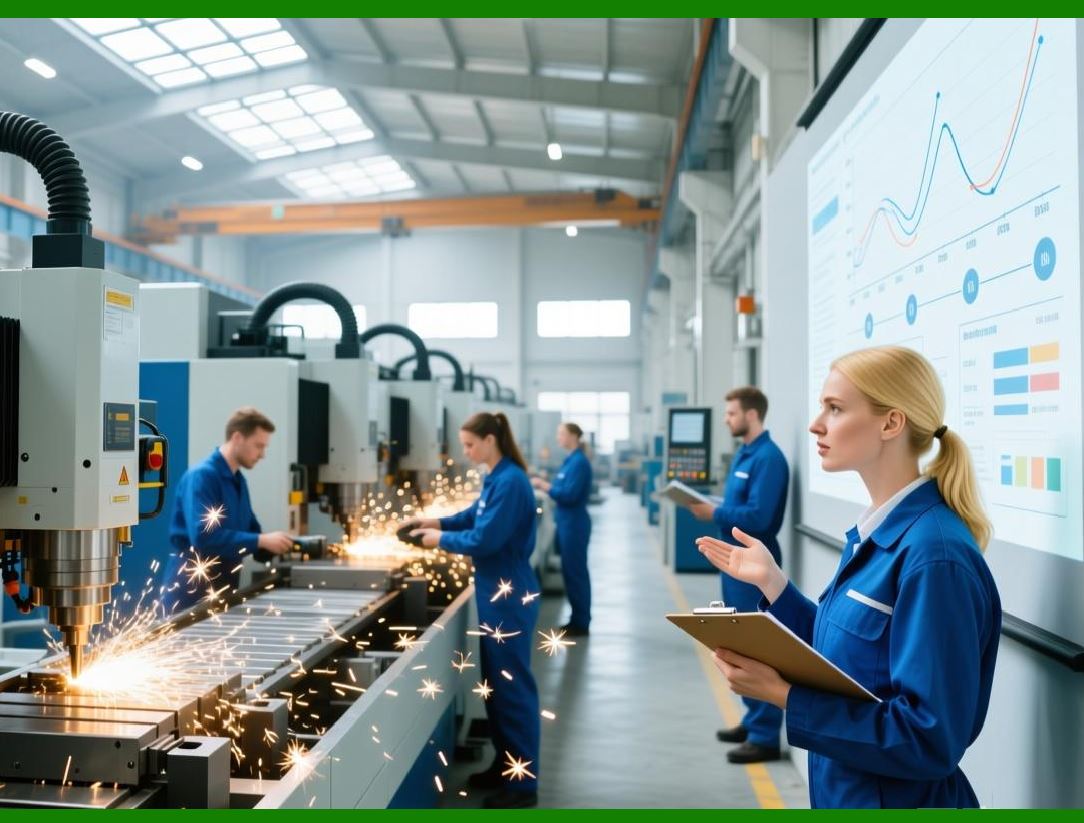
Today, the paradigm is shifting. We are moving from a world of passive identification to one of active, real-time spatial intelligence. This is driven by the convergence of two powerful technologies: Machine Vision and SLAM (Simultaneous Localization and Mapping). SLAM, a technique originally developed for robotics, allows a moving camera or sensor to build a map of an unknown environment while simultaneously keeping track of its own location within that map . |
When machine vision is combined with SLAM, the system no longer just 'sees' a barcode; it understands the three-dimensional geometry of the entire space. A camera system equipped with SLAM can create a continuously updating 3D map of a warehouse. As objects move---a forklift picks up a pallet, a worker places a box on a shelf, a package travels down a conveyor---the system can pinpoint their exact X, Y, and Z coordinates in real-time. This dynamic, data-rich model of the physical world is what we call a 'digital twin.' |
In the context of a warehouse, a digital twin is a virtual replica that is synchronized with the physical warehouse in real time. Instead of just looking up the last known location of an item in a database, a warehouse manager can open a dashboard and see a 3D representation of the entire facility, with every item represented as a virtual object in its current, precise location . This is not about merely replacing the barcode; it is about augmenting it with a continuous stream of spatial context. The barcode becomes a crucial anchor point for data, but the system's intelligence is now distributed across the environment. |

|
The Role of the Barcode: The Anchor in a Sea of Data |
Even in this age of sophisticated machine vision, the humble barcode is far from obsolete. It remains the most cost-effective and reliable way to provide a unique digital identity to a physical object. The barcode is the anchor that connects the physical item in the digital twin to its record in the warehouse management system (WMS). The machine vision system can track a generic 'box' moving through the warehouse, but the barcode tells the system *which* box it is, and its associated data---what's inside, its destination, its weight, and its handling instructions. |
Therefore, the type of barcode used remains critically important. While newer symbologies like Code 128 or 2D codes like Data Matrix and QR codes are often used for their high data density, Code 39 holds a unique and enduring legacy, particularly in the industrial and governmental sectors. Its widespread adoption, historical significance, and specific technical characteristics have directly shaped the workflow and application standards in numerous industries. Understanding Code 39 is fundamental to understanding how many of today's real-time tracking systems evolved. |
Understanding Code 39 Barcode Technology |
Code 39, also known as Alpha39, Code 3 of 9, or USD-3, is a variable-length, discrete barcode symbology that was developed in 1974 by Intermec Corporation . It was the first barcode to effectively encode both numbers and letters, a breakthrough that opened the door to a vast new range of applications beyond simple retail point-of-sale. |
|
Key Technical Characteristics |
Alphanumeric Character Set: One of Code 39's most defining features is its character set. The standard Code 39 can encode 43 characters: the uppercase letters A through Z, the digits 0 through 9, and the special characters space, period (.), dash (-), dollar sign ($), slash (/), plus sign (+), and percent sign (%) . This ability to include letters directly in the barcode made it ideal for applications like inventory management, where an item code might be a mix of letters and numbers (e.g., 'PART-123A'). An extended version, Code 39 Extended or Full ASCII Code 39, was later developed to encode the full 128-character ASCII set by using pairs of standard Code 39 characters . However, this significantly increases the length of the barcode. |
The Self-Checking Property: Code 39 is a self-checking barcode. This is one of its most crucial and celebrated attributes. The symbology uses a pattern of nine elements (five bars and four spaces) for each character, and exactly three of these elements are wide . The ratio of the wide elements to the narrow elements is typically between 2.5:1 and 3:1 . Because each character has a unique, standardized pattern of three wide and six narrow elements, a single printing defect (like a narrow bar printing too wide, or a wide space printing too narrow) will not accidentally transform one valid character into another. A misread results in an invalid character pattern, which the decoder can recognize and reject . This self-checking characteristic provides a high degree of built-in data integrity without requiring a mandatory check digit. |
Check Digit (Optional): Because of its self-checking nature, Code 39 does not require a check digit to be considered valid . However, for critical applications where data integrity is paramount, an optional check digit calculated using a Modulo 43 algorithm can be appended to the data . This adds an extra layer of verification but also increases the physical length of the barcode. Many industry standards, like the US Department of Defense's LOGMARS system, mandate the use of this check digit . |
Variable Length: Code 39 is a variable-length symbology, meaning it can encode from one character to an unlimited number of characters . In practice, however, the physical limitations of printing and scanning mean that the practical length is often restricted to between 20 and 50 characters . Longer barcodes require a very large label or a very high-resolution printer to remain scannable, as the narrow bars become too small to resolve. |
|
Advantages and Limitations |
The strengths and weaknesses of Code 39 are two sides of the same coin, directly derived from its design. |
Advantages: |
Wide Support: Code 39 is universally supported by almost every barcode scanner and software library in existence . This legacy support ensures that a Code 39 barcode printed decades ago can still be scanned on a modern device. |
No Required Check Digit: While not always an advantage for data integrity, the lack of a mandatory check digit simplifies the encoding process and reduces the barcode's size. This was a major factor in its early adoption when computing power was more limited . |
Self-Checking: The inherent error-detection capability of the symbology provides robust reading accuracy, especially in environments where label quality may be compromised . |
|
Limitations: |
Low Data Density: This is the most significant drawback of Code 39. Because each character requires nine elements and includes a wide inter-character gap, the barcode is physically long and takes up considerable label space. For any given data length, a Code 39 barcode will be much larger than a Code 128 barcode and far larger than a 2D code . This low data density makes it unsuitable for applications where label size is constrained, such as on small electronic components. |
No Default Checksum: The lack of a *mandatory* check digit means that if an error occurs that results in a valid, but incorrect, code being read (a substitution error), the scanner would not know. Although the self-checking property makes this unlikely, it is not impossible. The reliance on an optional check digit means that some implementations may lack this extra layer of security . |
How Code 39 Characteristics Influence Its Applications |
The unique blend of properties inherent to Code 39 has not only led to its widespread use but has also dictated *how* and *where* it is applied. Its influence is seen in the standards and practices of several key industries. |
|
Industry Standards and Governance |
The US Military (LOGMARS): Perhaps Code 39's most famous application is in the US Department of Defense's LOGMARS (Logistics Applications of Automated Marking and Reading Symbols) system. Starting in the 1980s, the DoD mandated that all items procured by the military be marked with a barcode for inventory and logistics tracking . Code 39 was chosen as the standard symbology, a decision that single-handedly drove its adoption into the global supply chain. The military's specific requirements---like a default checksum and strict labeling standards---shaped how the barcode was expected to be used, setting a benchmark for quality and reliability. Its robustness and self-checking nature were deemed essential for defense logistics, where the identification of parts and equipment is critical for safety and mission readiness. |
Automotive Industry (AIAG): The automotive sector, through organizations like the Automotive Industry Action Group (AIAG), has also long relied on Code 39. The AIAG B-1 standard, among others, defines how parts and components are labeled throughout the supply chain . In automotive manufacturing, a component label might include a part number, a supplier code, and a serial number. Code 39's alphanumeric capacity and reliability in harsh environments---like the grease, oil, and heat of a factory floor---make it a dependable choice. While the automotive industry has begun to adopt 2D codes for small parts, Code 39 remains a standard for many large components and assemblies. The evolution of tracking in this sector shows a clear move toward integrating more detailed part-level data, aligning with the principles of digital twins for production lines . |
|
Healthcare and Pharmaceutical Labeling |
The Health Industry Bar Code (HIBC) standard, used for labeling medical devices and pharmaceutical products, has historically been based on Code 39 . The need to encode letters and numbers was crucial for identifying manufacturers, products, and lot numbers. The HIBC standard mandated a specific format and often required the optional check digit to ensure the integrity of the data on high-stakes medical supplies. The self-checking property of Code 39 provided an extra layer of safety, reducing the risk of a medical professional administering a drug or using a device because of a barcode misread. However, as regulations have evolved to require more detailed product data and unique device identifiers (UDI), the limited data density of Code 39 has often given way to 2D barcodes like Data Matrix, which can pack the required data into a much smaller space, suitable for labeling even the smallest syringes or implantable devices. |
Beyond Code 39: The Modern Tracking Ecosystem |
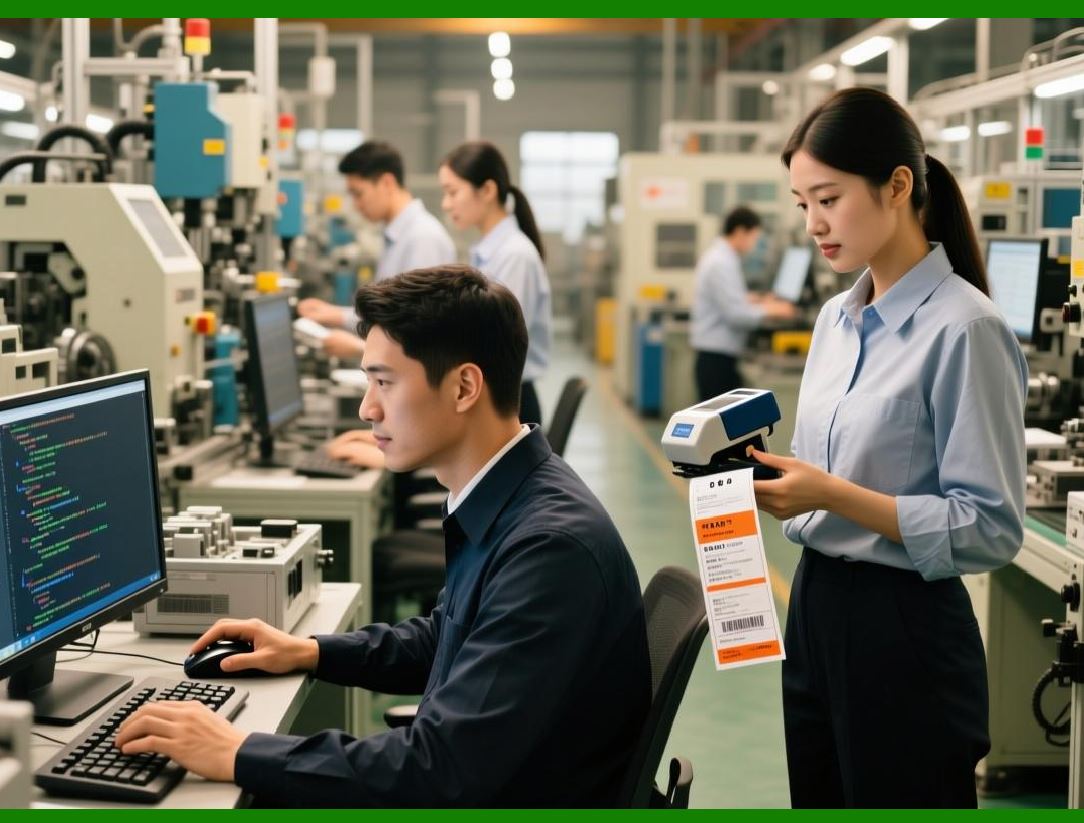
While Code 39 played a foundational role and continues to be used extensively, the modern warehouse and logistics environment is a complex tapestry of different symbologies and technologies. Code 39 is one tool among many, and its application is often a legacy choice or a specific requirement of an established system. When real-time object tracking creates a digital twin, the visual data isn't just about reading a single barcode type; it's about interpreting the entire visual scene. This shift is made possible by advanced computer vision algorithms. |
|
The Engine of Real-Time Tracking: YOLO and Deep Learning |
Modern real-time tracking systems are heavily reliant on deep learning models, particularly the 'You Only Look Once' (YOLO) family of object detection algorithms . YOLO and its variants are convolutional neural networks that can classify and locate objects in an image with a single forward pass, enabling high-speed, real-time performance that is essential for tracking items on a moving conveyor belt or a fast-moving forklift. |
In the context of a digital twin logistics system, a camera system captures video frames, which are then processed by a YOLO model. The model can be trained to detect packing boxes, pallets, personnel, and even specific types of equipment like automated guided vehicles (AGVs) . For example, a study on production line logistics demonstrated the use of a YOLOv8 pose estimation model to not only detect packing boxes but also to identify their corner points. This allowed the system to calculate the precise orientation and position of the box in 3D space. This information was then 'mapped' into the coordinate system of the digital twin, providing a real-time, synchronized 3D model of the entire production line . |
Similarly, for inventory management, YOLO models can be deployed to monitor warehouse shelves or retail stockrooms. A camera system can continuously scan a shelf, using YOLO to detect and count items . The system can identify gaps, detect when a product is low in stock, or even spot a product in the wrong location. This automated, continuous monitoring provides a level of real-time visibility that would be impossible with manual checks. The data from these visual systems can be integrated with enterprise resource planning (ERP) systems, enabling automatic reordering and proactive inventory optimization . |
|
Real-World Applications of Real-Time Object Tracking and Digital Twins |
The combination of machine vision, SLAM, and digital twins is not a theoretical concept; it is being deployed today across a wide spectrum of industries, each with its own unique set of challenges and requirements. These applications are moving far beyond simple inventory counting to enable intelligent, autonomous operations. |
Logistics and Warehousing: The Engine of E-Commerce |
The logistics and warehousing sector is the most obvious beneficiary of real-time object tracking. The rapid growth of e-commerce has created immense pressure to fulfill orders faster and more accurately. In this high-stakes environment, the digital twin is emerging as a critical tool. |
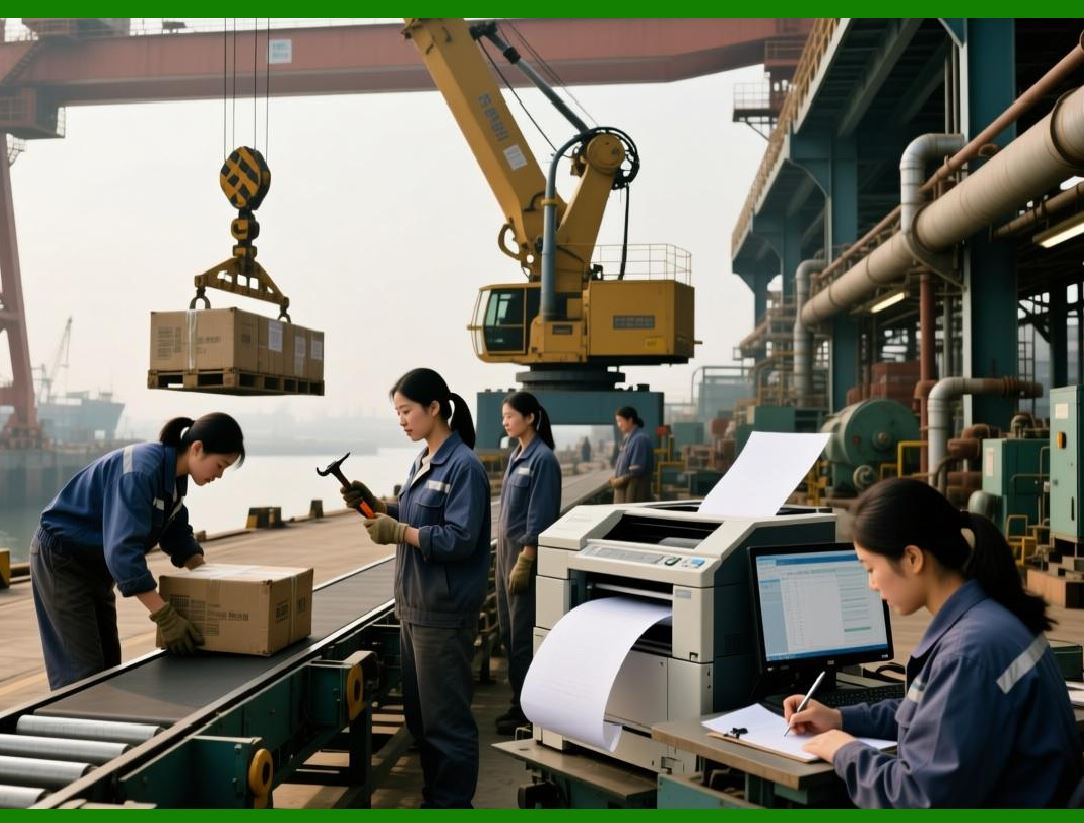
A prime example is the massive-scale warehouse digitization project undertaken by a partnership between Nagoya University and TRUSCO NAKAYAMA Corp. in Japan . The goal was to digitize and optimize large-scale logistics warehouses to address challenges like labor shortages and inefficient inbound processes. The solution involved deploying a large-scale camera array and a multi-camera object tracking system. This system could track the real-time location of both personnel and packages. By feeding this data into a digital twin, the researchers could analyze and optimize worker shifts and warehouse layout. |
To achieve this, they employed a technique called Factorization Machine Quantum Annealing (FMQA) to model the complex interactions between workers and warehouse layout . The results were staggering: the optimized digital twin model predicted a 37.4% reduction in lead times and a 14.3% decrease in labor hours . The system also provided a visualization tool for warehouse operators, allowing them to see this data-driven analysis and make better-informed management decisions. This real-world case study demonstrates the immense potential of digital twins not just for tracking, but for active optimization of operations. |
In a different example, researchers developed a method using YOLOv8 to locate and track packing boxes on a production line and update a digital twin model in real-time. The system used high-definition industrial cameras and the YOLOv8 keypoint estimation model to calculate the exact pose of each box in every video frame. This data was then mapped to the digital twin's coordinate system via a Redis database . The system overcame two major limitations of traditional photoelectric sensors: the inability to distinguish between different types of boxes and the failure to continuously track them. The results demonstrated a marked improvement in simulating the motion and posture of boxes, which is vital for managing complex logistics and preventing bottlenecks . This shows a clear shift from dumb sensors to intelligent, vision-based systems that can classify, track, and understand items in ways previously impossible. |
|
Manufacturing: The Smart Factory and Production Line |
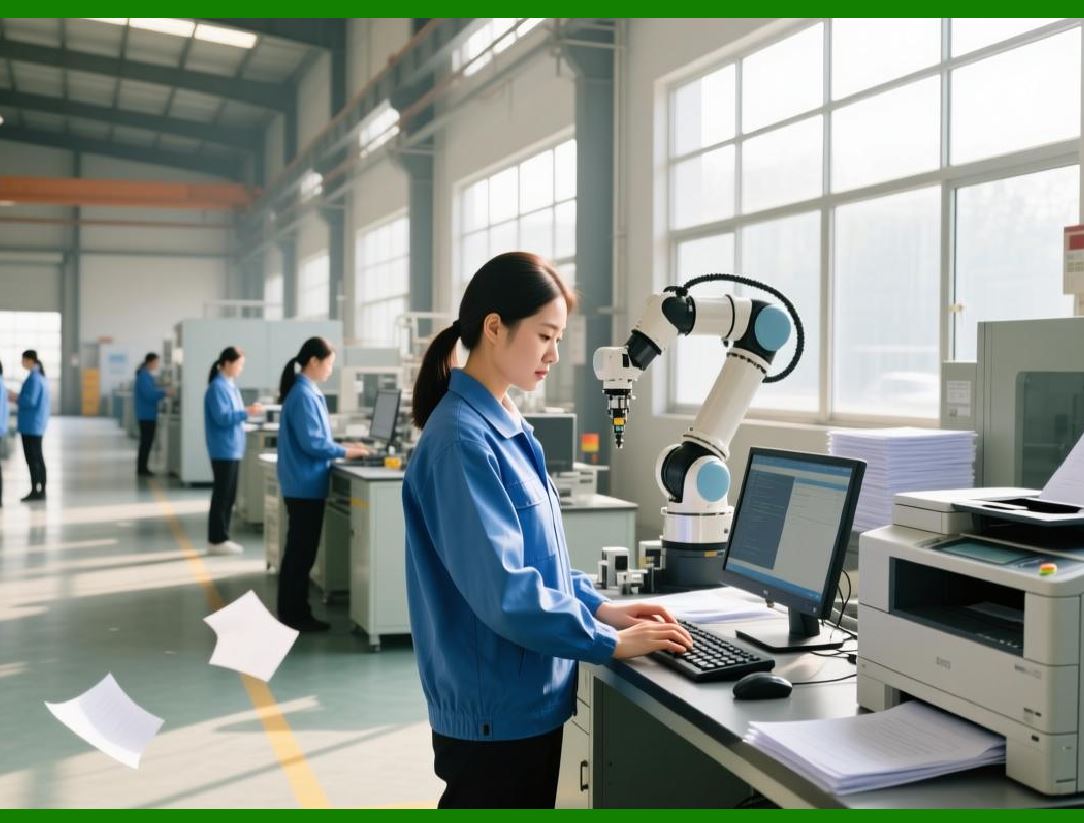
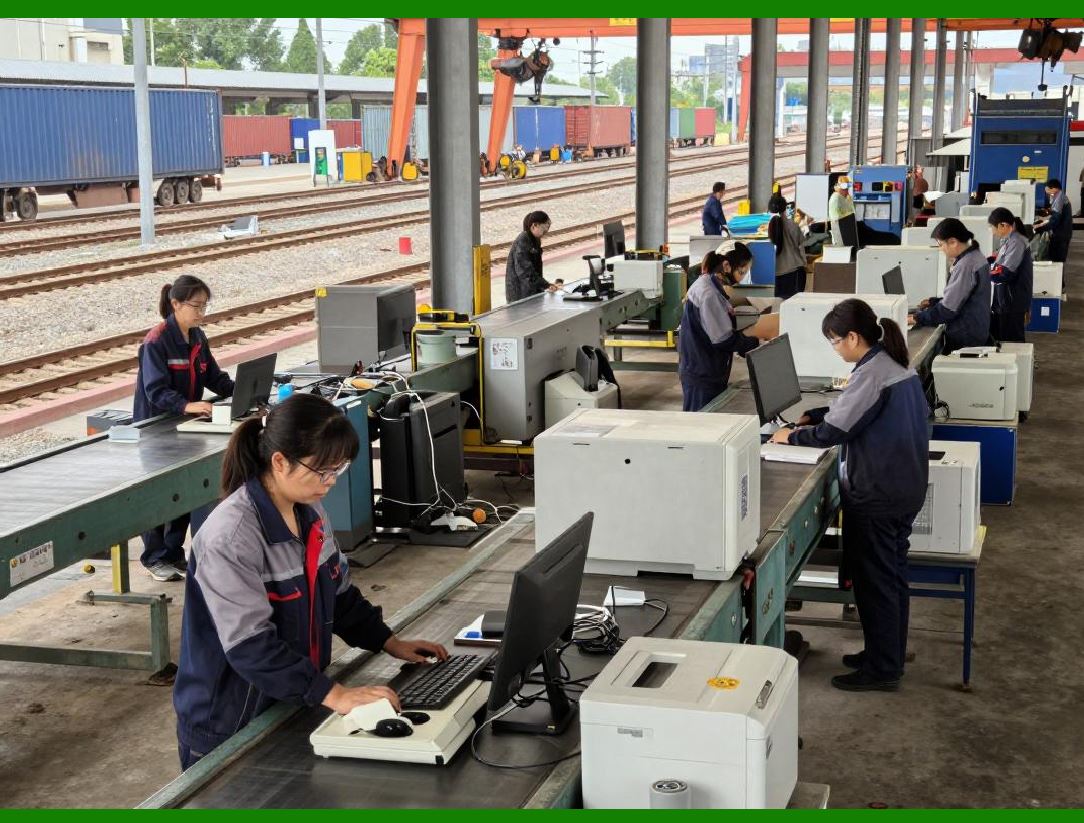
In the manufacturing sector, real-time object tracking is a cornerstone of the 'smart factory' or Industry 4.0 movement. Here, the goal is to create a fully connected and optimized production environment where every component, machine, and product is continuously communicating its status and location. The vision systems used for tracking are often integrated into a broader ecosystem that includes robotic arms, AGVs, and quality control systems. |
For instance, NVIDIA's Metropolis and Omniverse platforms offer a comprehensive suite of tools for building AI-powered multi-camera tracking applications. These can be used to optimize manufacturing and warehousing by tracking the movements of autonomous robots, equipment, and workers . The AI-powered analytics can identify operational bottlenecks, detect safety risks, and suggest optimal routes for workers and robots. This helps in making data-driven decisions to improve productivity and workplace safety. By using a digital twin, a production planner can simulate the effect of moving a machine, adding a new workstation, or changing the production schedule without physically altering the factory floor . |
Consider also a VR logistics training platform that integrates YOLOv8-based object detection and tracking. This system enables realistic training in a virtual environment, tracking boxes, forklifts, conveyor belts, and people within the simulation . This approach allows workers to train safely and effectively on complex logistics tasks. The digital twin here is a training tool, but the underlying principles of object detection and tracking are the same as those used in physical operations. This demonstrates how the same technology can be used for both real-world optimization and the development of a skilled workforce. |
|
Retail and Inventory Management: The Always-Accurate Store |
The retail sector is undergoing a significant transformation with the adoption of computer vision for inventory management. The traditional method of manual stocktaking is labor-intensive, infrequent, and prone to errors. Real-time tracking offers a solution: the 'always-accurate store.' |
Computer vision systems, often using YOLO models, can monitor store shelves from a ceiling-mounted camera or through robotic inventory scanners . These systems can continuously identify products, count units, and detect when an item is out of stock or misplaced. The advantages are compelling: |
Eliminating Manual Labor: Automated visual monitoring continuously checks inventory without the need for store associates to walk around with handheld scanners. |
Preventing Stockouts: By detecting low-stock conditions in real-time, the system can trigger automatic replenishment orders, ensuring shelves are always full and reducing lost sales. |
Planogram Compliance: The system can verify that products are placed in the correct location according to the store's planogram, ensuring that consumers can easily find what they're looking for, which is essential for a positive shopping experience . |
A practical example is the use of vision AI to reduce checkout queue times. A case study using Ultralytics YOLO models by Cali Intelligence demonstrated a 43% reduction in checkout queue times by intelligently managing customer flow . This showcases that the application of computer vision extends beyond just tracking products to also optimize the human flow within a retail environment. |
|
Healthcare: Patient Safety and Asset Management |
In the healthcare sector, the need for accuracy and traceability is paramount. Real-time object tracking and digital twins can significantly enhance patient safety and operational efficiency. The most well-known application is in pharmaceutical labeling and tracking, where barcodes, including Code 39 historically, have been used to ensure the 'Five Rights' of medication administration: the right patient, right drug, right dose, right route, and right time . |
Modern systems go far beyond this. A digital twin of a hospital could track the real-time location of all critical assets like infusion pumps, wheelchairs, and hospital beds, reducing the time staff spend searching for equipment and preventing unnecessary purchases. But more importantly, the technology can be used for patient monitoring. Multi-camera tracking systems, powered by AI, can be used to continuously monitor patients, particularly those at risk of falling or wandering. The system can detect unusual behavior or a patient leaving a safe zone and send real-time alerts to nursing staff . This application directly translates to improved patient safety and care. While Code 39 may have had its primary role in drug labeling, the new frontier for healthcare tracking is in 3D spatial awareness, making the entire hospital a safe and efficient environment. |

|
Defense and Aerospace: The Most Demanding Applications |
In defense and aerospace, the cost of error and the need for reliability are arguably the highest. Code 39's history with the US military's LOGMARS system is a testament to its perceived robustness and security . In these sectors, the standard is MIL-STD-130, which outlines the identification marking of US government property. This standard often mandates the use of a Code 39 barcode with a Modulo 43 check digit for data integrity . |
The tracking needs in these industries are incredibly rigorous. It's not just about knowing an item is in the warehouse; it's about knowing its exact location on a ship, on an aircraft, or in the field. The supply chain must be meticulously managed to ensure the timely delivery of parts for maintenance and repairs. A digital twin of a military supply base or an aircraft carrier would provide the kind of real-time visibility required to ensure that critical components are available exactly when and where they are needed. The flight safety and operational readiness implications of a lost or misidentified part are so severe that the additional costs and size of a Code 39 barcode are a small price to pay for its reliability and legacy integration. |

|
Conclusion: The Future is Spatial and Intelligent |
As we look to the future, the evolution from barcode scanning to real-time object tracking and digital twins represents a profound change in how we interact with the physical world. The journey from the simple, passive identification of a Code 39 barcode to the dynamic, intelligent environment of a machine-vision-powered digital twin is a story of technology building upon itself. Code 39, with its self-checking property and alphanumeric capacity, served as a crucial and reliable bridge into the digital age for heavy industry, defense, and healthcare. Its limitations---low data density and lack of a mandatory check digit---were not fatal flaws for many large-scale applications, but they were determining factors that often led to it being 'good enough' or a mandated standard, rather than the optimal choice for every new application. |
The future, however, is being shaped by new capabilities. The convergence of machine vision, deep learning, and SLAM is breaking down the walls between the digital and physical worlds. The old model was to scan a code and look up its data in an offline database. The new model is to visually perceive the environment, track the continuous flow of objects and people within it, and maintain a synchronized, data-rich virtual representation---the digital twin. |
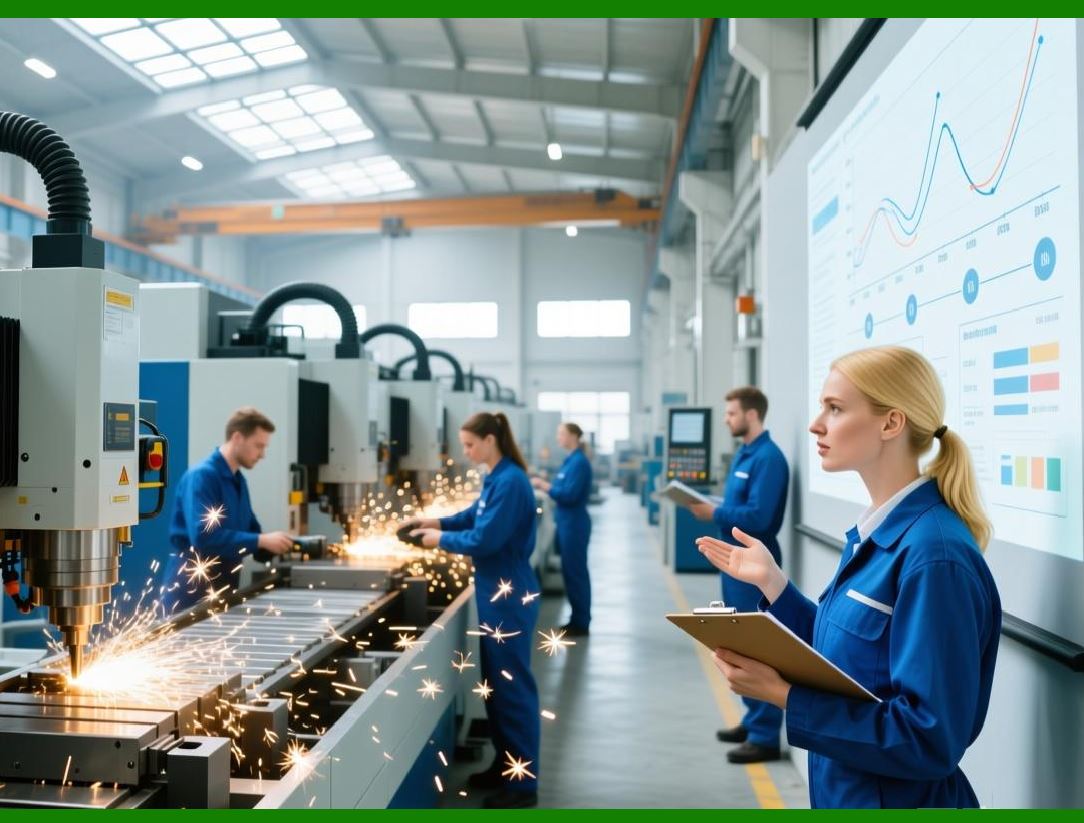
In a truly smart warehouse or smart factory, the system doesn't just know that item X is at location Y; it can see that a forklift is approaching it from a certain angle, that it's about to be moved to a new location by a robotic arm, and that its arrival at the new location is expected in 3.2 seconds. This level of predictive, real-time intelligence allows for optimization that was previously impossible. |
The barcode, in this new context, is not replaced but elevated. It remains the anchor for data. It is the final, crucial link between the physical object and its virtual identity. Whether it is a long, legacy Code 39 label on a military component or a microscopic Data Matrix code on a surgical instrument, the barcode provides the essential unique identifier for the item. The vision system doesn't need to replace it; it needs to integrate with it, reading the code while simultaneously mapping its precise location in a 3D space. The vision system is the eyes of the operation, and the barcode is the digital fingerprint of the object. |
|
The wide range of applications we see today---from the 37.4% reduction in lead times in a Japanese logistics warehouse to the 43% reduction in retail checkout queues , and from tracking patients in a hospital to simulating logistics operations in virtual reality ---are just the beginning. The cost of the technology is decreasing, the capability of AI models like YOLO is increasing, and the ability of businesses to integrate and leverage this data is becoming more sophisticated. The digital twin is becoming the new interface for managing complex physical operations, providing a level of control, foresight, and efficiency that is transforming entire industries. This is not a future possibility; it is a reality being built today, code by code and frame by frame. |
 cs@easiersoft.com