Chapter 12: Encoding FNC1 - The GS1-128 Enabler |
Short Summary |
This chapter explores the Function 1 character (FNC1), a special non-printable code that transforms a standard Code 128 barcode into the powerful GS1-128 standard. By placing FNC1 in the first position, a barcode signals to scanners that it contains structured data according to GS1 rules. This structure uses Application Identifiers (AIs) to define the meaning of the data that follows, such as item numbers, expiration dates, and serial numbers. Without FNC1, a barcode is just a number; with it, it becomes a key that unlocks global supply chain efficiency, enabling traceability in industries ranging from retail to healthcare. |

|
The Silent Key: Introducing FNC1 |
Imagine a library where every book is simply a number, with no system to tell you if that number represents a title, an author, or a publication year. It would be chaos. The barcodes we see on every product face a similar challenge. A standard Code 128 barcode is like a string of numbers and letters, but it has no context. It can represent any kind of information, but the scanner and the computer system reading it don't inherently know what that information means. |
This is where the Function 1 character, or FNC1, comes in. It is the silent key that unlocks order from potential chaos. In the world of barcodes, FNC1 is a special, non-printable command. When a barcode scanner encounters it, it doesn't display a character on the screen. Instead, it says, 'Stop! This is not a normal barcode; this is a GS1-128 barcode, and you must interpret the data that follows using specific rules.' |
Think of FNC1 as the 'magic word' that transforms an ordinary string of data into a structured, globally understood message. The most critical place for this character is at the very beginning of the barcode, right after the start character. If a scanner reads a Code 128 barcode and finds an FNC1 in this first position, it knows it is dealing with a GS1-128 symbol. This is the key distinction. Without this leading FNC1, it is just a Code 128 barcode. With it, it becomes a passport to the GS1 system, enabling complex data to be carried efficiently and accurately throughout the global supply chain. |

|
The Power of Application Identifiers |
Once the scanner recognizes the FNC1, it knows that the data is structured using GS1 Application Identifiers (AIs). An AI is a predefined numeric code, usually two or more digits long, that tells the system what the following data represents. It is a data dictionary for barcodes. |
For example, the AI (01) tells the system that the next 14 digits are a Global Trade Item Number, the unique identifier for a specific product. The AI (17) indicates that the next 6 digits are an expiration date in the format Year-Month-Day. The AI (10) signifies a batch or lot number, and the AI (21) indicates a unique serial number. |
This system is incredibly powerful because it allows a single barcode to hold multiple pieces of information, all clearly defined and easily parsed by a computer. A single GS1-128 barcode on a box of medical supplies might contain a GTIN, a lot number, and an expiration date, all seamlessly integrated. The scanner reads the whole thing, the software sees the leading FNC1, and then it can easily pull out each piece of data by looking for the AIs and their corresponding data fields. |
This is the technical foundation of traceability, which is critical in many modern industries. When a product can be uniquely identified and its key attributes (like its manufacturing batch or expiration date) are encoded in a scannable barcode, the entire supply chain becomes more transparent and manageable. |

|
FNC1 as a Data Separator |
The FNC1 character has a second, equally important job. It can also act as a data separator. Some data fields in GS1-128 have a fixed length, like the 14-digit GTIN or the 6-digit date fields. The computer system knows exactly how many characters to read for these AIs, so they don't need a separator. However, other fields are variable length, such as a lot number (AI 10) or a serial number (AI 21), which can be up to 20 characters long. For these, the system needs a way to know where one field ends and the next begins. |
When a variable-length field is not the last piece of data in the barcode, an FNC1 character is used as a delimiter to mark its end. When the scanner transmits this data to a computer, it often translates this FNC1 separator into a Group Separator (GS) character, which is a non-printing control character that tells the system software to move on to the next piece of data. |
This dual role---as a symbology identifier at the start and as a data separator in the middle---makes FNC1 an indispensable part of the GS1-128 system. It ensures that data is not only correctly identified but also correctly parsed, preventing errors that could arise from misinterpreting variable-length information. |
Real-World U.S. Example: Food and Beverage Traceability |
Consider the food industry. Tyson Foods, one of the largest meat and poultry producers in the United States, is a prime example of a company leveraging GS1-128 barcodes and their FNC1-enabled structure. Tyson processes millions of pounds of meat, and every case of chicken or beef is a potential variable-weight product, making accurate tracking critical for invoicing and logistics. |
|
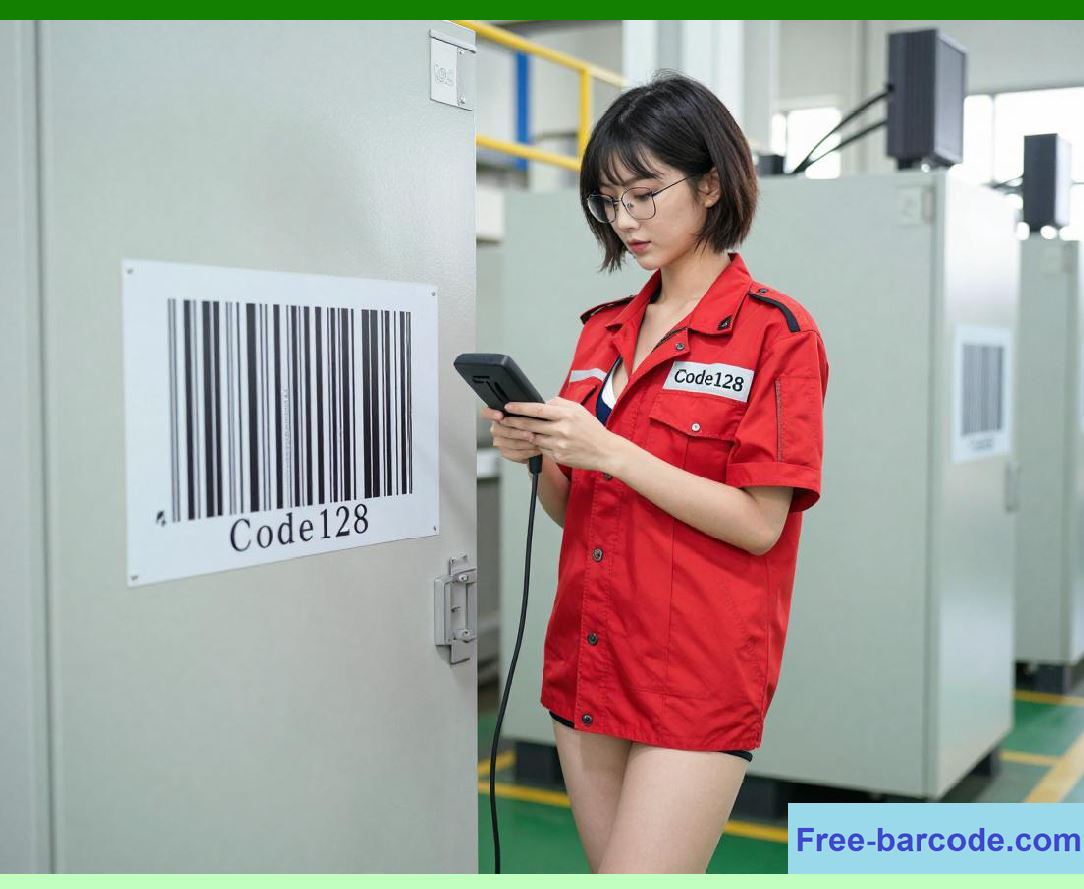
Tyson uses GS1-128 barcodes on its cases to encode not just the product GTIN but also the exact net weight of the case and often the batch or lot number. This is made possible by FNC1. The structure might look something like this: |
`(01)00012345678901(3103)002345(10)230415A` |
When a warehouse worker at a retail distribution center scans this barcode, the scanner recognizes the leading FNC1 and interprets the data. The AI (01) tells it this is the product ID. The AI (3103) tells it that the next data field is the net weight in kilograms, and (10) indicates the lot number. The system automatically updates inventory, verifies the shipment, and generates an accurate invoice without human intervention. This process greatly reduces invoice disputes and allows Tyson and its customers to track products instantly for quality control and efficient recall management if needed. 'With GS1-128 barcodes, we can now track products by batch/lot number, anywhere between our processing facilities, distribution centers and stores or restaurants,' says Paul Lothian, a business solutions architect for Tyson. |
Real-World U.S. Example: The Pharmaceutical Supply Chain |
In the healthcare sector, the need for pinpoint accuracy is even more acute. The U.S. Food and Drug Administration's Drug Supply Chain Security Act (DSCSA) mandates that pharmaceutical products be serialized with a standard barcode containing specific data elements to improve traceability and combat counterfeit drugs. The law requires that each package-level unit (the smallest saleable unit) and each case be marked with a barcode that includes the National Drug Code (embedded within a GTIN), a serial number, a lot number, and an expiration date. |
GS1-128 and the 2D GS1 DataMatrix barcodes are the primary standards used to meet this requirement. For a pharmaceutical manufacturer, a GS1-128 barcode on a case might contain: |
`(01)00345678901234(17)270501(10)XYZ789(21)0123456789A` |
Again, the FNC1 at the start signals that this is a structured GS1 barcode. The AI (01) provides the GTIN, (17) provides the expiration date, (10) is the lot number, and (21) is the unique serial number for that specific case. |
The impact of this is profound. Wholesalers like AmerisourceBergen and McKesson are now scanning these barcodes with high accuracy. A 2019 assessment showed that over 74% of scanned pharmaceutical barcodes met DSCSA requirements, a significant increase from previous years. This level of traceability helps to quickly isolate and remove recalled products from pharmacies and hospitals, protecting patient safety. It also provides an unprecedented level of visibility into the distribution of life-saving medications. |

|
Real-World U.S. Example: Healthcare Devices |
The U.S. FDA's Unique Device Identification (UDI) system operates on a similar principle to DSCSA. It requires medical device manufacturers to label their products with a unique device identifier that includes a device identifier (DI) and production identifiers (PI) such as lot numbers and expiration dates. Most devices use GS1-128 or GS1 DataMatrix barcodes to comply. |
The Miami VA Medical Center is an excellent case study in the benefits of scanning these FNC1-enabled barcodes. Previously, hospital staff spent countless hours manually entering product codes for hundreds of medical implants and devices used in procedures. For example, entering a single device code manually took an average of 70 seconds. With a barcode scanner, the same data could be captured in just 20 seconds. For approximately 100 procedures a week, this translated to more than an hour of saved time. |
Furthermore, the system allowed them to actively manage their inventory by expiration date. By scanning devices as they were received and as they were used, the system could identify and prioritize products nearing their expiration date, reducing waste. The medical center estimated savings of $5,000 to $10,000 each month from reduced product expirations alone. |
Most critically, scanning the barcodes drastically improves patient safety. In the event of a device recall, the hospital's management system, which automatically logs the UDI data from scanned barcodes, can instantly identify every patient who received an implant from a recalled lot. This rapid, accurate recall capability is a lifesaver and is only possible because of the standardized data structure enabled by FNC1. |

|
Real-World U.S. Example: Retail Giants and Compliance |
The use of FNC1 and GS1-128 is not optional for suppliers to major retailers in the United States. Companies like Neiman Marcus and Ulta Beauty have strict vendor compliance requirements that mandate the use of GS1-128 labels on all inbound cartons. |
For Neiman Marcus, a luxury retailer now under the Saks Global umbrella, suppliers must adhere to detailed Electronic Data Interchange and routing guide requirements. This includes generating GS1-128 labels that are placed correctly on cartons and that contain compliant data, such as the purchase order number and item barcodes, linked to an Advance Ship Notice (ASN). The FNC1 character in these labels is crucial; it ensures that when Neiman Marcus's distribution center scans a pallet of boxes, its systems can automatically reconcile the shipment against the electronic data, confirming that the correct items have been received. |
Ulta Beauty, one of the largest beauty retailers, has similar, if not stricter, standards. Ulta requires GS1-128 carton labeling on every inbound carton. The label must contain compliant data, including the PO number and item barcodes. Failure to use the correct label format, which is fundamentally reliant on the FNC1 structure, is a top chargeback trigger for vendors, resulting in flat-fee fines. This financial incentive ensures that suppliers invest in systems that generate proper GS1-128 labels. |
These examples highlight that the FNC1 character is not just a technical detail for IT departments; it's a business enabler. It is the foundation for compliance with major retailers, which is a prerequisite for doing business at scale in the U.S. market. |

|
The Technical Nuance: How Scanners See FNC1 |
For a barcode scanner, reading an FNC1 character is a routine but distinct event. When a scanner reads a GS1-128 barcode, it doesn't transmit the FNC1 symbol itself as a printable character like a letter or a number. Instead, it often converts the leading FNC1 into a 'symbology identifier.' This is a special sequence of characters that tells the host system what kind of barcode was scanned (e.g., GS1-128). This allows the system to automatically route the data to the correct data processing module. |
When FNC1 is used as a data separator, the scanner typically transmits it as a Group Separator (GS) character, which is an ASCII control character (ASCII 29). This might sound overly technical, but it's a vital mechanism that allows the system's software to parse the data stream correctly. The software is programmed to recognize these control characters and use them to separate the variable-length data fields. |
Using FNC1 is also more space-efficient than using a printable separator like a comma or a slash. Since FNC1 is a non-printable command, it doesn't take up the same space on the barcode as a printable character would, allowing more data to be encoded in a smaller area. |

|
Conclusion: The FNC1 as a Global Enabler |
The Function 1 character is the unsung hero of the modern supply chain. While invisible to the casual observer, it is the crucial component that enables the powerful data structures of GS1-128. By signaling the start of a GS1-compliant barcode and acting as a flexible data separator, FNC1 allows for the seamless encoding of complex information, such as product identification, expiration dates, and serial numbers, into a single, scannable symbol. |
From the poultry processing plants of Tyson Foods to the distribution centers of Neiman Marcus, from the hospital wards of the Miami VA to the pharmaceutical warehouses of McKesson, the FNC1 character facilitates a level of standardization and efficiency that would be impossible without it. It is the key that unlocks accurate invoicing, streamlined logistics, reduced waste, and, most importantly, improved patient safety through rapid traceability and recall capabilities. |
In essence, the FNC1 character is a testament to the power of a simple standard, meticulously applied. It transforms a generic barcode into a precise, globally understood message, ensuring that when a product is scanned, it is not just a number that passes through, but a story that is told---a story of its origin, its journey, and its purpose. This storytelling ability is the bedrock of the transparent, efficient, and safe supply chains that modern commerce and healthcare depend on. |

|
Detailed Summary |
This chapter examined the pivotal role of the FNC1 character within the Code 128 barcode symbology, specifically as the mechanism that enables the GS1-128 standard. The FNC1 is a non-printable command with two primary functions: it acts as a flag at the start of a barcode to identify it as a GS1-128 symbol, and it serves as a data separator for variable-length fields. Its presence instructs scanners and software to interpret the following data using GS1 Application Identifiers (AIs), such as (01) for GTIN, (17) for expiration date, and (10) for batch number. This structured approach allows a single barcode to encapsulate multiple, complex data elements, which is the cornerstone of modern supply chain traceability and automation. |
The chapter then explored several real-world applications across major U.S. industries. In food and beverage, companies like Tyson Foods use GS1-128 barcodes to encode variable product weights and lot numbers, streamlining invoicing and enabling efficient product tracking. In the pharmaceutical industry, the FDA's DSCSA mandates serialization at the package level, and GS1-128 barcodes, enabled by FNC1, are key to meeting these requirements for tracking drugs from manufacturing to dispensation. Similarly, in healthcare, the FDA's UDI system uses GS1-128 and DataMatrix barcodes to improve medical device traceability. The Miami VA Medical Center case study demonstrated significant operational and safety benefits from scanning these barcodes, including time savings and reduced product waste through automated expiration management. Finally, the chapter highlighted the business imperative for FNC1-enabled barcodes, as major retailers like Neiman Marcus and Ulta Beauty require GS1-128 labeling for vendor compliance, with non-compliance resulting in financial penalties. The FNC1 character, though often overlooked, is a foundational element for achieving efficiency, accuracy, and safety in the interconnected world of global commerce. |
 cs@easiersoft.com