Code 128 Barcodes: A Technical Deep Dive and Industry-Wide Integration with ERP Systems |
Chapter 21: Automotive Manufacturing - VIN and Part Tracking |
Summary Snapshot: The Silent Language of the Assembly Line |
In the fast-paced world of automotive manufacturing, efficiency and precision are not just goals; they are survival mechanisms. This chapter explores the critical role of Code 128 barcodes in tracking the Vehicle Identification Number (VIN) and automotive parts throughout the production lifecycle. We will examine how this symbology, particularly in its Code C subset for compact numeric data, serves as the backbone for complex ERP integrations---specifically with SAP's Production Planning (PP) module---to enable Just-in-Time (JIT) and Just-in-Sequence (JIS) manufacturing. Through practical examples from the American automotive industry, we will illustrate how these technologies converge to build the modern, data-driven assembly line. |

|
Introduction: The Unseen Tether of the Automotive Supply Chain |
To the casual observer, a modern automotive assembly plant is a marvel of robotics, conveyor belts, and human expertise working in harmony. However, beneath the surface of this mechanical ballet lies a far more complex and fragile network: the digital supply chain. This invisible infrastructure is responsible for ensuring that the right part, in the right quantity, arrives at the right station, at the exact second it is needed. If this digital nervous system fails, the physical machinery grinds to a halt. |
For decades, the unsung hero of this logistical symphony has been the barcode. While often overlooked as a simple black-and-white pattern, the barcode is a robust data carrier that bridges the gap between the physical world of parts and the digital world of Enterprise Resource Planning (ERP) systems. In the context of automotive manufacturing, one symbology stands out as the workhorse of identification and tracking: Code 128. |
This chapter delves deep into the technical application of Code 128 in the automotive sector. We will move beyond the basics to explore why Code 128 is preferred for encoding the 17-character VIN, how it facilitates the stringent demands of Just-in-Time production, and how it integrates seamlessly with systems like SAP to orchestrate the complex flow of materials. We will focus specifically on the American manufacturing landscape, highlighting real-world use cases from major Original Equipment Manufacturers (OEMs) and their vast networks of suppliers. The goal is to provide a comprehensive understanding of how a seemingly simple piece of technology serves as the foundation for one of the most complex manufacturing processes on earth. |

|
The Standard Bearer: Why Code 128 |
Before we explore the specific use cases, it is essential to understand the technical characteristics that make Code 128 the ideal choice for automotive applications. While older symbologies like Code 39 are still present in some legacy systems, Code 128 offers significant advantages in density and character set flexibility, making it the standard recommended by automotive industry bodies. |
The 'High-Density' Advantage |
In manufacturing, space on a label is valuable real estate. Labels must be attached to small components, wiring harnesses, or the limited real estate of a vehicle dashboard. Code 128 is a high-density linear barcode, meaning it can encode a significant amount of data in a relatively small physical area. This is crucial for automotive parts, where labels often need to carry a wealth of information---such as part numbers, lot codes, and manufacturing dates---without obscuring the part itself. |

|
The Power of Code C |
The chapter summary highlights the use of 'Code C' for encoding the VIN. This refers to one of the three character sets (or 'code pages') available in the Code 128 symbology: Code Set A, B, and C . Code Set C is specifically designed for numeric data. It encodes pairs of digits into a single character symbol, essentially doubling the data density for numeric information compared to Code Sets A or B. |
The VIN is a 17-character alphanumeric string with a highly structured format, comprising numeric digits and capital letters. By leveraging Code C for the portions of the VIN that are purely numeric, manufacturers can create a smaller, more compact barcode that is easier to print on small surfaces and less susceptible to errors in scanning due to damage or distortion. This ability to choose the most efficient character set on the fly is a hallmark of Code 128's versatility and a key reason for its adoption in space-constrained automotive environments. |

|
Industry Compliance |
In North America, the Automotive Industry Action Group (AIAG) provides the guiding standards for identification and tracking . Their B-4 standard, 'Parts Identification and Tracking Application Standard,' specifically recommends the use of Code 128 or Code 39 for these applications . This industry-wide endorsement ensures interoperability across the supply chain. When a component supplier places a Code 128 label on a part, they can be confident that any automaker or logistics provider in the network has the equipment and protocols to scan and interpret it accurately . |
The VIN: The DNA of a Vehicle |
The Vehicle Identification Number (VIN) is more than just a random string of characters; it is a globally unique identifier assigned to every motor vehicle manufactured . Acting as the vehicle's 'DNA,' it contains encoded information about the manufacturer, vehicle attributes, and manufacturing history. In the digital age, the VIN is the primary key that unlocks a vehicle's entire digital dossier. |

|
Encoding the 17 Characters |
The 17-character VIN is a standard in the United States and many other countries. Because of its universal acceptance, it is a critical data element for fleet management systems, automotive service software, and, most importantly, the manufacturing process itself . The compact encoding of the VIN via Code C is not just a matter of convenience; it is a strategic decision to ensure data integrity. A barcode scanner can read this compact symbol far more reliably than a human operator could transcribe the 17-character string, dramatically reducing the risk of keystroke errors. |
The VIN as a Digital Key |
From the moment a steel coil enters the stamping press, the VIN is linked to that vehicle. The barcode, either printed on a label or etched directly onto the frame, serves as the digital key for the entire manufacturing journey. As the vehicle moves down the assembly line, the VIN is scanned at each major station. This scan links the physical vehicle to its specific 'build sheet' in the ERP system---a digital recipe of exactly which parts, paints, and options are to be installed. |

|
The Digital Backbone: Integrating with SAP |
The raw data captured by a barcode scanner is meaningless until it is integrated into a system that can process and act upon it. This is the role of the Enterprise Resource Planning (ERP) system. In the automotive world, no name is more synonymous with ERP than SAP (Systems, Applications, and Products). SAP's Production Planning (PP) module, often used in conjunction with its Automotive (IS-A) industry solution, is designed to handle the immense complexity of modern automobile manufacturing . |

|
Just-in-Time (JIT) and Just-in-Sequence (JIS) Sequencing |
The terms 'Just-in-Time' and 'Just-in-Sequence' are often used interchangeably, but they represent distinct operational philosophies. JIT manufacturing means that parts are delivered to the assembly line only when they are needed, reducing the need for large, costly inventories. JIS takes this a step further: parts are not only delivered just in time, but also in the exact order they will be installed on the assembly line. |
Imagine a car body painted red, followed by a blue car. The first car's dashboard must arrive at the line before the blue car's dashboard. However, the sequence must also be precise. The red car needs a specific dashboard variant. The SAP system calculates the exact build sequence weeks in advance and communicates these demands to suppliers. The barcode on the part, integrated with the SAP PP module, is the confirmation mechanism that validates this sequence . |

|
A Real-World U.S. Example: The Beijing Benz Case Study |
While this example took place in Beijing, the partnership behind it---DaimlerChrysler, a major American-German automaker---provides a clear illustration of how these systems work. When Beijing Benz Automotive Corporation (BBDC) opened a new factory to build Mercedes-Benz and Chrysler vehicles, they set out to implement what is now considered one of the most advanced integrated automotive supply chains in the world . |
BBDC utilized the SAP for Automotive system and needed to integrate 100% of its suppliers into a digital ecosystem. The challenge was immense: many local suppliers lacked the sophisticated ERP systems required for traditional Electronic Data Interchange (EDI). |
Solution: BBDC deployed a dual strategy. Large suppliers connected directly via the SEEBURGER B2B Gateway. However, for smaller local suppliers, BBDC implemented a WebEDI partner portal . |
This portal allowed smaller suppliers to log in, receive production schedules, and generate their own AIAG-compliant shipping labels. Crucially, this portal included a built-in barcode generator, allowing these suppliers to print standard Code 128 barcodes . This ensured that when parts arrived at the BBDC factory, workers could scan them for automated goods receipt, regardless of the supplier's technological maturity. The case highlights how SAP and Code 128 barcodes create an inclusive yet highly efficient supply chain, enabling complex Just-in-Sequence operations on a single production line. For the U.S. context, this model is mirrored in the deep integration between Ford and its suppliers in Michigan, or Tesla and its supply chain in California. |

|
SAP and the Barcode Workflow |
In the SAP system, the barcode entry screen is a critical junction . Workers scan the barcode on a delivery note or a component. The system then recognizes the entry objects---the VIN, the part number, or the sequence number---and links them to the appropriate transaction. |
For example, in SAP's JIT Inbound module (used for parts sequencing), the barcode entry process triggers a series of actions. The worker might scan a part to 'confirm' that it has arrived for a specific build slot. If the part is out of sequence (the wrong part for the current vehicle on the line), the SAP system will flag an error immediately, preventing a costly mistake on the assembly line . This is the 'closed loop' that defines modern automotive manufacturing: the physical scan confirms the digital plan in real-time. |

|
American Application Scenarios: From Parts to Pallet |
Beyond the VIN, the application of Code 128 for parts tracking is ubiquitous across the American automotive landscape. This section explores specific scenarios to illustrate the depth of this integration. |
Scenario 1: The Supplier and the Assembly Plant |
Consider a major U.S. Tier 1 supplier, such as Magna International or Aptiv, providing instrument panels to a General Motors assembly plant in Texas. |
1. Production and Labeling: When the instrument panel is manufactured, it is immediately labeled. The label contains a Code 128 barcode that encodes not just the part number, but also a serial number, a lot code, and, crucially for the automaker, a sequence number that aligns with the GM production schedule . |
2. Logistics: The part is packed onto a pallet. The pallet itself receives a master label, also in Code 128, representing a Serial Shipping Container Code (SSCC). This code links the entire pallet's contents in an Electronic Advance Shipping Notice (ASN) . |
3. Receiving: At the GM plant, the truck driver pulls up to the receiving dock. A worker scans the pallet's Code 128 label. In an instant, the SAP system confirms receipt of the ASN, compares the delivery against the purchase order, and validates that the parts are in the correct sequence for today's production. The worker is guided on where to take the pallet, perhaps directly to a specific staging line. |
4. Line-Side Consumption: When the assembly line reaches the point where it needs that specific instrument panel, a line-side worker scans the individual part's Code 128 barcode. The system confirms the scan against the VIN of the vehicle currently in the station. If there is a mismatch, an alarm sounds, stopping the line before an incorrect install occurs. This process effectively eliminates 'mix-ups' and ensures that the precise part ends up on the precise vehicle . |

|
Scenario 2: Fleet Management and Maintenance |
The lifecycle of a vehicle does not end at the assembly plant. In the U.S., the Code 128 symbology is frequently used in fleet management systems. |
Companies like Fleetio utilize barcode scanning as a core feature of their asset management software. The Fleetio scanner can read VIN barcodes (often found on the vehicle's door jamb sticker) to instantly pull up the vehicle's complete service history, maintenance schedule, and specifications . This allows maintenance technicians in a large trucking fleet, for example, to quickly log work performed, link it to the specific vehicle, and trigger automatic reordering of parts used during the repair. |
The software also supports Code 128 for labeling tools and parts within the maintenance facility . A technician can scan a specialized tool, check it out against their employee ID, and link it to the specific work order. This not only prevents tool loss but also ensures that the correct calibrated tools are used for safety-critical maintenance. |

|
Scenario 3: Quality Control and Inline Verification |
Quality is paramount in the automotive industry, where a part failure can lead to massive recalls. In a U.S. plant, automated inspection systems are used to ensure that barcodes are printed clearly. A barcode that cannot be scanned is a 'broken link' in the traceability chain. |
Companies like Omron have developed high-speed inline verification systems capable of checking Code 128 barcodes at speeds of up to 1,000 codes per minute . These systems, which adhere to ISO/IEC 15416 standards, grade the quality of the printed barcode in real-time. If a label is faint, smudged, or misprinted, the system rejects the part before it can enter the supply chain. This verification process is critical for maintaining the integrity of the entire production chain and is a standard practice in high-volume U.S. automotive plants . |

|
Scenario 4: Aftermarket and Retail |
The traceability extends to the aftermarket. Auto parts sold in retail environments (like AutoZone or O'Reilly Auto Parts) often use UPC-A or EAN-13 barcodes for point-of-sale scanning. However, the logistics behind getting that part to the shelf rely on Code 128. |
For example, a distribution center for a major U.S. auto parts retailer will label all incoming pallets and cases with GS1-128 barcodes. This code encodes GTINs, lot numbers, and quantities, ensuring that the inventory is managed flawlessly and that when a customer orders a specific part online, the system knows exactly which bin in the warehouse contains the correct item . This integration between the physical label (Code 128) and the ERP system (often Oracle or SAP) is what allows for same-day or next-day delivery promises. |

|
The Bigger Picture: Connection and Compliance |
The examples above demonstrate that the Code 128 barcode is not an isolated tool; it is a communications standard. It translates raw data from the physical world into a format that digital systems can process. |
In the U.S., this is heavily influenced by standards bodies like the AIAG, which work to ensure that the 'language' spoken by a supplier in Mexico is the same as the 'language' spoken by a plant in Detroit . By adhering to these standards, the entire supply chain becomes 'plug-and-play.' A new supplier can be onboarded quickly because the label formats and data structures are already defined. |
Furthermore, the integration with ERP systems like SAP ensures that this data is not just scanned and forgotten. It is reconciled. A scan confirms a receipt, which posts an inventory update, which triggers a payment, which closes a purchase order. These real-time updates provide the 'single source of truth' for finance, logistics, and manufacturing. As one source notes, the goal is to '[keep] your ERP as the system of record while letting mobile workflows handle the high-volume edge' . |
The 'software glue' that connects workers to these complex systems is critical. Solutions designed to interface with rugged Android scanners and provide guided workflows for receiving, picking, and shipping ensure that the data captured by the Code 128 barcode is instantly and accurately posted to the ERP, maintaining data integrity even in offline or harsh environments . |

|
Conclusion: The Ubiquitous Enabler of Modern Manufacturing |
In summary, the Code 128 barcode, specifically its Code C subset, is a foundational pillar of the American automotive manufacturing industry. It represents a convergence of technical efficiency, operational necessity, and industry-wide standardization. |
We began by recognizing the VIN as the vehicle's digital DNA. The use of Code C allows this complex, 17-character identifier to be encoded into a compact, easily scannable symbol that adheres to the strict space constraints of automotive labeling. This compactness, however, is merely a feature that supports the broader function of the barcode: to serve as a dependable digital key. |
This key unlocks the immense power of ERP systems, particularly SAP's Production Planning module. We saw how the integration of barcode scanning with SAP enables the twin logistical miracles of Just-in-Time and Just-in-Sequence manufacturing. The systems are so sophisticated that they can orchestrate the delivery of millions of unique parts so they arrive at the assembly line in the exact sequence a customer's specific vehicle requires. The real-world case of BBDC illustrated how this integration can be scaled to include an entire supplier network, bridging technology gaps through innovative EDI and web-based portals. |
Through various American application scenarios, we traced the lifecycle of a part from the supplier's factory floor to the assembly line, through the distribution center, and into the hands of a fleet maintenance technician. Each scan of a Code 128 label confirmed the digital plan, updated inventory, ensured quality, or logged a maintenance action. We saw how standards from groups like the AIAG ensure that this digital language is universally understood across the North American supply chain. The implementation of inline verification systems from companies like Omron provides a 'check and balance' to guarantee that the printed code remains readable and compliant, thereby preserving the chain of traceability. Finally, the integration of the barcode into the ERP system ensures that the data it carries is not siloed but is used to drive enterprise-wide decisions, closing the loop between the shop floor and the boardroom. |
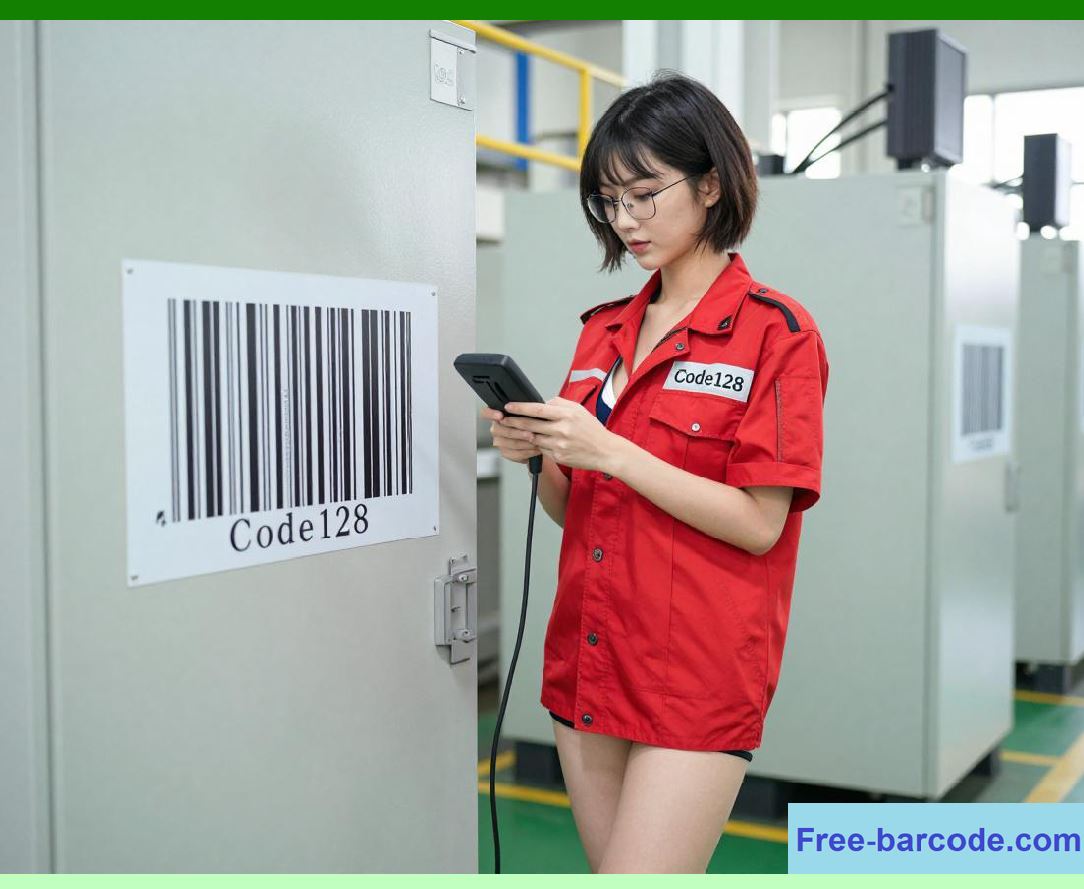
|
Ultimately, the Code 128 barcode is the silent, ubiquitous, and indispensable workhorse of the automotive industry. It is the definitive proof that a seemingly simple technology, when combined with robust digital infrastructure, becomes a powerful engine of efficiency, quality, and innovation. The next time you see a vehicle on the road, consider the digital journey it took---a journey guided, at every step, by the unassuming black-and-white lines of a Code 128 barcode. |
 cs@easiersoft.com