The Silent Language of the Warehouse: A Technical Deep Dive into Code 128 Barcodes and Their Integration with US E-commerce ERP Systems |
Executive Summary |
In the sprawling fulfillment centers that power American e-commerce, a quiet digital conversation is constantly taking place. This conversation is conducted through the humble barcode. Specifically, the Code 128 barcode symbology serves as the linguistic foundation for many of the most critical operations in modern retail. This article explores the technical nature of Code 128, explains why it has become the preferred standard for logistics, and details its deep integration with Enterprise Resource Planning (ERP) systems like Oracle NetSuite. By examining the 'pick-and-pack' process, we will see how a simple scan connects a physical item in a vast warehouse to a digital record, updating inventory, initiating shipping, and ultimately ensuring that an online order arrives at a customer's doorstep. This is not merely a story of technology, but a story of efficiency, accuracy, and the immense scale of the American e-commerce ecosystem. |
|
Chapter 1: The Ubiquitous Lines - What is a Barcode |
Before diving into the specifics of Code 128, it is helpful to consider the barcode in a broader context. The barcode, in its most basic form, is a machine-readable representation of data. By translating human-readable characters into a series of parallel lines of varying widths and spacings, a barcode allows for the rapid and error-free capture of information. In the 1970s, the adoption of the Universal Product Code (UPC) revolutionized grocery checkout, but that was just the beginning. |
In a warehouse setting, the barcode is the bridge between the physical world and the digital realm. Every item, every shelf, every shipping container, and every worker can be represented by a unique identifier encoded in a barcode. When a worker scans this code with a handheld device, they are effectively asking the system, 'What is this, and what do I do with it' The system responds instantly, displaying the answer on the worker's screen and logging the transaction. This process of data capture is the engine that drives efficiency in a modern fulfillment center. |

|
The Big Picture |
Think of a large e-commerce warehouse. It is a maze of towering shelves, containing millions of individual products. Without a system to locate and track these items, finding a specific product would be like finding a needle in a haystack. The barcode is the key to this system. Every location, or 'bin,' in the warehouse has a barcode label. Every product has a barcode on its packaging. This dual system of location and product identifiers creates a structured, searchable map of the entire facility. |
When a customer places an order, the Warehouse Management System (WMS) determines the most efficient route for a picker to gather the items. The picker is guided by their handheld scanner, which tells them exactly which bin to go to and what product to retrieve. They scan the bin's barcode to confirm they are in the right place and then scan the product's barcode to confirm they have picked the correct item. This 'scan, pick, confirm' workflow virtually eliminates the possibility of picking the wrong color, size, or style. |

|
Chapter 2: Why Code 128A Technical Overview of the Symbology |
While barcodes like the UPC are ubiquitous in retail, Code 128 has become the standard for logistical and industrial applications. Understanding why requires a look at its technical capabilities. |
What is Code 128 |
Code 128 is a high-density, alphanumeric barcode symbology. As the name suggests, it is capable of encoding the full 128-character ASCII set, including uppercase and lowercase letters, numbers, and a wide range of control characters and symbols. This ability to encode both letters and numbers is a key advantage over older symbologies that were limited to numeric data only. |
For a warehouse, this is critical. An item's Stock Keeping Unit (SKU) is rarely just a number; it often contains a mix of letters and numbers to denote product attributes like color, size, and style. A barcode symbology that can only encode numbers would be insufficient for this purpose. |

|
Key Advantages of Code 128 |
1. High Data Density: Code 128 is incredibly compact. It can encode a large amount of information in a relatively small space. This is vital for labeling small items or fitting a great deal of data onto a shipping label. For instance, a Code 128 barcode can contain a product's SKU, lot number, and expiration date within a small label, whereas a UPC code would only hold a product identifier. |
2. Full ASCII Support: As mentioned, Code 128 encodes all 128 characters of the ASCII set, enabling it to handle alphanumeric data. This is a primary reason it is chosen for internal logistics and inventory management, where complex product codes are the norm. |
3. Flexibility and Versatility: Its ability to store a wide range of information makes Code 128 suitable for a wide variety of industry applications, from retail and logistics to manufacturing and healthcare. It is the go-to code for packaging, shipping labels, and internal inventory management. |
4. Self-Checking and Error Prevention: Code 128 incorporates a check digit, a calculated character that allows the scanner to verify that it has read the code correctly. This drastically reduces the chance of misreads, ensuring that the data captured is the data intended. In the fast-paced environment of a fulfillment center, this accuracy is paramount. |

|
Code 128 in the Warehouse Context |
In the scenarios described in this article, Code 128 is used for a specific purpose: to encode unique identifiers for locations and orders. For example: |
Location Barcodes: Every bin, shelf, or pallet location in the warehouse will have a Code 128 label. Scanning this label tells the WMS exactly where the worker is. |
Order Pick Tickets: When an order is generated, the WMS may print a pick ticket with a Code 128 barcode. Scanning this barcode tells the WMS which order the worker is currently fulfilling, and the system then guides them through the pick list. |
These are internal, non-retail barcodes. Unlike a UPC, which is standardized and regulated by GS1 for point-of-sale use, warehouse location codes are typically generated internally by the company's ERP system, as any unique alphanumeric identifier can be encoded. This internal generation allows businesses to create a highly customized and flexible labeling system. |

|
Chapter 3: The Big Picture - ERP and WMS Integration |
A barcode is just a label until it is part of a larger system. Its true power is unlocked when it is integrated with a company's Enterprise Resource Planning (ERP) system and its associated Warehouse Management System (WMS). These systems are the digital brains of a modern e-commerce business. |
What is an ERP |
An ERP system is a centralized software platform that manages a company's core business processes. This includes everything from finance and accounting to human resources, customer relationship management (CRM), and supply chain operations. In the context of this discussion, Oracle NetSuite is a prime example of a cloud-based ERP system widely used by e-commerce businesses. NetSuite provides a single source of truth for the entire organization. |
What is a WMS |
A WMS is a specialized software application that manages the day-to-day operations of a warehouse. It controls and optimizes the movement of goods, from receiving inventory to shipping orders. The WMS guides workers through tasks, tracks inventory levels, and determines the most efficient storage and picking strategies. In a modern, integrated environment, the WMS is often a module or an add-on to the central ERP system. |

|
The Integrated Workflow |
The integration of Code 128 barcodes with an ERP/WMS system like NetSuite creates a seamless flow of information. Here is how it works: |
1. Receiving: When a truckload of inventory arrives at the warehouse, workers use handheld scanners to read the Code 128 barcodes on the incoming cartons or pallets. This scan tells the WMS what items have arrived and updates the ERP's inventory record in real-time. This triggers a 'putaway' task, guiding workers to store the items in specific bins. |
2. Order Processing: When a customer places an order on an e-commerce website, the order data flows directly into the ERP system. The ERP then communicates with the WMS, creating a 'pick wave' - a batch of orders to be fulfilled. |
3. Picking: Pickers are directed by the WMS to the appropriate bin locations. They scan the Code 128 label on the bin to verify their location and then scan the Code 128 or UPC barcode on the product to confirm the correct item is being picked. Each scan updates the WMS, which in turn updates the inventory record in NetSuite in real-time. This process is called 'guided picking' or 'scan-driven picking.' |
4. Packing: Once all items for an order are gathered, they are taken to a packing station. The packer scans the Code 128 barcode on the order pick ticket. The system verifies that all items have been picked and then generates a shipping label. This label often includes a Code 128 barcode that tracks the package through the carrier's network. |
5. Shipping: The final step is scanning the package as it is loaded onto the delivery truck. This 'ship' event updates the order status in the ERP system, triggers an email to the customer with tracking information, and finalizes the inventory reduction. |
This entire process, from order to delivery, is automated and tracked by the integration of these technologies. The Code 128 barcode is the critical link in this chain, translating a physical action (a scan) into a digital event (an inventory update). |

|
Chapter 4: Real-World US Examples - Code 128 in Action |
The seamless integration of Code 128, WMS, and ERP is not just theoretical. It is the backbone of e-commerce logistics for countless companies across the United States. The following examples illustrate how this technology is applied in real-world scenarios. |
Example 1: The 3PL Powerhouse - Cart.com |
To understand the scale of this technology, consider a company like Cart.com. This company is a technology-enabled commerce platform that provides a suite of services to brands, including fulfillment. They currently support over eight billion dollars in gross merchandise value and operate fourteen omnichannel facilities across the United States, totaling over 8.5 million square feet of space. |
For a third-party logistics (3PL) provider like Cart.com, efficiency and accuracy are everything. They are handling orders for numerous brands, each with its own product catalog, SKU structure, and packing requirements. The only way to manage this complexity is through a robust WMS that relies on barcode scanning. At their facilities, Code 128 barcodes are used to: |
Track Inventory: Every item stored in their facility is labeled with a barcode tied to the client's specific SKU. |
Manage Pick Waves: Orders from different brands are aggregated and processed in waves. Each order is assigned a unique barcode that the picker scans to begin the fulfillment process. |
Ensure Accuracy: The scanning process ensures that the right item, in the right quantity, is being picked for the right brand's customer. This pick-and-pack to a specific identifier is essential for their operations. |
|
Example 2: The National Chain - Whole Foods Market (and Amazon Integration) |
While Whole Foods is primarily a grocery chain, its integration with Amazon's technology and fulfillment operations provides a fascinating look at barcode-driven retail. At their flagship store in Austin, Texas, Whole Foods introduced Amazon Dash Carts. These are shopping carts equipped with cameras, sensors, and a touchscreen. As a shopper places an item in the cart, the cart's system identifies it (often using a barcode scan or computer vision) and adds it to a digital tally. The shopper can then simply walk out of the store, and payment is automatically processed. |
This same technology is used in Amazon's fulfillment centers. In a sense, the physical retail store is being treated like a very small, customer-driven warehouse. The cart is the WMS, and scanning or identifying the item is akin to a picker scanning it from a bin. While the article focuses on the 'future of grocery,' the underlying principle of real-time inventory tracking and barcode-driven transactions is identical to the e-commerce pick-and-pack process. |
|
Example 3: The Specialty Distributor - Sam Nutrition |
The need for barcode tracking is not limited to massive retailers. A case study from GIR Software Services details how they implemented a NetSuite Warehouse Solution for Sam Nutrition. Sam Nutrition is a health and wellness company that needed a better way to manage its inventory and fulfillment. |
The solution, built on NetSuite WMS, used handheld barcode scanners and 'multi-element GS1-128' barcodes to track products. A GS1-128 barcode is a variation of Code 128 that follows the GS1 standard, allowing it to encode additional data like lot numbers and expiration dates. This is critical in the nutrition and food industry for quality control and regulatory compliance. |
By implementing this system, Sam Nutrition was able to automate its pick, pack, and ship processes. Workers could scan items with a mobile device to update inventory in real-time, a process now common with modern mobile WMS apps that can even use built-in cameras for scanning. This integration with NetSuite ensured that their financial records and physical inventory were always in sync. |
|
Example 4: The Apparel Giant - VF Corporation |
VF Corporation is a massive apparel and footwear company that owns brands like Vans, The North Face, and Timberland. They are constantly looking for ways to improve their retail technology. In a 2024 report, VF Corp announced that they were deploying mobile inventory scanning. |
For a multi-brand giant like VF, managing inventory across thousands of retail stores and multiple distribution centers is a Herculean task. Mobile inventory scanning means that store associates or warehouse workers can use handheld devices to scan barcodes (likely Code 128 for internal stock-keeping or UPCs for retail items) to perform cycle counts, check inventory, and manage stock levels. This data is fed back into their central ERP system, giving them real-time visibility into their massive supply chain and enabling better decision-making. |

|
Example 5: The Restaurant Connection - Toast and Instacart |
The use of barcode technology is even extending into the restaurant industry. Toast, a major restaurant point-of-sale (POS) provider, partnered with Instacart to bridge the gap between digital marketplaces and physical storefronts. This partnership uses Toast's 'SmartScan' barcode technology to automatically sync a restaurant's in-store inventory with their online storefront on the Instacart Marketplace. |
This means that if a restaurant runs out of a particular ingredient or retail product, the barcode scan updates the system, and the item is immediately marked as 'out of stock' online. This prevents customers from ordering items that aren't available, a major point of frustration. Furthermore, the partnership allows restaurants to use Instacart Business for 'just-in-time' emergency supply deliveries, which could be as simple as a restaurant scanning an item to reorder it and having it delivered within hours. This is a prime example of how a barcode-driven system, likely using Code 128 or UPC, can power omnichannel efficiency and create new supply chain models. |

|
Example 6: The Specialized WMS Provider - RF-SMART |
Companies like RF-SMART provide the mobile inventory management and barcode scanning solutions that enable these complex operations. Based in Jacksonville, Florida, RF-SMART is a provider of WMS software and hardware that integrates directly with ERP systems, including Oracle NetSuite and Microsoft Dynamics. They offer the tools that bring the Code 128 barcode to life on the warehouse floor. Their solutions enable functionalities like: |
Mobile Warehouse Management: Turning handheld scanners and smartphones into powerful warehouse management tools. |
Real-Time Data Capture: Ensuring every scan is immediately fed back into the central ERP system. |
Integration with Leading ERPs: Providing a seamless connection between the physical act of scanning a barcode and the digital world of the ERP. |
Solutions like RF-SMART are the connective tissue between the worker on the floor and the complex digital infrastructure of the ERP. They make the technical deep dive tangible. |

|
Chapter 5: The Worker's View - Scanning Code 128 in the Warehouse |
To truly grasp the importance of Code 128, it is helpful to look at the process from the perspective of a warehouse worker. In a busy e-commerce fulfillment center, speed and accuracy are measured in seconds and fractions of a percent. |
The Daily Routine |
A picker starts their shift by logging into a handheld scanner, often a ruggedized mobile computer from a manufacturer like Zebra or Honeywell. The scanner uses a built-in laser or camera to read barcodes. The worker navigates to the 'picking' module on their device. The WMS assigns them a 'pick wave' - a batch of orders to be fulfilled. |
The scanner screen displays the first item to pick: 'Item: Red T-Shirt, Size: L. Location: Aisle 12, Bin 4.' The worker walks to Aisle 12, finds Bin 4, and scans the Code 128 label on the bin. The scanner beeps and the screen confirms, 'Location Verified.' The worker then finds the Red T-Shirt, removes it from the bin, and scans the product barcode (which could be a UPC or a Code 128). The scanner beeps again and displays, 'Item Verified. Quantity: 1. Place in Tote.' The worker places the item in the designated tote or cart and moves on to the next item on the pick list. |
This 'scan, confirm, pick' loop continues until the entire pick list is complete. If the worker ever scans the wrong item or tries to pick an item from the wrong location, the scanner will emit an error tone and display a warning. This real-time feedback prevents mistakes before they happen. |

|
The Psychology of the Scan |
This workflow is not just about technology; it is designed with human psychology in mind. By breaking down a complex task (fulfilling dozens of orders) into a series of simple, binary decisions (right/wrong, yes/no), the system reduces cognitive load. The worker doesn't need to memorize what a 'Red T-Shirt, Size L' looks like or where it is located. They just need to follow the scanner's instructions and confirm their actions with a scan. This leads to less mental fatigue, fewer errors, and significantly faster picking times, which directly translates to lower costs and faster shipping for the e-commerce company. |

|
Chapter 6: Beyond the Basics - The Future of Scanning |
While Code 128 is a cornerstone of current warehouse operations, the technology around it continues to evolve. The 'scan' is becoming more intelligent and integrated. |
Mobile-First WMS |
The trend toward 'mobile-first' warehouse management is undeniable. Modern WMS solutions are designed to be used primarily on mobile devices, not at a desktop terminal. This allows workers to operate from anywhere on the warehouse floor. The mobile-first approach is becoming more accessible, with solutions offering the ability to run on consumer-grade smartphones or dedicated handhelds, reducing the cost of entry for smaller businesses. |
Camera-Based Scanning |
While laser scanners are still common, many modern mobile WMS apps are taking advantage of the built-in cameras on smartphones and tablets to scan barcodes. This eliminates the need for a separate, expensive scanning device. The software can decode a Code 128 barcode just as effectively as a dedicated scanner. This lowers the barrier to entry for smaller businesses and allows companies to provide employees with multi-functional devices that can scan, communicate, and access a wider range of information. |
GS1-128 and Enhanced Data |
A significant evolution of Code 128 is the GS1-128 standard. This is not a different symbology, but rather a specific way of using Code 128 to encode data according to GS1 standards. It uses 'Application Identifiers' (AIs) to define the meaning of the data that follows. For example, an AI of '01' indicates that the following data is a Global Trade Item Number (GTIN), while an AI of '10' indicates a batch or lot number. This allows a single Code 128 barcode to carry a rich set of data about an item, such as its identity, expiration date, and serial number. This is a major advancement for traceability, especially in industries like food and pharmaceuticals. |

|
Chapter 7: A Final Summary - The Indispensable Code |
The Code 128 barcode is far more than just a series of black and white lines. It is a foundational technology that enables the modern American e-commerce economy. Without it, the massive, distributed, and incredibly fast-moving world of online retail would be impossible. |
The Key Takeaways |
The Bridge: Code 128 barcodes are the essential bridge between physical inventory in a vast warehouse and the digital records in an ERP system like NetSuite. Each scan is a transaction that updates the system in real-time. |
The Process: The 'scan, pick, confirm' workflow is the primary driver of efficiency. It reduces human error, speeds up task completion, and provides a clear audit trail. From the moment inventory is received to the moment it is shipped, the Code 128 barcode is the constant companion guiding the process. |
The System: The value of the barcode is unlocked by its integration with a WMS and ERP. This creates a single source of truth for inventory, enabling data-driven decisions that optimize the entire supply chain. |
US Examples in Action: Companies ranging from logistics titans like Cart.com to restaurant tech providers like Toast are utilizing this technology to streamline operations and improve customer satisfaction. Whether it is optimizing pick waves in a huge fulfillment center or syncing in-store inventory with an online marketplace, the Code 128 barcode is the common thread. |
The Future: The technology continues to evolve. Mobile-first solutions and camera-based scanning are making these systems more accessible. The adoption of GS1-128 is adding a new layer of data and traceability, ensuring that the humble Code 128 barcode will remain a critical tool in the e-commerce arsenal for years to come. |
|
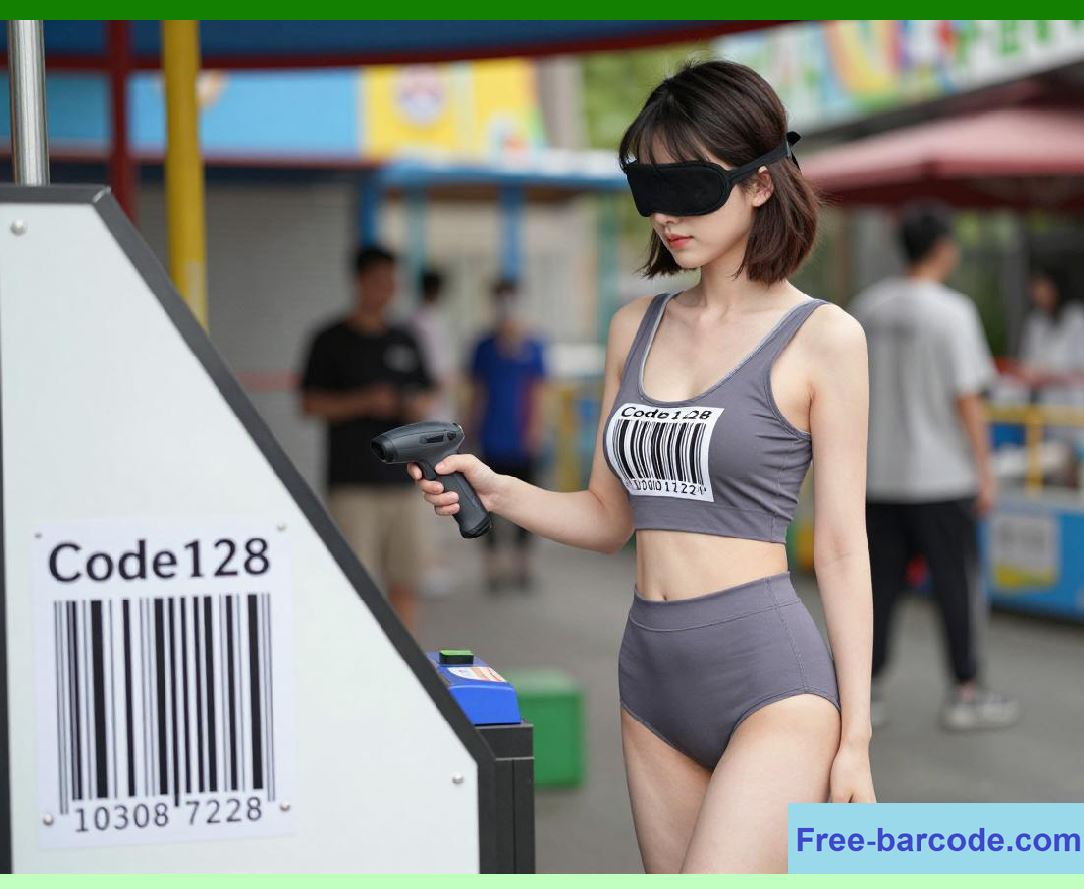
The next time you receive a package from an e-commerce site, remember the silent journey it took to get to you. The red shirt was scanned from a bin, its location logged by the system. The shipping label was generated after a final scan confirmed the order was complete. And all of this was made possible by the efficient and versatile Code 128. It is the unsung hero of the warehouse, a digital language that speaks in simple lines but conveys a world of information, keeping the complex machinery of American e-commerce running smoothly. |
 cs@easiersoft.com