The Digital Thread on the Factory Floor: Code 128 Barcodes, PCB Serialization, and Rework Tracking in American Electronics Manufacturing |
Executive Summary |
This chapter explores the critical role of Code 128 barcodes in the electronics manufacturing industry, focusing specifically on printed circuit board serialization and rework tracking within enterprise resource planning and manufacturing execution systems. We examine how a unique Code 128 barcode assigned to each PCB enables complete traceability throughout the product lifecycle. When a board enters a rework station, scanning this barcode allows the MES---such as Siemens Camstar (now Opcenter Execution Electronics)---to instantly retrieve the board's complete test history and automate the repair workflow. This integration is not merely a convenience but a regulatory and quality necessity in industries such as aerospace, medical devices, automotive, and defense. We will explore real-world applications across the United States, demonstrating how this technology drives efficiency, ensures compliance, and builds the foundation for smart manufacturing. |

|
1. Introduction: The Identity Crisis of a Circuit Board |
Imagine a high-performance printed circuit board (PCB) fresh off the assembly line. It is identical in appearance to a thousand others manufactured that same hour. Yet, in the world of modern electronics, this board possesses a unique digital identity that distinguishes it from every other board ever made. This identity is not a complex serial number etched into a corner in a font so small it requires a magnifying glass. Instead, it is often a compact, linear pattern of black and white bars known as a Code 128 barcode. |
In the United States, from the bustling electronics hubs of Silicon Valley to the defense manufacturing corridors of Texas and the aerospace clusters in the Pacific Northwest, this barcode is the key to unlocking a wealth of data. This simple mark is the linchpin in a vast digital ecosystem that connects the physical component to its digital twin. It is the thread that weaves through the manufacturing execution system (MES), the enterprise resource planning (ERP) system, and every critical test and rework station the board will encounter. |
The process is deceptively simple but profoundly powerful. At the moment a PCB is manufactured, it is given a unique identifier encoded as a Code 128 barcode. This is not just any barcode. Code 128 is a high-density linear barcode symbology that is the global trade identification standard . It is chosen for its ability to encode a large amount of data in a relatively small space---a critical requirement for modern PCBs, where real estate is at a premium. This unique code becomes the board's digital license plate. |
When a board arrives at a rework station---perhaps for a failed automated optical inspection (AOI) or an in-circuit test (ICT)---an operator scans this Code 128 barcode. In an instant, the MES system, such as Siemens' Camstar Electronics Suite, identifies the board and retrieves its complete digital history . This includes its manufacturing pedigree, every component used in its assembly, and, most critically, its complete test and inspection history. The operator is not starting from scratch; they are armed with the knowledge of exactly what failed and where, allowing them to execute the repair efficiently. Once the rework is complete, the process is logged against that same unique identifier, creating an unbroken chain of custody for that component. |
This chapter explores the technical underpinnings and the practical, real-world applications of this system. We will examine how it is implemented across the United States, looking at the regulatory frameworks that mandate it and the business benefits that drive it. From ensuring a critical avionics board meets Federal Aviation Administration (FAA) requirements to helping a medical device manufacturer comply with Food and Drug Administration (FDA) traceability mandates, the integration of Code 128 barcodes, PCBs, and ERP/MES systems is a cornerstone of modern American manufacturing. |

|
2. The Mechanics of Identification: Code 128 on the PCB |
2.1. Choosing Code 128: A Question of Density and Standardization |
Not all barcodes are created equal. In the early days of electronics manufacturing, a variety of symbologies were used, including Code 39, which is still common in some defense and automotive applications due to its simplicity and status as a U.S. Department of Defense standard . However, as boards became more complex and components smaller, the need for a more data-dense symbology became paramount. This is where Code 128 comes into play. |
Code 128 is a high-density linear barcode that can encode the full 128-character ASCII set. This is a significant advantage over older symbologies, which are often limited to numeric or a restricted set of alphanumeric characters . The ability to encode letters, numbers, and special characters in a compact space is vital for PCB serialization, which often requires complex alphanumeric strings. For example, a PCB serial number might need to encode the manufacturer's internal part number, a date code, a week of manufacture, and a unique sequential identifier, such as 'YYWWVVANN' (Year, Week, Manufacturer Code, Alphanumeric Sequence) as specified by some industry guidelines . Code 128 can handle this seamlessly. |
Furthermore, Code 128 is a global standard. It is supported by virtually all barcode scanners, printers, and software systems . This universality is crucial in a global supply chain where a board manufactured in California might be tested in Mexico and assembled into a final product in Texas. The choice of Code 128 ensures that the barcode can be read reliably at every point in the product's lifecycle. |

|
2.2. Application Methods: Etching the Digital Identity |
The physical process of marking a PCB with a Code 128 barcode is itself a specialized field. For a mark to be durable enough to survive the harsh manufacturing environment---which can involve high temperatures, solvents, and mechanical stress---it must be permanent. The two most common methods are: |
1. Laser Marking: This is the gold standard for PCB serialization. A laser marking system, often integrated with a software suite like BarTender, can print a high-contrast, permanent Code 128 barcode directly onto the board . Modern systems can mark a wide variety of PCB sizes with great precision. The laser etches the barcode into the solder mask or copper layer, creating a mark that is highly resistant to abrasion and chemical attack. This is the preferred method for high-reliability industries such as aerospace, defense, and medical devices where the mark must last for the life of the product. |
2. Labeling: In some applications, a durable barcode label is applied to the board. This is often done using specialized labels designed to withstand the thermal and chemical stresses of the manufacturing process. However, this method is less favored for high-reliability applications because labels can be damaged, fall off, or be deliberately removed. Labels are more common for boards in less harsh environments or for tracking at the panel or lot level during manufacturing . |

|
2.3. The Role of Design Tools |
The incorporation of a barcode is not an afterthought; it is part of the design process itself. Modern PCB design software, such as Altium Designer, allows engineers to place barcode symbols directly onto any layer of the PCB design . This is not just a visual placeholder. When the designer configures a text object as a Code 128 barcode, they define the data string that will be encoded. The software generates the correct bar and space pattern that will later be etched or printed onto the finished board. |
This integration of barcode generation into the PCB design process is a critical step in creating the digital thread. It ensures that the barcode's position, size, and readability are considered at the very beginning of the product lifecycle, avoiding costly rework or manufacturing delays later on. |

|
3. The Nervous System: MES, ERP, and the Digital Thread |
The barcode on the PCB is useless without a system to interpret it and make its data actionable. This is the role of the Manufacturing Execution System (MES) and the Enterprise Resource Planning (ERP) system. |
3.1. The MES as the 'Digital Twin' Conductor |
The MES is the central nervous system of the smart factory. It is the software that controls and monitors manufacturing operations in real-time. In the context of PCB serialization and rework, the MES is the database where the board's unique identity is stored and its entire history is recorded. |
A system like Siemens' Camstar Electronics Suite (now often referred to as Opcenter Execution Electronics) acts as this digital brain . It is built specifically for the electronics industry and provides the foundation for 'smart manufacturing' and 'Industry 4.0' strategies. The MES takes the physical barcode and transforms it from a simple mark into a portal to the board's 'digital twin.' This digital twin is a complete, virtual representation of the physical board. It contains every data point that has been collected about that board, from the moment it was a bare laminate to its final assembly and test. |
3.2. ERP Integration: The Business Backbone |
While the MES manages the factory floor, the ERP system manages the business. It handles sales, purchasing, inventory, and finances. The integration between the MES and the ERP is where the real magic happens. |
When a rework station scans a Code 128 barcode, the MES retrieves the board's test history. It might also query the ERP system for information about the bill of materials, the supplier of a specific component that failed, or the cost of the rework. This integration ensures that the entire enterprise operates from a single source of truth. |
This seamless flow of data is what Siemens calls the 'digital thread' . It connects product design (PLM), business planning (ERP), and shop floor execution (MES). This is not just a technological achievement; it is a competitive necessity. It allows a manufacturer in the United States to react to design modifications quickly, shorten product lifecycles, and improve quality across the entire manufacturing lifecycle . |
3.3. The Box-Build Challenge |
The power of this system is most apparent when considering the 'box-build'---the final assembly of the PCB into a finished product . A manufacturer that handles both PCB fabrication and final assembly (box-build) faces a unique challenge. The PCB process is highly automated, while the box-build process is often more manual and varied. A unified MES like Siemens' Opcenter Execution Electronics bridges this gap. A single scan of the PCB's Code 128 barcode can pull up its entire history and seamlessly connect it to the workflow instructions for the box-build, ensuring that the right board goes into the right product with the right software and configuration. |

|
4. United States Application Examples: Real-World Scenarios |
The implementation of Code 128 barcodes and MES systems is not a theoretical exercise. It is a practical reality in manufacturing facilities across the United States. The specific drivers and applications vary significantly by industry. |
4.1. Aerospace: The Imperative of Traceability |
In the aerospace industry, traceability is not just a best practice; it is a legal and regulatory requirement. The industry is governed by standards like AS9100 and MIL-STD, which mandate full traceability of parts and processes . |
Scenario: A manufacturer in Wichita, Kansas, produces avionics control boards for a commercial airliner. Each board is given a unique Code 128 barcode at the beginning of its life. This code is etched via laser to ensure it can withstand the vibrations and temperature fluctuations of flight. The board's digital record in the MES tracks every detail: the lot of solder paste used, the specific pick-and-place machine that mounted each component, the results of every AOI and X-ray inspection, and the individual technician who performed any manual soldering. |
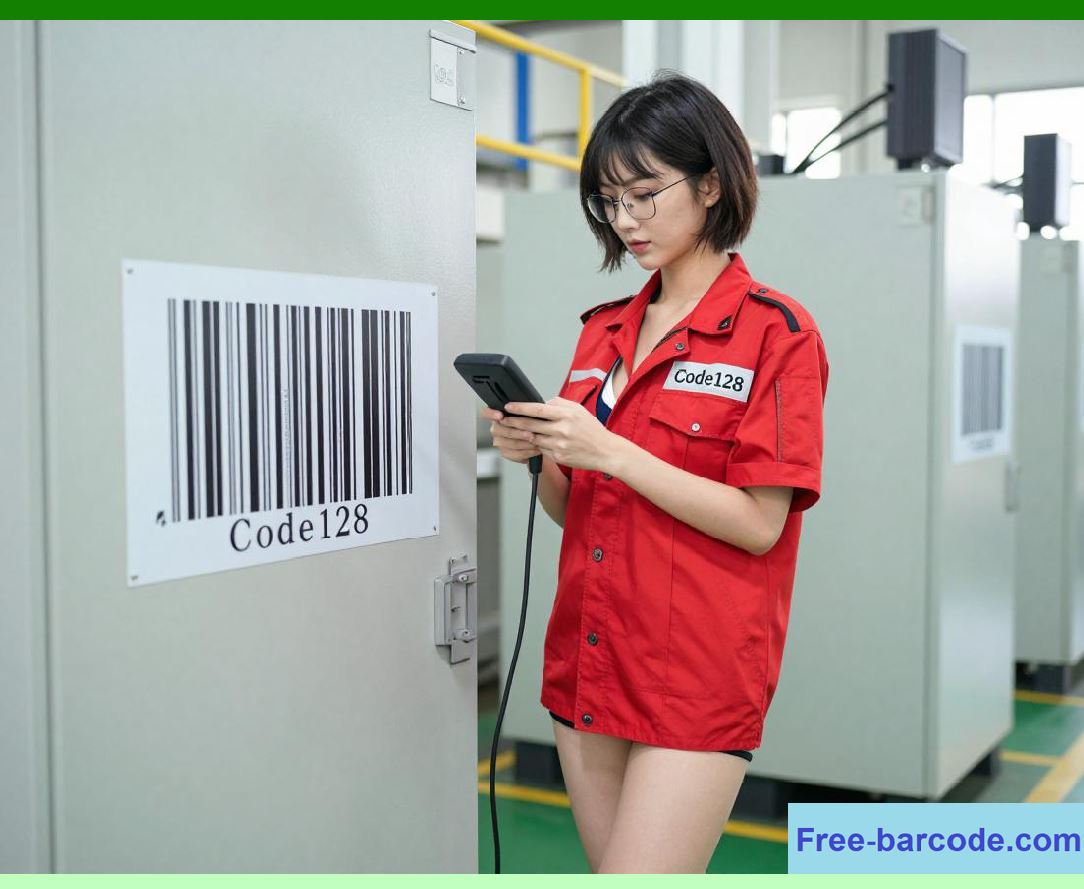
Rework Scenario: A board fails an in-circuit test. The operator at the rework station scans its Code 128 barcode. The MES immediately displays the test report, pinpointing a specific capacitor that is out of tolerance. The system also queries the ERP to check the inventory of replacement capacitors and guides the technician through the approved repair procedure. Once the capacitor is replaced, the technician scans the barcode again, and the system automatically queues the board for a retest. |
Regulatory Compliance: This complete, automated record-keeping is vital. If there is ever a suspected issue with a batch of capacitors from a supplier, the manufacturer can instantly query the MES and ERP to find every board containing that component and its serial number, allowing for a targeted and efficient recall or rework campaign. |
|
4.2. Medical Devices: FDA 21 CFR Part 820 and Patient Safety |
The medical device industry operates under the purview of the FDA, which mandates rigorous quality system regulations outlined in 21 CFR Part 820 . This regulation requires manufacturers to establish and maintain procedures for device history records (DHRs), which must contain complete and accurate documentation of the manufacturing process. |
Scenario: A company in Minnesota manufactures a critical component for an implantable cardiac device. The PCB inside the device is serialized with a Code 128 barcode. The entire assembly process is managed by a validated MES. |
Rework Scenario: During a final functional test, a board shows a slightly high current draw. The technician scans the barcode. The MES retrieves the board's entire manufacturing history, including the temperature profile from the reflow oven and the specific settings of the soldering robot. This level of detail allows the technician to trace the issue back to a specific solder joint. The rework process is performed using a pre-approved work instruction displayed on the operator's screen, and every action is logged against the board's record. |
Patient Safety: The value of this system goes far beyond efficiency. If a device is later found to be faulty in the field, the MES provides a clear record of how it was manufactured. The manufacturer can trace the problem back to a specific batch of materials or a process setting, allowing for a decisive corrective and preventive action (CAPA) and ensuring patient safety. |
|
4.3. Automotive: IATF 16949 and the Drive for Zero Defects |
The automotive industry, governed by the IATF 16949 standard, is characterized by high volumes and a relentless pursuit of zero defects . A recall for a faulty electronic control unit (ECU) can cost a manufacturer billions of dollars. |
Scenario: A supplier to a major American automaker in Detroit produces ECUs for a new electric vehicle. The PCB inside each ECU is serialized with a Code 128 barcode. The MES tracks the board through every stage of assembly, including surface-mount technology (SMT) and the final test. |
Rework Scenario: The SMT line's automated optical inspection (AOI) system detects a misaligned component. The board is automatically flagged for rework and routed to the rework station. When scanned, the system highlights the exact location of the defect and guides the operator through the rework. This closed-loop control is essential. The IPC-2547 standard provides the data structure for these rework events---detailing the original defect, the rework action (remove, replace, etc.), and the operator ID---and is designed to flow seamlessly into the MES . |
Data Analysis: At the end of the day, the plant manager runs a report in the MES to analyze first-pass yield and defect PPM (parts per million) . The data from every scanned board and rework station is used to identify trends. The manager can see that a particular component is failing on a specific assembly line, leading to a targeted maintenance or process adjustment to prevent future defects. |

|
4.4. Defense: MIL-STD and High-Reliability Electronics |
The defense industry relies on MIL-STD specifications, which often have stringent and specific serialization and lot-coding requirements . |
Scenario: A defense contractor in Virginia is manufacturing a guidance system for a munitions application. The contract requires a specific lot-date code structure, for example, one that indicates the year and week of manufacture and includes a manufacturer code (YYWWVV) as well as an alphanumeric serial number (ANNN) . The contractor must print a Code 128 barcode that encodes this entire string. |
Rework and Compliance: Given the critical nature of the application, the rework process is tightly controlled. When a board is scanned for rework, the MES must ensure that the technician has the proper security clearance and certification for the task. The system also automatically updates the board's record and generates the necessary reports for the government customer, providing proof of compliance with the complex and non-negotiable serialization requirements . |

|
5. The Rework Station: Automation and Guidance |
The rework station is where the value of the barcode and the power of the MES are most tangibly demonstrated to the operator on the shop floor. |
5.1. The Guided Repair Workflow |
Before the integration of MES and barcodes, the rework process was often a paper-based, manual, and error-prone affair. A technician might receive a box of boards with a 'FAIL' sticker and a paper note describing a vague defect. They would have to use their own judgment to find and fix the issue, often with little or no documentation of the repair. |
Today, a modern rework station in a U.S. factory is a model of automation and guidance. |
1. Scan: The technician receives a PCB flagged for repair and scans its Code 128 barcode. |
2. Identify and Retrieve: The MES instantly identifies the board and retrieves its complete digital history. |
3. Display: The system displays the board's test results and test history on a monitor. It might show a visual representation of the board (from the AOI image) with the defective component highlighted. |
4. Guide: The MES presents the technician with a pre-approved rework workflow. This workflow is a step-by-step guide that shows the exact procedure to follow, including what tools to use, what temperature to set the soldering iron to, and what components to replace. |
5. Execute and Log: The technician performs the repair. They might need to scan a barcode on the new component's reel to confirm that the correct part is being used. |
6. Complete and Retest: Once the repair is complete, the technician scans the board's barcode again, signaling the MES that the rework is done. The system then automatically creates a 'RetestRequired' event and routes the board back to the test station . The board's digital twin is updated with a full record of the rework, including a timestamp, the technician's ID, the original defect, and the action taken . |

|
5.2. Benefits of Automation |
This automated workflow provides tremendous benefits: |
Reduced Errors: It eliminates the guesswork and human error associated with paper-based systems. |
Consistent Quality: It ensures that all rework is performed according to the same exacting standards. |
Complete Traceability: It creates an immutable record of every action performed on the board, fulfilling regulatory and quality requirements. |
Faster Turnaround: It dramatically reduces the time it takes to diagnose and repair a board by providing the technician with all the necessary information instantly. |
Training and Knowledge: It acts as an on-the-job training tool, guiding less experienced technicians through complex repairs and capturing the expertise of senior staff in standardized workflows. |

|
6. The Future: Industry 4.0 and Emerging Standards |
The integration of Code 128 barcodes and MES is the foundation upon which the smart factory of the future is being built. |
6.1. IPC Standards: CFX vs. CAMX |
To achieve true interoperability in a connected factory, data must be standardized. The electronics industry relies on standards from the IPC (the Association Connecting Electronics Industries). For many years, IPC-2547 (also known as CAMX) was the standard for event messages used to connect inspection and test equipment to the MES. It provided a well-defined, XML-based structure for reporting on test results and rework events . |
However, the industry is now transitioning to a more modern standard: IPC-2591, known as Connected Factory Exchange (CFX). CFX uses JSON for data interchange and employs modern, scalable message brokering, making it more suitable for the high-speed, high-volume data demands of Industry 4.0 . |
A key challenge for U.S. manufacturers today is managing this transition. Many legacy machines still rely on IPC-2547, while new equipment supports CFX. This often requires the use of gateways to bridge the two protocols, ensuring a smooth flow of data from the barcode scanner at the rework station all the way to the enterprise-level ERP system. |

|
6.2. The Vision of a Seamless Digital Thread |
The ultimate goal is a seamless, end-to-end digital thread . This vision extends beyond the factory floor. It connects design engineers at their workstations to the manufacturing process. |
Design for Manufacturability (DFM): If a particular board design proves difficult to test or frequently requires rework at a specific point, the MES can feed this information back to the PLM system. The design engineer can then modify the design to eliminate the problem, creating a closed-loop feedback system that continuously improves the product. |
Predictive Rework: With enough data, a system might even be able to predict a likely failure point. An MES could analyze the test history of a specific board and predict that a certain component is likely to fail, prompting a preemptive rework before a more serious failure occurs. |
The Code 128 barcode, the humble black-and-white pattern, is the essential entry point for this data. It is the anchor of the digital thread, connecting the physical board to its digital twin and enabling a new era of efficiency, quality, and innovation in American manufacturing. |

|
7. Summary and Conclusion |
In the complex, high-stakes world of modern electronics manufacturing, a unique identity is as essential to a printed circuit board as its copper traces. The Code 128 barcode serves as this digital fingerprint, providing a robust, standardized, and high-density method for encoding a board's unique serial number onto its physical surface. |
This simple mark, however, unlocks a world of power and potential when integrated into a sophisticated Manufacturing Execution System (MES) and Enterprise Resource Planning (ERP) ecosystem. In the United States, this integration is a critical enabler of efficiency, quality, and regulatory compliance across the aerospace, medical device, automotive, and defense industries. |
Key takeaways from this chapter include: |
Code 128 is the symbology of choice for PCB serialization due to its high data density and support for the full ASCII character set, making it ideal for encoding complex serial numbers and lot codes. |
The MES acts as the 'digital twin' conductor, maintaining a complete, real-time history for each serialized board, from its initial component placement to its final test. |
Rework is transformed from an error-prone manual process into a guided, automated workflow. Scanning the Code 128 barcode instantly retrieves the board's test history and provides the technician with the precise repair instructions, ensuring consistency and compliance. |
This system is not optional for many American manufacturers. It is the primary mechanism for meeting stringent regulatory requirements from the FAA, FDA, IATF, and Department of Defense, which mandate complete traceability and detailed quality records. |
The integration of the MES with PLM and ERP systems creates a true digital thread, allowing for closed-loop feedback from the factory floor to the design department, driving continuous improvement. |
The industry is moving towards a more interconnected future, with standards like IPC-2591 CFX replacing older protocols like IPC-2547 (CAMX) to enable the high-speed, high-volume data exchange required for Industry 4.0 and the smart factory. |

|
In conclusion, the application of Code 128 barcodes for PCB serialization and rework tracking, when integrated with powerful MES systems like Siemens Camstar (Opcenter Execution Electronics), represents a cornerstone of modern manufacturing. It is a technology that balances the pragmatic needs of the factory floor---speed, accuracy, and ease of use---with the strategic imperative of creating a fully traceable, data-driven enterprise. As the United States continues to invest in domestic semiconductor and electronics manufacturing, this digital infrastructure will be the bedrock upon which a resilient, innovative, and competitive industry is built. |
 cs@easiersoft.com