Code 128 Barcodes: A Technical Deep Dive and Industry-Wide Integration with ERP Systems |
Chapter 34: Electronics - Component Reel Tracking for SMT Lines |
Summary Overview: This chapter examines the critical role of Code 128 barcodes in modern electronics manufacturing, specifically focusing on Surface Mount Technology (SMT) production lines. We explore how capacitors, resistors, and other passive components arrive on reels labeled with Code 128 symbology encoding batch numbers and quantities. These labels enable automated tracking through pick-and-place machines, which scan each reel and update enterprise systems like Oracle Agile PLM to track material consumption in real time. The chapter provides a technical examination of Code 128 capabilities, explains the SMT workflow, and presents multiple real-world application examples from American manufacturing facilities. |

|
Introduction: The Invisible Backbone of Modern Electronics |
Every smartphone, laptop, medical device, and automotive control module contains hundreds or thousands of tiny electronic components. These components---resistors, capacitors, inductors, and integrated circuits---are manufactured in massive quantities and delivered to electronics assembly facilities on reels, tubes, or trays. The humble resistor, often smaller than a grain of sand, must be tracked with absolute precision to ensure quality, traceability, and regulatory compliance. |
This tracking challenge is solved through a combination of barcode technology and enterprise software. Code 128, a high-density linear barcode symbology, has emerged as the industry standard for labeling component reels in electronics manufacturing. When a reel of capacitors arrives at a factory, its Code 128 label carries essential information that enables automated handling, consumption tracking, and inventory management. |
The journey of a single resistor from manufacturer to finished product involves numerous data transactions. Each scan updates databases, triggers reorder points, and maintains a digital thread that connects raw materials to finished goods. This chapter explores this ecosystem in depth, focusing on Surface Mount Technology (SMT) lines where these components are placed onto circuit boards by high-speed robotic machines. |

|
Understanding Code 128: Why This Barcode Matters |
Code 128 is a linear barcode symbology that encodes the full ASCII character set, including numbers, uppercase and lowercase letters, and special characters . This versatility makes it particularly valuable for electronics manufacturing, where part numbers often include alphanumeric combinations that other barcode types cannot represent. |
The symbology derives its name from its ability to encode all 128 characters of the American Standard Code for Information Interchange. Unlike older barcode standards that support only numeric data or limited character sets, Code 128 provides the flexibility needed for modern supply chain applications. Its compact design allows manufacturers to print labels containing substantial information in a small space---critical when labeling reels that may be only a few inches in diameter. |
Code 128 features automatic switching between character sets, which optimizes barcode length based on the data being encoded. This efficiency means manufacturers can encode more information without requiring larger labels. For component reels, the barcode typically includes the manufacturer's part number, batch or lot number, quantity, date code, and sometimes additional data such as RoHS compliance status or MSL (Moisture Sensitivity Level) rating. |

|
Surface Mount Technology: The Manufacturing Context |
Surface Mount Technology represents the dominant method for assembling electronic circuit boards today. Components are mounted directly onto the surface of printed circuit boards, eliminating the need for through-hole mounting that was common in earlier electronics manufacturing. |
SMT production lines operate at remarkable speeds. Modern pick-and-place machines can place over 100,000 components per hour. These machines use vacuum nozzles to pick components from reels, position them with micron-level accuracy, and place them onto boards where solder paste holds them in place before reflow soldering. |
The reels used in SMT lines are standardized across the industry. Components are packaged in tape-and-reel format, where individual components are seated in cavities on a carrier tape, covered with a clear top tape to hold them in place, and wound onto plastic reels. Each reel may contain anywhere from a few hundred to several thousand components, depending on component size and manufacturer specifications. |
Every reel bears a label containing critical information in both human-readable and barcode formats. This label must withstand warehouse storage conditions, survive the SMT manufacturing environment, and remain readable throughout the entire consumption process. |

|
The Technical Workflow: From Receiving to Placement |
The journey of an SMT component reel through an American electronics factory involves multiple scanning points, each feeding data into enterprise systems that track inventory, consumption, and quality. |
Receiving and Inspection: When reels arrive at the factory, warehouse personnel scan the Code 128 label using handheld barcode readers. This initial scan creates a receiving record in the Enterprise Resource Planning (ERP) system, typically integrated with the factory's Oracle Agile PLM or similar product lifecycle management software. The scan updates inventory levels, records the batch number for traceability, and verifies that the correct components have arrived. |
The receiving process often includes quality inspection. Operators verify that the barcode data matches the physical labels on the reel, check for damage to the packaging, and confirm that the components meet required specifications. Any discrepancies trigger quality holds and investigation before the material is released to production inventory. |
Warehouse Storage: After receiving, reels move to designated storage locations in the factory warehouse. Many modern facilities use warehouse management systems that assign bin locations based on component type, lot number, and expiration date. When operators scan the Code 128 label and the bin location barcode, the system creates a link between the physical location and the electronic inventory record. |
Component reels are often stored in automated storage and retrieval systems that manage inventory with minimal human intervention. These systems rely on barcode scanning to track each reel's movement and ensure that materials are accessible when needed for production. |
Production Kitting: When production schedules are released, the warehouse management system generates picking lists for the reels needed by each SMT line. Operators scan the Code 128 labels when retrieving reels from storage, which updates the inventory status to 'in production' and creates a record that prevents the same material from being used on multiple production orders simultaneously. |
Kitting may involve grouping multiple reels onto a cart or pallet for delivery to the SMT line. Each scan creates a digital record that connects the material to the specific production order, enabling precise consumption tracking. |
|
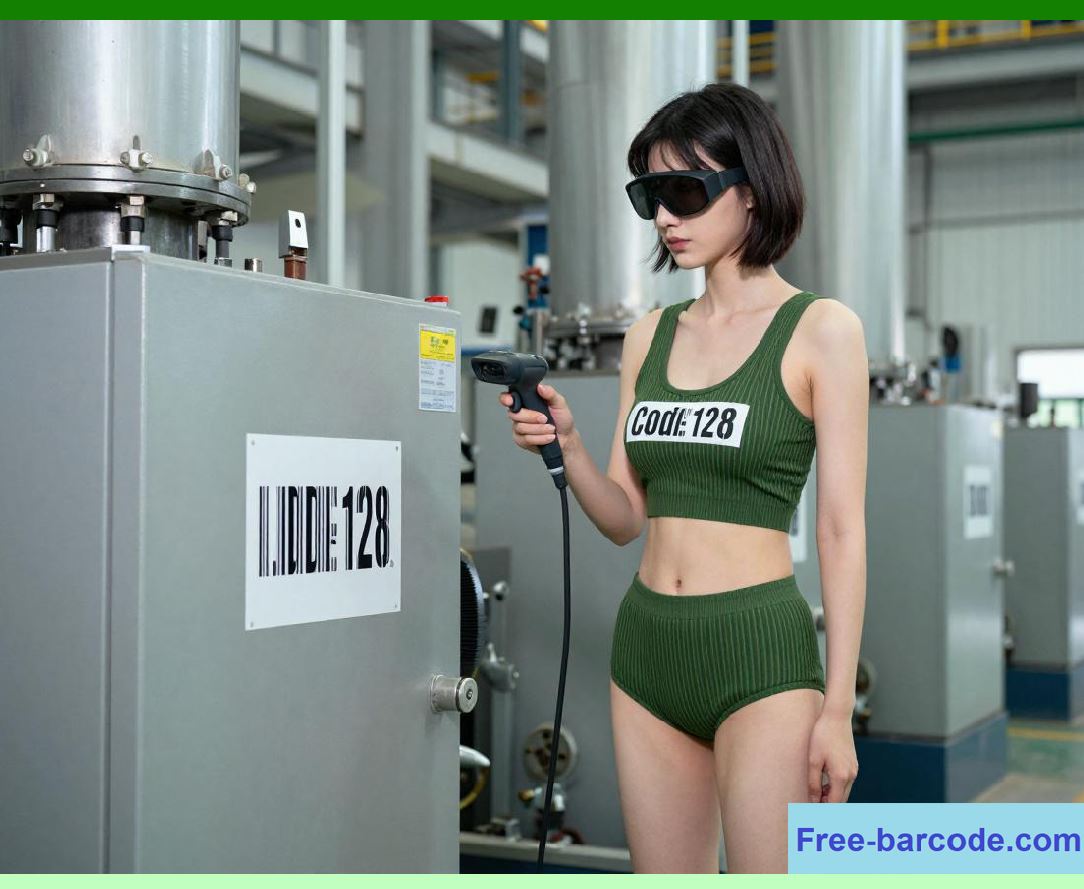
SMT Line Setup: At the SMT machine, operators load reels into the pick-and-place machine's feeders. Each feeder holds a reel and advances the tape forward as components are removed. Before the machine begins production, operators scan the Code 128 label on each reel. This scan serves multiple purposes: |
First, it verifies that the correct component type is loaded into each feeder position. The SMT machine must place components according to the bill of materials, and using the wrong component could cause expensive defects or product failures. |
Second, the scan records the batch number and lot code, which is essential for traceability. If downstream testing or field failures reveal issues with a particular manufacturing batch, the factory can identify which production orders used that material. |
Third, the scan updates the enterprise systems to reserve the component inventory for the specific production order, reducing the risk of material shortages or misallocations. |

|
Machine Operation and Consumption Tracking: During production, the pick-and-place machine counts components as they are consumed from each reel. This counting can be accomplished through various methods: the machine may count individual components as they are picked, or it may track how many components have been removed by counting the number of increments the feeder has advanced. |
The machine's controller periodically updates the enterprise systems with current consumption data. This information is typically transmitted through a Manufacturing Execution System (MES) that bridges the gap between shop floor machines and the higher-level ERP or PLM systems. For each production order, the system maintains a record of which components were used, when they were consumed, and which batch numbers were involved. |
This data flow ensures that inventory levels remain accurate even as thousands of components are consumed every minute. The system automatically decrements inventory counts, and when a reel is emptied, the SMT machine may generate an alert for operators to load a new reel. |
Reel Return and Disposal: When a production run is complete, any partially consumed reels are returned to the warehouse. The Code 128 label is scanned again to update inventory levels with the remaining quantity. This step is crucial for maintaining accurate inventory counts because reels are rarely consumed completely during a single production run. |
Empty reels may be either returned to the component manufacturer for reuse or disposed of according to environmental regulations. The enterprise system maintains a record of the entire lifecycle, from receiving through final consumption or disposal. |

|
Integration with Oracle Agile PLM |
Oracle Agile PLM is a comprehensive product lifecycle management solution widely used in electronics manufacturing to manage product data, engineering changes, and supply chain collaboration. Integration between SMT production systems and Agile PLM enables the digital thread that connects component traceability to finished product records. |
When a pick-and-place machine scans a reel's Code 128 label and transmits consumption data, the information flows through the MES to the PLM system. This integration updates multiple aspects of the product record in real time. |
Material Consumption Recording: The primary function of this integration is to record which components were used in manufacturing each product. This creates a complete bill of materials record that can be referenced throughout the product's lifecycle. If a product later requires warranty service or is identified as having potential quality issues, the PLM system can identify exactly which components were used in that specific unit. |
Inventory Reconciliation: The PLM system receives inventory updates in real time, maintaining accuracy across multiple storage locations. This visibility helps planners forecast material needs, avoid production stoppages due to stockouts, and optimize inventory carrying costs. |
Lot Traceability: Integration ensures that each finished product is linked to the specific batches of components used in its assembly. This capability is critical for both quality management and regulatory compliance. In industries such as automotive or medical electronics, traceability is often mandated by standards and regulations. |
Quality Monitoring: The PLM system can analyze consumption data to identify trends in material usage. For example, if a particular batch of components appears to be consumed at a higher-than-normal rate, it may indicate higher defect rates requiring investigation. |
The integration between SMT equipment and PLM systems has matured significantly in recent years. Modern solutions offer standardized interfaces such as RESTful APIs, direct database connections, or web services that simplify connectivity . Some systems can be integrated in as little as three business days when using well-designed integration frameworks. |

|
Real-World Applications: American Manufacturing Examples |
The principles described above are implemented in factories across the United States. Here we examine several specific examples of American manufacturers using Code 128 barcode tracking with ERP and PLM integration for SMT component management. |
Texas Instruments - Dallas, Texas: The semiconductor manufacturer's assembly and test facility in Dallas processes components for use in their own SMT lines as well as shipping to customers. The facility uses Code 128 labels on every reel of components, whether they are TI-manufactured parts or materials received from external suppliers. |
The Dallas facility integrates its SMT machines directly with Oracle Agile PLM through an MES layer. When reels are loaded onto pick-and-place machines, the initial scan triggers a validation against the PLM system's bill of materials for the current production order. This validation prevents incorrect component usage and maintains an audit trail for each production lot. |
Operators carry handheld scanners running custom applications that communicate with both the MES and the PLM system. The applications guide operators through material handling workflows, ensuring that all required scans are performed at the right stages of production. The system also includes quality checkpoints where operators scan reels and confirm that components meet the required specifications for the production order. |
Jabil Circuit - St. Petersburg, Florida: Jabil is a global contract manufacturer with significant operations in the United States. The St. Petersburg facility specializes in high-mix, low-volume production for medical device and aerospace customers, where traceability requirements are exceptionally stringent. |
The facility uses Code 128 labels on all incoming component reels and has implemented a comprehensive traceability system that integrates with the Oracle Agile PLM platform. When components arrive, the receiving team scans each reel and creates a detailed digital record in the PLM system, including the manufacturer's lot code, date of manufacture, and any quality certifications. |

|
The SMT line integration captures consumption data for each production order. This data is used to generate detailed as-built records that are retained for the life of each product. The facility has implemented automated error-proofing that prevents the SMT machine from operating if a reel's Code 128 label indicates that components are expired, have been subject to temperature or humidity excursions, or otherwise fail to meet the quality standards for the production order. |
Flex - Austin, Texas: The Austin facility of Flex (formerly Flextronics) operates multiple high-speed SMT lines producing electronics for networking and communications equipment. The facility has implemented a sophisticated material management system using Code 128 barcodes as the primary identification method for all component reels. |
The system uses a combination of fixed mount scanners at SMT machine feeders and handheld scanners for material handling operations. When operators load reels onto the SMT machines, fixed scanners automatically read the Code 128 label as the reel is installed. The system verifies the component type and lot number against the production order before allowing machine operation. |

|
The Austin facility integrates its production systems with Oracle Agile PLM through a Web Services interface. Consumption data is transmitted in real time, ensuring that inventory records are accurate for planning purposes. The integration also supports material visibility across Flex's global operations, enabling the company to locate components anywhere in their supply chain when needed for urgent production requirements. |
Benchmark Electronics - Huntsville, Alabama: Benchmark Electronics operates a highly automated facility in Huntsville serving defense and aerospace customers. The traceability requirements for these applications are among the most demanding in the electronics industry. |
The facility uses Code 128 labels with extended data fields that include not only batch number and quantity but also specific government-contract identifiers and quality certification references. These labels are scanned at every stage of the production process, creating a comprehensive chain of custody for every component. |
The Huntsville facility's integration with Oracle Agile PLM extends beyond simple consumption tracking. The PLM system maintains complete records of when components were received, when they were moved to storage, when they were allocated to production orders, and which machines used them. This detailed tracking ensures that the facility can provide complete traceability to their government customers, supporting both quality audits and potential product recalls. |
Sanmina - San Jose, California: Sanmina's Silicon Valley facility specializes in prototype and new product introduction services where flexibility is essential. The Code 128 tracking system must accommodate frequent changes in components and production processes. |
The facility uses a mobile-based scanning solution that integrates directly with Oracle Agile PLM. Operators use handheld devices with integrated barcode readers to scan reels at each stage of handling. The system supports both the standard SMT workflow and the more complex requirements of prototype production, where reels may be split into smaller quantities for engineering builds or qualification testing. |
The San Jose facility has implemented advanced error-proofing based on the PLM integration. When operators scan a reel's Code 128 label, the system checks the component specifications against the production order and warns if there are mismatches. This validation extends to moisture sensitivity levels, with the system tracking exposure times and preventing use of components that have been exposed to ambient conditions for too long. |

|
Challenges and Solutions in Code 128 Implementation |
While Code 128 provides a robust foundation for component tracking, electronics manufacturers face several challenges in implementation. The following sections examine these challenges and describe how American facilities have addressed them. |
Label Quality and Durability: Component reels often travel through multiple environments, from humidity-controlled warehouses to the harsh conditions of SMT production lines. Labels must remain readable despite exposure to dust, temperature variations, and handling. Some facilities have implemented label quality verification procedures that test sample labels during the receiving process, ensuring that barcodes meet minimum contrast and symbol quality standards . |
Scanner Reliability: The SMT environment presents challenges for barcode scanners, including varying lighting conditions, label orientation issues, and the need for rapid scanning. American facilities typically use industrial-grade scanners designed for factory automation, with features that support high-speed scanning and omnidirectional reading . Vision systems with AI-based recognition algorithms can achieve recognition rates above 99 percent, even when labels are damaged or partially obscured . |
System Integration Complexity: Connecting SMT machines to ERP and PLM systems requires careful planning and implementation. The challenge lies in the diversity of systems involved: SMT machines from different manufacturers, MES software from various vendors, and ERP or PLM platforms like Oracle Agile all must communicate seamlessly. |
American manufacturers have addressed this challenge through several strategies. Some use standardized integration frameworks provided by their MES vendors, which include pre-built connectors for common ERP and PLM systems. Others develop custom integration middleware that translates between proprietary machine protocols and the enterprise systems . The trend is toward standards-based interfaces such as REST APIs, which simplify connectivity and reduce the time required for integration. |
Data Volume and Real-Time Processing: High-speed SMT lines consume components at rates that can overwhelm simple data processing systems. A single SMT line may place 100,000 components per hour, and a factory may operate dozens of lines simultaneously. The data from each component must be captured and processed without slowing down the manufacturing process. |
American facilities address this challenge through distributed data processing architectures. The SMT machine controllers perform initial data validation and aggregation locally, sending summary information to the enterprise systems rather than transmitting individual component data. This approach reduces network bandwidth requirements and ensures that the PLM system can handle the data volume from multiple production lines. |
Supply Chain Collaboration: Many American electronics manufacturers source components from global suppliers, and they must track materials through multiple tiers of the supply chain. Component manufacturers often label reels with their own barcode formats, which may not be directly compatible with the factory's systems. |
To address this challenge, many American facilities have implemented material registration processes that create a unique digital identity for each incoming reel . This process scans the supplier's barcode and generates a new Code 128 label in the factory's own format, binding the supplier's information to the facility's internal tracking system. This approach maintains traceability while ensuring compatibility with the factory's scanning equipment and enterprise software. |

|
The Value of Real-Time Data Integration |
The integration of Code 128 barcode scanning with ERP and PLM systems creates value through several mechanisms, each contributing to improved manufacturing efficiency and quality. |
Inventory Accuracy: Real-time consumption tracking maintains accurate inventory records, enabling just-in-time material planning and reducing the risk of production stoppages due to stockouts. Manufacturers can optimize inventory levels, reducing carrying costs while maintaining enough safety stock to cover demand fluctuations. |
Traceability and Recall Management: When quality issues arise, the integration enables rapid identification of affected products. If a component supplier reports a defect in a particular batch, manufacturers can query their systems to find all products containing components from that batch. This capability reduces the scope of recalls and protects brand reputation. Walmart, for example, has implemented serial number tracking for high-value electronics to manage recalls and protect against unauthorized returns . |
Quality Improvement: Analyzing consumption data can reveal patterns indicating quality issues. If a particular batch shows higher consumption rates than expected, it may indicate higher defect rates requiring investigation. The PLM system can correlate component batch data with test results from finished products, identifying potential issues before they affect customers. |
Regulatory Compliance: Industries such as medical devices and automotive electronics require comprehensive traceability records to meet regulatory requirements. The integration ensures that these records are maintained automatically, reducing the administrative burden of compliance and improving audit readiness. |

|
Future Directions: Beyond Code 128 |
While Code 128 remains the dominant barcode symbology for component reel tracking, the electronics industry is exploring enhanced identification methods that could supplement or replace traditional barcodes. |
Two-Dimensional Codes: QR codes and Data Matrix codes offer higher data density than linear barcodes, enabling the encoding of more information in a smaller space . These codes can also include error correction that allows reading even when the code is partially damaged. Some component manufacturers are already using Data Matrix codes on smaller components where space for a linear barcode is limited. |
Radio Frequency Identification: RFID tags offer the advantage of reading without line-of-sight, enabling automated inventory counting and component tracking without manual scanning . The technology has been adopted in some high-value applications, though the higher cost of RFID tags compared to printed labels limits broader adoption for commodity components. Companies like Checkpoint Systems have developed end-to-end RFID solutions for supply chain visibility . |
Blockchain Integration: Some manufacturers are exploring blockchain technology for securing traceability records . By storing component provenance information on a blockchain, manufacturers create an immutable record that can be verified by customers, regulators, or other stakeholders. While still in early stages, this approach could enhance trust in traceability claims and simplify compliance verification. |
Artificial Intelligence: AI technologies are being applied to improve barcode reading reliability and automate error detection. AI-based vision systems can recognize barcodes in challenging conditions, including labels that are partially damaged, oriented at difficult angles, or subject to poor lighting. These systems can also detect anomalies in component usage patterns, alerting operators to potential issues before they affect production. |

|
A Detailed Summary |
Code 128 barcodes serve as a critical enabler of efficient, traceable electronics manufacturing in the United States. The symbology's compact design and full ASCII character support make it ideal for labeling component reels in SMT production lines, where resistors, capacitors, and other components must be tracked with absolute precision. |
The SMT workflow integrates Code 128 scanning at multiple stages: receiving, storage, kitting, production setup, consumption tracking, and return processing. Each scan updates enterprise systems with data about component location, lot number, and quantity, creating a digital thread that connects raw materials to finished products. This integration supports inventory accuracy, traceability, quality monitoring, and regulatory compliance. |
American manufacturing facilities have implemented these capabilities in diverse settings, from semiconductor assembly plants to contract manufacturers serving medical, aerospace, and communications customers. These facilities use industrial-grade scanners, integration middleware, and enterprise systems such as Oracle Agile PLM to maintain real-time visibility into component consumption and inventory levels. |
The value of this integration extends beyond the factory floor. Accurate inventory records support efficient material planning, reducing carrying costs and preventing production stoppages. Traceability enables rapid response to quality issues, protecting brand reputation and supporting regulatory compliance. The data captured through barcode scanning also supports continuous improvement through analysis of consumption patterns and defect trends. |
While Code 128 remains the industry standard, the electronics industry is exploring enhanced identification methods including two-dimensional codes, RFID, and blockchain-based traceability. These technologies promise to build on the foundation established by Code 128, providing even greater data capacity, reading reliability, and tamper resistance. |
|
For electronics manufacturers, the integration of Code 128 barcode scanning with ERP and PLM systems represents more than a technical convenience. It is a strategic capability that enables the precision, efficiency, and quality demanded by modern electronics production. As component densities increase, package sizes shrink, and quality requirements become more stringent, the role of automated tracking and traceability will only grow in importance. |
 cs@easiersoft.com