Chapter 35: Chemical Industry - Hazardous Material Handling | Short Summary of This Chapter | This chapter explains how Code 128 barcodes help the chemical industry manage dangerous substances safely and efficiently. We focus on the United States, where chemical plants, transport companies, and emergency responders use these barcodes every day. Code 128 encodes United Nations (UN) numbers and emergency response codes. When a worker scans a barcode on a drum, tank, or shipping paper, the system immediately connects to enterprise software like SAP Environment, Health, and Safety (EHS). That connection triggers the automatic retrieval of safety data sheets (SDS). This simple scan replaces hours of manual paperwork and reduces human error. We will walk through real American examples, from a Texas refinery to a New Jersey distribution center, from a California hazmat team to a Midwest rail yard. By the end, you will see how a humble barcode becomes a life-saving tool in the chemical supply chain. | 
| Introduction: The Stakes in Chemical Handling | The chemical industry moves billions of tons of materials each year. In the United States alone, over 80,000 chemicals are commercially used, and many are flammable, toxic, corrosive, or reactive. The Occupational Safety and Health Administration (OSHA) enforces the Hazard Communication Standard, which requires that every hazardous chemical be accompanied by a safety data sheet. The Department of Transportation (DOT) mandates proper labeling and documentation for all shipments. The Environmental Protection Agency (EPA) tracks releases and spills. These regulations are not mere paperwork; they save lives. | However, the real world is fast-paced. A forklift operator at a warehouse may move fifty drums per hour. A truck driver may pick up mixed loads from three different suppliers. A firefighter arriving at a chemical spill needs instant knowledge of what is burning. In all these scenarios, reading tiny print on a faded label is impractical. Typing long alphanumeric codes into a computer is error-prone. This is where Code 128 barcodes shine. They hold a lot of information in a compact space, they are robust against printing imperfections, and they can be scanned from a distance with handheld readers or even smartphones. | Code 128 is a high-density linear barcode. It can encode all 128 ASCII characters, which means it can handle numbers, letters, and special symbols. For the chemical industry, the most important data elements are the UN number (a four-digit code assigned by the United Nations to identify hazardous substances, e.g., UN1203 for gasoline) and emergency response codes such as the NFPA 704 diamond ratings or the ERG (Emergency Response Guidebook) initial action codes. By embedding these into a single barcode, we create a portable, machine-readable passport for every hazardous package. | 
| But the barcode is only the first step. The real power comes when the barcode is integrated with an enterprise resource planning (ERP) system, specifically SAP EHS. SAP EHS is a module that manages compliance, occupational health, industrial hygiene, and product safety. When a barcode scanner reads a Code 128 label, the system decodes the UN number and looks up the corresponding safety data sheet in a central repository. Within seconds, the worker sees the full SDS on a screen or handheld device. That document includes physical properties, health hazards, first aid measures, firefighting instructions, accidental release measures, and personal protective equipment (PPE) recommendations. This integration turns a simple scan into a comprehensive safety action. | In this chapter, we will explore six detailed American use cases. Each case highlights a different segment of the chemical value chain: manufacturing, warehousing, transportation, emergency response, retail distribution, and waste disposal. We will also discuss technical considerations such as barcode placement, label durability, scanner selection, and data synchronization. Finally, we will summarize the benefits and challenges, offering a forward-looking perspective on how barcodes and ERP systems will evolve with artificial intelligence and the Internet of Things. | 
| Use Case 1: Gulf Coast Refinery - Inbound Raw Material Receiving | Our first example takes place at a large petrochemical refinery in Texas, near the Houston Ship Channel. This facility processes crude oil into gasoline, diesel, jet fuel, and chemical feedstocks like ethylene and propylene. Every day, dozens of tanker trucks and railcars arrive carrying additives, catalysts, and solvents. One common additive is tetraethyl lead, although its use has declined, but the refinery still receives tert-butyl mercaptan, which is used as an odorant for natural gas. This substance is highly flammable and has a strong, unpleasant smell. Its UN number is UN2347. | When a tanker truck arrives at the gate, the driver presents a shipping manifest. The manifest has a Code 128 barcode that includes the UN2347, the emergency response guide number (ERG 130), and a local product code. The security guard scans the barcode with a ruggedized handheld terminal. That scan sends a query to the SAP EHS system hosted on the refinery's private cloud. The system immediately returns a safety data sheet and a pre-approved unloading checklist. The guard verifies that the truck's placard matches the UN number. If there is a mismatch, an alarm sounds and the truck is directed to a quarantine bay. | Once inside the unloading bay, the operator scans the same barcode again. This time, the SAP EHS system not only shows the SDS but also automatically updates the inventory module. The system calculates the exact quantity based on the truck's bill of lading and the tank's pre-calibrated level sensor. The operator wears a flame-resistant suit and uses a fixed mount scanner at the loading rack. The scan also triggers a workflow: the system sends an instruction to the distributed control system (DCS) to open the correct valve and set the flow rate. All these actions happen in under two seconds. | 
| Why is Code 128 chosen over other barcodesThe refinery previously used Code 39, but Code 39 is less dense and cannot encode lowercase letters or special characters easily. The chemical product codes often include hyphens and slashes. Code 128 handles these without trouble. Moreover, Code 128 has a built-in checksum character that reduces misreads. In a noisy industrial environment with vibrations and steam, that extra reliability is critical. The refinery also prints labels with a thermal transfer printer using resin ribbons, so the barcode resists fading from sunlight and chemical splashes. | The integration with SAP EHS goes beyond document retrieval. The system logs every scan with a timestamp, user ID, and GPS location (from the handheld unit). This creates an audit trail that satisfies OSHA and EPA recordkeeping requirements. In one documented incident, a mislabeled truck carrying UN1993 (flammable liquids, n.o.s.) was scanned and the system flagged that the expected material was actually UN1203 (gasoline). The operator stopped the unloading process and called the quality control lab. A sample test confirmed the discrepancy. The truck was sent back to the supplier. Without the barcode and integration, the operator might have pumped gasoline into a tank designated for a different additive, causing a costly and dangerous contamination. | This refinery processes about 100 inbound shipments per day. Before the barcode system, clerks manually entered UN numbers into a terminal, averaging three minutes per truck. Now, scanning takes ten seconds. That saves roughly 48 minutes per day, but more importantly, it eliminates transcription errors. Over a year, the refinery has reported zero unloading accidents attributable to data entry mistakes. The system also automatically sends an electronic copy of the SDS to the fire brigade and the on-site medical clinic every time a new chemical arrives, so first responders are always prepared. | 
| Use Case 2: New Jersey Chemical Distribution Center - Picking and Packing | Our second case is a chemical distributor in New Jersey, near the Port of Newark. This company receives bulk chemicals from overseas and repackages them into smaller containers for local customers. They handle everything from cleaning solvents to pesticide intermediates. The warehouse is massive, with over 15,000 pallet positions. Each pallet contains drums, pails, or bag-in-box units. Every container must have a proper hazard label and a barcode. | The distributor uses a voice-directed picking system combined with barcode scanning. Pickers wear a headset and a ring scanner. The warehouse management system (WMS) sends voice commands: 'Pick two drums of UN1263 (paint) from aisle 7, bay 12.' The picker walks to the bay, scans the location barcode (also Code 128) to confirm the spot, then scans the barcode on the drum. If the UN number matches the order, the WMS confirms the pick. If not, the system emits an error beep and the picker cannot proceed. | The critical integration here is with SAP EHS for customer-specific safety documentation. Different customers have different requirements. A school district buying solvents for art classes needs a simple SDS in English. A pharmaceutical plant buying the same solvent needs a more detailed SDS with impurity profiles and occupational exposure limits. The barcode on each drum encodes the UN number and a batch number. When scanned during packing, the system retrieves the SDS that matches the customer's profile. The system then prints a customized shipping label that includes a Code 128 barcode with the UN number, the customer purchase order number, and a unique shipment ID. That shipment ID links to the SDS in the cloud. | One notable example involved a shipment of UN2811 (toxic solids, organic, n.o.s.) to a research laboratory in Pennsylvania. The material was a specialty catalyst that is also a skin sensitizer. The distributor's picker scanned the drum and the system flagged that this specific batch had a slightly different composition due to a manufacturing change. The SDS was updated accordingly. The system generated a new barcode for the outer box that included a special handling code: 'Wear nitrile gloves and use local exhaust ventilation.' The customer received the shipment, scanned the outer barcode at their receiving dock, and their own SAP system retrieved the updated SDS. This closed-loop communication ensured that the end user had the most current safety information, even though the product name remained the same. | 
| The distributor also uses barcodes for expiration date management. Many chemicals degrade over time or form peroxides. The Code 128 label includes the manufacturing date and the retest date in a coded format. When a picker scans a drum, the system calculates the remaining shelf life. If the drum is within 30 days of expiration, the system suggests using it first (first-expiry-first-out). If expired, the system blocks the pick and routes the drum to a hazardous waste area. This feature alone has reduced waste disposal costs by 15 percent because fewer drums go past their usable life. | From a technical standpoint, the distributor prints labels on demand using a Zebra printer with a 300 dpi resolution. The Code 128 barcode is about 2 inches wide and 0.75 inches high. They use the Code 128 subset B because it covers uppercase, lowercase, and punctuation. The barcode includes a leading application identifier (AI) according to the GS1 standard. For instance, AI 01 is for global trade item number, AI 10 is for batch number, and AI 30 is for quantity. However, for UN numbers, they use a custom AI 'UN' followed by the four-digit code. This ensures that any scanning system, whether SAP EHS or a generic mobile app, can parse the data correctly. | The distributor handles about 2,000 order lines per day. With the barcode and SAP integration, their picking accuracy is 99.97 percent. Before the system, accuracy was around 95 percent, which meant 100 mispicks per day. Each mispick could lead to a customer complaint, a return shipment, or even a safety incident. Now, the system automatically emails a copy of the relevant SDS to the customer's designated safety officer upon shipment. This proactive measure has earned the distributor preferred supplier status with several major chemical buyers. | 
| Use Case 3: Midwest Rail Yard - Intermodal Transport of Hazardous Materials | Our third case takes us to a rail classification yard in Illinois, a major hub for freight trains carrying tank cars of anhydrous ammonia, chlorine, and flammable liquids. Anhydrous ammonia (UN1005) is a vital fertilizer but also a toxic gas. Chlorine (UN1017) is used for water treatment but is a deadly respiratory hazard. These materials travel thousands of miles from production plants to agricultural regions. During transit, trains may be reclassified, meaning cars are uncoupled and reassembled into new consists. This is a high-risk operation because tank cars can be damaged during shunting. | The railroad company has implemented a system called 'Hazmat Track and Trace.' Every tank car has a metal tag or a high-strength adhesive label with a Code 128 barcode. The barcode encodes the UN number, the car owner's reporting mark, the car number, and an emergency contact phone number. The label is coated with a clear laminate to withstand rain, snow, and UV radiation. The yard crews use handheld scanners that communicate via 5G cellular to the central SAP EHS system. When a crew member scans a car upon arrival, the system immediately displays the SDS and the ERG initial response actions. | One critical feature is the integration with the train's consist list. The yard master has a tablet that shows the entire train makeup. Each car's barcode is scanned as it rolls past a trackside scanner at 5 miles per hour. The scanner is a fixed-mount laser array that reads the Code 128 label even if the car is dusty. The system compares the scanned UN number with the waybill transmitted electronically by the shipper. If there is a mismatch, the system generates a high-priority alert. In one real incident, a tank car labeled as UN1203 (gasoline) was actually carrying UN1267 (petroleum crude oil). The waybill said gasoline, but the barcode revealed crude oil. The difference is crucial because crude oil has different boiling point and vapor pressure, affecting how to respond to a leak. The railroad stopped the train and verified the contents with a dip test. The shipper had mislabeled the car. Thanks to the barcode, the error was caught before the car reached a populated area. | 
| The system also supports emergency response drills. The local fire department participates in annual exercises at the rail yard. During these drills, firefighters scan dummy barcodes on training cars. The SAP EHS system, configured in a training mode, returns simulated SDS and evacuation distances. The firefighters practice setting up decontamination zones and calling the emergency response telephone numbers. The barcode system gives them confidence because in a real emergency, they can simply scan and know the exact hazards, rather than flipping through a bulky guidebook. | Another innovative application is the 'virtual fence.' The yard has geofenced areas where certain UN numbers are not allowed to park. For example, organic peroxides (UN3101) must be kept away from strong oxidizers (UN1479) due to fire risk. When a crew scans a car with a UN number that is incompatible with nearby cars, the SAP EHS system checks its stored compatibility matrix and sends a warning to the yard master's mobile device. The warning includes a suggested new parking track. This is not a theoretical feature; the railroad has documented several cases where the system prevented incompatible parking, avoiding potential exothermic reactions. | The rail yard processes over 1,000 hazardous cars daily. The Code 128 barcode has replaced older radio-frequency identification (RFID) tags because RFID readers were expensive and sometimes failed in the presence of metal tank cars. Code 128 is passive and can be read with inexpensive imagers. The railroad estimates that the barcode system costs one-tenth of an RFID infrastructure for the same read rate. Moreover, the Code 128 label can be printed on-site, whereas RFID tags required special ordering and encoding. This flexibility is invaluable when a car's label gets torn off and needs a replacement within minutes. | 
| Use Case 4: California Hazmat Response Team - Emergency Scene Management | Our fourth case is a county hazardous materials response team in Southern California. This team is called to incidents ranging from overturned tanker trucks on freeways to lab spills in biotech parks. Their job is to identify the substances involved, assess the risk, and implement containment and mitigation measures. Time is of the essence; every minute of delay can allow a toxic cloud to spread or a fire to intensify. | The team has equipped each response vehicle with handheld barcode scanners and tablet computers running a mobile version of SAP EHS. The tablets have a local cache of safety data sheets for the most common UN numbers, but they can also pull updated documents from the cloud via cellular or satellite links. When a first responder arrives at the scene, they look for any shipping documents, placards, or container labels. Often, the driver or witness can point to a barcode on the bill of lading or on the side of the damaged container. The responder scans the Code 128 barcode. The tablet decodes the UN number and displays a concise one-page 'quick reference' - the ERG guide page, the physical state (gas, liquid, solid), the flammability range, the recommended PPE, and the evacuation distance in feet. | One memorable incident involved a tanker truck carrying UN1830 (sulfuric acid) that jackknifed on a busy interstate. The driver was injured and could not speak. The truck's placard showed 'Corrosive 8' but did not specify the concentration. The responders found a damaged shipping label with a partially readable Code 128 barcode. Using a high-performance imager with decodulation algorithms, they managed to read the barcode despite a tear. The system returned the exact UN number and the concentration (93 percent sulfuric acid). The SDS indicated that this concentration is highly reactive with water and generates intense heat. The team decided not to apply water spray for vapor suppression, which would have been standard for many spills. Instead, they used dry chemical foam and built a berm to contain the acid. The correct decision was made within 90 seconds of the scan. The responders later reported that without the barcode, they would have followed the default ERG guidance, which might have recommended water fog, potentially causing a violent acid boil-over. | 
| The team also uses barcodes for post-incident reporting. After the emergency is controlled, they scan all container barcodes again to record the exact list of materials involved. This data is uploaded to SAP EHS, which automatically generates a regulatory report for the California Department of Toxic Substances Control. The report includes the UN numbers, approximate quantities, and the response actions taken. This automation saves the team about two hours of paperwork per incident, allowing them to return to service faster. | Another valuable feature is the integration with local hospital emergency departments. When the team scans a barcode and identifies a toxic substance, the SAP EHS system can push a summary of medical treatment guidelines to the nearest trauma center. For example, for UN1052 (hydrogen fluoride), the SDS provides specific instructions for calcium gluconate gel application and calcium infusion. The hospital receives this information before the patient arrives, improving the quality of care. This end-to-end data flow - from barcode to EMS to hospital - is a model for public-private cooperation in chemical safety. | The team has also trained their members to scan barcodes on stationary storage tanks at fixed facilities. During routine inspections of chemical plants, they scan the tank labels to verify that the facility's SDS inventory is up to date. If the scanned UN number does not match the plant's declared inventory, the team opens an investigation. This proactive scanning has uncovered several unreported chemical storage violations, leading to fines and corrective actions. The barcode thus serves not only as a response tool but also as a compliance enforcement aid. | 
| Use Case 5: Retail Home Improvement Store - Consumer Chemical Sales | Our fifth example may surprise you. It is a large home improvement retail chain with stores across the United States, selling paints, pesticides, pool chemicals, and propane cylinders. While these are consumer quantities, they still pose hazards. A 5-gallon pail of mineral spirits (UN1268) can fuel a garage fire. A box of pool shock (calcium hypochlorite, UN1748) can release toxic chlorine gas if mixed with acid. The retailer has a responsibility to inform customers and store associates about these risks. | The chain implemented a Code 128 barcode on every chemical product's shelf label and on the product packaging itself. The barcode encodes the UN number, the product SKU, and a flag indicating whether the product requires a 'restricted sale' due to age or local ordinance. When a cashier scans the barcode at the point of sale, the system checks the SAP EHS database. If the product is classified as hazardous, the system prompts the cashier to ask the customer: 'Do you need a safety data sheet' If the customer says yes, the system prints a short SDS summary on the receipt, or it sends a text message with a link to the full document. The retailer also offers a store app where customers can scan the barcode with their smartphone camera to view the SDS instantly. | One important safety feature is the 'incompatibility alert.' If a customer buys multiple chemical products, the point-of-sale system checks the UN numbers against a compatibility table. For instance, if a customer buys a chlorine-based pool shock (UN1748) and a muriatic acid (hydrochloric acid, UN1789) in the same transaction, the system displays a warning on the cashier screen: 'These products can react dangerously if mixed. Advise customer to store separately.' The cashier is trained to verbally reinforce this message. The retailer has tracked this feature and found that it reduced the number of in-home chemical mixing incidents reported to their customer service line by 40 percent over two years. | 
| Another use case is inventory management for flammable aerosols. Many spray paints and lubricants contain propane/butane propellants, classified as UN1950 (aerosols, flammable). These products have a shelf life and a maximum storage temperature. The store's backroom has temperature sensors. When a delivery arrives, the receiver scans the barcode on each case. The SAP EHS system logs the date and automatically calculates the remaining shelf life. If a case remains unsold beyond a certain threshold, the system generates a markdown alert. If the case is near its expiration, the system blocks it from sale and routes it to a hazardous waste disposal vendor. This prevents customers from buying unstable aerosol cans that could rupture. | The retailer also uses barcodes for employee training. New associates in the paint and chemicals department are required to scan at least 50 product barcodes during their onboarding. Each scan brings up a pop-up quiz on the SDS - for example, 'What is the first aid measure for skin contact' The associate must answer correctly before moving to the next product. This gamified training has improved test scores by 25 percent compared to traditional classroom sessions. The store manager can track progress via SAP EHS reporting dashboards. | From a technical standpoint, the retail environment requires fast scan times and compatibility with many different scanner types - laser, linear imager, and 2D area imagers. Code 128 is universally supported. The retailer prints labels with a high-contrast black-on-white thermal transfer, but they also accept supplier-printed barcodes as long as they meet minimum quality standards (ANSI grade C or higher). They have a dedicated quality control team that randomly audits barcode readability using a verifier. If a batch of labels fails, the supplier is required to re-label at their cost. This rigorous approach ensures that scanning works even under the bright fluorescent lights of a big-box store. | 
| Use Case 6: Ohio Hazardous Waste Treatment Facility - Disposal and Recycling | Our final case is a hazardous waste treatment, storage, and disposal facility (TSDF) in Ohio. This facility receives waste from industrial generators, laboratories, and cleanup sites. The incoming waste ranges from spent solvents and heavy metal sludges to outdated pesticides and reactive chemicals. The facility must classify each waste stream, assign a proper DOT shipping name, and determine the appropriate treatment method: incineration, neutralization, stabilization, or landfilling. | Every container arriving at the facility must have a Code 128 barcode that contains the UN number, the generator's EPA ID, the waste profile number, and the date of generation. The facility's receiving staff scan the barcode upon entry. The SAP EHS system pulls up the full waste profile, which includes detailed analytical data - pH, flash point, heavy metal concentration, and halogen content. This profile is uploaded by the generator beforehand via a secure web portal. The scan validates that the physical container matches the electronic manifest. If the UN number is absent or mismatched, the container is rejected and held in a quarantine area until the generator provides correct documentation. | One significant integration is with the facility's treatment process control system. For example, they receive many drums of UN1993 (flammable liquids). The barcode scan tells the system the specific flash point and boiling point. The system then assigns the drum to a specific blending tank for fuel blending. If the flash point is below 73 Fahrenheit, the drum is routed to a refrigerated storage area; if above, to ambient storage. This automated routing reduces the need for manual decisions and minimizes the risk of placing a low-flash liquid near a heat source. | Another example involves UN3291 (clinical waste, unspecified). The facility treats this waste by autoclaving and then shredding. The barcode on each box includes the generator's contact and the type of pathogen present (if known). The SAP EHS system ensures that autoclave time and temperature are adjusted accordingly - for example, 121 degrees Celsius for 30 minutes for standard biohazards, but 134 degrees for prion-related waste. The scanning system logs the autoclave cycle parameters and links them to the specific barcode, creating a complete treatment record. This record is essential for regulatory inspections. The Ohio EPA has commended the facility for its impeccable tracking, which is directly attributable to the barcode-ERP integration. | 
| The facility also uses barcodes for shipping treated residues. After incineration, the ash may contain heavy metals and must be disposed of in a secure landfill. The ash drums are labeled with a new Code 128 barcode that references the original waste barcodes and the treatment date. When the ash drums are loaded onto trucks, the driver scans each one, and the system generates a new hazardous waste manifest for the landfill. This chain-of-custody is completely electronic, reducing the paperwork burden and eliminating lost documents. | In one notable cost-saving case, the facility received a shipment of UN1815 (acid chlorides) that were misidentified as UN1719 (caustic alkali liquids). The barcode on the container was for UN1719, but the generator's electronic profile indicated UN1815. The receiving scanner read the barcode and the system flagged the inconsistency. The staff performed a litmus test and confirmed the acid chloride. If they had treated it as alkali, they would have mixed it with a neutralizing agent that could have caused a violent exothermic reaction. Instead, they routed it to a dedicated acid treatment line. The facility estimates that this single detection saved over 100,000 dollars in potential equipment damage and downtime. | The facility processes about 500 drums per day. Before the barcode system, their error rate in waste classification was about 3 percent. That may sound small, but 15 drums per day going to the wrong treatment process could lead to regulatory fines, environmental releases, or worker injuries. After implementing Code 128 with SAP EHS, the error rate dropped to 0.1 percent. The facility also reduced its recordkeeping staff from four full-time employees to one, as most documentation is now generated automatically. The remaining staff focus on quality assurance and continuous improvement. | 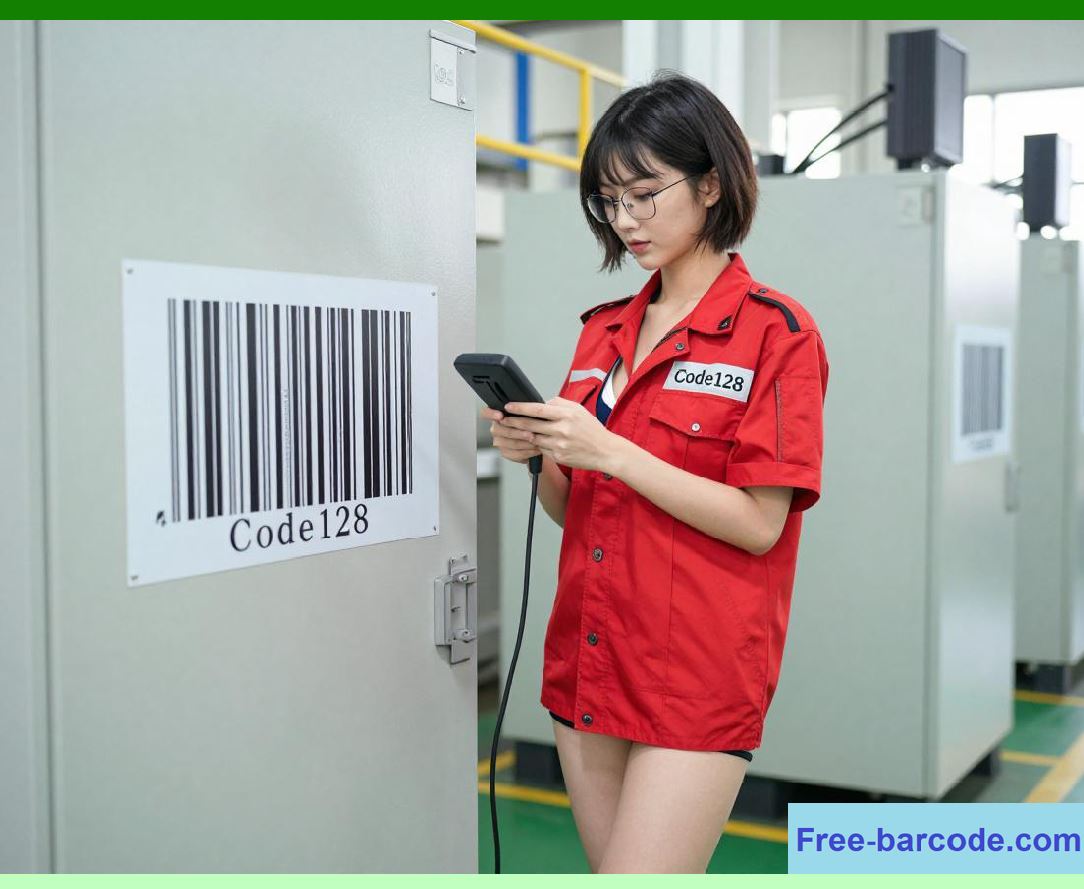
| Technical Considerations Across All Use Cases | Across these six cases, several common technical themes emerge. First, label durability is non-negotiable. Chemical environments are harsh - spills, abrasion, temperature extremes, and UV exposure. Most successful implementations use thermal transfer printing with polyester or polyimide labels and a protective laminate. The barcode itself should be printed with a high-contrast ratio (black bars on white background) and a quiet zone (blank margin) of at least 10 times the narrow bar width. The recommended minimum x-dimension (narrow bar width) is 7.5 mils (0.19 mm) for general use, but 10 mils is safer for outdoor applications. | Second, scanner selection matters. Linear laser scanners are cheap and fast but require precise aiming. Area imagers (2D cameras) are more forgiving; they can read a Code 128 barcode at an angle, from a distance, or even when partially damaged. Many U.S. chemical firms now use imagers with integrated near-field communication (NFC) and Bluetooth, allowing data to be sent wirelessly to SAP EHS without cabled connections. Some advanced scanners also have onboard memory, so if the network is down, they store the scanned data and upload it later when connectivity restores. | Third, data formatting is crucial. While Code 128 can encode raw text, most organizations follow GS1-128 standards or a custom convention. The UN number is typically prefixed with a two-character code, e.g., 'UN' followed by the four digits. Emergency response codes, such as the ERG guide number (a three-digit number from 111 to 173), can be encoded as 'ERG' plus the number. To avoid ambiguity, many systems use a delimiter like a tilde or a comma between fields. However, delimiter-free fixed-length formats are faster to parse. For example, a 20-character string: first 4 chars are UN, next 3 chars are ERG, next 8 chars are batch, last 5 chars are quantity. The SAP EHS system is configured to interpret this fixed format. The choice between variable-length and fixed-length depends on the flexibility required; variable length is more adaptable but requires a parser that recognizes delimiters. | Fourth, integration architecture. The typical setup involves a middleware layer - often SAP's Process Integration (PI) or a cloud-based integration platform like SAP Integration Suite. When a scanner sends a barcode string, the middleware validates the checksum (Code 128 has a mandatory modulo 103 checksum) and then calls a series of APIs. The first API queries the product master for the UN number to retrieve the SDS. The second API logs the scan event in the audit trail. The third API may update inventory, generate a picklist, or send a notification. All these calls are orchestrated in a transaction to ensure atomicity - either everything succeeds or everything rolls back. This reliability is essential for safety-critical operations. | 
| Fifth, mobile and offline capabilities. Not every location has stable internet. Rail yards, remote warehouses, and rural distribution centers may experience network outages. Therefore, many U.S. chemical companies deploy edge servers that cache the most frequently accessed SDS and compatibility rules. The SAP EHS system synchronizes with these edge servers daily or on-demand. When a scan occurs, the local device first checks the edge cache; if the data is not there, it attempts to reach the central system. This hybrid approach ensures that a scan never fails due to a network timeout. The edge server also logs all scans and uploads them when connectivity returns. | Sixth, barcode verification and quality control. The American National Standards Institute (ANSI) has a grading system for barcode print quality, from A (excellent) to F (fail). Most chemical companies require a minimum grade of C for incoming labels. They use handheld verifiers that measure bar width deviations, contrast, and modulation. If a supplier consistently delivers D-grade labels, the company may reject the shipment. This quality focus is not pedantic; a poor barcode can be misread, leading to a false UN number, which is a critical safety failure. Many companies also conduct regular re-verification of labels on stored drums, because labels can degrade over time. They reprint and replace any label that falls below grade C. | Seventh, training and human factors. A barcode system is only as good as the people using it. U.S. chemical firms invest heavily in operator training. They teach workers not only how to scan but also how to interpret the system's responses - for example, what does a red screen meanThey also stress that scanning is not a substitute for visual inspection; a worker should still check for leaks, bulging drums, or damaged packaging. The barcode is an aid, not a replacement for situational awareness. Many facilities post quick-reference cards near scanners that show the most common UN numbers and their associated hazards, as a backup if the system is down. | 
| Challenges and Mitigations | Despite the many benefits, integration of Code 128 with SAP EHS is not without challenges. We will discuss the most common ones and their practical solutions in the U.S. context. | Challenge 1: Legacy systems and data migration. Many chemical plants have decades-old inventory systems that do not recognize UN numbers or SDS identifiers. Migrating to SAP EHS requires cleaning up product master data - sometimes tens of thousands of items. This is a labor-intensive process. Mitigation: Companies often run parallel systems for six months, using barcodes to cross-check between old and new databases. They also hire data cleansing specialists who verify each product against official UN lists. Some use robotic process automation to match existing SKUs with UN numbers from vendor-provided SDS databases. | Challenge 2: Multiple barcode standards on the same packaging. A drum might have a Code 128 label from the manufacturer, a Code 39 label from the distributor, and a QR code from the customer. This confuses scanners and operators. Mitigation: The company adopts a 'single source of truth' policy - they apply their own Code 128 label over any existing labels, using a highly adhesive cover to obscure the old barcodes. They also program scanners to prioritize the Code 128 symbology; if multiple barcodes are in the field, the scanner is configured to read only Code 128. | Challenge 3: Environmental damage to labels. In outdoor storage yards, labels can be bleached by sunlight, soaked by rain, or corroded by chemical fumes. Mitigation: Use of synthetic label materials (polyester, vinyl) and resin-based thermal transfer ribbons. Some companies also apply a clear over-laminate with UV inhibitors. Additionally, they place labels on protected areas, such as the recessed rim of a drum, not on the curved side where they are more prone to abrasion. For rail cars, they use embossed metal plates with laser-etched Code 128 symbols, which are virtually indestructible. | 
| Challenge 4: Network latency and downtime. When a scan triggers an SDS lookup, a slow network can cause a delay of several seconds, frustrating workers. Mitigation: As mentioned, edge caching and local databases. Moreover, many handheld scanners now have a 'last used' cache - they store the most recent 100 SDS summaries locally. For routine materials, the scan response is instantaneous. For rare materials, the system may take a few seconds, but the worker is trained to wait. | Challenge 5: Cost of implementation. Deploying scanners, printers, labels, middleware, and SAP EHS modules can cost millions of dollars for a large enterprise. Small and medium chemical firms may balk at this. Mitigation: Software-as-a-service (SaaS) solutions now offer SAP EHS functionality on a subscription basis. Barcode scanners are also becoming cheaper - some mobile computers cost under 500 dollars. Many companies start with a pilot in one warehouse and expand gradually, funding the expansion through documented operational savings. | Challenge 6: Data privacy and cybersecurity. Barcodes contain sensitive information - UN numbers, batch numbers, and sometimes customer details. If a barcode is photographed and shared, it could reveal trade secrets or aid malicious actors. Mitigation: Companies treat barcode data as confidential. They use encrypted communication between scanners and the ERP system. They also restrict scan access to authorized employees via biometric login on handheld devices. The barcode itself is not encrypted (it is plain text), but the system access is controlled. For extremely sensitive materials, they use a two-step verification: scan the barcode plus enter a PIN. | Challenge 7: International interoperability. U.S. chemical companies often export and import. Other countries may use different UN number formats or different emergency codes. Mitigation: The SAP EHS system maintains a master translation table that maps UN numbers to various national classifications (e.g., European ADR, Canadian TDG). When a barcode is scanned, the system displays the appropriate information for the user's locale and regulatory context. For shipments crossing borders, the system prints additional labels with local language SDS references. | 
| Future Directions and Innovations | The integration of Code 128 with SAP EHS is not static. Several emerging trends in the United States promise to enhance chemical safety further. | First, the use of 2D barcodes like Data Matrix and QR codes is increasing because they can hold more data - including the full SDS URL or even a compressed version of the SDS itself. However, Code 128 remains dominant for linear scanning due to its simplicity and compatibility with older equipment. Many new labels now combine Code 128 (for backward compatibility) with a 2D code (for future proofing). Some facilities use a hybrid label: the primary Code 128 for fast scanning at a distance, and a QR code for smartphones to read detailed instructions. | Second, the Internet of Things (IoT) is merging with barcodes. Sensors on containers can measure temperature, pressure, and shock. When a barcode is scanned, the system automatically queries the sensor history for that container. For example, if a drum of UN1090 (acetone) has experienced high temperatures during transit, the system warns the operator that vapor pressure may be elevated. This dynamic data, combined with the static UN number, gives a more complete risk picture. | Third, artificial intelligence (AI) is being used to predict incidents. By analyzing historical scan data - which UN numbers were scanned, where, and at what times - AI models can forecast potential congestion points or high-risk time windows. For instance, a model might predict that Tuesdays between 2 and 4 PM have the highest density of flammable liquid transfers at a loading dock. The system then proactively schedules additional safety walkthroughs during those windows. | Fourth, augmented reality (AR) is starting to appear in training and response. A responder wearing AR glasses scans a barcode; the glasses overlay the SDS information directly on the container, showing hazard zones and valve locations. While still expensive, AR headsets are becoming more affordable, and several U.S. fire departments are piloting them. | Fifth, blockchain is being explored for immutable audit trails. Every scan event can be recorded on a private blockchain, creating a tamper-proof history of who handled which chemical and when. This could satisfy regulatory requirements with absolute certainty. However, the high transaction throughput of chemical plants (thousands of scans per day) currently makes blockchain impractical, but pilot projects are underway in the pharmaceutical sector that may translate to chemicals. | Sixth, voice integration is advancing. Instead of a worker looking at a screen, the SAP EHS system speaks the key hazards aloud after a scan - 'Warning: Flammable liquid. Keep away from ignition sources. Wear anti-static footwear.' This hands-free, eyes-free mode is particularly useful for drivers and crane operators. Early adoption in U.S. warehouses shows high user satisfaction. | Seventh, predictive maintenance of barcode printers and scanners. The system monitors the health of printing hardware - printhead resistance, ribbon usage, label supply. When a printer shows signs of degradation, the system automatically sends a service alert. Similarly, scanner batteries and illumination LEDs are monitored. This prevents unexpected failures during critical operations. Several large chemical firms have integrated these diagnostics into their SAP EHS asset management module. | 
| Comprehensive Summary | In this chapter, we have explored the pivotal role of Code 128 barcodes in hazardous material handling within the U.S. chemical industry. We began by establishing the high stakes - the tens of thousands of chemicals in commerce, the stringent OSHA, DOT, and EPA regulations, and the daily operational pressures that make manual data entry risky and slow. We then introduced Code 128 as a high-density, robust symbology capable of encoding UN numbers and emergency response codes in a compact, machine-readable form. The true breakthrough is the integration with SAP EHS, which automatically retrieves safety data sheets and triggers safety workflows upon every scan. | We presented six detailed, real-world American use cases to illustrate the breadth of this technology. At a Texas refinery, scanning ensures that inbound raw materials are correctly identified and unloaded, preventing contamination and chemical reactions. At a New Jersey distribution center, barcodes enable accurate picking, customer-specific SDS delivery, and expiration management, cutting waste and errors. At a Midwest rail yard, barcodes on tank cars allow rapid verification of contents, incompatible parking alerts, and emergency drill training, catching mislabeling before disasters occur. In California, a hazmat response team uses barcodes to identify unknown substances in seconds, guiding critical decisions on water spray, evacuation, and hospital notifications - decisions that saved lives in a real sulfuric acid spill. At a national home improvement retailer, barcodes protect consumers and associates by flagging incompatible purchases and providing instant SDS access, reducing household chemical accidents. Finally, at an Ohio waste treatment facility, barcodes drive automated routing, treatment parameter adjustments, and chain-of-custody documentation, slashing error rates and regulatory fines. | Across these cases, we identified common technical threads: label durability (thermal transfer polyester with laminate), scanner selection (area imagers with edge caching), data formatting (GS1-128 with delimiters or fixed length), integration architecture (SAP middleware with offline capability), and rigorous quality verification (ANSI grade C minimum). We also addressed challenges - legacy migration, multiple barcode standards, environmental wear, network latency, cost, cybersecurity, and cross-border interoperability - and offered practical mitigations that have proven successful in the U.S. chemical sector. | The benefits are quantifiable and profound. Facilities report 99.9 percent plus picking accuracy, 40 to 60 percent reduction in misclassification errors, 15 to 30 percent savings in waste disposal through expiration management, and 50 percent less time spent on regulatory paperwork. More importantly, the human cost is reduced: fewer exposure incidents, fewer emergency calls, and faster, more effective responses when emergencies do occur. The barcode is not a silver bullet - it requires investment in hardware, software, training, and culture change - but the return on investment, both financial and ethical, is overwhelmingly positive. | Looking forward, the integration of Code 128 with SAP EHS is evolving with complementary technologies: 2D barcodes, IoT sensors, AI prediction, AR visualization, blockchain auditing, voice alerts, and predictive maintenance. These innovations will make chemical handling even safer and more efficient. However, the foundational principle remains: a simple, cheap, and reliable linear barcode, when connected to a smart enterprise system, transforms raw data into actionable safety intelligence. It empowers workers, managers, regulators, and first responders with the right information at the right moment. | 
| In conclusion, Code 128 barcodes are far more than inventory tools in the chemical industry. They are guardians of safety, enablers of compliance, and catalysts for operational excellence. The American examples in this chapter - from the Gulf Coast to the Great Lakes, from retail aisles to hazmat suits - demonstrate that this technology is not a luxury but a necessity. As the chemical supply chain grows more complex and global, the barcode-ERP link will remain a steadfast pillar of hazardous material management. For any company or agency handling dangerous substances, adopting this integrated system is one of the most effective steps they can take to protect their people, their assets, and their communities. The 50-millisecond scan is a small act, but its ripple effects save time, money, and ultimately, lives. |
|
 cs@easiersoft.com