Chapter 21: The Defense Logistics Agency (DLA) |
A Quiet Revolution in Military Supply Chains |
In the annals of technological history, certain milestones capture the public imagination: the first moon landing, the invention of the personal computer, the dawn of the internet. Yet alongside these celebrated breakthroughs lie countless unsung innovations that quietly transformed the way the world operates. The adoption of Code 39 barcodes by the United States military in 1981 is one such milestone. It may not have made headlines, but its impact rippled far beyond the walls of military depots and supply rooms, reshaping industries from healthcare to automotive manufacturing. |
This chapter tells the story of that adoption and its far-reaching consequences. We will explore how the Defense Logistics Agency (DLA) --- the logistics arm of the U.S. Department of Defense --- came to mandate Code 39 for all supplied parts under the LOGMARS program, creating one of the largest early deployments of barcode technology in history. More importantly, we will examine how the technical characteristics of Code 39 --- its simplicity, its alphanumeric capability, its self-checking nature, and its limitations --- influenced its adoption across a diverse range of industries. The story of Code 39 is not merely a story of a barcode symbology; it is a story of how a well-chosen technical standard can enable a revolution in efficiency, accuracy, and accountability that continues to this day. |
The central argument of this chapter is straightforward: Code 39's technical features --- particularly its support for both letters and numbers, its variable length, its self-checking property, and its ease of printing with widely available technologies --- made it the ideal choice for the military's LOGMARS program. This military endorsement, in turn, created a virtuous cycle of adoption. Industries seeking to modernize their own logistics and tracking systems looked to the military's example and adopted the same standard, creating a robust ecosystem of compatible equipment and established practices. Even today, despite the emergence of more advanced symbologies, Code 39 remains relevant precisely because of the momentum generated by that initial military deployment. |
We will begin with the story of the Defense Logistics Agency and the LOGMARS program, then examine the technical characteristics that made Code 39 suitable for this monumental task. From there, we will journey through a variety of industries --- automotive, healthcare, manufacturing, government, and beyond --- to see how Code 39's technical profile either enabled or constrained its use in each context. Finally, we will reflect on the enduring legacy of this barcode symbology and the lessons it offers for those designing technical standards today. |

|
The Defense Logistics Agency and the LOGMARS Program |
The Burden of Military Logistics |
To understand the significance of the LOGMARS program, one must first appreciate the scale and complexity of military logistics. The U.S. Department of Defense operates what is arguably the largest and most complex supply chain in human history. Every bullet, every spare part for a fighter jet, every ration pack for a soldier in the field, every bolt on a naval vessel --- all must be procured, tracked, stored, and delivered to precisely the right place at precisely the right time. |
The Defense Logistics Agency, established in 1961, is the organization charged with this monumental task. The DLA manages the global supply chain for the Army, Navy, Air Force, Marine Corps, Space Force, Coast Guard, allied nations, and other federal agencies. It procures and distributes over 5 million different items, ranging from medical supplies to fuel to complex electronics. The agency operates a vast network of distribution centers, depots, and supply points spanning the globe. |
For decades before the advent of barcodes, this supply chain was managed using manual record-keeping systems. Each item was tracked through a labyrinth of paper forms, handwritten logs, and punched-card records. Clerks and supply officers spent countless hours transcribing identification numbers, counting inventory, and reconciling discrepancies. The process was labor-intensive, error-prone, and slow. |

|
The Genesis of LOGMARS |
In the late 1970s, as barcode technology began to prove its worth in commercial applications --- particularly in retail grocery checkout --- military planners began to see the potential for applying similar technology to the enormous challenge of logistics automation. The idea was deceptively simple: if every item procured by the military could be labeled with a unique barcode, scanning that barcode at each step of the supply chain could automate data capture, reduce errors, and dramatically speed the flow of goods. |
This vision became the Logistics Applications of Automated Marking and Reading Symbols program --- known by its acronym, LOGMARS. The program represented one of the most ambitious deployments of barcode technology ever attempted. It would require the participation of tens of thousands of military suppliers, the development of new scanning equipment for military depots and field units, and the establishment of standards that would ensure interoperability across the entire defense ecosystem. |
On September 1, 1981, the Department of Defense took the decisive step. It adopted Code 39 as the standard symbology for marking all products sold to the United States military . This decision was not made lightly. A variety of barcode symbologies existed, each with its own strengths and weaknesses. The choice of Code 39 was driven by its technical characteristics, which aligned closely with the specific requirements of military logistics. |

|
The 50,000 Supplier Mandate |
The adoption of Code 39 for LOGMARS was not merely a recommendation; it was a mandate. The U.S. Department of Defense required some 50,000 of its suppliers to label new procurements with Code 39 barcode symbols . This was a requirement with teeth: suppliers who failed to comply would risk losing lucrative military contracts. |
The scale of this mandate is difficult to overstate. Fifty thousand suppliers represented an enormous cross-section of American industry, from massive defense contractors like Lockheed Martin and General Dynamics to small machine shops producing specialized components. Each of these suppliers had to invest in barcode printing equipment, adopt new labeling procedures, and ensure that their products met the military's specifications for symbol quality and placement. |
The impact of this mandate rippled through the supply chain. Suppliers who had never used barcode technology were suddenly compelled to become experts in it. Many of them, in turn, began to apply the same technology to their own internal operations, seeing the benefits of barcode-based tracking for their own inventory and production management. The military's requirement created a 'training effect' that spread barcode literacy throughout the industrial base. |

|
Objectives and Scope of LOGMARS |
The LOGMARS program aimed to achieve several specific objectives: |
Improve inventory accuracy: By automating data capture, the program sought to eliminate the transcription errors that plagued manual record-keeping. A clerk reading a part number and writing it down could make a mistake; a barcode scanner, properly functioning, would read the code accurately every time. |
Speed logistics operations: Scannning barcodes was much faster than manual data entry. Receiving clerks could process incoming shipments more quickly; warehouse staff could conduct cycle counts with far less disruption; and supply officers could make decisions based on up-to-date information. |
Enable real-time tracking: As barcode scanning became integrated with computer systems, military logistics would gain the ability to track the location and status of items in real time, from the supplier's factory floor to the soldier in the field. |
Reduce costs: The automation of data capture and the reduction of errors would lead to significant cost savings, both in labor costs and in the costs associated with lost or misidentified items. |
Enhance battlefield support: At the most fundamental level, the goal of LOGMARS was to ensure that the right supplies reached the right place at the right time, enhancing the effectiveness of U.S. military forces. |
The scope of LOGMARS extended to virtually all tangible items procured by the Department of Defense. From the smallest electronic component to the largest vehicle, if it was supplied to the military, it was to bear a Code 39 label. This universality meant that the barcode system had to be capable of identifying an enormous variety of items and handling a correspondingly wide range of data formats. |
It is worth noting, however, that there were exceptions to the scope of LOGMARS. Certain areas were either outside its purview or required special handling. These included commissary and exchange systems (which were considered retail operations, more akin to private sector grocery stores), bulk petroleum oils and lubricants (which presented unique marking challenges due to their physical form), nuclear ordnance (where data was classified), and personal property or household goods . These exceptions acknowledged that even the most comprehensive system must accommodate unique circumstances. But for the vast majority of military supplies, Code 39 was the standard. |

|
Technical Characteristics of Code 39 |
To appreciate why Code 39 was chosen for LOGMARS --- and why it proved so adaptable to other industries --- it is essential to understand the technical characteristics of this symbology. Code 39, also known as 'Code 3 of 9,' was originally developed in 1974 by the Intermec Corporation . It was the first barcode symbology capable of encoding both letters and numbers --- a critical feature for any application requiring alphanumeric identifiers. |
The Alphanumeric Advantage |
Code 39 supports 43 characters: the uppercase letters A through Z, the digits 0 through 9, and a set of special characters that includes the hyphen, period, space, dollar sign, slash, plus sign, and percent sign . The asterisk (*) is reserved as the start and stop character and cannot appear within the body of the barcode . |
The alphanumeric capability of Code 39 was a decisive advantage for military logistics. Military part numbers, like many industrial identifiers, are alphanumeric. A typical part number might be something like 'M274A1' or 'AN/PRC-77.' A barcode that could only encode numbers would require the development of complex cross-reference systems to map numeric codes to actual part numbers. Code 39, by contrast, could encode the part numbers directly. This direct encoding eliminated an entire layer of complexity, reducing the potential for errors and making the system easier to implement. |
Variable Length |
Code 39 is a variable-length symbology . Unlike some barcode types that are fixed in length, Code 39 can encode data strings of any length, within practical limits. This flexibility was crucial for LOGMARS because military part numbers vary in length. A simple item might have a short identification code, while a complex assembly might require a longer one. |
However, this variable length comes with a trade-off: as the data string grows longer, so does the physical barcode. This has implications for label space, which we will explore when discussing specific industries. For most military applications, this was not a fatal problem --- the military could specify label sizes and placement, and suppliers could accommodate the requirements. In other industries, as we shall see, the physical length of Code 39 barcodes could sometimes pose challenges. |

|
The Self-Checking Property |
One of the most important technical characteristics of Code 39 is that it is self-checking. This means that a single printing defect or scanning error is highly unlikely to be misinterpreted as a different character. The barcode is designed so that each character pattern differs from every other character pattern in multiple positions. If a scanner misreads a bar or space, the resulting pattern will not correspond to any valid character, and the scanner can reject it or request a rescan. |
The self-checking property made Code 39 particularly reliable in the demanding environments of military logistics. Supplies might be stored in damp warehouses, shipped in dusty containers, or handled in rough field conditions. Labels could become smudged, scratched, or partially obscured. A barcode that could still be read reliably under these conditions was essential for practical use. |
The Start and Stop Characters |
Every Code 39 barcode begins and ends with the same character: the asterisk (*) . This serves as the start and stop character, signaling to the scanner where the barcode begins and ends. This pattern is critical because it enables bidirectional scanning: a Code 39 barcode can be read from left to right or from right to left, which is extremely convenient in real-world settings where operators may not be able to orient labels perfectly. |
The start and stop character also helps ensure that the scanner captures the entire barcode. If a scanner begins reading in the middle of the barcode, the absence of a valid start character will tell the system to ignore the partial reading and try again. |

|
The Optional Check Digit |
Code 39 supports an optional check digit using the Modulo 43 algorithm . A check digit is a mathematical validation character appended to the data. The scanner computes the check digit from the data it reads and compares it to the check digit encoded in the barcode. If they match, the scan is assumed to be correct. If they do not, the scan is rejected. |
The check digit adds a layer of error detection, further enhancing the reliability of the system. It is optional because many applications do not require this level of error protection; the self-checking property of Code 39 is often sufficient. However, for applications where data integrity is critical --- such as in certain healthcare applications or in the tracking of high-value military assets --- the check digit provides additional assurance. |
Importantly, the MOD 43 check digit format used by Code 39 is supported by U.S. Customs for import and export shipping . This alignment with government standards further reinforced Code 39's position as a preferred symbology for regulated applications. |

|
Printing and Scanning Compatibility |
Code 39 is relatively simple to print. It requires only a standard printer --- unlike some barcode symbologies that require specialized printing technology --- and it can be printed at various densities (the number of characters per inch) to suit different label sizes and scanning equipment. This ease of printing was significant for the LOGMARS program because it meant that suppliers could implement barcode labeling without massive capital investments. |
Similarly, Code 39 is compatible with a wide range of scanning equipment, from the earliest laser scanners to the most modern imagers. This backward compatibility has been crucial for the symbology's longevity. Organizations that adopted Code 39 decades ago can continue to use their existing equipment even as technology evolves, or they can upgrade to newer scanning devices without changing their labels. |

|
Code 39's Technical Profile: A Summary |
Before we explore the industry applications, let us summarize the technical characteristics of Code 39 and their implications: |
| Technical Characteristic | Description | Implication for Industry Use | |
| Alphanumeric encoding | Supports uppercase letters, digits, and special characters | Can encode part numbers, model codes, and other alphanumeric identifiers directly; no need for cross-reference systems | |
| Variable length | Can encode any length of data (within practical limits) | Flexible for different data requirements; but longer data creates longer barcodes, requiring adequate label space | |
| Self-checking | Each character is designed so that misreads are not misinterpreted as other characters | Reliable even with imperfect printing or damaged labels; robust for harsh environments | |
| Start/stop character | Asterisk marks the beginning and end of the barcode | Allows bidirectional scanning; ensures full barcode capture | |
| Optional check digit | Modulo 43 check digit for error detection | Adds data integrity for critical applications; aligns with U.S. Customs standards | |
| Ease of printing | Can be printed on standard printers at various densities | Low implementation cost; suitable for large-scale supplier adoption | |
| Scanner compatibility | Works with a wide range of scanners, from legacy to modern | Long-term support; no need for costly upgrades when changing equipment | |
These characteristics made Code 39 an excellent choice for the LOGMARS program and laid the foundation for its adoption in many other industries. |

|
Industry Applications of Code 39 |
The military's adoption of Code 39 under LOGMARS did not occur in a vacuum. It was both a product of its time and a catalyst for broader adoption. As 50,000 suppliers learned to print and use Code 39 labels, the technology spread into the civilian economy. The following sections explore how Code 39 was adopted in various industries and how its technical characteristics shaped its use --- either enabling certain applications or presenting constraints. |
Government and Defense |
Government and defense remained the most natural and extensive application domains for Code 39, extending well beyond the initial LOGMARS mandate. |
Department of Defense Logistics |
The LOGMARS program, as described above, was the foundational deployment. It required all suppliers to mark products with Code 39 barcodes. Within the military, barcode scanners were deployed at receiving docks, warehouses, and supply points. Soldiers and civilian employees used handheld scanners to record inventory transactions, with the data flowing into centralized logistics systems. |
The technical characteristics that made Code 39 valuable in this context were: |
Alphanumeric encoding: Military part numbers are alphanumeric, and Code 39 could encode them directly. |
Robustness: The self-checking feature made it resilient to the sometimes harsh conditions of military logistics --- dust, moisture, rough handling. |
Ease of printing: The military could mandate the symbology without imposing excessive costs on suppliers, many of whom were small businesses. |
Variable length: Part numbers could be encoded directly, regardless of their length. |

|
Defense Non-Logistics Applications |
While LOGMARS was the primary driver of military barcode use, Code 39 found applications outside of logistics as well. Commissary and exchange systems --- the military's retail operations --- adopted barcode technology similar to that used in private-sector retail. Other specialized applications included the tracking of bulk petroleum products and lubricants, where barcodes were used on containers and shipping documents . |
It is a testament to the versatility of Code 39 that it could be adapted to these diverse applications. Its alphanumeric capability made it suitable for the varied data formats used across different domains, and its basic structure was simple enough to implement even in specialized settings. |
Federal Government and U.S. Customs |
Beyond the Department of Defense, other federal agencies and government-adjacent operations adopted Code 39. U.S. Customs, for example, supported the MOD 43 check digit format for import and export shipping, which is the same check digit standard used in Code 39 . This alignment meant that businesses shipping goods internationally could use the same barcode symbology for both commercial and customs requirements, reducing complexity and cost. |
The federal government's broader use of Code 39 reinforced the symbology's position as a de facto standard for regulated and government-related applications. This gave businesses an incentive to adopt Code 39 for their own internal logistics, as they could leverage the expertise and equipment they had developed for government compliance. |

|
Automotive Industry |
The automotive industry was one of the earliest and most enthusiastic adopters of Code 39 for manufacturing and supply chain management. The reasons for this adoption are rooted in both the industry's structure and Code 39's technical characteristics. |
Part Identification and Traceability |
Automotive manufacturing involves enormous numbers of parts and subassemblies. A single vehicle might contain 30,000 individual parts, many of which are supplied by hundreds of different suppliers. Tracking these parts through the manufacturing process --- and maintaining traceability for quality control and recall purposes --- is a massive challenge. |
Code 39 was adopted for labeling parts at various stages of production. It was used to identify components, track assemblies as they moved through the factory, and manage inventory at the many distribution points in the automotive supply chain . |
The alphanumeric capability of Code 39 was again a key factor. Automotive part numbers are typically alphanumeric, and the ability to encode them directly saved time and reduced errors compared to using numeric codes that required lookups. The variable length of Code 39 also accommodated the wide variety of part number formats used by different manufacturers and suppliers. |
Assembly Tracking |
As components moved down the assembly line, Code 39 barcodes were scanned to record the installation of each part. This created a detailed record of which parts were used in which vehicle, supporting quality control and traceability. If a particular batch of parts was later found to be defective, the manufacturer could trace exactly which vehicles had received those parts and initiate a targeted recall. |
The robustness of Code 39 was beneficial in the automotive factory environment, where labels could be exposed to oil, grease, and temperature variations. The self-checking property ensured reliable reading even under these conditions. |
Legacy Systems |
One of the interesting aspects of Code 39 in the automotive industry is the persistence of legacy systems. In many automotive plants, Code 39 continues to be used for internal labeling, even as newer symbologies like Code 128 have become available for logistics applications . The installed base of Code 39 equipment --- printers, scanners, and software --- is so extensive that switching to a different symbology would require significant investment. The technical simplicity of Code 39 also makes it well-suited to legacy computing systems that may have limited processing power or storage. |

|
Medical and Healthcare |
The healthcare industry presents unique challenges for tracking and identification. Patient safety, regulatory compliance, and efficient operations all depend on accurate identification of patients, medications, and medical devices. |
Patient Identification |
In the hospital setting, patient identification is paramount. Misidentifying a patient can lead to serious medication errors, incorrect procedures, or other adverse events. Hospitals began adopting barcoded wristbands with Code 39 to improve patient identification accuracy. |
The use of Code 39 for patient identification is interesting because it illustrates how even a basic symbology can have significant safety implications. Nurses scan the barcode on a patient's wristband before administering medication, drawing blood, or performing a procedure. The system verifies the patient's identity, checks the medication against the doctor's orders, and confirms that the correct procedure is being performed at the correct time. |
The alphanumeric capability of Code 39 is useful here because patient identifiers often include both letters and numbers (e.g., 'JOHN-SMITH-12345'). The self-checking property adds reliability, ensuring that a smudged or partially obscured wristband will not be misread. |
Medication Labeling |
Medication errors --- such as administering the wrong drug or the wrong dose --- are a significant cause of preventable harm in healthcare. Barcoding medications has been shown to reduce these errors significantly. Code 39 has been used on medication packaging and unit-dose labels, enabling bedside scanning to confirm the 'five rights': right patient, right drug, right dose, right route, and right time. |
In this application, the optional check digit provides an additional layer of safety. By verifying that the encoded data matches the check digit, the scanning system can ensure that the medication label has been read correctly and that no misreading has occurred. |
Medical Device Tracking |
Hospitals also use Code 39 to track medical devices and equipment. Life-support equipment, infusion pumps, defibrillators, and other high-value devices can be tagged with Code 39 barcodes for inventory management and maintenance tracking. When a device is used on a patient, the barcode can be scanned to record the usage and, if necessary, link it to the patient's electronic health record. |
The variable length of Code 39 is useful here because device identifiers and serial numbers can vary greatly in format and length. The broad scanner compatibility of Code 39 ensures that these barcodes can be read by the various scanners in use across a hospital's many departments. |

|
Manufacturing and Industrial |
Beyond the automotive industry, Code 39 found extensive use in manufacturing and industrial operations. |
Work-in-Process Tracking |
In many manufacturing environments, tracking work-in-process is essential for managing production flow. Code 39 barcodes can be placed on parts, subassemblies, or carriers as they move through successive workstations. Scanning the barcode at each station records the time and the work performed, providing data for production scheduling, quality control, and cost accounting. |
The alphanumeric capability of Code 39 is valuable here because work orders and job numbers often include letters. The variable length allows for different data formats across different manufacturing cells or product lines. The ease of printing Code 39 means that labels can be printed on demand at the workstation, rather than requiring preprinted labels from a central source. |
Inventory Management |
Manufacturing companies maintain substantial inventories of raw materials, components, and finished goods. Code 39 barcodes are commonly used to label these items for inventory management . When materials are received, they are scanned into inventory. When they are issued to production, they are scanned out. Cycle counts are performed by scanning barcodes, which is faster and more accurate than counting by hand. |
The use of Code 39 in inventory management is a direct extension of the LOGMARS model. Suppliers who learned to label items for the military found that the same skills and equipment could be applied to their own inventory operations. |
Electronics Manufacturing |
In the electronics industry, Code 39 has been used to label printed circuit boards, components, and finished products. Small size is often a critical requirement in electronics, and Code 39's relatively low density --- it cannot encode as much data in a given area as some other symbologies --- can be a limitation . However, for many applications, the alphanumeric capability and ease of use outweighed the space constraints. |
The telecommunications and electronics sectors are among the industries in which Code 39 has been widely used . The need to track components through the manufacturing process, manage inventory, and provide traceability for quality control has made barcode labeling essential in this industry. |
|
Other Industries |
Beyond these major sectors, Code 39 has found application in a surprising variety of other fields. |
Photo Finishing |
The photo finishing industry, which processes film and prints photographs, was an early adopter of Code 39 . Each roll of film or order could be assigned a unique barcode, which was used to track the order through the various stages of processing and to match prints to the correct customer. The alphanumeric capability allowed for customer identifiers and order numbers to be encoded directly. |
Furniture and Aluminum Industries |
The furniture and aluminum industries are among those listed as using Code 39 . In furniture manufacturing, barcodes can be used to track components, manage inventory, and label finished products. The aluminum industry might use barcodes on ingots, sheets, or finished products for inventory management and traceability. |
Electronics and Telecommunications |
As noted earlier, Code 39 has been used extensively in electronics and telecommunications . The tracking of components, circuit boards, and finished devices throughout the supply chain and manufacturing process is a typical application. Given the complexity of modern electronic devices and the global nature of the electronics supply chain, barcode-based tracking is essential. |
Document Management |
Organizations use Code 39 barcodes to label physical documents and files . By assigning a unique barcode to each document or file folder, organizations can track document location and movement, streamline filing and retrieval, and reduce the risk of lost files. The alphanumeric capability is useful for encoding file numbers or document identifiers that may include letters. |
High-Speed Sorting |
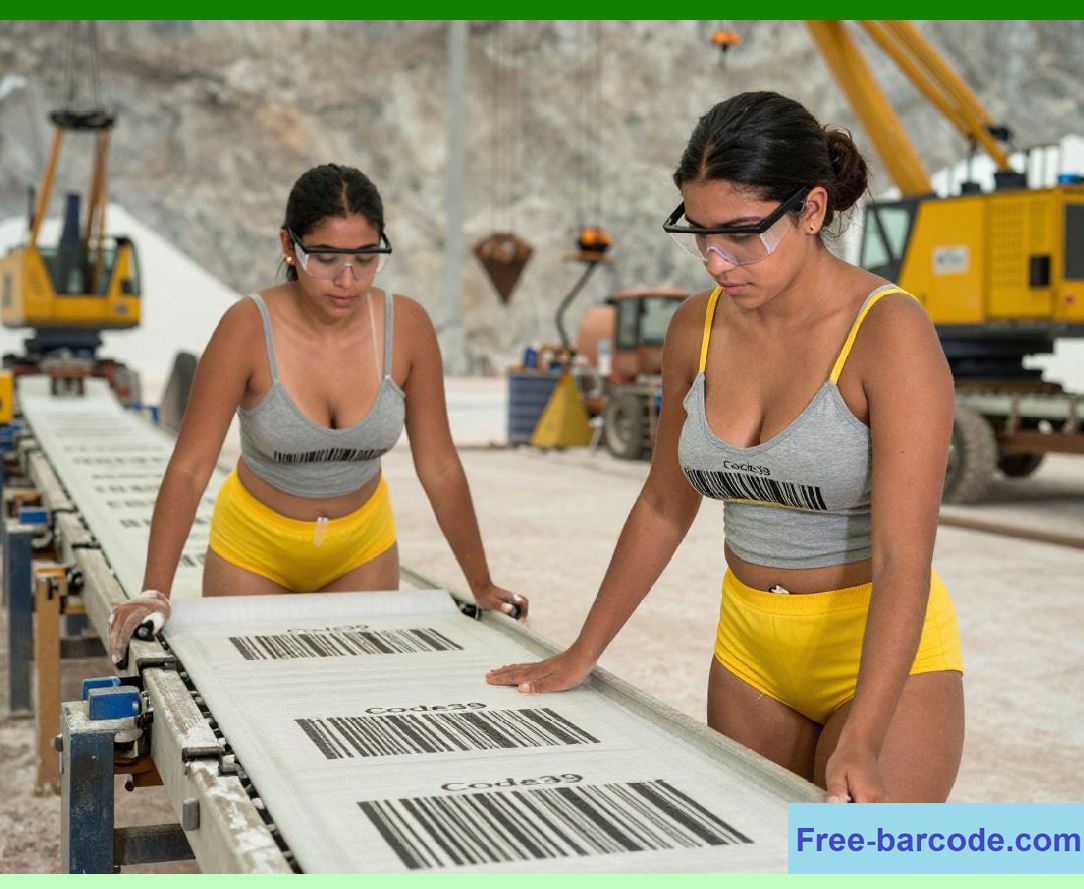
Code 39 has been used in high-speed sorting applications, such as sorting packages or parcels in distribution centers . In these applications, the barcode is scanned as the item passes by on a conveyor belt, and the sorting system directs the item to the appropriate destination based on the encoded data. The self-checking property of Code 39 helps ensure reliable reads even at high speeds. |

|
How Technical Characteristics Influence Use |
Let us now return to the technical characteristics of Code 39 and examine more systematically how they influenced its adoption across industries. |
The Power of Alphanumeric Encoding |
The single most important feature of Code 39 was its alphanumeric capability. In 1974, when Code 39 was developed, few barcode symbologies could encode anything beyond numbers. This capability positioned Code 39 as the go-to solution for any application requiring letters as well as numbers. |
Consider the industries we have discussed: |
Military: Part numbers were alphanumeric, and the military needed to encode them directly rather than maintaining a cross-reference table. |
Automotive: Part numbers, VIN numbers, and assembly codes are alphanumeric. |
Healthcare: Patient identifiers often include letters; medication lot numbers, expiration dates, and National Drug Codes are alphanumeric. |
Manufacturing: Work orders, job numbers, and part numbers across various industries are alphanumeric. |
Government: Asset tags, license plates, and many other identifiers are alphanumeric. |
Without alphanumeric capability, a barcode system requires a lookup system: the barcode encodes a numeric identifier that must be matched to a record containing the actual alphanumeric identifier. This adds complexity, introduces another potential point of failure, and slows down operations. Code 39's direct encoding of alphanumeric data eliminated these problems. |

|
The Variable Length Trade-off |
The variable length of Code 39 is a double-edged sword. On the positive side, it offers flexibility: the same symbology can be used for short identifiers and long ones. This made Code 39 suitable for the diverse data requirements of LOGMARS and other applications. |
On the negative side, variable length means that the physical barcode grows longer as more data is encoded. This can be a problem in applications where label space is limited, such as small electronic components or medical devices. In these cases, a higher-density symbology like Code 128 might be preferable . |
However, in many applications, the variable length was not a serious constraint. Military and automotive parts often have ample surface area for labeling. In healthcare, wristbands and medication labels can accommodate reasonably long barcodes. For these contexts, the benefits of Code 39 outweighed the space considerations. |
The Robustness Factor |
The self-checking property of Code 39 was a significant advantage in industrial and military settings. In factories, labels might be exposed to oil, grease, and temperature extremes. In field conditions, they might be smudged, scratched, or partially obscured. The self-checking property meant that Code 39 could still be read reliably under these conditions. |
This robustness also reduced the cost of quality control for printing. Unlike symbologies that require perfect printing, Code 39 is tolerant of minor printing imperfections. This was important for the LOGMARS program, where tens of thousands of suppliers, many with no barcode printing experience, were required to produce compliant labels. |
The Simplicity Advantage |
The simplicity of Code 39 --- both in terms of the symbology's structure and its printing requirements --- was a major factor in its widespread adoption. Code 39 was simple to implement, simple to print, and simple to scan. This low barrier to entry meant that organizations of all sizes could adopt it without massive investments. |
Compare this with some other symbologies that require specialized printing equipment or are compatible only with certain types of scanners. Code 39 could be printed with a standard laser printer on adhesive labels or even with a dot matrix printer. It could be scanned with a wide range of equipment, from the earliest laser scanners to modern imagers. This broad compatibility meant that organizations could adopt Code 39 without replacing their entire printing and scanning infrastructure. |
Legacy and the Network Effect |
One of the most interesting aspects of Code 39's success is the network effect. The LOGMARS program created a vast installed base of Code 39 printers, scanners, and software. Fifty thousand suppliers invested in the technology. They learned how to use it. They built it into their operations. This created a powerful inertia: even as newer symbologies with higher density or other advantages were developed, organizations were reluctant to switch because the cost of switching --- retraining staff, replacing equipment, updating software, and reprinting labels --- was too high. |
Furthermore, the military continued to rely on Code 39 for many applications. If a supplier wanted to do business with the military, they needed to use Code 39. This created an ongoing demand that sustained the technology. |
In many industries, Code 39 remains the standard for internal labeling and tracking, even if other symbologies are used for external supply chain applications. For example, an automotive supplier might use Code 128 for shipping labels that must comply with industry standards but use Code 39 for internal work-in-process tracking. The internal system is already in place, staff are trained, and there is no compelling reason to change . |

|
Limitations of Code 39 |
We should also acknowledge the limitations of Code 39 that have led to its gradual displacement in some applications: |
Relatively low density: Code 39 cannot encode as much data in a given area as some other symbologies. For applications with severe space constraints, other symbologies may be preferred. |
Limited character set: Code 39 encodes only uppercase letters, digits, and a small set of special characters. It does not support lowercase letters or the full range of ASCII characters. For applications that require these, other symbologies (such as Code 128) are better suited. |
Lack of built-in error correction: The optional check digit provides error detection, but Code 39 does not support error correction (the ability to recover from errors). This is generally sufficient for most applications, as the correct response to a read error is to rescan, but it is a limitation in some high-reliability contexts. |
These limitations are why Code 39 is increasingly limited to niche applications or internal use, while more advanced symbologies have taken over in many logistics and retail applications. However, in government, defense, healthcare, and legacy industrial applications, Code 39 remains a workhorse. |

|
The Enduring Legacy of Code 39 |
Looking back on the history of Code 39, we can see that its success was built on a combination of technical suitability, timing, and institutional support. The technical characteristics --- alphanumeric encoding, variable length, self-checking, ease of printing, broad scanner compatibility --- aligned well with the needs of military logistics and many other applications. The timing --- in the early 1980s, when barcode technology was still evolving --- allowed Code 39 to become established before many competing symbologies existed. And the institutional support --- the military's LOGMARS mandate --- created the scale and momentum that sustained the symbology for decades. |
The Standardization Journey |
The importance of Code 39 was recognized internationally through its adoption as an ISO/IEC standard. ISO/IEC 16388, first published in 2007 and most recently updated in 2023, specifies the requirements for the Code 39 symbology, including its characteristics, data character encodation, dimensions, tolerances, decoding algorithms, and parameters . This formal standardization ensured that Code 39 would be implemented consistently across different manufacturers, systems, and countries, reinforcing its position as a reliable global standard. |
The ISO standard provides the formal specification that equipment manufacturers and application designers can reference when developing systems. It includes, for example, specifications for symbol structure, character assignments, dimensions, and guidelines for use . This ensures that a Code 39 barcode printed by one supplier can be read by any compliant scanner, regardless of the manufacturer. Without such standards, barcode technology would be fragmented and far less useful. |
Lessons for Technical Standards |
The story of Code 39 offers valuable lessons for those who design and promote technical standards: |
Fit for purpose: The success of Code 39 was rooted in its fit with the needs of the LOGMARS program. It was not the most advanced symbology, but it was the most suitable for the specific requirements of military logistics. |
Simplicity is power: Code 39's simplicity made it accessible. Organizations of all sizes could adopt it without massive investments. This simplicity was a feature, not a bug. |
The mandate effect: The military's mandate gave Code 39 a critical mass of adoption that would have been difficult to achieve through organic market growth alone. |
Network effects matter: Once an installed base of equipment, software, and expertise is established, the network effects can sustain a standard far longer than its technical merits would suggest. |

|
Code 39 Today |
Even today, more than four decades after the LOGMARS mandate, Code 39 remains in active use . It is the third generation of scanners being used on the same first-generation barcodes in some settings. The technology's longevity is remarkable. |
Current applications include basic asset tracking in government, education, and electronics sectors; inventory management and work-in-process tracking in manufacturing; patient identification and medication labeling in healthcare; and document management and tracking . While Code 128 and 2D barcodes have taken over many high-volume logistics and retail applications, Code 39 remains a trusted, reliable, and compatible solution in many contexts. |
In the defense sector, Code 39 continues to be used, even as newer symbologies are introduced. The military's need for backward compatibility and the enormous installed base of Code 39 equipment ensure that this symbology will remain relevant for the foreseeable future. The LOGMARS program may have been the starting point, but Code 39's journey through various industries has made it one of the most enduring and widely recognized barcode symbologies in history. |

|
Conclusion |
On September 1, 1981, the U.S. Department of Defense adopted Code 39 for all products sold to the military under the LOGMARS program. This decision, requiring 50,000 suppliers to begin barcode labeling, was one of the largest and most influential deployments of barcode technology in history. It established Code 39 as a standard for government and defense applications and created a network effect that spread the technology throughout the economy. |
The technical characteristics of Code 39 --- its alphanumeric capability, variable length, self-checking property, ease of printing, and broad scanner compatibility --- were the foundation of its success. These features aligned well with the requirements of military logistics and proved equally suitable for applications in automotive manufacturing, healthcare, industrial production, and many other fields. In each of these industries, Code 39 enabled more accurate data capture, more efficient operations, and better traceability. |
However, Code 39 also had limitations that affected its adoption. Its relatively low density made it less suitable for applications with tight label space constraints, and its limited character set restricted its use in some contexts. As more advanced symbologies like Code 128 were developed, Code 39 gradually ceded ground in high-volume logistics and retail applications. |
Yet, Code 39 has not disappeared. In government and defense, in healthcare, in legacy manufacturing applications, and in countless other settings, Code 39 continues to be a reliable and practical standard. Its simplicity, durability, and compatibility ensure that the barcodes printed under the LOGMARS mandate and in the decades since remain readable today. |
The story of Code 39 is ultimately a story of how a well-designed technical standard, supported by a powerful institution and sustained by network effects, can transform industries and endure for decades. It is a reminder that technology is not just about the latest and greatest; it is also about what works, what is compatible, and what people know how to use. Code 39 may not be the most glamorous barcode, but its impact on the world of automatic identification and data capture is undeniable. The LOGMARS program may have been the beginning, but Code 39's legacy extends far beyond --- into factories, hospitals, warehouses, and businesses of all kinds, where this simple, robust barcode continues to facilitate the accurate and efficient flow of goods and information. |
 cs@easiersoft.com