Chapter 47: The Rise of Code 128 (1981) |
A New Standard for a New Decade |
The year 1981 marked a turning point in the history of automatic identification. By the dawn of that year, Code 39 had already established itself as the workhorse of the barcode industry, having found a home everywhere from automotive assembly lines to the U.S. Department of Defense. Its open, self-checking design had made it the most versatile symbology of its era. Yet even as Code 39's popularity soared, the limitations that had been acceptable in the 1970s were beginning to chafe against the more complex demands of the 1980s. |
The modern supply chain was becoming more global, more intricate, and far more data-hungry. Manufacturers, logistics providers, and retailers were no longer content with encoding simple alphanumeric identifiers of twenty or thirty characters. They wanted to embed richer information into their labels---expiration dates, lot numbers, destination codes, and detailed product attributes---all within a limited label space. The industrial landscape was also evolving, with new regulatory requirements and quality standards demanding better data integrity. In response to these pressures, a new symbology emerged from the labs of Computer Identics Corporation, an innovation that would fundamentally reshape the barcode industry: Code 128. |
This chapter explores the rise of Code 128, examining how its technical innovations met the real-world needs of diverse industries. From shipping labels that circle the globe to pharmaceutical packaging that safeguards patient health, Code 128's story is one of technological necessity meeting practical application. The barcode that began as a denser, more capable successor to Code 39 would soon become the new standard for high-density, high-integrity data capture in countless sectors. But its journey was not without its own set of challenges, including a requirement for licensed encoders initially and a more demanding printing specification that limited its early adoption in some contexts. |

|
The Genesis: Solving the Density Problem |
To understand why Code 128 was created, one must first appreciate the fundamental challenge facing barcode designers in the late 1970s. Code 39 had proven that an alphanumeric barcode could be built on a simple, elegant foundation, but its simplicity came at a cost: space. Every character in Code 39 required nine elements---five bars and four spaces---with three of those elements being wide. This 'two-width' structure, where bars and spaces came in only narrow and wide variations, made printing and scanning straightforward, but it also made the barcode physically long for any substantial amount of data. |
For applications requiring more than twenty characters, a Code 39 barcode could stretch across several inches of label space. While this was acceptable for large shipping cartons or vehicle identification tags, it proved impractical for smaller items like electronic components, retail goods, or medical vials. As one industry observer later noted, Code 39 was 'not suitable for encoding a large amount of data due to its low density, and in order to encode large data the length of the barcode had to be increased which was not a convenient solution'. |
Computer Identics, a pioneer in barcode scanning technology, recognized this gap and set out to design a symbology that could pack more data into less space. The result, introduced in 1981, was a barcode that could encode all 128 characters of the ASCII set while maintaining a far more compact footprint than its predecessor. The name 'Code 128' was derived directly from this capability---the ability to encode the complete 128-character ASCII set. |
Ted Williams of Laserlight Corporation is credited with the invention, and the specification he developed represented a genuine leap forward in barcode design. The new symbology was not merely an incremental improvement but a fundamental rethinking of how characters could be encoded in a linear barcode. |

|
A Fundamental Redesign: How Code 128 Works |
At a structural level, Code 128 departed significantly from the two-width logic that had defined Code 39. Where Code 39 used two widths for its bars and spaces, Code 128 employed four distinct widths, with each character encoded by three bars and three spaces. This shift from nine to six elements per character, combined with the use of four bar widths, was the key to achieving greater density. Each symbol in a Code 128 barcode consists of bars and spaces that can be one, two, three, or four units wide, with the total width of each character being eleven units (with the stop character being thirteen units wide). |
This more complex encoding scheme allowed Code 128 to represent far more information per unit of length. As a practical comparison, Code 128 can produce a barcode that is approximately 35 percent shorter than a Code 39 barcode containing the same data. This dramatic space savings made it possible to place detailed information on smaller labels and products where Code 39 had simply been too long to be practical. |

|
The Three Code Sets |
One of the most innovative features of Code 128 is its use of three distinct character sets, referred to as Code Set A, Code Set B, and Code Set C. This three-set structure allows the symbology to adapt its encoding strategy to the specific data being represented, optimizing density for different types of information. |
Code Set A includes all uppercase letters, digits, punctuation marks, and ASCII control characters (values 00 through 95). This set is particularly useful for industrial applications where data may include non-printable characters or messages containing specialized control codes. |
Code Set B encompasses the full ASCII character set from 32 through 127, including uppercase and lowercase letters, digits, punctuation marks, and seven special characters. This set provides the most comprehensive support for general text data and is the most commonly used set for applications requiring full alphanumeric encoding. |
Code Set C represents the most dramatic departure from earlier barcode designs. In this set, each symbol character encodes a pair of numeric digits, from 00 to 99. This 'double-density' encoding means that a single barcode character can represent what would require two characters in Code Set A or B. For purely numeric data, this makes Code 128 extraordinarily efficient, capable of storing almost twice as much numeric information in the same space as other encoding modes. This feature would prove invaluable for applications like shipping labels and inventory tracking, where numeric strings are common. |
The start character at the beginning of every Code 128 barcode tells the scanner which code set is being used, and the symbology also supports shift codes that allow switching between sets within a single barcode. This flexibility means a single barcode can be optimized for mixed data types, using Code Set C for numeric portions and Code Set B for text, all within the same linear symbol. |

|
The Mandatory Check Digit: Ensuring Data Integrity |
Perhaps the most important improvement Code 128 brought to barcode design was its mandatory check digit. While Code 39 included an optional check digit that was rarely used in practice, Code 128 made data integrity a core feature. |
Every Code 128 barcode includes a check character, calculated using a modulo 103 algorithm, that appears just before the stop character. The calculation involves summing the weighted values of all data characters, starting with the start character at position 1, and then applying modulo 103 arithmetic to derive the check digit. This check digit serves as a final verification step, allowing scanners to detect and reject any misread codes. |
The inclusion of this mandatory check digit represented a significant advance in reliability. In environments where barcodes could be partially obscured, scuffed, or poorly printed, the check digit provided an additional layer of security against misreads. As Code 128 found its way into healthcare, pharmaceutical, and other regulated industries, this reliability feature became essential for meeting stringent quality and safety standards. |

|
The Challenge of Adoption: Licensed Encoders and Printing Constraints |
Despite its technical superiority, Code 128 did not immediately supplant Code 39. The new symbology faced two significant obstacles that slowed its adoption in the early years. |
First, unlike Code 39, which had always been an open standard requiring no license fees, the early implementation of Code 128 required licensed encoders. This barrier to entry meant that companies had to invest in new software and equipment specifically designed to generate Code 128 symbols. For organizations that had already built their systems around Code 39 and had little need for the additional capabilities Code 128 offered, the cost and effort of switching could not be justified. |
Second, Code 128's four-width structure proved more demanding of printing equipment. Code 39's two-width approach was tolerant of printing imperfections. Even with inexpensive dot-matrix printers or worn printing plates, Code 39 barcodes could usually be scanned successfully. Code 128, however, required more precise control over bar widths to ensure readability. As one industry source noted, 'Code 128 requires higher print quality and more precise printing technology compared to Code 39, since it has four different bar widths that must be accurately reproduced to be readable by scanners'. |
This requirement meant that early adopters of Code 128 needed access to higher-quality printing equipment, such as thermal transfer printers or laser printing systems, rather than the less expensive impact or inkjet printers that were common in the 1980s. For many applications where Code 39 worked adequately on corrugated cardboard, this printing precision requirement made Code 128 less practical. |
Yet despite these challenges, adoption began to grow as the advantages of Code 128 became clear. Industries that needed compact labels, complex data encoding, or high reliability found the investment worthwhile. |

|
Code 128 in Action: Industry Applications |
The true test of any technology lies not in its theoretical capabilities but in its practical applications. Code 128's technical innovations---high density, full ASCII support, and the mandatory check digit---made it particularly well-suited to several key industries. Over the following decades, it would become the barcode of choice in logistics, healthcare, manufacturing, and retail, gradually establishing itself as the most versatile linear symbology in existence. |

|
The Logistics and Shipping Revolution |
The most prominent application of Code 128 has been in the logistics and shipping industries, where its high density and reliability transformed package tracking and supply chain management. The symbology's adoption was accelerated by the development of GS1-128, formerly known as UCC/EAN-128, a standard that defines how Code 128 should be used for supply chain applications. |
GS1-128 extends the basic Code 128 specification by introducing Application Identifiers, which are standardized prefixes that indicate the type of information encoded in the data that follows. A single GS1-128 barcode can encode multiple pieces of information---product identification, lot number, expiration date, weight, destination, and more---all in a compact linear symbol that can be scanned quickly at any point in the supply chain. |
The versatility of GS1-128 labels made them ideal for the increasingly complex logistics networks that emerged in the 1980s and 1990s. A shipping carton bearing a GS1-128 label could travel from a manufacturer in one country to a distribution center in another, then to a retail store, with each stop scanning the same barcode to update the package's status. The structured nature of GS1-128 meant that the barcode contained not just an identification number but a complete set of data about the contents and handling of the shipment. |
Major logistics providers quickly standardized on GS1-128 for their tracking systems. The barcode's density was crucial for this application---shipping labels often had limited space for barcodes, especially on small packages, yet they needed to encode substantial amounts of tracking information. Code 128's ability to encode all 128 ASCII characters also meant that labels could include alphanumeric tracking numbers and other identifiers without conversion or encoding tricks. |
The widespread adoption of Code 128 in shipping can be attributed to several key advantages. Its high density allows significantly shorter barcodes for the same data, saving valuable label real estate. The mandatory check digit ensures reliable scanning even in harsh shipping environments where labels may be scratched or dirty. The support for all ASCII characters means no data must be excluded or transliterated, preserving the integrity of tracking information. |

|
Healthcare and Pharmaceutical Applications |
The healthcare industry proved to be a particularly receptive environment for Code 128. Hospitals, laboratories, and pharmaceutical companies all faced challenges that the symbology could address effectively. |
Medical specimen tracking represents one of the most critical applications. Blood samples, tissue biopsies, and other specimens must be accurately identified and tracked from collection through analysis and storage. The consequences of misidentification can be catastrophic, potentially leading to incorrect diagnoses or dangerous medical errors. |
Code 128's mandatory check digit makes it highly reliable for specimen labeling. Even if a label is partially damaged or the scanner struggles due to lighting conditions or angle, the check digit verification ensures that incorrect reads are rejected before they can cause harm. The barcode's support for all ASCII characters allows labels to include not just patient IDs but also test codes, collection dates, and other vital information. |
Medication management has also benefitted from Code 128's capabilities. Hospital pharmacies use barcodes to track medications from receipt through dispensing, matching each dose to the correct patient and dosage regimen. The compact nature of Code 128 allows these labels to fit on medication vials and unit-dose packages where Code 39 would have been too large. |
The pharmaceutical industry has additionally embraced Code 128 for tracking drugs through the supply chain. Serialization requirements for pharmaceuticals, driven by regulatory efforts to prevent counterfeiting and diversion, have made barcode labeling essential. Code 128's support for GS1 Application Identifiers makes it possible to include product identification, lot numbers, and expiration dates in a single barcode, ensuring that every unit can be traced from manufacturer to patient. |
Patient identification is another important application in healthcare settings. Wristbands and patient charts often carry Code 128 barcodes that encode patient IDs, along with other identifying information. The support for full ASCII characters means that patient names and other text-based information can be included directly in the barcode, simplifying integration with hospital information systems. |

|
Manufacturing and Production Control |
In manufacturing environments, Code 128 has proven invaluable for product identification and work-in-process tracking. The symbology's density makes it suitable for labeling individual components and subassemblies where space is limited, while its reliability ensures accurate tracking through complex manufacturing processes. |
Production tracking systems rely on barcodes to maintain visibility into the flow of materials through factories. As components move from station to station, workers scan barcodes to update inventory systems, record quality control checks, and verify that the right parts are used in the right assemblies. Code 128 can encode product identification numbers, lot codes, and routing instructions in a single barcode that can be printed on small labels attached to components. |
The symbology's support for ASCII control characters also finds occasional use in manufacturing applications, where such codes may be needed for specialized equipment integration. |
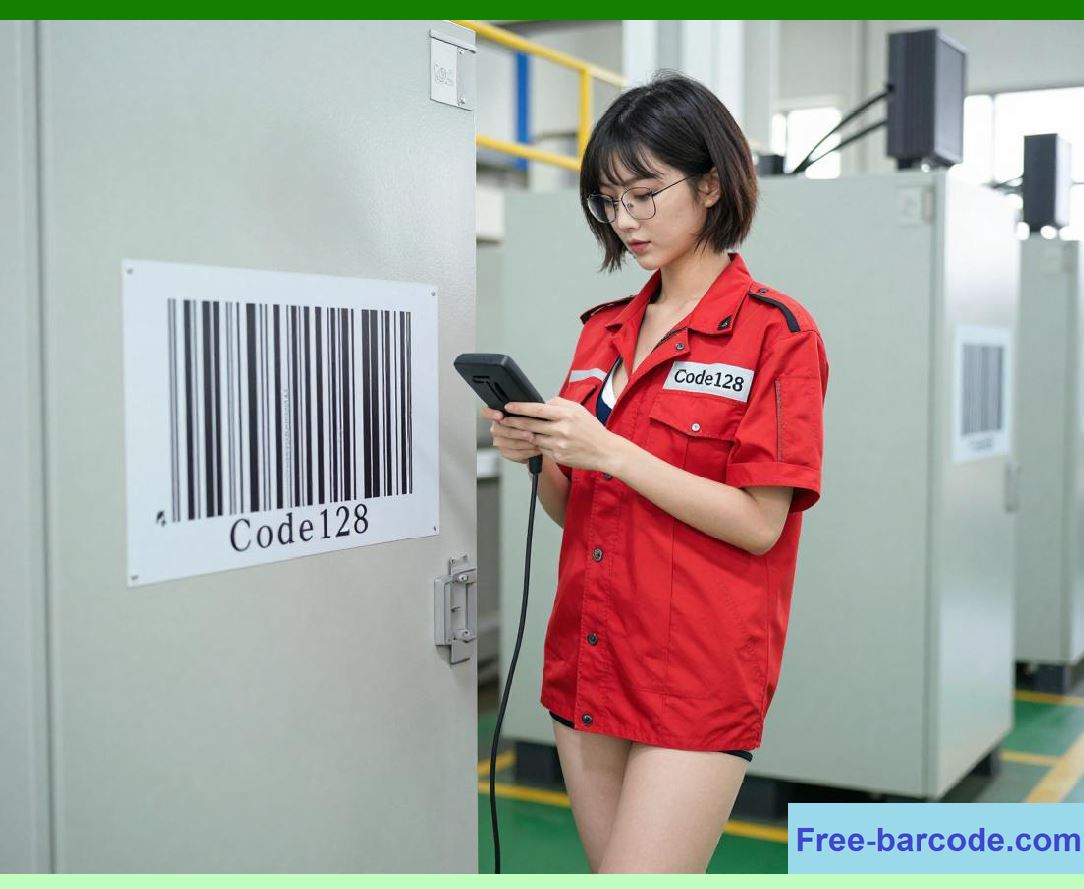
Automotive manufacturing provides a compelling example of Code 128 in action. Production lines that assemble vehicles from thousands of components rely on barcodes to ensure that the right parts are installed in the right sequence and configuration. A barcode on a component might encode not just its part number but its batch or serial number, allowing full traceability back to its manufacturing source. Code 128's combination of density and reliability makes it ideal for these demanding applications, where incorrect assembly can have serious consequences. |
|
Retail and Inventory Management |
While the retail sector has traditionally favored UPC and EAN barcodes for point-of-sale scanning, Code 128 has found important roles in retail operations behind the scenes. |
Warehouse inventory management is a key application. Retail distribution centers handle vast quantities of products, each requiring accurate tracking from receiving through storage and shipping to stores. Code 128 barcodes on pallets and cartons encode product identification, quantity, and destination information, enabling efficient movement of goods through the distribution network. |
Price labeling and in-store inventory management also benefit from Code 128's capabilities. Retailers use Code 128 on shelf labels to encode product information for in-store inventory scanning, price verification, and shelf-space management. The compact nature of Code 128 makes these labels practical even on narrow shelf edges where space is limited. |
Store-level inventory management applications, where employees use handheld scanners to verify stock levels and update inventory systems, often utilize Code 128 labels. The symbology's reliability and support for alphanumeric data allow accurate tracking of diverse product lines without requiring specialized labels for different product categories. |

|
Government and Military Applications |
The government and military sectors have long been important users of barcode technology, and Code 128 has found applications in these demanding environments as well. |
The LOGMARS standard, developed by the U.S. Department of Defense, initially specified Code 39 for military logistics applications. However, the higher density of Code 128 has made it increasingly attractive for modern defense supply chains, where the volume and complexity of inventory have grown tremendously over the decades. While Code 39 remains in use in many older government systems, new applications often default to Code 128 because of its superior capabilities. |
Asset tracking is another significant application. Government agencies, from local municipalities to federal departments, maintain inventories of everything from office equipment to specialized vehicles. Code 128 barcodes applied to these assets allow efficient inventory tracking and maintenance management. The compact size of Code 128 makes it suitable for small assets like laptops and hand tools, while its reliability ensures that asset scans are accurate, reducing the risk of lost or misidentified equipment. |

|
Emerging and Niche Applications |
As Code 128 has matured over more than four decades, it has found its way into an ever-wider array of applications. |
Libraries and archival institutions use Code 128 for tracking books, manuscripts, and other materials. The support for full ASCII characters allows direct encoding of titles, author names, and call numbers, simplifying library management systems. |
Membership and loyalty programs, such as those used by retailers, gyms, and other organizations, often encode membership numbers in Code 128 barcodes. The compact nature of Code 128 permits small labels on membership cards, while the support for alphanumeric data accommodates various numbering schemes. |
Customer loyalty programs that utilize barcoded keychain tags or phone stickers also benefit from Code 128's efficiency. The small size of the barcode allows it to fit on these limited-space media while still encoding unique member identification numbers. |
The technology sector also uses Code 128 in various internal applications. Many software systems generate Code 128 barcodes for purposes ranging from asset tagging to bug tracking to deployment control. The symbology's versatility makes it a convenient choice for development teams who need a reliable, general-purpose barcode format. |

|
Comparing Code 39 and Code 128: A Balanced Perspective |
The relationship between Code 39 and Code 128 is not one of simple succession but of complementary strengths. Each symbology has its own character and optimal use cases, and both continue to be used in the modern world. |
Code 39's primary advantages are its simplicity, its open standard status, and its robustness under less-than-ideal printing conditions. Code 39 barcodes, with their two-width structure and simple encoding scheme, can be printed on a wider range of equipment and remain readable even when the print quality is not optimal. This has made Code 39 the preferred choice for applications where barcodes are printed on corrugated cardboard, where labels may be exposed to harsh conditions, or where low-cost printing equipment is used. |
Code 128, by contrast, excels in situations where label space is limited, where large amounts of data must be encoded, where full ASCII characters are needed, or where the highest possible data integrity is required. The symbology's greater density means shorter, more compact labels; its support for all ASCII characters means no data is left out; and its mandatory check digit means an extra layer of protection against misreads. |

|
In practical terms, the choice between Code 39 and Code 128 often comes down to the specific requirements of the application: |
- For barcodes with short alphanumeric messages printed on large labels with less demanding equipment, Code 39 is often the appropriate choice. |
- For barcodes with longer messages, smaller labels, or requirements for full ASCII data encoding, Code 128 is typically superior. |
- For applications requiring GS1 compliance, such as shipping labels, Code 128 is mandatory. |
- For applications in regulated industries like healthcare or pharmaceuticals, Code 128's mandatory check digit provides an important safety feature. |
The transition from Code 39 to Code 128 did not mean the end of Code 39, any more than the transition from steam locomotives to diesel engines meant the end of rail travel. Code 39 continues to serve faithfully in many applications where its particular strengths are valuable, while Code 128 has become the dominant symbology for applications requiring high density and versatility. |

|
The GS1-128 Standard: A Transformative Development |
No discussion of Code 128's rise would be complete without examining the GS1-128 standard, which transformed the barcode from a simple identifier into a sophisticated data carrier. The standard, originally known as UCC/EAN-128, was developed to provide a unified approach to supply chain data management using Code 128 as its foundation. |
The key innovation of GS1-128 was the introduction of Application Identifiers, standardized prefixes that indicate the meaning of the data that follows. These identifiers, usually shown in parentheses in the human-readable text beneath the barcode, are not encoded as parentheses but as distinct data elements in the barcode itself. Common Application Identifiers include: |
- 01 for Global Trade Item Numbers (the standard product identification number) |
- 10 for batch or lot numbers |
- 11 for production dates |
- 17 for expiration dates |
- 21 for serial numbers |
- 30 for quantity or count |

|
By using these Application Identifiers, a single GS1-128 barcode can encode a complete picture of a product: what it is, when it was made, when it expires, which lot it belongs to, and even its weight or destination. This capability has transformed supply chain management, enabling sophisticated logistics systems that can track items from manufacturer to consumer with unprecedented precision. |
GS1-128 barcodes are distinguished from basic Code 128 barcodes by the inclusion of a special FNC1 (Function 1) character immediately after the start character, which signals to the scanner that the barcode conforms to GS1 standards. This allows systems to interpret the barcode data according to the Application Identifier structure, extracting each piece of information based on its identifier. |
The adoption of GS1-128 was driven by major retailers and manufacturers who recognized the need for better visibility into their supply chains. Standardized barcodes that could carry rich product information made it possible to automate receiving, inventory, and shipping processes, reducing labor costs and improving accuracy. |
Today, GS1-128 is the standard barcode format for many industries, including retail logistics, healthcare, and food production. Its use is mandated by many retailers and is required by various regulations, particularly in pharmaceutical supply chains where product tracking is essential. |

|
The Legacy of Code 128 |
From its origins in 1981 as a high-density alternative to Code 39, Code 128 has grown to become one of the most widely used barcode symbologies in the world. Its combination of high density, full ASCII support, and mandatory check digit has made it the barcode of choice for countless applications across diverse industries. |
The symbology's path to dominance was not without its challenges. The need for licensed encoders initially limited its adoption. The requirement for higher-quality printing equipment made it less accessible for some applications. Yet over time, as printing technology improved and the benefits of Code 128 became more apparent, these barriers diminished. |
The development of the GS1-128 standard accelerated Code 128's adoption by providing a structured approach to supply chain data management. The ability to encode rich product information in a single barcode transformed logistics and supply chain management, enabling sophisticated tracking systems that would have been impossible with earlier symbologies. |
Today, Code 128 remains a vital technology in the automatic identification landscape. While newer technologies like two-dimensional barcodes and RFID have emerged, Code 128 continues to serve faithfully where linear barcodes are appropriate. Its ongoing importance can be measured by its inclusion in ISO/IEC 15417, the international standard that defines the Code 128 specification. |

|
Conclusion: A Symbology for the Modern Age |
The year 1981 marked the birth of a barcode that would help shape the modern world. Code 128 arrived at a time when global commerce, manufacturing, and logistics were growing increasingly complex, demanding better data capture capabilities. By offering higher density, support for all 128 ASCII characters, and mandatory dual checksums, Code 128 provided the tools that industries needed to manage this complexity. |
Yet Code 128 did not simply replace Code 39. Rather, it carved out its own territory, serving applications where its strengths were most valuable while Code 39 continued to provide excellent service in other contexts. This complementarity between symbologies, each suited to different applications and environments, has been one of the enduring features of the barcode industry. |
The story of Code 128 is also the story of how technical innovations find their way into practical use. The inventors at Computer Identics and Laserlight Corporation created a technology with clear technical advantages, but the barcode's ultimate success depended on how those advantages were applied to solve real-world problems. The logistics provider who could track packages more efficiently; the hospital that could reduce medication errors; the manufacturer who could improve quality control---these are the people and organizations that made Code 128 a success. |
As we look back on more than four decades of Code 128, we can appreciate how this symbology has quietly supported the infrastructure of modern commerce. The barcodes on shipping labels, medication packages, and manufacturing components that we encounter daily may go unnoticed, but they represent the culmination of decades of innovation in automatic identification. |
Code 128 achieved what its designers set out to accomplish, providing a high-density, versatile, and reliable barcode symbology for the modern age. Its continued use, decades after its introduction, testifies to the soundness of its design and its enduring value in applications where data integrity and density are paramount. The barcode that began as an answer to the limitations of its predecessor has become, in many ways, the measure against which new symbologies are compared. Code 128 is not simply a technical specification but a testament to the power of thoughtful engineering to solve practical problems in the real world. |
 cs@easiersoft.com