DataMatrix Decoded: A Technical Deep-Dive |
Executive Summary |
DataMatrix is a two-dimensional (2D) barcode that stores information in a compact grid of black and white squares. Unlike traditional linear barcodes that can only hold a small product identifier, DataMatrix codes can pack thousands of characters into a space as small as a postage stamp. Their built-in error correction allows them to remain readable even when scratched, dirty, or partially damaged. In the United States, DataMatrix has become the backbone of traceability across healthcare, aerospace, automotive, logistics, retail, and defense industries. It powers everything from pharmaceutical serialization required by the FDA to package routing in the USPS network and equipment tracking for the Department of Defense. As American industries prepare for the retail industry's Sunrise 2027 initiative, DataMatrix is positioned to become the new standard barcode on virtually every product sold in the United States. The following article explores the technical foundations of this remarkable technology and presents over 50 real-world applications across the American economy. |
|
Part One: Technical Foundations |
Chapter 1: What is a DataMatrix Code |
A DataMatrix code is a two-dimensional matrix barcode composed of black and white square modules arranged in either a square or rectangular grid. The fundamental difference from a traditional linear barcode is that DataMatrix stores data in both horizontal and vertical dimensions, dramatically increasing its information capacity relative to its physical size. |
Chapter 2: A Brief History |
The DataMatrix symbology was originally developed by International Data Matrix Inc. in 1989. It was later standardized under the ISO/IEC 16022 specification, which has undergone several revisions, with the latest version published in May 2024. The technology was designed specifically for applications where traditional barcodes could not survive harsh industrial environments or fit on tiny components. |
Chapter 3: The ECC 200 Standard |
The most commonly used version today is ECC 200, which employs advanced Reed-Solomon error correction. Earlier versions (ECC 000-140) are now considered obsolete. ECC 200 is the standard defined in ISO/IEC 16022:2024 and is the version used in virtually all commercial applications worldwide. |
Chapter 4: Understanding the Finder Pattern |
Every DataMatrix symbol has a distinctive finder pattern that helps scanners locate and orient the code. This pattern consists of a solid L-shaped line along two adjacent sides, known as the L finder pattern, and a clock track or timing pattern along the opposite sides. The L pattern defines the symbol's size, orientation, and any distortion, while the clock track provides additional structural information. |

|
Chapter 5: The Quiet Zone Requirement |
Like all barcodes, DataMatrix requires a quiet zone a blank margin surrounding the symbol. This quiet zone must be at least one module width on all four sides. It helps scanners distinguish the code from background graphics or text, ensuring reliable decoding. |
Chapter 6: Data Capacity |
A single DataMatrix symbol can hold up to 3,116 numeric characters, 2,335 alphanumeric characters, or 1,556 bytes of binary data. The maximum capacity is achieved with the largest square format 144 rows by 144 columns. However, for applications using GS1 DataMatrix, the capacity is slightly reduced because the first position must contain a special Function 1 Symbol Character. |
Chapter 7: Symbol Size Flexibility |
DataMatrix symbols come in 24 possible square sizes ranging from 10x10 modules to 144x144 modules. There are also six rectangular formats for situations where horizontal or vertical space is constrained. The smallest codes can be as tiny as 2.5 millimeters square, making them ideal for marking electronic components. |
Chapter 8: Square vs. Rectangular Formats |
The square format is the most commonly used and offers the highest data capacity. However, the rectangular format with its limited height is better suited to high-speed printing techniques and unusual printing spaces, such as the narrow edges of packaging or small cylindrical objects. |

|
Chapter 9: Error Correction Capabilities |
DataMatrix uses Reed-Solomon error correction, which adds redundant data to the original message. This redundancy allows the decoding process to detect and correct errors. Depending on the symbol size, between 28% and 62.5% of the code space is dedicated to error correction. In practice, DataMatrix codes can typically recover from damage affecting up to 30% of the code area. |
Chapter 10: How Data is Encoded |
DataMatrix supports multiple encoding schemes, including ASCII, C40, X12, EDIFACT, and Base256. The choice of encoding affects both the data capacity and the symbol size. Most real-world applications use UTF-8 encoding, which provides broad character support. The encoding process first converts data into codewords, then places them in a specific serpentine pattern within the matrix, followed by adding error correction codewords. |
Chapter 11: GS1 DataMatrix |
GS1 DataMatrix is a specialized implementation that follows the GS1 standards. It adds a Function 1 Symbol Character (FNC1) in the first position and uses GS1 Application Identifiers (AIs) to structure the data. Application Identifiers are 2, 3, or 4-digit numbers that define the meaning and format of subsequent data. For example, AI 01 indicates a Global Trade Item Number (GTIN), AI 10 indicates a batch or lot number, AI 15 indicates a best-before date, and AI 21 indicates a serial number. |
Chapter 12: Data Regions |
The matrix symbol is composed of several data regions. For example, a 32x32 symbol has four data regions of 14x14 modules each. Larger symbols have more regions: 64x64 symbols have 16 regions, and 144x144 symbols have 36 regions. This regional structure facilitates error correction and decoding. |
|
Chapter 13: Structured Append |
DataMatrix supports a feature called structured append, which allows data to be split across up to 16 separate symbols. The scanning software reads all the symbols and reassembles the complete data. This is useful for applications that require more data than can fit in a single symbol or for marking large items with multiple codes. |
Chapter 14: Reading and Decoding |
Decoding a DataMatrix code involves several steps. First, the scanner captures an image of the code and identifies the finder pattern and quiet zones. The image is then converted into a binary representation using thresholding. Next, the timing pattern is examined to estimate any perspective distortion. Finally, the data pattern is read and decoded using the appropriate encoding scheme. Modern scanning software can handle inverse codes, codes on curved surfaces, and direct part markings. |
Chapter 15: Printing Technologies |
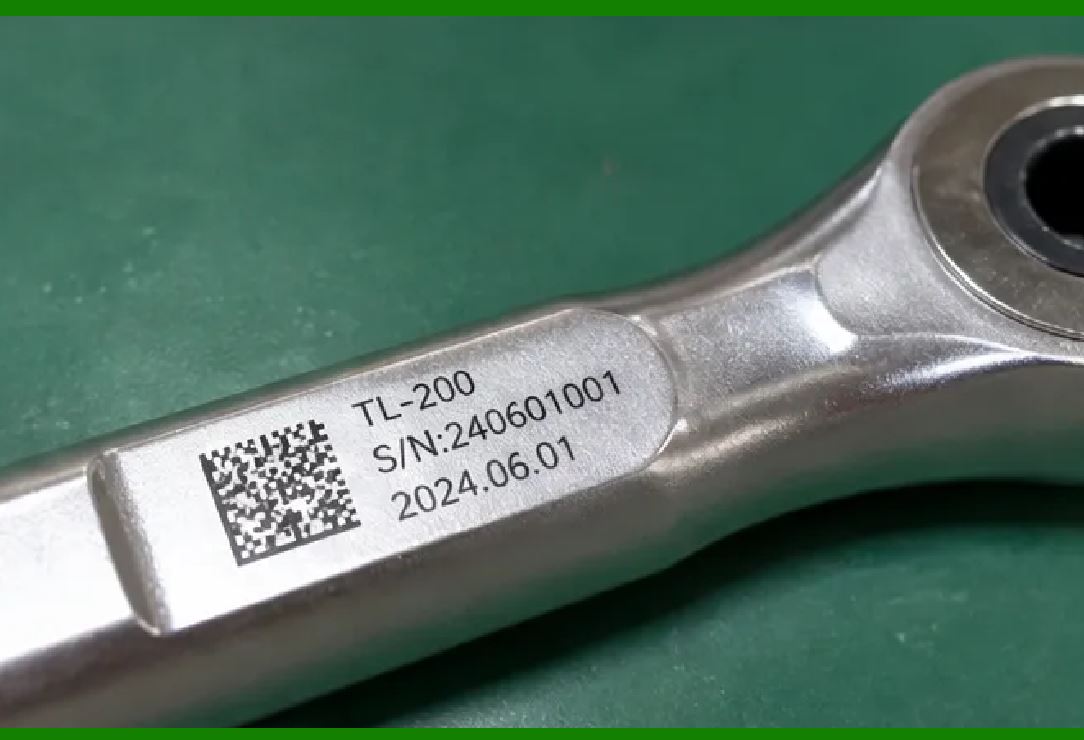
DataMatrix codes can be printed using virtually any marking technology. Thermal transfer printers are common for labels. For permanent marking, laser etching, inkjet printing, dot peening, and chemical etching are all used. The choice depends on the surface material, durability requirements, and production environment. Direct part marking (DPM) where the code is permanently inscribed onto the product itself is especially important in aerospace, automotive, and medical device manufacturing. |
Chapter 16: Scanning Technologies |
DataMatrix codes are read using camera-based systems, including CMOS sensors and CCD cameras. Advanced algorithms enable reading from curved or reflective surfaces, and from low-contrast codes such as those etched on glass or metal. The minimum print contrast signal requirement is 0.4, but modern readers can decode codes with much lower contrast. |
|
Chapter 17: DataMatrix vs. QR Codes |
While both DataMatrix and QR codes are 2D barcodes, they serve different purposes. DataMatrix codes are typically smaller for the same amount of data and are more durable in harsh environments. QR codes, while capable of storing more data overall, require more space and are more commonly used in consumer marketing applications. DataMatrix dominates in industrial, healthcare, and logistics applications where space is limited and durability is critical. |
Part Two: Applications in the United States Healthcare Industry |
Chapter 18: Pharmaceutical Serialization |
The U.S. pharmaceutical industry has embraced DataMatrix to meet regulatory requirements. The Drug Supply Chain Security Act (DSCSA) mandates serialization of prescription drugs to enable tracking from manufacturing to dispensing. More than 16 billion medicine packages in the United States now carry GS1 DataMatrix codes. These codes encode the National Drug Code (NDC), lot number, and expiration date, enabling rapid identification and recall management. |
Chapter 19: Fresenius Kabi's Unit-of-Use Barcodes |
Fresenius Kabi, a global healthcare company, has committed to marking its pharmaceutical products with GS1 DataMatrix codes in the United States. With more than 700 products many in small packaging like vials and syringes the company needed a labeling solution that could fit on tiny surfaces while carrying critical drug information. The DataMatrix code allows clinicians to automatically capture the medication's NDC, lot number, and expiration date with a single scan, eliminating manual data entry and improving patient safety. |
Chapter 20: Google Lens Integration |
In a global collaboration with GS1, Google has made it possible for users to scan GS1 DataMatrix codes using Google Lens on Android devices. When a consumer or healthcare professional scans the code on a medicine package, they gain instant access to reliable medical product information directly on their device. This initiative builds on two decades of digitalization efforts in healthcare, where GS1 DataMatrix is already a recommended or required standard for identification and traceability in more than 70 countries. |

|
Chapter 21: Non-Retail Healthcare Guidelines |
GS1 US has published guidelines specifically for implementing GS1 DataMatrix in non-retail healthcare environments, including hospitals, pharmacies, clinics, infusion centers, long-term care facilities, and ambulances. These guidelines help stakeholders implement 2D barcodes in settings where products are not sold at retail but still require accurate tracking and identification. |
Chapter 22: Medical Device Identification |
The FDA requires Unique Device Identifiers (UDIs) on medical devices. DataMatrix codes are widely used to encode these UDIs on everything from surgical instruments to implantable devices. Hospitals use these codes to track device usage, monitor performance, and respond quickly to safety alerts or recalls. Laser-etched DataMatrix on hip stems, pacemaker cases, and dental screws enable post-sale tracking and MRI-safe identification. |
Chapter 23: Laboratory Sample Management |
Clinical laboratories across the United States use DataMatrix codes on specimen containers, slides, and test tubes. The codes' small size allows multiple identifiers to be placed on even the smallest containers. Automated analyzers read these codes to link patient IDs with hundreds of chemical assay results, ensuring accurate sample identification throughout testing processes. |
Chapter 24: Patient Safety Applications |
Hospitals implement DataMatrix codes on patient wristbands and medication packages to ensure accurate patient identification and medication administration. The error correction capabilities provide an additional safety layer in critical healthcare environments. With a single scan, clinicians can confirm they are using the right product in the right dosage for the right patient and automatically import that information into the patient's electronic health record. |

|
Chapter 25: Blood Bag Tracking |
DataMatrix codes are used on blood bags in transfusion medicine to encode donor ID, blood type, and collection date. This ensures patient-to-bag matching at the point of care, reducing the risk of transfusion errors. The codes' durability is essential for blood bags that must withstand cold storage and handling. |
Chapter 26: Environmental Benefits |
The transition to digital pharmaceutical leaflets accessible through DataMatrix scanning offers substantial sustainability benefits. In the United States, printed pharmaceutical leaflets are estimated to require around 12 million trees annually. By enabling digital access to package inserts, DataMatrix codes contribute to reducing this environmental impact. |
Part Three: Manufacturing and Industrial Applications |
Chapter 27: Electronics Manufacturing |
The U.S. electronics industry has long relied on DataMatrix for component traceability. The Electronics Industries Alliance recommends labeling components using DataMatrix barcodes in its Component Marking Standard. Each code typically contains part numbers, manufacturing dates, batch codes, and quality control data, enabling complete traceability from production through assembly to end-user products. |
Chapter 28: Printed Circuit Board Marking |
PCBs in American electronics manufacturing often feature DataMatrix codes that contain comprehensive information about the board's specifications, revision numbers, and manufacturing parameters. The codes' small size allows them to fit on even the most compact circuit boards without interfering with component placement or electrical functionality. This is essential for quality assurance and warranty management. |

|
Chapter 29: Semiconductor Wafers |
DataMatrix codes are etched onto individual dies or wafer frames in semiconductor manufacturing. These codes link to electrical test data, yield analysis, and binning information. The tiny size and high durability of DataMatrix make it ideal for this application, where marking space is extremely limited. |
Chapter 30: Aerospace Parts Marking |
The aerospace industry in the United States uses DataMatrix for permanent direct part marking on turbine blades, airframe components, and critical fasteners. The FAA mandates traceability for safety-critical parts, and DataMatrix enables lifetime tracking from manufacturing through maintenance and repair. The codes' ability to withstand extreme temperatures and harsh environments is essential for aerospace applications. |
Chapter 31: Automotive Assembly |
American automotive manufacturers have adopted DataMatrix for parts tracking and compliance with safety regulations. Components ranging from engine parts to electronic control units carry these codes to ensure complete traceability throughout the vehicle's lifecycle. Robotic cameras on assembly lines read the codes for just-in-sequence production, and the traceability is crucial for recall management. |
Chapter 32: Defense Equipment Tracking |
The U.S. Department of Defense uses DataMatrix to track equipment under its Item Unique Identification (IUID) requirements. Every piece of equipment, from small components to major weapon systems, is assigned a unique identifier encoded in a DataMatrix symbol. This enables the military to track assets throughout their lifecycle, manage maintenance, and account for equipment across the global supply chain. |

|
Chapter 33: Tire Manufacturing |
Major tire manufacturers in the United States mold DataMatrix codes into tire sidewalls during vulcanization. These codes store DOT code, plant ID, and compound recipe information. This enables liability tracking and rapid recall response if a manufacturing defect is discovered. The codes must survive decades of road use and exposure to the elements. |
Chapter 34: 3D Printed Parts |
In additive manufacturing, DataMatrix codes are being embedded as surface textures directly into the CAD model. After printing, the code is integral to the part itself. This is especially important for aerospace and medical applications where parts must be permanently identifiable and traceable. |
Chapter 35: Solar Panel Manufacturing |
American solar panel manufacturers are increasingly using DataMatrix codes etched on panel frames or junction boxes. These codes store panel serial numbers, IV-curve data, and warranty start dates. This enables manufacturers to track panel performance over time and identify quality issues across production batches. |
Part Four: Logistics, Postal, and Retail Applications |
Chapter 36: USPS Intelligent Mail Matrix Barcode |
The United States Postal Service has adopted a 2D GS1 DataMatrix barcode called the Intelligent Mail Matrix Barcode (IMmb). This code is used for routing and tracking packages within the USPS processing network. Currently, the IMmb is used in combination with the Intelligent Mail Package Barcode (IMpb) to improve processing efficiency and package visibility. |

|
Chapter 37: Parcel and Package Sorting |
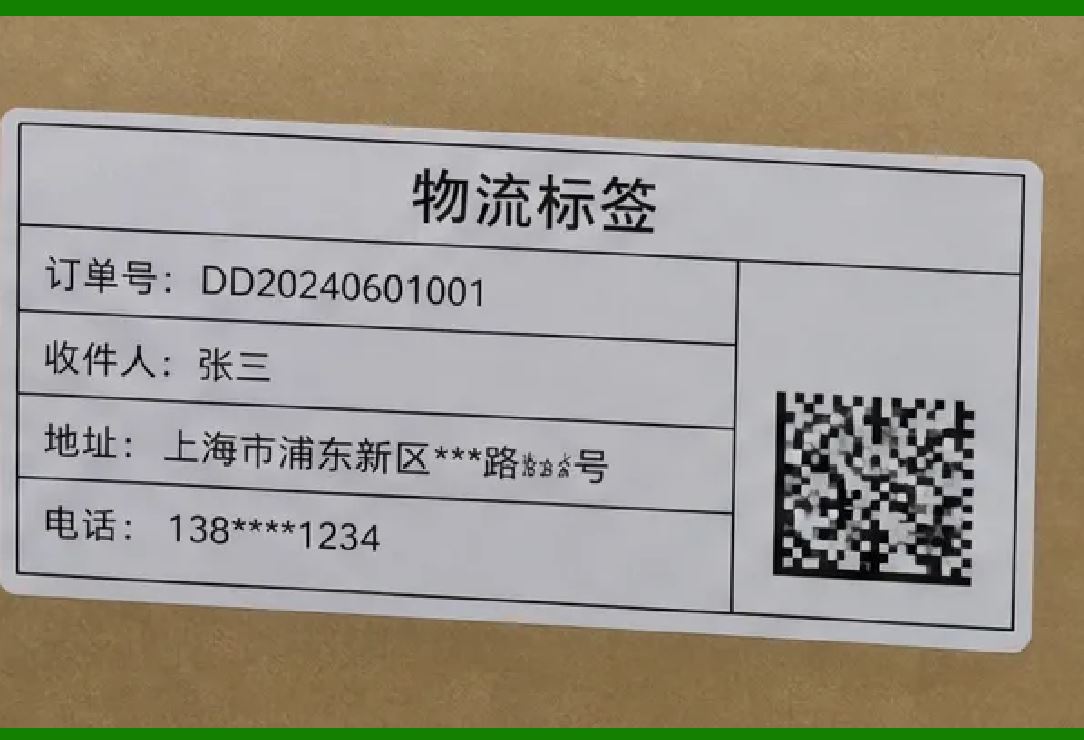
Major logistics companies including FedEx and DHL use DataMatrix codes on parcel labels alongside traditional barcodes. High-speed tunnel readers at sorting hubs scan these codes to route packages to their destinations. The 360-degree readability of DataMatrix codes allows packages to be scanned from any orientation, improving sorting speed and accuracy. |
Chapter 38: Warehouse Racking and Inventory |
American warehouses and distribution centers use DataMatrix codes on metal rack beams and storage locations. Forklift-mounted scanners confirm bin locations during put-away and picking operations. This reduces errors, improves inventory accuracy, and enables real-time tracking of goods within the warehouse. |
Chapter 39: Retail Sunrise 2027 |
The U.S. retail industry, in collaboration with GS1 US, has set a timeline known as Sunrise 2027 for scanning 2D barcodes at point-of-sale. While traditional 1D barcodes are not being phased out, retailers are increasingly adopting 2D codes like QR codes and GS1 DataMatrix to provide richer product information. The goal is to eventually have two barcodes on packages, with at least one being 2D. |
Chapter 40: Apparel and General Merchandise |
GS1 US has released guidelines for implementing 2D barcodes in the apparel and general merchandise sectors. These guidelines help brands and retailers prepare for Sunrise 2027 by providing practical advice on implementation, including use cases for improved product information, traceability, authentication, and streamlined checkout and returns. The transition to 2D barcodes enables brands to provide consumers with more detailed product information through their mobile devices. |

|
Chapter 41: Jewelry and Luxury Goods |
American jewelry retailers engrave DataMatrix codes on the inside of rings, watch clasps, and other luxury items. These codes store SKU, carat weight, certificate numbers, and other identifying information. This enables anti-theft inventory management, authentication, and traceability throughout the supply chain. |
Chapter 42: Event Ticketing |
U.S. event venues and ticketing companies use DataMatrix codes on wristbands and paper tickets. Gates scan these codes for entry validation and anti-counterfeiting. The codes can encode unique ticket identifiers, seat assignments, and attendee information, enabling efficient entry management and fraud prevention. |
Part Five: Food, Agriculture, and Other Applications |
Chapter 43: Food Safety and Traceability |
American food producers use DataMatrix codes on packaging to encode farm origin, harvest dates, and pesticide batch information. This enables rapid recall response if contamination is detected. The codes support the growing consumer demand for transparency about food origin and production methods. |
Chapter 44: Dairy and Meat Processing |
Vacuum-packed meat and dairy products in U.S. grocery stores carry DataMatrix codes storing slaughterhouse ID, temperature logs, and best-before dates. This supports cold-chain verification and enables tracking from farm to table. The codes help retailers manage inventory and reduce food waste. |

|
Chapter 45: Beverage Can Tracking |
Some American beverage manufacturers etch DataMatrix codes onto the underside of aluminum tabs invisible to consumers but readable for quality control and promotion verification. This enables tracking of individual cans through the production process and supports promotional campaigns where consumers can scan codes for prizes. |
Chapter 46: Paint and Chemical Safety |
DataMatrix codes on paint and chemical containers in the United States encode batch numbers, formulations, and hazard classifications. This is essential for Material Safety Data Sheet compliance and enables manufacturers to quickly identify and recall products with quality issues. The codes' durability ensures they remain readable despite exposure to harsh chemicals. |
Chapter 47: Textile and Garment Tags |
U.S. clothing manufacturers use DataMatrix codes printed on care labels and garment tags. These codes encode style numbers, sizes, and dye lots, enabling automated sorting in distribution centers. The codes also allow consumers to access care instructions and product information through their mobile devices. |
Chapter 48: Document Management |
American government agencies and corporations use DataMatrix codes on archival folders and documents. These codes link physical documents to scanned digital copies, enabling retrieval without optical character recognition errors. The codes' small size allows them to be printed on labels or directly on documents without obscuring content. |
|
Chapter 49: Construction and Structural Steel |
DataMatrix codes are applied to structural steel beams and construction components in the United States via handheld dot-peen markers. Structural engineers scan these codes on-site to verify yield strength and mill certifications. This ensures that the right materials are used in the right places, supporting building safety and quality assurance. |
Chapter 50: Museum and Artifact Preservation |
American museums use non-invasive adhesive DataMatrix labels on the bases of sculptures and artifacts. These codes store accession numbers, provenance information, and conservation history. The codes enable curators to quickly retrieve detailed records about each artifact without damaging the object or creating a visual distraction. |

|
Detailed Summary |
DataMatrix is far more than just another type of barcode. It is a sophisticated information storage and retrieval system that has become an invisible but essential part of modern American industry. Its technical foundations the compact grid structure, the distinctive finder pattern, the powerful Reed-Solomon error correction, and the flexible encoding schemes enable it to perform where other barcodes cannot. |
The United States has emerged as a leader in DataMatrix adoption across multiple sectors. In healthcare, DataMatrix codes on pharmaceutical packaging support the Drug Supply Chain Security Act, enable clinicians to quickly and accurately confirm medications at the point of care, and allow consumers to access reliable product information through their mobile phones. The collaboration between GS1 and Google, enabling scanning of over 16 billion medicine packages, represents a milestone in digital healthcare transparency. |
In manufacturing, DataMatrix codes enable the traceability that keeps American aerospace, automotive, and defense products safe and reliable. From turbine blades to tire sidewalls, from semiconductor wafers to structural steel beams, DataMatrix provides the permanent, machine-readable identification that modern quality systems require. The Department of Defense's Item Unique Identification program and the Electronics Industries Alliance's Component Marking Standard both rely on DataMatrix as the foundation for equipment tracking. |
|
In logistics and retail, DataMatrix codes are helping transform how goods move through the American supply chain. The USPS uses DataMatrix for package routing, major logistics companies rely on it for automated sorting, and the retail industry's Sunrise 2027 initiative is paving the way for DataMatrix to become the standard barcode on virtually every product sold in the United States. |
Looking to the future, DataMatrix will continue to evolve. The ISO/IEC 16022 standard was updated in 2024, reflecting ongoing improvements in the technology. Future developments may include color DataMatrix for multi-layer data, AI-enhanced decoders that read even severely damaged marks, and deeper integration with blockchain traceability systems. The environmental benefits of digital package inserts accessible through DataMatrix scanning could save millions of trees annually. |
DataMatrix is the quiet workhorse of American industry. It does not seek attention, but it makes modern supply chains possible. From a grain of rice to a jet engine, DataMatrix silently secures our material world, ensuring that what we make, buy, and consume is safe, traceable, and accountable. |
 cs@easiersoft.com