DataMatrix Decoded: A Technical Deep-Dive |
Executive Summary |
The DataMatrix encoding process is a carefully orchestrated sequence that transforms ordinary information into a durable, machine-readable code capable of surviving damage and harsh environments. The process begins when data is first analyzed to select the most efficient encoding scheme, then converted into a stream of codewords. These codewords are placed into the matrix grid using a specific serpentine pattern, and finally, Reed-Solomon error correction codewords are added to protect the data against damage . The resulting DataMatrix symbol can be read reliably even when partially obscured, scratched, or distorted. |
This encoding process is the technical foundation that enables DataMatrix to serve critical American applications. In the pharmaceutical industry, it allows the Drug Supply Chain Security Act requirements to be met by encoding National Drug Codes, lot numbers, and expiration dates on tiny vials and syringes. In the healthcare sector, GS1 DataMatrix codes support electronic health records, efficient recall management, and enhanced patient safety . The U.S. Postal Service relies on this encoding process for the Intelligent Mail Matrix Barcode (IMmb), which provides redundant scanning opportunities on package labels to improve processing efficiency . From defense logistics to medical device tracking, the encoding process makes DataMatrix an indispensable technology across the American economy. |

|
Part One: The Three-Step Encoding Process |
Chapter 1: An Overview of Encoding |
The DataMatrix encoding process follows a clear, three-step sequence defined in ISO/IEC 16022, the international standard for the symbology . The first step is data encodation, where the user's information is analyzed and converted into a stream of codewords using the most efficient encoding scheme. The second step generates error checking and correcting codewords using the Reed-Solomon algorithm. The third step places all codewords into the matrix in a specific pattern . Understanding each step reveals how DataMatrix achieves its remarkable combination of density, capacity, and robustness. |
Chapter 2: Step One - Data Encodation |
The encoding process begins with data encodation. The system analyzes the input data stream to identify the variety of different characters to be encoded . Based on this analysis, the encoder selects the most efficient encodation scheme. DataMatrix supports multiple schemes, including ASCII, C40, Text, X12, EDIFACT, and Base 256 . Each scheme is optimized for different types of data, allowing the encoder to minimize the number of codewords needed and, therefore, the symbol size. |
Chapter 3: The ASCII Encodation Scheme |
ASCII encodation is the default scheme and handles standard text characters. It is particularly efficient for double-digit numerics, which are encoded in just four bits per two digits . Single ASCII values (0 to 127) take eight bits, while extended ASCII values (128 to 255) require sixteen bits. This scheme is suitable for general text data, but it is not the most efficient for specialized data types like numeric strings or uppercase text. |

|
Chapter 4: The C40 and Text Encodation Schemes |
The C40 scheme is optimized for uppercase alphanumeric data and uses approximately 5.33 bits per character . This is significantly more efficient than ASCII for typical alphanumeric product codes. The Text scheme is similar but optimized for lowercase alphanumeric data. Both schemes can handle mixed-case and special characters using shift characters, though this reduces efficiency . These schemes are commonly used for product identifiers, serial numbers, and batch codes. |
Chapter 5: The X12 and EDIFACT Encodation Schemes |
The X12 scheme is designed for ANSI X12 Electronic Data Interchange (EDI) data sets, using approximately 5.33 bits per character . This is valuable for supply chain and logistics applications that exchange standardized EDI messages. The EDIFACT scheme handles ASCII values 32 to 94 at six bits per character , making it efficient for international trade data interchange. These specialized schemes demonstrate DataMatrix's versatility across different data formats. |
Chapter 6: The Base 256 Encodation Scheme |
Base 256 encodation is designed for binary data, handling all byte values from 0 to 255 at eight bits per character . This is essential for applications that need to store non-text data, such as encrypted information, cryptographic signatures, compressed files, or small images. Base 256 is the least efficient scheme for text data, but it provides the flexibility to encode any type of digital information. |

|
Chapter 7: Choosing the Smallest Symbol |
After the data is encoded into codewords, the system must determine the appropriate symbol size. The encoder will select the smallest matrix size that can accommodate the data codewords if the user does not specify a size . This automatic size selection ensures that the DataMatrix symbol is as space-efficient as possible, which is critical for applications where marking space is limited. |
Chapter 8: Adding Pad Characters |
If the number of codewords required for the data is less than the capacity of the chosen symbol size, the encoder adds pad characters to fill the required number of codewords . These pad characters are placeholders that do not represent meaningful data but ensure the symbol has the correct number of codewords for the chosen size. The decoder recognizes and ignores these pad characters. |
Chapter 9: Step Two - Error Correction Codeword Generation |
The second step generates error correction codewords using the Reed-Solomon algorithm . For symbols with more than 255 codewords, the codeword stream is subdivided into interleaved blocks . This interleaving is critical: it ensures that if a localized area of the code is damaged, the damage affects codewords from different parts of the data rather than a single contiguous block, dramatically improving the chance of recovery . |

|
Chapter 10: Reed-Solomon in Action |
The Reed-Solomon error correction algorithm is the heart of DataMatrix's robustness. It works by treating data as a mathematical polynomial and adding redundant codewords that are later used to reconstruct the original data. Depending on the symbol size, the data is split into multiple blocks, and error correction codewords are generated for each block . The process expands the codeword stream by the number of error correction codewords, with the correction codewords placed after the data codewords . |
Chapter 11: Interleaving for Robustness |
The interleaving process for larger symbols is essential for reliability. When multiple data blocks are used, the bytes of each block are interleaved . The first byte of data block one, then the first byte of block two, and so on, are placed sequentially. This 'de-interleaving' during decoding allows the system to separate the data back into original blocks, ensuring that damage is spread evenly across all blocks . |
Chapter 12: The Importance of Blocking |
The division into blocks serves a practical purpose. For a 144 by 144 symbol, there are cases where the last n blocks (where n may be 0) have one less byte than the other blocks . This nuanced handling ensures that the symbol's data capacity is fully utilized while maintaining consistent error correction across all blocks. |

|
Chapter 13: Step Three - Module Placement in the Matrix |
The final step places the encoded codewords into the matrix in a specific serpentine pattern . This pattern arranges the codewords in a continuous path that snakes back and forth across the matrix, ensuring that adjacent codewords in the data stream are not physically adjacent in the code. This placement strategy further improves robustness, as localized damage is less likely to corrupt a contiguous block of data codewords. |
Chapter 14: The Role of the Finder Pattern |
The module placement process respects the finder pattern structure. The two solid adjacent borders forming the L-shape and the two alternating dashed borders (the Clock Track) are not part of the data region . The data modules are placed inside the perimeter defined by this finder pattern. The finder pattern is crucial for enabling the scanner to locate the code, determine its size, and correct for distortion. |
Chapter 15: The Completed Symbol |
After all three steps are completed, the DataMatrix symbol is ready for printing or marking. The resulting code contains the original data codewords, error correction codewords, and the finder pattern structure. The symbol can now be printed using any marking technology, including laser etching, inkjet printing, thermal transfer, or dot peening. The encoding process has transformed raw data into a durable, error-correcting visual code that can be read even under challenging conditions. |

|
Part Two: American Applications and the Encoding Process |
Chapter 16: Pharmaceutical Serialization Under DSCSA |
The Drug Supply Chain Security Act requires serialization of prescription drugs in the United States. Each package must carry a GS1 DataMatrix code encoding the National Drug Code (NDC), lot number, expiration date, and a unique serial number. The encoding process allows all this information to be efficiently encoded in a small symbol that fits on vials, syringes, and blister packs. The error correction ensures the code remains readable throughout the supply chain. |
Chapter 17: Fresenius Kabi's Unit-of-Use Barcodes |
Fresenius Kabi marks over 700 pharmaceutical products with GS1 DataMatrix codes in the United States. Many of these products are in small packaging where space is extremely limited. The encoding process's ability to select the smallest symbol size and the most efficient encoding scheme is essential for fitting the required data on tiny labels without compromising readability. |
Chapter 18: Healthcare Non-Retail Applications |
GS1 US has released guidelines for implementing GS1 DataMatrix in non-retail healthcare channels, including hospitals, pharmacies, clinics, infusion centers, long-term care facilities, and ambulances . Key benefits of GS1 DataMatrix include efficient recall management, improved inventory management, enhanced traceability, and support for electronic health records . The encoding process enables this by allowing comprehensive product data to be stored in a single symbol. |

|
Chapter 19: GS1 Healthcare's Endorsement |
GS1 Healthcare has adopted GS1 DataMatrix as the data carrier of choice. The symbology allows the encoding and marking of a greater amount of data within a smaller space, enables direct part marking where labels may not be practical, and provides error detection and correction capabilities to improve readability despite irregular packaging or physical damage . These capabilities are critical for patient safety in care-giving environments. |
Chapter 20: Medical Device Identification |
The FDA requires Unique Device Identifiers (UDIs) on medical devices distributed in the United States. The encoding process allows device manufacturers to encode the Device Identifier and Production Identifier in a single DataMatrix symbol that can be laser-etched onto surgical instruments, implants, and other devices. The error correction ensures the UDI remains readable despite sterilization and handling. |
Chapter 21: USPS Intelligent Mail Matrix Barcode |
The United States Postal Service has developed the Intelligent Mail Matrix Barcode (IMmb), a two-dimensional GS1 DataMatrix barcode used for routing and tracking packages within the USPS processing network . The IMmb contains the same data as the Intelligent Mail Package Barcode (IMpb) but uses a more robust, space-efficient symbology . The encoding process allows the USPS to include this barcode in unused areas of existing shipping labels. |

|
Chapter 22: Enhancing Package Visibility |
The IMmb's smaller footprint allows two IMmb barcodes to be added to standard shipping labels, providing redundancy of the barcode data . This gives sorters two additional chances to read the barcode, increasing the volume and quality of scan data collected on processing equipment. The encoding process enables this redundancy by ensuring the same data can be encoded in multiple locations using the robust DataMatrix symbology. |
Chapter 23: USPS Improved Processing |
The IMmb reduces mail rework and boosts the potential for more complete enroute visibility. Benefits include reduction in delays due to manual processing, increased customer satisfaction, and reduction in calls to call centers . The encoding process's error correction is particularly valuable for packages that become distorted or creased during automated parcel processing. |
Chapter 24: Department of Defense Item Unique Identification |
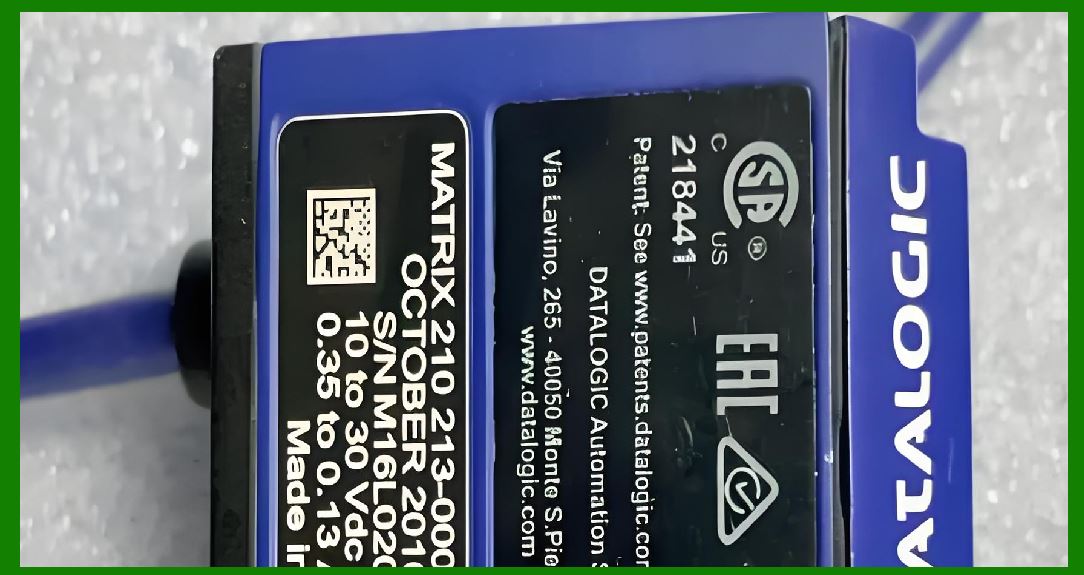
The U.S. Department of Defense requires Item Unique Identification (IUID) marking under MIL-STD-130. DataMatrix is the specified technology for this marking. The encoding process allows the DoD to encode enterprise identifiers, part numbers, and serial numbers in a symbol that can be read reliably in harsh field environments. The error correction is critical for military logistics. |
|
Chapter 25: Aerospace Parts Marking |
The American aerospace industry uses DataMatrix for part marking on turbine blades, engine housings, and airframe structures. The encoding process supports the storage of part numbers, serial numbers, material certifications, and maintenance histories in a laser-etched symbol. The error correction ensures the code survives extreme temperatures, vibration, and chemical exposure. |
Chapter 26: Automotive Parts Tracking |
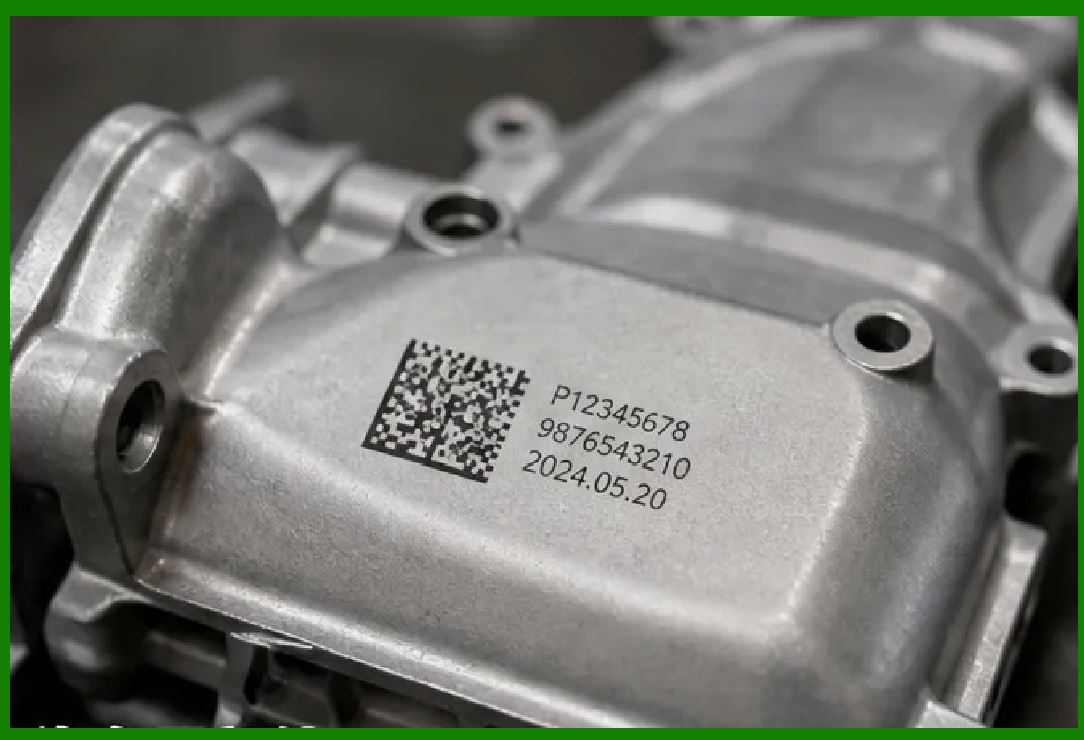
American automotive manufacturers use DataMatrix for parts tracking and quality control. The encoding process allows engine blocks, transmissions, and electronic control units to carry comprehensive identification and test data. The serpentine module placement and interleaving ensure the code remains readable despite exposure to oils, high temperatures, and robotic handling. |
Chapter 27: Electronics Manufacturing |
American electronics manufacturers use DataMatrix on printed circuit boards, semiconductor packages, and components. The encoding process's ability to select the smallest symbol size is essential for fitting codes in the limited space between components and circuit traces. The error correction compensates for the challenges of tiny module sizes and low-contrast markings. |
|
Chapter 28: Laboratory Sample Tracking |
Clinical laboratories across the United States use DataMatrix codes on specimen containers, slides, and test tubes. The encoding process allows patient identifiers, sample numbers, and test requisition data to be stored in codes that fit on tiny surfaces. The error correction ensures codes on often-handled laboratory items remain readable, reducing sample identification errors. |
Chapter 29: Retail Sunrise 2027 |
The American retail industry has set the Sunrise 2027 timeline for scanning 2D barcodes at point-of-sale. GS1 US has issued guidelines for implementing 2D barcodes in apparel and general merchandise sectors . The encoding process enables DataMatrix codes to provide improved product information, traceability, authentication, and streamlined checkout and returns . |
Chapter 30: Apparel and General Merchandise |
American apparel brands use DataMatrix on care labels and garment tags. The encoding process supports the storage of style numbers, sizes, dye lots, and other product information. The ability to choose the most efficient encoding scheme helps fit the data on fabric labels that may be folded, washed, or handled. |

|
Chapter 31: Food Safety Traceability |
American food producers use DataMatrix on packaging to encode farm origin, harvest dates, and batch information. The encoding process enables comprehensive traceability data to be stored in a symbol that can be scanned at various points in the supply chain. The error correction ensures readability even when packaging is wet, cold, or damaged. |
Chapter 32: EV Battery Manufacturing |
American electric vehicle battery manufacturers use DataMatrix on battery cells and modules. The encoding process allows formation test data, capacity readings, and internal resistance measurements to be stored on each cell. The interleaved error correction is critical for codes on cylindrical or pouch cells that may be exposed to manufacturing stresses. |
Chapter 33: Solar Panel Manufacturing |
American solar panel manufacturers use DataMatrix on panel frames and junction boxes. The encoding process supports the storage of panel serial numbers, IV-curve data, and warranty start dates. The error correction ensures codes remain readable after decades of outdoor exposure to sunlight, rain, and temperature extremes. |

|
Chapter 34: Construction Structural Steel |
American steel fabricators apply DataMatrix to structural steel beams using dot-peen markers. The encoding process allows yield strength and mill certification data to be encoded in a durable symbol. Structural engineers scan the codes on-site to verify materials, relying on the error correction to compensate for surface conditions and handling damage. |
Chapter 35: Defense Supply Chain Logistics |
The defense supply chain involves millions of parts moving through hundreds of facilities. DataMatrix codes on parts and packages are read by automated scanners at receiving docks, warehouses, and distribution centers. The encoding process's support for the X12 and EDIFACT schemes enables efficient encoding of EDI data, supporting automated logistics. |
Chapter 36: Hospital Medication Administration |
American hospitals scan DataMatrix codes on medication packages and patient wristbands for the 'five rights' verification. The encoding process ensures all necessary medication data is stored in a single symbol that can be scanned quickly at the patient's bedside. The error correction provides an additional safety layer in critical healthcare environments. |

|
Chapter 37: Surgical Instrument Tracking |
American hospitals use DataMatrix codes on surgical instruments for tracking and sterilization management. The encoding process allows instrument identifiers, manufacturing dates, and sterilization histories to be laser-etched on each instrument. The error correction ensures codes survive repeated autoclave cycles and handling. |
Chapter 38: 3D Printed Parts |
American manufacturers of 3D printed parts embed DataMatrix codes directly into the CAD model. After printing, the code is integral to the part itself. The encoding process ensures the data is stored in a format that can be printed at the resolution of the 3D printer, and the error correction compensates for minor printing imperfections. |
Chapter 39: Jewelry and Luxury Goods |
American jewelry retailers engrave DataMatrix on rings, watch clasps, and other luxury items. The encoding process allows SKU, carat weight, certificate numbers, and ownership history to be stored in an extremely small code. The serpentine module placement helps fit the code on curved or irregular surfaces. |

|
Chapter 40: Document Management |
American government agencies and corporations use DataMatrix on archival folders and documents. The encoding process supports the storage of document identifiers and metadata in a small symbol that links physical documents to scanned digital copies. The error correction ensures codes on aged documents remain readable. |
Chapter 41: Access Control |
American organizations use DataMatrix on identification badges, access cards, and visitor passes. The encoding process allows user credentials and access permissions to be stored securely in the code. The error correction ensures access is not denied due to a worn or partially obscured code. |
Chapter 42: Event Ticketing |
American event venues use DataMatrix on wristbands and paper tickets. The encoding process supports the storage of ticket identifiers, seat assignments, and attendee information in a code that can be scanned at entry gates. The error correction ensures entry validation works even if the ticket is folded or crumpled. |

|
Chapter 43: Industrial Tools and Equipment |
American manufacturers of industrial tools use DataMatrix for asset tracking. The encoding process allows tool identifiers, calibration dates, and maintenance histories to be marked on tools exposed to oils, dirt, and physical abrasion. The error correction ensures codes remain readable despite harsh conditions. |
Chapter 44: Chemical and Biomedical Instruments |
American manufacturers of chemical and biomedical analysis instruments use DataMatrix on consumables, reagents, and instrument parts. The encoding process supports the storage of lot numbers, expiration dates, and test results. The error correction ensures codes exposed to chemicals and biological fluids remain readable. |
Chapter 45: Warehouse Inventory Management |
American warehouses use DataMatrix on rack beams, storage locations, and individual items. The encoding process allows location identifiers, product identifiers, and inventory data to be stored in a symbol that can be read by forklift-mounted scanners. The error correction compensates for dust, vibration, and occasional impacts. |

|
Chapter 46: Library and Archive Management |
American libraries and archives use DataMatrix on book spines, archival boxes, and artifacts. The encoding process allows item identifiers and metadata to be stored in a symbol that can be scanned for inventory and retrieval. The error correction ensures codes remain readable over decades of handling. |
Chapter 47: Mail and Document Tracing |
The USPS and private couriers use DataMatrix on envelopes and packages for automated routing and tracking. The encoding process supports the efficient encoding of routing data in a small footprint. The error correction ensures readability despite postal handling, including sorting machines and weather exposure. |
Chapter 48: Museum Artifact Preservation |
American museums use DataMatrix on artifact labels. The encoding process allows accession numbers, provenance, and conservation history to be stored in a code that does not obscure the artifact. The error correction ensures codes remain readable for curatorial and research purposes. |

|
Chapter 49: The 2024 ISO Standard Update |
The 2024 revision of ISO/IEC 16022 defines the encoding process with updated requirements . The revision confirms the three-step process of data encodation, error correction generation, and module placement . It also mandates support for rectangular formats and Extended Channel Interpretations, ensuring the encoding process can handle modern international applications. |
Chapter 50: The Future of Encoding |
As American industries continue to digitize, the encoding process will evolve to meet new demands. The GS1 US guidelines for 2D barcode adoption in healthcare, apparel, and general merchandise represent the next phase . The encoding process will support more data, more efficient storage, and integration with GS1 Digital Link for consumer engagement. The foundational three-step process, however, will remain the same, ensuring DataMatrix continues to be the reliable, robust, and versatile data carrier American industry depends on. |

|
Detailed Summary |
The DataMatrix encoding process is a carefully orchestrated three-step sequence that transforms raw data into a durable, machine-readable symbol. The first step, data encodation, analyzes the input data and selects the most efficient encoding scheme from a range including ASCII, C40, Text, X12, EDIFACT, and Base 256 . The choice of scheme significantly impacts the symbol size and data capacity, with numeric data being the most compact and binary data the least. The encoder adds pad characters as needed and selects the smallest symbol size that can accommodate the data . |
The second step, error correction codeword generation, is the heart of DataMatrix's robustness. The Reed-Solomon algorithm generates error correction codewords, and for larger symbols, the codeword stream is subdivided into interleaved blocks . This interleaving ensures that localized damage is spread across different parts of the data, dramatically improving the chance of recovery . The process expands the codeword stream, with correction codewords placed after the data codewords . |
The third step, module placement in the matrix, places the codewords into a specific serpentine pattern . This placement strategy, combined with the interleaving, ensures that adjacent codewords are not physically adjacent, making the code more resistant to localized damage. The finder pattern and quiet zone are maintained as separate structural elements . |
In the United States, this encoding process enables DataMatrix to serve critical applications across every major industry. In healthcare, GS1 DataMatrix codes support pharmaceutical serialization under the Drug Supply Chain Security Act, medical device identification under FDA regulations, and patient safety initiatives in hospitals and non-retail healthcare settings . The GS1 Healthcare endorsement of DataMatrix is based on its ability to encode more data in smaller spaces, enable direct part marking, and provide error detection and correction . |
The USPS relies on the encoding process for the Intelligent Mail Matrix Barcode (IMmb), which improves package visibility and reduces mail rework by providing redundant scanning opportunities . The Department of Defense uses DataMatrix for Item Unique Identification, ensuring military equipment is traceable through the supply chain. The aerospace, automotive, electronics, food, and energy industries all depend on the encoding process to make DataMatrix the reliable identifier that their operations require. |

|
The encoding process may be invisible to the end user, but it is the technical foundation that makes DataMatrix indispensable. As the 2024 revision of ISO/IEC 16022 confirms, the process continues to evolve to meet modern demands . With the retail industry's Sunrise 2027 initiative and GS1 US guidelines driving 2D barcode adoption, the encoding process will remain central to American industry for decades to come. It is the process that turns data into durability, enabling traceability and accountability in the systems that power the modern economy. |
 cs@easiersoft.com