DataMatrix Decoded: A Technical Deep-Dive |
Executive Summary |
The DataMatrix decoding process is the remarkable sequence that transforms a printed or etched pattern of black and white squares back into meaningful data. When a scanner captures an image of a DataMatrix code, it must locate the distinctive L-shaped finder pattern, determine the size of each individual module, sample the grid to extract the raw codewords, and then apply the powerful Reed-Solomon error correction algorithm to recover the original data even if the code is damaged, dirty, or partially obscured . This decoding process is the reason DataMatrix can be read reliably in the most demanding conditions, from high-speed USPS sorting facilities to operating rooms and battlefield logistics. |
The decoding process is built on years of research and standardization. The ISO/IEC 16022 standard provides a reference decode algorithm that all compliant scanners implement, ensuring consistent decoding across different equipment manufacturers . In practice, decoding must handle challenges like perspective distortion from codes read at an angle, non-uniform lighting, low contrast, and damage from handling or environmental exposure. Modern scanners use sophisticated image processing techniques to overcome these challenges, making DataMatrix one of the most reliable data carriers available. |
In the United States, the decoding process enables applications where reliability is absolutely critical. The Drug Supply Chain Security Act requires that pharmaceutical codes be decodable through the entire supply chain, from manufacturing to dispensing. Hospitals depend on accurate decoding for the 'five rights' medication verification that protects patient safety. The U.S. Postal Service uses automated decoders in high-speed sorting equipment to route billions of packages each year. This article explores the technical steps of the decoding process and presents dozens of real-world American applications that depend on reliable decoding. |

|
Part One: Technical Steps of the Decoding Process |
Chapter 1: The Decoding Process Overview |
The decoding process follows a logical sequence that transforms a captured image into usable data. The first major step is image capture and preprocessing, where the scanner obtains a digital image of the DataMatrix code. The second step is code location, where the decoder finds the L-shaped finder pattern and determines the code's orientation and size. The third step is grid sampling, where the decoder determines the size of each module and extracts the raw data. The fourth step is error correction, where Reed-Solomon is applied to correct any errors. The final step is data output, where the corrected data is transmitted to the host system . |
Chapter 2: Image Capture and Preprocessing |
The decoding process begins when the scanner captures an image of the DataMatrix symbol. The scanner's camera, typically a CMOS or CCD sensor, converts the light reflected from the code into a digital image. Preprocessing steps are often applied to improve image quality. These may include adjusting brightness and contrast, removing noise, and enhancing edges. The goal of preprocessing is to create an image where the DataMatrix code can be clearly distinguished from the background and any surrounding graphics. |
Chapter 3: Binarization or Thresholding |
After preprocessing, the image must be converted into a binary image of black and white pixels. This process, called binarization or thresholding, involves comparing each pixel's gray value to a threshold. Pixels above the threshold are considered white, and pixels below are considered black . The challenge is selecting the correct threshold, especially when the code has low contrast or uneven lighting. Advanced algorithms use adaptive thresholding, which adjusts the threshold based on local image characteristics, to handle these challenging conditions. |

|
Chapter 4: Locating the L-Shaped Finder Pattern |
The first major decoding step is to locate the L-shaped finder pattern . This pattern consists of two solid adjacent borders forming an L shape along the left and bottom sides of the symbol . The decoder searches for the L pattern using edge detection algorithms that identify the sharp transitions between the dark L border and the light quiet zone. The L pattern's distinctive geometry allows the decoder to determine the code's orientation, even if the code is rotated by any angle, and correct for perspective distortion . |
Chapter 5: Determining the Code Size |
Once the L pattern is located, the decoder must determine the size of the DataMatrix symbol . The size is determined by the number of modules in each dimension. The decoder counts the number of modules along the solid L border and the alternating Clock Track (the timing pattern) on the opposite sides. This counting process must be accurate because the symbol size determines how many data and error correction codewords are expected. The decoder must also account for distortion that may make the modules appear different sizes in different parts of the image. |
Chapter 6: The Clock Track and Module Size |
The alternating Clock Track on the two sides opposite the L pattern provides critical information for determining module size . The Clock Track is a dotted line of alternating dark and light modules. By measuring the width of the Clock Track and counting the transitions between dark and light, the decoder can calculate the average module size . This calculation is essential for accurately sampling the grid; if the module size is incorrect, the decoder will sample the wrong positions and extract incorrect data. |

|
Chapter 7: Perspective and Distortion Correction |
When a DataMatrix code is viewed from an angle, the image appears distorted, with squares appearing as trapezoids. This is called perspective distortion. The decoder uses the geometry of the L pattern and the Clock Track to correct for this distortion . The correction process mathematically transforms the distorted image back into a regular grid, where all modules have the same size and are aligned in straight rows and columns. This mathematical correction is one of the reasons DataMatrix can be read reliably even when the scanner is not perfectly aligned with the code. |
Chapter 8: Grid Sampling |
After the perspective distortion is corrected, the decoder samples the grid to extract the raw data codewords . The process involves determining the positions of each module within the regular grid and reading the color of each module (black or white) . This sampling process must be precise; even a small error in module positioning can cause a bit error that the error correction must handle. Modern scanners use interpolation techniques to estimate the color of each module based on the surrounding pixels, improving accuracy. |
Chapter 9: Codeword Extraction |
Once the modules have been sampled, the decoder extracts the codewords. The codewords are the binary data units that were placed in the matrix during the encoding process. The decoder follows the same serpentine pattern used during encoding to read the codewords in the correct order . This pattern snakes back and forth across the matrix, ensuring that adjacent codewords in the data stream were not physically adjacent during encoding, which improves robustness. |

|
Chapter 10: Applying Reed-Solomon Error Correction |
The extracted codewords include both data codewords and error correction codewords. The decoder applies the Reed-Solomon algorithm to detect and correct errors . The algorithm works by treating the codewords as a mathematical polynomial and using the redundant codewords to reconstruct the original polynomial. If the number of errors is within the correction capacity, the decoder can recover the original data perfectly . If the damage exceeds the capacity, the decoder will detect that correction is impossible and report a decode failure. |
Chapter 11: Handling Erasures and Errors |
Reed-Solomon can handle two types of problems: erasures and errors. Erasures occur when the decoder knows that a specific codeword is missing or unreadable, often because the scanner could not read a particular area of the code. Errors occur when a codeword is read but the value is wrong. The decoder can correct more erasures than errors because erasures provide location information. In practice, the decoder uses both types of information to recover the data with the highest possible reliability. |
Chapter 12: Data Decoding |
After error correction, the recovered data must be decoded according to the encoding scheme that was used . The decoder must determine which encoding scheme (ASCII, C40, Text, X12, EDIFACT, or Base 256) was used and convert the codewords back into the original characters or bytes . The encoding scheme is typically identified by the first few codewords, which serve as mode indicators. The decoder also handles any pad characters that were added during encoding, removing them from the output. |

|
Chapter 13: Output and Transmission |
The final step of the decoding process is to transmit the decoded data to the host system . The data is typically output as a string of characters or bytes. For GS1 DataMatrix applications, the decoder must also handle the Function 1 Symbol Character (FNC1), which indicates that the data follows GS1 Application Identifier formatting. The decoder may parse the data according to the application identifiers, extracting the product identifier, lot number, expiration date, and other fields. |
Chapter 14: The Reference Decode Algorithm |
ISO/IEC 16022 defines a reference decode algorithm that all compliant scanners must implement . This algorithm provides a common approach to decoding, ensuring that different scanners produce the same result from the same input. The reference algorithm includes the steps described above: locate the finder pattern, determine symbol size, correct distortion, sample the grid, extract codewords, apply error correction, and decode the data. The standard ensures consistency across equipment manufacturers. |
Chapter 15: Decoding Challenges |
Real-world decoding faces numerous challenges. Codes may be printed with low contrast, making it difficult to distinguish black from white. Codes may be damaged by scratches, dirt, or wear. Codes may be printed on curved surfaces, causing significant distortion. Lighting conditions may be poor, with shadows or glare. Modern decoders use sophisticated algorithms to handle these challenges, including adaptive thresholding, morphological processing, and advanced correction techniques. The decoding process is a testament to the robustness of the DataMatrix symbology and the ingenuity of the engineers who designed the decoding algorithms. |

|
Part Two: American Applications and the Decoding Process |
Chapter 16: Pharmaceutical Serialization Under DSCSA |
The Drug Supply Chain Security Act requires serialization of prescription drugs in the United States. Each package carries a GS1 DataMatrix code that must be decoded at multiple points in the supply chain. The decoding process in pharmacies and hospitals must be fast and reliable, allowing pharmacists and nurses to verify medications quickly. The error correction is essential because pharmaceutical labels can be scratched or smudged during handling. |
Chapter 17: Fresenius Kabi's Unit-of-Use Barcodes |
Fresenius Kabi marks over 700 pharmaceutical products with GS1 DataMatrix codes in the United States. Many of these products are in small packaging where codes are tiny and printed on curved vial surfaces. The decoding process must handle the distortion caused by the curved surface and the small module size. Modern decoders use perspective correction and interpolation to read these challenging codes reliably. |
Chapter 18: Hospital Medication Administration |
American hospitals scan DataMatrix codes on medication packages and patient wristbands for the 'five rights' verification. The decoding process must be fast and reliable at the patient's bedside, where lighting conditions may be poor, and the nurse may be holding the scanner at an angle. The L-shaped finder pattern's ability to enable omnidirectional reading is critical; the nurse does not need to orient the code precisely. |
|
Chapter 19: Healthcare Non-Retail Applications |
GS1 US has published guidelines for implementing GS1 DataMatrix in non-retail healthcare channels, including hospitals, pharmacies, clinics, infusion centers, long-term care facilities, and ambulances . The decoding process in these settings often uses handheld scanners or mobile devices. The guidelines emphasize the importance of reliable decoding for patient safety and efficient recall management . |
Chapter 20: Medical Device Identification |
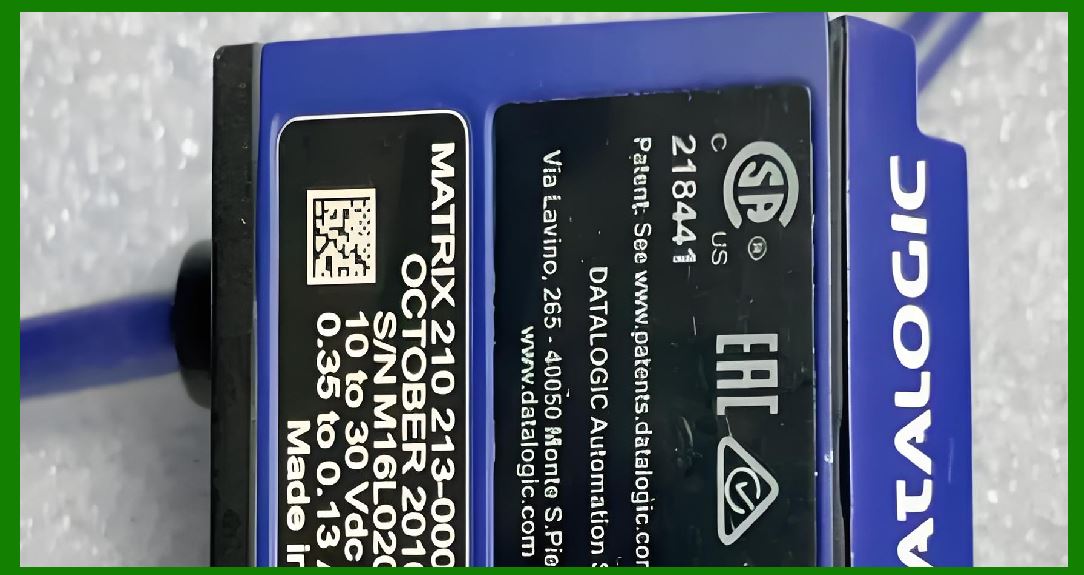
The FDA requires Unique Device Identifiers (UDIs) on medical devices. The decoding process in hospitals must read DataMatrix codes on surgical instruments, implants, and packaging. The codes are often laser-etched on metal surfaces with low contrast, requiring advanced decoding algorithms to distinguish the modules from the metal background. The error correction ensures the UDI is read correctly despite sterilization marks or wear. |
Chapter 21: Surgical Instrument Tracking |
American hospitals use DataMatrix codes on surgical instruments for tracking and sterilization management. The decoding process must read codes on instruments that have been repeatedly sterilized, often with accumulated scratches and wear. The Reed-Solomon error correction is essential because even a scratched code can be decoded if the damage is not too extensive. |

|
Chapter 22: USPS Package Routing |
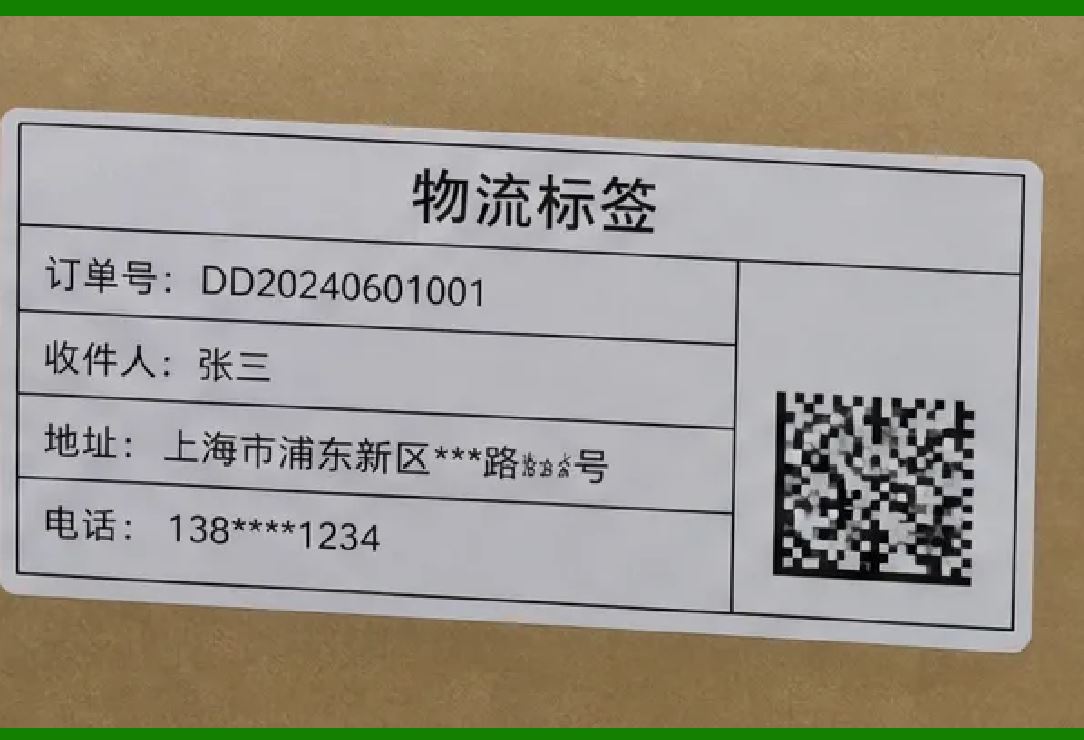
The United States Postal Service uses DataMatrix-based Intelligent Mail Matrix Barcodes (IMmb) for package routing . The decoding process in USPS processing facilities uses high-speed tunnel scanners that read codes as packages move along conveyor belts at high speed . The decoders must handle codes that are distorted, dirty, or partially obscured, and they must decode the codes in milliseconds to keep up with the package flow. |
Chapter 23: USPS IMmb Redundancy |
The IMmb's smaller footprint allows two IMmb barcodes to be added to standard shipping labels, providing redundancy of the barcode data . This gives sorters two additional chances to read the barcode . The decoding process is critical for this redundancy; if one code is unreadable due to damage, the decoder can still read the other code, ensuring package visibility. |
Chapter 24: Private Parcel Carrier Sorting |
FedEx, UPS, and other private carriers use DataMatrix codes on shipping labels. The decoding process in their sorting hubs uses high-speed cameras that capture images of codes as packages pass by. The decoders must handle codes that are rotated, tilted, or partially covered by other labels. The L-shaped finder pattern enables the decoders to locate the code regardless of its orientation. |
|
Chapter 25: Department of Defense Item Unique Identification |
The U.S. Department of Defense requires Item Unique Identification (IUID) marking on military equipment. The decoding process in the field uses handheld scanners that must read codes on equipment exposed to sand, moisture, and extreme temperatures. The error correction is essential because codes may be worn or partially obscured by dirt. The decoding process must be reliable because misread equipment could affect mission readiness. |
Chapter 26: Defense Supply Chain Logistics |
The defense supply chain involves millions of parts moving through hundreds of facilities. DataMatrix codes on parts and packages are read by automated scanners at receiving docks, warehouses, and distribution centers. The decoding process must handle codes on parts with irregular surfaces, such as curved or textured surfaces, where distortion correction is essential. |
Chapter 27: Aerospace Parts Marking |
The American aerospace industry uses DataMatrix for part marking on turbine blades, engine housings, and airframe structures. The decoding process in maintenance facilities must read codes on parts that have been exposed to extreme temperatures, vibration, and chemical exposure. The error correction ensures that codes remain readable despite accumulated wear and tear. |

|
Chapter 28: NASA and Space Applications |
NASA has issued guidance on DataMatrix application to aerospace parts. The decoding process in space applications must be extremely reliable; codes on spacecraft components must be decodable even in challenging inspection conditions. The reference decode algorithm specified in ISO/IEC 16022 provides the consistency needed for these critical applications. |
Chapter 29: Automotive Assembly Lines |
American automotive manufacturers use DataMatrix on engine blocks, transmissions, and electronic control units. The decoding process on assembly lines uses robotic cameras that must read codes at high speed as components move along the line. The decoders handle codes that may be partially obscured by oil or dirt and must correct for the perspective distortion caused by cameras at oblique angles. |
Chapter 30: Automotive Quality Control |
DataMatrix codes on automotive components are read at quality control stations. The decoding process must confirm that the correct components are installed and record inspection results. The error correction ensures that codes are read reliably even when the components are handled roughly. |

|
Chapter 31: Electronics Manufacturing |
American electronics manufacturers use DataMatrix on PCBs, semiconductor packages, and components. The decoding process in electronics manufacturing uses high-resolution cameras to read tiny codes on densely populated boards. The decoders must handle the challenges of low contrast (silicon marking) and small module sizes. The L-shaped finder pattern enables reliable location and orientation detection. |
Chapter 32: Semiconductor Wafer Marking |
DataMatrix codes are etched onto semiconductor dies and wafer frames. The decoding process in wafer inspection uses microscope-based scanners. The decoders handle the extremely small module sizes and the challenges of silicon surface textures. The reference decode algorithm ensures consistency across different inspection tools. |
Chapter 33: Solar Panel Manufacturing |
American solar panel manufacturers use DataMatrix on panel frames and junction boxes. The decoding process in field service uses handheld scanners that must read codes on panels exposed to sunlight, rain, and temperature extremes. The error correction ensures that codes remain readable despite outdoor exposure and accumulated dirt. |

|
Chapter 34: EV Battery Manufacturing |
American electric vehicle battery manufacturers use DataMatrix on battery cells and modules. The decoding process in battery assembly uses scanners that must read codes on cylindrical or pouch cells. The decoders handle the curvature of the cell surface and the distortion this causes in the captured image. Perspective correction is essential. |
Chapter 35: Construction Structural Steel |
American steel fabricators apply DataMatrix to structural steel beams using dot-peen markers. The decoding process on construction sites uses handheld scanners that must read codes on steel beams exposed to dirt, rust, and welding spatter. The error correction is essential because codes may be partially obscured or damaged. |
Chapter 36: Food Safety Traceability |
American food producers use DataMatrix on packaging to encode farm origin, harvest dates, and batch information. The decoding process in the supply chain uses scanners that must read codes on packaging that may be wet, cold, or damaged. The error correction ensures that codes remain readable despite the challenging conditions of food distribution. |

|
Chapter 37: Retail Sunrise 2027 |
The American retail industry's Sunrise 2027 initiative aims to enable scanning of 2D barcodes at point-of-sale. DataMatrix codes on consumer packaging will be decoded by consumer smartphones and retail scanners. The decoding process in these consumer-facing applications must be intuitive and reliable. The L-shaped finder pattern enables omnidirectional reading, allowing consumers to scan codes from any angle. |
Chapter 38: Apparel and General Merchandise |
American apparel brands use DataMatrix on care labels and garment tags. The decoding process in distribution centers uses scanners that must read codes on fabric labels that may be folded or wrinkled. The decoders handle the distortion caused by the flexible label material and the challenges of reading codes on curved garment surfaces. |
Chapter 39: Warehouse Inventory Management |
American warehouses use DataMatrix on rack beams, storage locations, and individual items. The decoding process in warehouses uses forklift-mounted scanners and handheld readers. The decoders must handle codes that may be dusty or partially obscured by stored items. The error correction ensures that codes are read reliably, supporting accurate inventory management. |

|
Chapter 40: Laboratory Sample Tracking |
Clinical laboratories across the United States use DataMatrix codes on specimen containers, slides, and test tubes. The decoding process in laboratories uses automated analyzers that must read codes on tubes rotating on carousels. The decoders handle the curvature of the tube surface and the small module sizes. The L-shaped finder pattern enables fast and reliable decoding. |
Chapter 41: Industrial Tools and Equipment |
American manufacturers of industrial tools use DataMatrix for asset tracking. The decoding process in maintenance shops and field service uses handheld scanners that must read codes on tools exposed to oils, dirt, and physical abrasion. The error correction ensures that codes remain readable despite the harsh conditions. |
Chapter 42: Chemical and Biomedical Instruments |
American manufacturers of chemical and biomedical analysis instruments use DataMatrix on consumables and instrument parts. The decoding process in laboratories uses scanners that must read codes exposed to chemicals and biological fluids. The decoders handle the challenges of codes on small vials and tubes. |

|
Chapter 43: Access Control |
American organizations use DataMatrix on identification badges, access cards, and visitor passes. The decoding process in access control uses door readers and handheld scanners. The decoders must be fast and reliable, as a decoding failure could delay or deny access. The L-shaped finder pattern enables quick code location. |
Chapter 44: Event Ticketing |
American event venues use DataMatrix on wristbands and paper tickets. The decoding process at entry gates uses scanners that must read codes on tickets that may be folded, crumpled, or worn. The error correction ensures that tickets are validated correctly, supporting efficient entry management. |
Chapter 45: Jewelry and Luxury Goods |
American jewelry retailers engrave DataMatrix on rings, watch clasps, and other luxury items. The decoding process for inventory management uses specialized scanners that must read extremely small codes on curved surfaces. The decoders handle the distortion caused by the curved surface and the small module size. |

|
Chapter 46: 3D Printed Parts |
American manufacturers of 3D printed parts embed DataMatrix codes directly into the CAD model. The decoding process after printing uses scanners that must read codes integrated into the part surface. The decoders handle any minor imperfections introduced by the 3D printing process, using error correction to compensate. |
Chapter 47: Museum and Archive Management |
American museums use DataMatrix on artifact labels, and archives use them on storage boxes. The decoding process in museums and archives uses handheld scanners that must read codes on labels that may be aged, faded, or partially obscured. The error correction ensures that codes remain readable over decades. |
Chapter 48: Mail and Document Tracing |
The USPS and private couriers use DataMatrix on envelopes and packages for automated routing and tracking. The decoding process in mail sorting uses high-speed cameras that must read codes on small surfaces, often at high speed. The decoders must handle codes that may be partially covered by postmarks or other markings. |

|
Chapter 49: The 2024 ISO Standard Update |
The 2024 revision of ISO/IEC 16022 defines the decoding process with updated requirements . The revision confirms the reference decode algorithm and the steps of locating the finder pattern, determining symbol size, correcting distortion, sampling the grid, and applying error correction . The revision also ensures compatibility with the mandatory UTF-8 and ECI support added to the encoding process. |
Chapter 50: The Future of Decoding |
As American industries continue to digitize, the decoding process will evolve to meet new demands. AI-enhanced decoders are being developed that can read even severely damaged DataMatrix codes using machine learning algorithms. Mobile devices are becoming more capable scanners, with smartphone cameras now able to read DataMatrix codes in many applications. The L-shaped finder pattern and Reed-Solomon error correction remain the foundation, but advances in image processing and computing power will make decoding faster, more reliable, and more accessible. The decoding process will continue to be the bridge between the physical and digital worlds, enabling the traceability and accountability that modern American industry depends on. |

|
Detailed Summary |
The DataMatrix decoding process is a remarkable sequence that transforms a visual pattern into usable data. The process begins with image capture and preprocessing, where the scanner obtains a digital image and enhances it for analysis. Binarization converts the image to black and white using adaptive thresholding to handle varying lighting and contrast conditions. The decoder then locates the L-shaped finder pattern, which provides the orientation and size of the code. The alternating Clock Track on the opposite sides helps determine the module size and correct for perspective distortion. The decoder samples the grid to extract the raw codewords, following the serpentine pattern that was used during encoding. The Reed-Solomon error correction algorithm is then applied to detect and correct any errors, using the redundant codewords added during encoding. Finally, the decoder converts the codewords back into the original data using the appropriate encoding scheme and transmits the data to the host system . |
The decoding process is essential for DataMatrix to serve critical American applications. In pharmaceutical serialization, the decoding process must be fast and reliable to support the Drug Supply Chain Security Act's requirements for product tracking . In healthcare, the decoding process supports patient safety through the 'five rights' verification in hospitals and efficient recall management in non-retail healthcare channels . The U.S. Postal Service relies on the decoding process for the Intelligent Mail Matrix Barcode (IMmb), which provides redundant scanning opportunities to improve package visibility . In retail, the decoding process will be central to the Sunrise 2027 initiative, enabling consumers and retailers to scan 2D codes at point-of-sale . |
Modern decoding technology handles a remarkable range of challenges. Codes printed on curved surfaces are corrected for perspective distortion. Low-contrast codes on metal or glass are decoded using advanced image processing. Codes scratched, smudged, or partially obscured are recovered using Reed-Solomon error correction. High-speed tunnel scanners decode codes in milliseconds as packages race along conveyor belts. Handheld scanners read codes in dimly lit warehouses, construction sites, and hospital rooms. |
The 2024 revision of ISO/IEC 16022 confirms the decoding process, ensuring that all compliant scanners implement the reference decode algorithm consistently . This standardization is the foundation of DataMatrix's reliability. As AI-enhanced decoding and mobile scanning capabilities advance, the decoding process will continue to improve, making DataMatrix even more accessible and reliable across American industry. |

|
The decoding process may be hidden from the end user, but it is the essential bridge between the physical world of products, equipment, and labels and the digital world of inventory systems, health records, and logistics networks. Every successful scan of a DataMatrix code is the result of this carefully designed process, silently enabling the accuracy and accountability that modern society depends on. |
 cs@easiersoft.com