DataMatrix Decoded: A Technical Deep-Dive |
Executive Summary |
DataMatrix codes can be produced using an extraordinary range of printing and marking technologies, each offering distinct advantages for different materials, environments, and durability requirements. Thermal transfer and inkjet printing are the workhorses of packaging and labeling, enabling high-speed production of millions of codes on paper, plastic, and foil surfaces. For applications demanding permanent identification that must last the lifetime of a product, direct part marking technologies including laser etching, dot peen marking, and chemical etching create codes directly on metal, glass, ceramic, and plastic surfaces that can withstand extreme temperatures, chemical exposure, and physical abrasion . |
In the United States, this technological diversity enables DataMatrix to serve applications ranging from pharmaceutical blister packs printed by high-speed thermal inkjet systems to jet engine turbine blades laser-etched with permanent identification that must survive temperatures from -55 degrees Celsius to over 150 degrees Celsius and continuous vibration . The Department of Defense mandates MIL-STD-130 compliance for DataMatrix codes on military equipment, requiring marks that remain readable throughout decades of service . The FDA's Unique Device Identification requirements drive laser marking of surgical instruments and implants, while the automotive industry relies on both dot peen and laser marking for components tracked through industry standards . From the printing press to the factory floor, the choice of marking technology determines the durability, readability, and regulatory compliance of every DataMatrix code across the American economy. |

|
Part One: Printing Technologies for Labels and Packaging |
Chapter 1: Thermal Transfer Printing |
Thermal transfer printing is one of the most common methods for producing DataMatrix codes on labels. This process uses a heated print head to transfer ink from a ribbon onto the label material. The print head contains many tiny heating elements that selectively melt the ink onto the label in the pattern of the DataMatrix code. Thermal transfer produces high-contrast, durable codes that resist smudging and fading. It is widely used for shipping labels, product labels, and pharmaceutical packaging. The print quality is sufficient for most applications, though the labels themselves can be damaged by moisture, abrasion, or chemicals. |
Chapter 2: Direct Thermal Printing |
Direct thermal printing is a variation where heat-sensitive label material darkens where the print head applies heat, eliminating the need for a ribbon. This method is simpler and less expensive than thermal transfer but produces less durable codes. Direct thermal labels can fade over time, especially when exposed to heat, light, or chemicals. They are commonly used for shipping labels and temporary identification where long-term durability is not required. The U.S. Postal Service uses direct thermal printing for some label applications where the labels need only survive the shipping journey. |
Chapter 3: Thermal Inkjet Printing |
Thermal inkjet printing is a high-resolution technology widely used for printing DataMatrix codes directly on packaging and labels. Thermal inkjet printers propel droplets of ink onto a substrate using heat to create vapor bubbles that eject the ink. Modern industrial thermal inkjet systems can achieve high resolutions up to 600 by 600 dots per inch, sufficient for the small module sizes required for GS1 DataMatrix codes on pharmaceutical packaging . The Videojet Wolke m600 advanced thermal inkjet printer, available in North America, is specifically designed for complex coding requirements in pharmaceutical, tobacco, health and beauty, and other industrial markets . |

|
Chapter 4: Pharmaceutical Serialization with Thermal Inkjet |
Pharmaceutical serialization in the United States relies heavily on high-speed thermal inkjet printing. The Drug Supply Chain Security Act requires serialization of prescription drugs, and thermal inkjet systems provide the speed and resolution needed for high-volume production . The printers must be capable of printing serialized data and GS1 DataMatrix codes in compliance with track-and-trace applications . The printing systems often integrate with process control systems to maintain electronic data records for FDA-regulated industries in compliance with 21 CFR Part 11 . |
Chapter 5: Continuous Inkjet Printing |
Continuous inkjet printing is a high-speed, non-contact method that propels a continuous stream of ink droplets onto the substrate. It is widely used for printing simple codes on packaging lines where high throughput is required. Videojet is a leading manufacturer of continuous inkjet systems, with over 275,000 units installed worldwide and direct sales and service operations in the United States . While continuous inkjet does not achieve the resolution of thermal inkjet systems, it is sufficient for many DataMatrix applications where module sizes are relatively large and speed is the priority. |
Chapter 6: UV Inkjet Printing |
UV inkjet printing uses inks that cure instantly when exposed to ultraviolet light. This technology produces durable codes that resist smudging and chemicals. UV inkjet is often used for printing on non-porous surfaces such as plastics, metals, and glass where traditional inks would not adhere well. It is increasingly used in American pharmaceutical and medical device packaging for permanent, scannable DataMatrix codes that must survive handling and shipping. |

|
Chapter 7: Label Printing and Application |
Many DataMatrix codes are pre-printed on labels that are later applied to products or packaging. Label printers using thermal transfer or inkjet technology produce rolls of labels that are applied by automated label applicators. The label material must be compatible with the product and the environment. For healthcare and food applications, labels must withstand refrigeration, moisture, and handling. For industrial applications, label materials may be specially formulated for chemical or temperature resistance. The GS1 US guidelines for healthcare and retail applications emphasize the importance of print quality and label durability for reliable DataMatrix decoding . |
Chapter 8: Pre-Printed Packaging |
Consumer goods packaging often has DataMatrix codes printed directly on the box, carton, or wrapper during the packaging manufacturing process. This eliminates the need for separate label application and reduces cost. For retail applications under the Sunrise 2027 initiative, DataMatrix codes on packaging must be printed with sufficient quality and contrast to be readable by consumer smartphones . The GS1 US guidelines for apparel and general merchandise provide practical advice for implementing 2D barcodes on product packaging, ensuring they meet both supply chain and consumer requirements . |
Chapter 9: Black Fluorescent Inks for Security |
An innovative approach to DataMatrix printing involves the use of black fluorescent inks. These inks appear visually black or dark grey under normal lighting but fluoresce in a specific wavelength range when excited by shorter wavelength light, such as ultraviolet . This provides enhanced security because the code becomes covert: it is readable by standard scanners under visible light but also has a fluorescent component that can be used for authentication. If the fluorescent image is not detected or does not match a reference image, the document can be rejected as an unauthorized copy . This technique simplifies symbol detection by enhancing the signal-to-noise ratio of the code in the environment of other visible printing and provides a powerful anti-counterfeiting feature . Pitney Bowes, a major U.S. mailing and document solutions company, has patented this approach for DataMatrix and other optical codes . |

|
Part Two: Direct Part Marking Technologies |
Chapter 10: What is Direct Part Marking |
Direct part marking is a process that permanently marks a DataMatrix code directly on the surface of a component, rather than on a separate label. This approach is used when labels would not survive the component's operating environment or when permanent traceability is required throughout the component's entire lifecycle. Direct part marking codes are considered permanent because they would require significant damage to become unreadable, unlike labels that can peel, tear, or be obscured by moisture. In aerospace applications, DataMatrix marks must survive temperatures ranging from -55 degrees Celsius to over 150 degrees Celsius, continuous vibration with accelerations up to 20g, and exposure to aggressive fluids such as Jet-A1 fuel and hydraulic oils . |
Chapter 11: Laser Marking |
Laser marking is the most common direct part marking technology for DataMatrix codes. A fiber laser is typically used to create high-contrast, permanent marks on metals, plastics, glass, and ceramics. The laser works by one of several mechanisms: ablation removes surface material to create a tactile mark; annealing heats the subsurface to create a color change on the surface; carbonization chars the surface for dark marks on light materials. Laser marking produces the highest resolution and contrast of any direct part marking method, making it suitable for the smallest DataMatrix codes . |
Chapter 12: Fiber Lasers for Metal Marking |
Fiber lasers are the workhorse of American industrial laser marking. They are used to mark DataMatrix codes on metal parts including engine blocks, turbine blades, medical implants, and surgical instruments. Fiber lasers produce marks with excellent contrast and durability, able to withstand extreme temperatures, chemical exposure, and physical abrasion . For 7xxx-series aluminum alloys commonly used in primary aerospace structures, fiber lasers with pulses of 30 to 50 nanoseconds and average powers between 15 and 30 watts are typically used. The marking depth generally varies between 10 and 50 micrometers, providing lasting contrast without compromising structural integrity . |

|
Chapter 13: Laser Marking of Aerospace Components |
The aerospace industry represents one of the most demanding industries in terms of traceability and permanent identification of components . Every element installed on an aircraft, from the smallest screw to complex systems such as engines, must be traceable throughout its entire operational life cycle, which can span decades . Laser marking with DataMatrix symbols, as specified in MIL-STD-130N section 5.8.2, allows essential information to be encoded in extremely small spaces, often less than 3 to 4 square millimeters . A common error in aerospace laser marking concerns the handling of contrast after subsequent surface treatments. If marks are applied before final anodizing, the electrochemical treatment can equalize the contrast, making the DataMatrix virtually illegible. The solution is to perform marking as the last operation in the production cycle . |
Chapter 14: Laser Marking of Stainless Steels and Superalloys |
For 316-series austenitic stainless steels, widely used in hydraulic and pneumatic systems, annealing marking offers excellent results. With fiber lasers operating at powers of 18 to 25 watts, marking speeds of 800 to 1200 millimeters per second, and controlled defocusing of about 2 to 3 millimeters, permanent dark contrast is achieved without ablation of the material. The thermal penetration depth remains below 5 micrometers, completely preserving the surface mechanical properties . |
Nickel-based superalloys such as Inconel 718 or Waspaloy, used in the hot sections of turbo gas engines, require even more sophisticated approaches. Their high thermal conductivity and resistance to oxidation make it difficult to achieve stable contrasts. In these cases, MOPA lasers with fine control of pulse duration adjustable between 2 and 500 nanoseconds enable optimization of deposited energy. For Inconel 718, typical parameters include pulses of 80 to 120 nanoseconds, frequencies of 25 to 35 kilohertz, and peak powers around 15 kilowatts, with controlled ablation depths between 20 and 40 micrometers . |
Chapter 15: UV Lasers for Composite Materials |
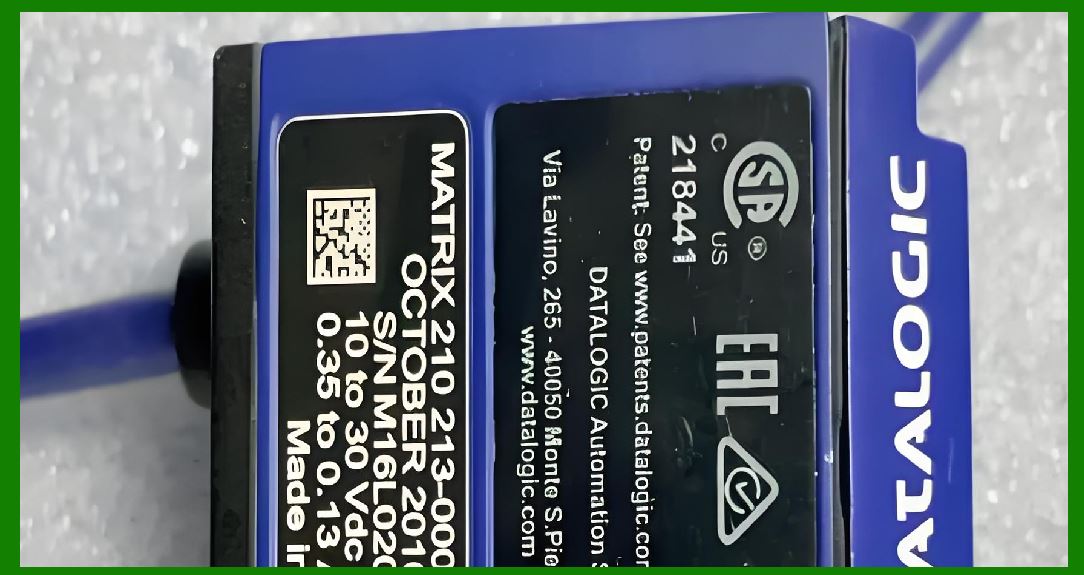
For applications on Carbon Fiber Reinforced Polymer matrix composites, increasingly popular in modern aerospace structures where they can make up to 50 percent of the structural weight of advanced aircraft, ultraviolet wavelengths (typically 355 nanometers) offer significant advantages. The photochemical interaction, predominant over the thermal effect, minimizes heat-affected zones typically below 50 micrometers and reduces the risk of delamination or damage to reinforcement fibers. With solid-state UV lasers operating at average powers of 3 to 8 watts and frequencies of 30 to 80 kilohertz, markings with controlled depths between 10 and 30 micrometers on the polymer matrix are achieved, sufficient for reliable DataMatrix decoding . |
|
Chapter 16: Dot Peen Marking |
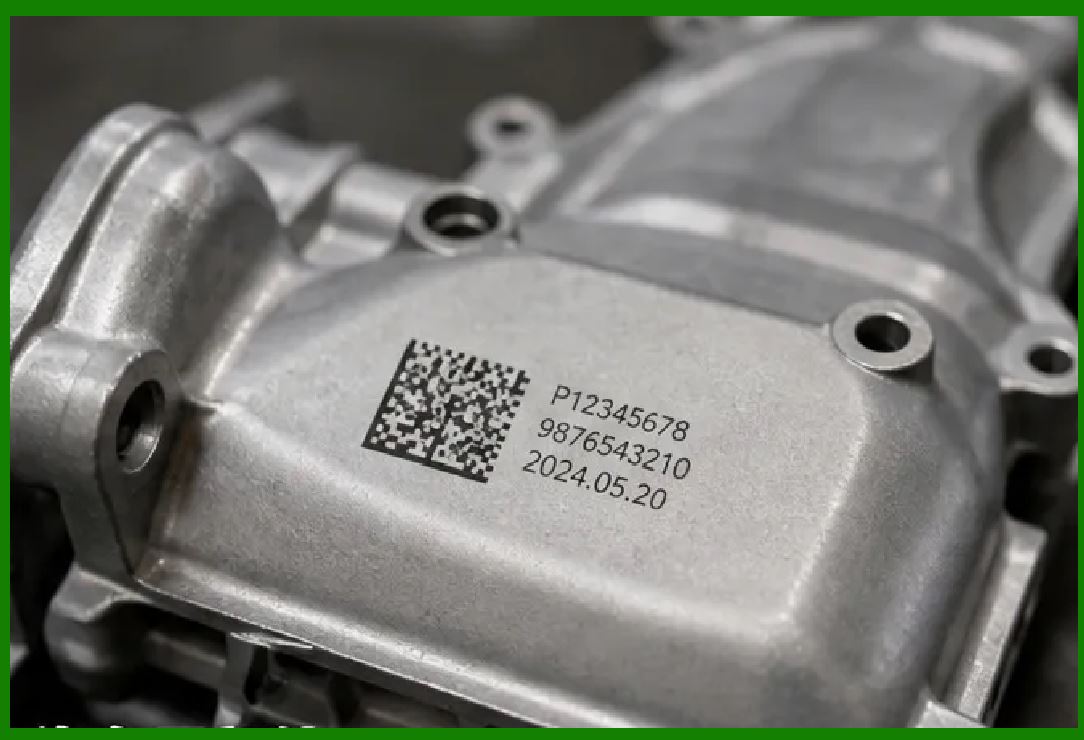
Dot peen marking is a direct part marking method that uses a pneumatically driven pin to create a series of small indentations on the surface of a metal or hard plastic part. The indentations form the dark modules of the DataMatrix code, while the unmarked surface forms the light modules. Dot peen is considered the most cost-effective direct part marking method for large volumes, but produces lower contrast than laser marking, which can make the codes more challenging to read . |
Chapter 17: Dot Peen Applications in Aerospace and Medical Industries |
Dot peen marking is widely used in the American aerospace and medical industries for marking parts that require deep, durable identification. Borries Marking Systems, based in Ann Arbor, Michigan, produces dot peen marking systems specifically designed to meet aerospace industry standards. Their Model 350 dot matrix machine, for example, is designed to meet AS9132 requirements for DataMatrix codes on aerospace components, with integrated image processing for complete marking verification for traceability and lot control . The same company also offers a tabletop DataMatrix marking system for the medical industry that utilizes a stylus for deep marking to ensure traceability of clinical instruments, capable of marking DataMatrix ECC200 codes according to HIBC and GS1 specifications . |
Chapter 18: Chemical Etching and Electrochemical Marking |
Chemical etching, also known as electrochemical etching, uses a sodium-based solution combined with a pulsed low-voltage current to dissolve metal from the surface of a conductive part. The process uses a stencil to define the DataMatrix pattern. Chemical etching produces moderate-contrast marks on metals such as stainless steel and titanium. It is used in American medical device manufacturing for marking instruments and implants that must retain their corrosion resistance. Electrochemical marking is a variation that uses an electrolyte solution and a low-voltage current, generating no heat and being suitable for marking thin or heat-sensitive metal parts. |
|
Chapter 19: Comparison of Direct Part Marking Technologies |
Each direct part marking technology offers a different balance of cost, durability, contrast, and precision. Laser marking provides the highest contrast and resolution but is the most expensive to install and operate. Dot peen marking is the most cost-effective for large volumes and creates the deepest marks but produces lower contrast. Chemical etching provides moderate contrast, preserves surface properties, and is suitable for sensitive materials. The choice depends on the application's requirements for durability, cost, and readability . |
Chapter 20: Direct Part Marking Quality Standards and Verification |
Direct part marks must meet quality standards to be reliably decodable. In aerospace, MIL-STD-130 requires DataMatrix codes on defense equipment to meet specified quality grades . AS9132 is the aerospace industry's own specification for dot-peen direct part marking, with corrosion resistance tests requiring that markings withstand at least 168 hours of salt spray exposure without visible contrast degradation . The FDA's Unique Device Identification requirements specify quality standards for medical device marking. Verification systems analyze the code's contrast, modulation, and other parameters to assign a grade. Codes that fail verification must be corrected before they can be used in regulated supply chains . |
|
Part Three: American Applications by Printing Technology |
Chapter 21: Pharmaceutical Packaging (Thermal Inkjet) |
American pharmaceutical manufacturers use high-speed thermal inkjet printing to apply GS1 DataMatrix codes to cartons, labels, and blister foils. The Drug Supply Chain Security Act requires serialization of prescription drugs, and thermal inkjet systems provide the speed and resolution needed for high-volume production . The codes print at 600 by 600 dots per inch or higher, ensuring the small module sizes required for tiny pharmaceutical packages remain readable. The printers integrate with process control systems to maintain compliance with FDA electronic records requirements . |
Chapter 22: Videojet Pharmaceutical Coding Systems |
Videojet Technologies, with over 250 direct sales and service personnel in the United States alone, is a leading provider of coding solutions for pharmaceutical applications . The Wolke m600 advanced thermal inkjet printer, available in North America through Videojet, is specifically designed for complex coding requirements in pharmaceutical and medical device manufacturing . The printer's multiprocessor architecture and flexible communications options enable integration with track-and-trace applications, ensuring GS1 DataMatrix codes meet the serialization requirements of the Drug Supply Chain Security Act . |
Chapter 23: Pharmaceutical Outsert Verification |
DataMatrix codes are also used in pharmaceutical packaging for quality control of printed materials. MiniGraphics, a high-volume printing house, uses DataMatrix codes on pharmaceutical outserts to ensure that the correct documents are paired with the correct drug products . The FDA requires drug companies to attach two outserts to medicine bottles: one for the pharmacist and one for the patient. MiniGraphics uses machine vision systems from Cognex to read the DataMatrix codes on each outsert as it moves through the packaging machine, verifying that Part A and Part B are correctly matched . The DataMatrix code can be read even if up to a quarter of the code is damaged, and it can be read at any orientation, allowing the system to operate at high speed without throughput reduction . |
|
Chapter 24: USPS Shipping Labels (Thermal Transfer) |
The United States Postal Service uses thermal transfer printing to produce labels with Intelligent Mail Matrix Barcodes, which are GS1 DataMatrix codes used for package routing. Thermal transfer provides the durable, high-contrast marks required for automated sorting. The labels must survive postal handling, including high-speed sorting equipment and weather exposure. The thermal transfer process ensures consistent code quality across millions of labels. |
Chapter 25: Parcel Carrier Labels |
FedEx, UPS, and other private carriers use thermal transfer printing for DataMatrix codes on shipping labels. The codes are used for automated tracking and routing through high-speed sorting facilities. The thermal transfer process produces durable marks that survive package handling and environmental exposure. The labels are designed for compatibility with the carriers' automated scanning systems. |
Chapter 26: Food Packaging |
American food producers use inkjet printing to apply DataMatrix codes to product packaging for traceability and consumer information. The codes encode farm origin, harvest dates, and batch information. The ink formulations are designed for food-safe applications and must survive refrigeration, handling, and shipping. As food safety regulations become more stringent, the use of DataMatrix on food packaging is increasing. |

|
Chapter 27: Dairy and Meat Packaging |
Dairy and meat processors in the United States use inkjet printing to apply DataMatrix codes to vacuum-packed trays and other packaging. The codes store slaughterhouse ID, temperature logs, and best-before dates. The ink must adhere to plastic and foil packaging materials and survive cold storage and handling. The codes enable cold-chain verification and rapid recall response. |
Chapter 28: Medical Device Packaging |
American medical device manufacturers use inkjet printing for DataMatrix codes on packaging and labels. The codes encode the Unique Device Identifier, lot number, and expiration date. The printing must meet FDA quality standards for readability. The packaging is often processed in high-volume production lines, requiring reliable, high-speed printing. |
Chapter 29: Aerospace Component Marking (Laser Etching) |
The American aerospace industry uses laser etching to mark DataMatrix codes on turbine blades, engine housings, and airframe structures . Fiber lasers create high-contrast, permanent marks on titanium, aluminum, and superalloy components. The codes survive extreme temperatures, vibration, and chemical exposure. The FAA and NASA rely on these marks for lifetime traceability of safety-critical components . In 2018, a hydraulic component manufacturer was able to handle a recall on valves installed in several military helicopter fleets in 72 hours instead of the weeks that would have been required with traditional tracking systems, thanks to MIL-STD-130 compliant DataMatrix marking . |

|
Chapter 30: NASA Space Applications (Laser Etching) |
NASA has studied the feasibility of using direct part marking with DataMatrix symbols for future programs, analyzing marking technologies based on material type, operational environment including ground, suborbital, and Low Earth Orbit, durability of marks, ease of operation, reliability, and affordability . A U.S. Government Accountability Office review of twelve NASA programs found widespread parts quality problems contributing to significant cost overruns, schedule delays, and reduced system reliability. Direct part marking with DataMatrix symbols could significantly improve the quality of inventory control and parts lifecycle management . |
Chapter 31: Medical Implant Marking (Laser Etching) |
American medical implant manufacturers use laser etching to mark DataMatrix codes on hip stems, pacemaker cases, and dental screws. Fiber lasers create permanent marks on titanium and other implant materials. The codes encode the Unique Device Identifier, serial number, and manufacturing history. The marks must survive the implant's lifetime inside the body and be readable by surgical teams during implantation procedures. |
Chapter 32: Surgical Instrument Marking (Laser and Dot Peen) |
American hospitals and surgical instrument manufacturers use laser etching and dot peen marking to apply DataMatrix codes to scalpels, clamps, retractors, and other reusable surgical tools . The codes encode instrument identifiers, manufacturing dates, and sterilization histories. The marks must survive repeated autoclave sterilization cycles without degrading. Borries Marking Systems' tabletop DataMatrix marking system provides deep marking to ensure traceability of clinical instruments through their entire lifecycle . |

|
Chapter 33: Automotive Engine Block Marking (Dot Peen and Laser) |
American automotive manufacturers use both dot peen and laser marking for DataMatrix codes on engine blocks. Dot peen marking is commonly used for cast iron blocks, where the deep indentations survive the harsh engine environment. Laser marking is used on aluminum blocks for higher contrast. The codes encode part numbers, serial numbers, and manufacturing dates, enabling lifecycle tracking and recall management. |
Chapter 34: Automotive Component Marking |
Transmission housings, suspension components, and other automotive parts are marked with DataMatrix codes using dot peen or laser technology. The automotive industry's standards specify quality requirements for these marks. The codes are used for just-in-sequence production, quality control, and warranty tracking. The durability of direct part marking ensures the codes remain readable throughout the vehicle's lifetime. |
Chapter 35: Department of Defense Equipment Marking (MIL-STD-130) |
The U.S. Department of Defense requires DataMatrix codes on military equipment under MIL-STD-130 . Both laser etching and dot peen marking are used, depending on the equipment and material. The codes must achieve specified quality grades. The marks are used for Item Unique Identification, enabling equipment tracking from acquisition through disposal . The durability of direct part marking is essential for equipment deployed in harsh battlefield conditions. |

|
Chapter 36: Counterfeit Prevention in Defense and Aerospace |
Counterfeiting of aerospace and defense components is a growing threat to operational safety and supply chain integrity . In 2019, a European Union Aviation Safety Agency survey identified more than 60,000 counterfeit or suspect parts that entered the European market over a three-year period . UID laser marking is a first line of defense against this phenomenon, creating a permanent identification that is difficult to replicate without specialized equipment . According to U.S. Department of Defense data, systematic implementation of the Item Unique Identification system has reduced by 68 percent the cases of counterfeit or noncompliant components identified during audits between 2015 and 2023 . |
Chapter 37: EV Battery Cell Marking (Laser Etching) |
American electric vehicle battery manufacturers use laser etching to mark DataMatrix codes on cylindrical and pouch battery cells. The codes encode cell identifiers, capacity readings, and manufacturing dates. Fiber lasers create permanent marks on the metal cell casings that survive the assembly process and vehicle operation. The marks enable battery passport compliance and lifetime performance tracking. |
Chapter 38: Solar Panel Marking (Laser Etching) |
American solar panel manufacturers use laser etching to mark DataMatrix codes on panel frames and junction boxes. The codes encode serial numbers, IV-curve data, and warranty start dates. The marks must survive decades of outdoor exposure to sunlight, rain, and temperature extremes. Laser marking provides the durability required for long-term outdoor applications. |

|
Chapter 39: Semiconductor Wafer Marking (Laser Etching) |
American semiconductor manufacturers use laser etching to mark DataMatrix codes on semiconductor wafers and individual dies. The codes are extremely small, sometimes requiring UV lasers for precision marking. They encode wafer numbers, die coordinates, and test results. The marks enable yield analysis and failure tracking across the semiconductor supply chain. |
Chapter 40: Electronics PCB Marking (Laser Etching) |
American electronics manufacturers use laser etching to mark DataMatrix codes on printed circuit boards. The codes encode board specifications, revision numbers, and manufacturing parameters. Fiber lasers create high-contrast marks on the board surface without damaging sensitive components. The marks enable traceability through the electronics manufacturing process. |
Chapter 41: Construction Structural Steel (Dot Peen) |
American steel fabricators use dot peen marking to apply DataMatrix codes to structural steel beams and columns. The deep indentations survive construction handling, welding, and decades of service. The codes encode yield strength and mill certification data, enabling structural engineers to verify materials on-site. Dot peen is preferred for steel because of its durability and cost-effectiveness. |

|
Chapter 42: Industrial Tool Marking (Laser and Dot Peen) |
American manufacturers of industrial tools and equipment use both laser etching and dot peen marking for DataMatrix codes. The codes enable asset tracking, maintenance history, and warranty management. Laser marking is used for tools with high-value components, while dot peen is used for tools exposed to extreme wear. The durability of direct part marking ensures the codes remain readable throughout the tool's lifetime. |
Chapter 43: Aerospace Supplier Compliance |
American aerospace suppliers must meet industry standards for DataMatrix marking. Laser etching is the preferred method for most aerospace components because of its high contrast and durability . The codes enable traceability from component manufacture through final assembly and maintenance. Suppliers must verify the quality of their marks to maintain their certification. |
Chapter 44: Medical Device Unique Device Identification Compliance |
The FDA's Unique Device Identification requirements drive DataMatrix marking of all medical devices. Laser etching is the preferred method for permanent components such as implants and surgical instruments. Chemical etching is used for components where thermal effects must be avoided. The marks must meet FDA quality standards for readability and durability through the device's lifetime. |

|
Chapter 45: Anti-Counterfeiting with Fluorescent DataMatrix |
Black fluorescent inks provide an innovative anti-counterfeiting solution for DataMatrix codes . A code printed with black fluorescent ink appears normally under visible light but has a fluorescent component that can be detected under ultraviolet illumination. This creates a covert composite image: if the fluorescent component is not detected or does not match a reference image, the document can be rejected as an unauthorized copy . This approach is valuable for secure documents, tickets, postage, and product authentication. |
Chapter 46: Recall Management in Aerospace |
Technical recalls in the aerospace industry, while relatively rare, have critical safety implications and carry significant costs . The ability to quickly identify all components affected by a specific issue, verify their location, and plan corrective actions depends directly on the effectiveness of the tracking system . In 2022, Boeing had to manage a Service Bulletin affecting specific batches of electrical connectors on 737 MAX aircraft. With UID marking implemented according to MIL-STD-130, identification of the 2,847 affected components on 412 aircraft from 28 different operators was completed in 4 days, with replacement actions completed in 12 days . This demonstrates the power of DataMatrix marking combined with the right printing technology. |
Chapter 47: Healthcare Supply Chain Traceability |
GS1 US has released guidelines for implementing GS1 DataMatrix in non-retail healthcare channels, including hospitals, pharmacies, clinics, infusion centers, long-term care facilities, and ambulances . Key benefits of GS1 DataMatrix include efficient recall management, improved inventory management, enhanced traceability, and support for electronic health records . The guidelines provide information for both labelers and their downstream supply chain trading partners regarding print and scanning technologies and the consumption of data . |

|
Chapter 48: Apparel and General Merchandise 2D Barcodes |
The American retail industry has set the Sunrise 2027 timeline for scanning 2D barcodes at point-of-sale . GS1 US has issued guidelines for implementing 2D barcodes in apparel and general merchandise sectors, providing practical advice for brands and retailers. The guidelines explain how 2D barcodes can be used to provide improved product information, traceability, authentication, and streamlined checkout and returns . Thermal transfer and inkjet printing are the primary technologies for these consumer-facing codes. |
Chapter 49: The Role of Code Verification |
Across all American industries, DataMatrix code verification ensures that printed or marked codes meet quality standards. Verification systems analyze the code's contrast, modulation, and other parameters to assign a grade . For direct part marking, ISO/IEC 29158 defines seven quality parameters. Codes that fail verification must be corrected before they can be used in regulated supply chains. Verification is essential for compliance with DSCSA, FDA Unique Device Identification, DoD MIL-STD-130, and industry standards . |
Chapter 50: The Future of DataMatrix Printing and Marking |
As printing and marking technologies advance, DataMatrix codes will be applied in new ways and on new materials. High-resolution inkjet printing will enable even smaller codes on packaging. New laser technologies will allow marking on materials that were previously difficult to mark . The integration of DataMatrix marking with digital production systems will enable real-time traceability across the entire supply chain . With the retail industry's Sunrise 2027 initiative and GS1 US guidelines driving 2D barcode adoption, DataMatrix printing and marking will remain central to American industry for decades to come . |

|
Detailed Summary |
DataMatrix codes can be produced using an extraordinary range of printing and marking technologies, each offering unique advantages for different applications, materials, and durability requirements. For labels and packaging, thermal transfer printing provides durable, high-contrast marks on paper and plastic labels, while direct thermal printing offers a lower-cost alternative for temporary applications. Thermal inkjet printing, exemplified by systems like the Videojet Wolke m600 advanced printer, delivers high-resolution, high-speed coding essential for pharmaceutical serialization under the Drug Supply Chain Security Act . Inkjet systems can print GS1 DataMatrix codes on pharmaceutical cartons, labels, and blister foils at speeds up to 250 meters per minute, integrating with process control systems to maintain FDA compliance . |
Direct part marking technologies create permanent marks that survive the lifetime of the product or component. Laser etching, the most common direct part marking method, uses fiber lasers to create high-contrast marks on metals, plastics, glass, and ceramics . In aerospace applications, laser-etched DataMatrix codes on turbine blades and engine housings must survive temperatures from -55 degrees Celsius to over 150 degrees Celsius, continuous vibration, and exposure to aggressive fluids . For aluminum alloys, marking depths of 10 to 50 micrometers provide lasting contrast without compromising structural integrity. For nickel-based superalloys used in hot sections of turbo gas engines, MOPA lasers with precise pulse control enable optimized marking of these challenging materials . |
Dot peen marking provides a cost-effective alternative for deep, durable marks on metals . Borries Marking Systems, based in Ann Arbor, Michigan, produces dot peen systems specifically designed for aerospace and medical applications, including the Model 350 dot matrix machine that meets AS9132 requirements for DataMatrix codes on aerospace components . Chemical etching preserves surface properties while providing permanent identification, used for sensitive medical devices and instruments . |
In the United States, these technologies enable DataMatrix to meet stringent regulatory requirements across multiple industries . The pharmaceutical industry uses high-speed thermal inkjet for DSCSA-compliant serialization on blister foils and cartons . The defense industry uses laser and dot peen marking to meet MIL-STD-130 requirements for Item Unique Identification . The medical device industry uses laser etching for FDA Unique Device Identification-compliant marking of implants and surgical instruments . The automotive industry uses both methods to meet industry quality standards. The USPS and private carriers use thermal transfer printing for DataMatrix codes on shipping labels. |
Innovative approaches like black fluorescent inks provide enhanced security features, creating DataMatrix codes that are readable under visible light but also have a fluorescent component for authentication . This technique simplifies symbol detection by enhancing signal-to-noise ratio and provides a powerful anti-counterfeiting capability for secure documents, tickets, and product authentication . |

|
The choice of printing or marking technology depends on the application's requirements for durability, contrast, precision, and cost . For labels and packaging, thermal transfer and inkjet printing provide the speed and flexibility needed for high-volume production. For permanent identification, direct part marking technologies provide the durability required for products that must be traceable throughout their lifetime. Code verification ensures that printed or marked DataMatrix codes meet the quality standards required for reliable decoding . DataMatrix, combined with the right marking technology, enables the traceability that American industry depends on for safety, compliance, and accountability . |
 cs@easiersoft.com