DataMatrix Decoded: A Technical Deep-Dive |
Executive Summary |
In the pharmaceutical industry, patient safety depends on the ability to verify that every single medicine package is genuine, untampered, and correctly identified. DataMatrix codes have become the global standard for meeting this critical need, transforming how drugs are tracked from manufacturing to the patient's bedside. Under the US Drug Supply Chain Security Act (DSCSA) and the European Falsified Medicines Directive (FMD), every prescription drug package must now carry a GS1 DataMatrix code encoding a unique product identifier, lot number, expiration date, and serial number . This 'digital birth certificate' for each medicine package enables end-to-end traceability, rapid recall response, and protection against counterfeit drugs. |
The application of DataMatrix to pharmaceutical vials, syringes, and ampoules presents unique technical challenges. The codes must be printed on tiny surfaces---often curved glass or plastic---with high contrast and precision to remain readable through the product's shelf life . They must meet strict quality grades, with major global wholesalers often requiring a grade of 'B' or better . Yet, the benefits are profound: when a pharmacist or nurse scans a DataMatrix code on a medication package, they instantly verify that the drug is authentic, not expired, and intended for the right patient. |
This article explores the regulatory framework driving pharmaceutical DataMatrix adoption, the technical requirements for printing and verification, and real-world American applications that demonstrate how this tiny code is making the global drug supply chain safer and more transparent. |

|
Part One: The Regulatory Framework |
Chapter 1: The Drug Supply Chain Security Act (DSCSA) |
The Drug Supply Chain Security Act, enacted by the US Congress in 2013, represents the most significant pharmaceutical traceability legislation in American history. The law mandates that every prescription drug package in the US supply chain carries a unique serialized barcode, enabling track-and-trace from manufacturer to dispenser . |
The DSCSA's key requirements include: |
Serialization: Every salable unit carries a unique serial number |
Verification: Ability to verify the identity of individual packages |
Traceability: Maintain transaction records for each product movement |
Response: Ability to respond to verification requests within 24 hours |
Since November 27, 2023, manufacturers, wholesale distributors, and large dispensers have been required to comply with the serialization and verification provisions of the DSCSA . |

|
Chapter 2: The Falsified Medicines Directive (EU FMD) |
The European Union's Falsified Medicines Directive represents the parallel regulatory framework for pharmaceutical traceability in Europe. Under Delegated Regulation EU 2016/161, which took effect on February 9, 2019, all prescription drug packages sold in the EU must carry safety features including a unique identifier encoded in a GS1 DataMatrix code and an anti-tampering device . |
The FMD's serialization requirements mirror the DSCSA: each package must encode a product code (GTIN), lot number, expiry date, and serial number in a GS1 DataMatrix code . Additionally, some EU member states require a fifth data element, such as a national healthcare reimbursement number, to be included in the serialized code . |

|
Chapter 3: GS1 DataMatrix Standards |
Both the DSCSA and EU FMD mandate the use of GS1 DataMatrix as the data carrier for pharmaceutical serialization. GS1 DataMatrix, a subset of the DataMatrix symbology, encodes structured data using GS1 Application Identifiers (AIs) . |
The four mandatory data elements encoded in every pharmaceutical GS1 DataMatrix code are: |
AI (01) - Global Trade Item Number (GTIN): 14 numeric digits. For US pharmaceutical products, the GTIN is derived from the National Drug Code (NDC) . |
AI (17) - Expiration Date: 6 digits in YYMMDD format . |
AI (10) - Lot or Batch Number: Up to 20 alphanumeric characters . |
AI (21) - Serial Number: Up to 20 alphanumeric characters, uniquely identifying each individual package . |

|
Chapter 4: The 16 Billion Packages Milestone |
The impact of these regulatory mandates is staggering. More than 16 billion medicine packages in the US and EU now carry GS1 DataMatrix codes . This represents the largest and most complex serialization effort in the history of the pharmaceutical industry. |
Chapter 5: Verification and the 24-Hour Rule |
A critical element of both the DSCSA and FMD is the verification requirement. When a trading partner needs to verify a product, they scan the GS1 DataMatrix code and send a verification request with the GTIN, serial number, lot number, and expiration date . The manufacturer's verification system must check the data against production records and respond within 24 hours . This verification process is essential for detecting counterfeit, diverted, or expired products in the supply chain. |

|
Chapter 6: Print Quality Requirements |
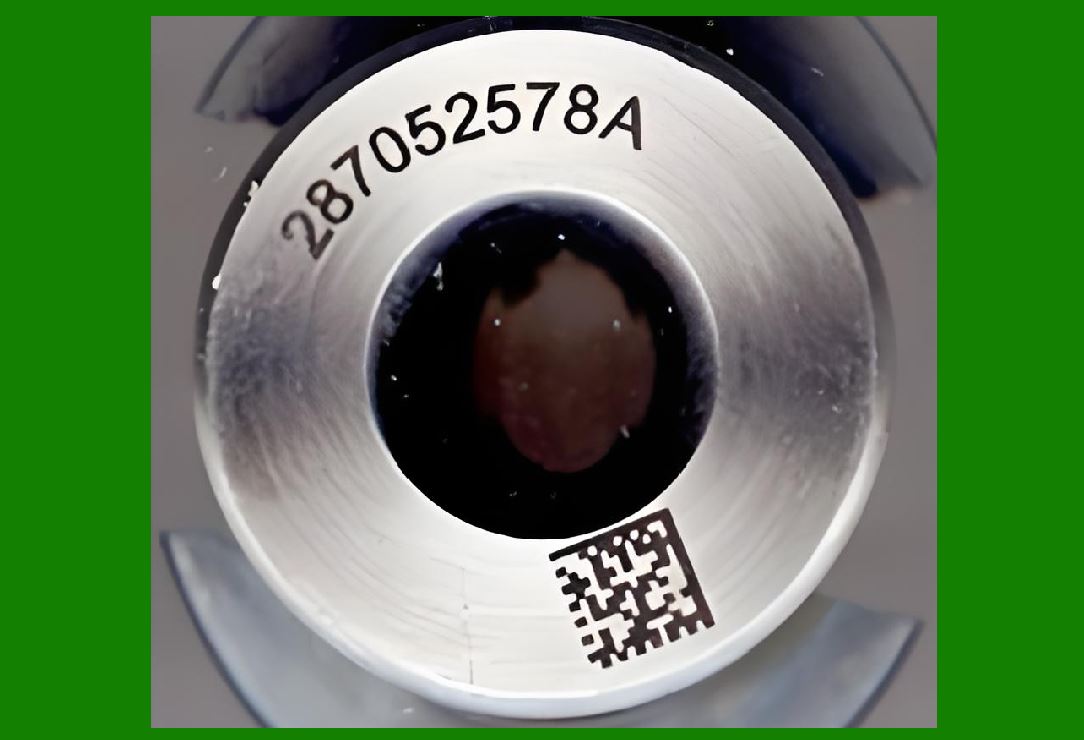
Pharmaceutical DataMatrix codes must meet stringent print quality standards to be reliably decodable throughout the product's shelf life. The GS1 specifications require verification against ISO/IEC 15415, the international standard for 2D barcode print quality grading . Major global pharmaceutical wholesalers typically require a minimum grade of 'B' for DataMatrix codes on drug packages . |
The verification process assesses six parameters: contrast, modulation, axial non-uniformity, grid non-uniformity, unused error correction, and fixed pattern damage. Each parameter receives a grade from 0 to 4, and the lowest grade determines the overall code grade . A code that fails to meet the required grade will be rejected by wholesalers, preventing the product from reaching the market. |
|
Chapter 7: Reading vs. Grading |
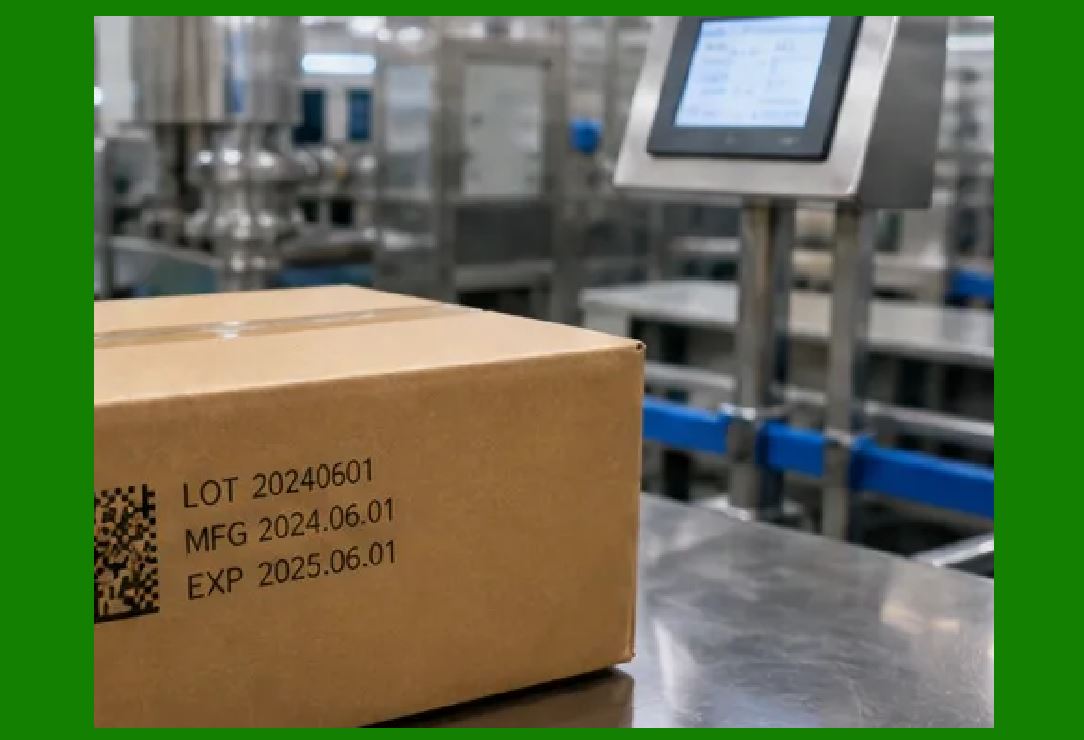
A critical distinction in pharmaceutical DataMatrix applications is the difference between reading and grading. Reading is simply verifying that a code is present and can be decoded, like scanning a product in a grocery store. Grading, however, involves assessing the code's quality against ISO/IEC 15415 standards . According to FDA guidelines for DSCSA, verification of the product identifier may use either human-readable or machine-readable methods. However, the EU FMD insists on a grade of 'C' for compliance, while major global wholesalers prefer a grade of 'B' . This high standard ensures that codes remain readable throughout the distribution chain and at the point of dispensing. |
|
Part Two: Technical Implementation on Pharmaceutical Packaging |
Chapter 8: Packaging Substrates and Challenges |
Pharmaceutical DataMatrix codes must be printed on a wide variety of packaging substrates, each presenting unique challenges. The most common substrates include secondary cartons (folding boxes), labels for vials and syringes, and aluminum blister foils. Each substrate requires careful consideration of the printing technology and ink formulation to achieve the required print quality and contrast . |
A thermal inkjet printer may produce a perfect black code on a white carton, but if printed on a dark blue label, the contrast would be insufficient, and the vision system would give a low grade every time . Similarly, a beautiful laser code on a red background creating white characters might look perfect to the human eye, but cameras read in grayscale, and the code might not be visible to the camera at all . These substrate-specific challenges must be carefully addressed during packaging design and production. |
|
Chapter 9: Printing Technologies for Pharmaceutical DataMatrix |
Pharmaceutical manufacturers use several printing technologies to apply DataMatrix codes, each with distinct advantages and limitations: |
Thermal Inkjet (TIJ): High-resolution printing suitable for cartons and labels. TIJ printers can achieve the required resolution for small DataMatrix codes but require careful management of ink formulation and substrate interaction. |
Laser Etching: Provides permanent, high-contrast marks on glass vials and ampoules. Laser etching is particularly valuable for unit-of-use packaging where labels might not be practical. |
Thermal Transfer Printing (TTR): Used for labels that are later applied to vials, syringes, and bottles. TTR provides durable, high-quality codes but requires careful label material selection. |
Continuous Inkjet (CIJ): Used for high-speed printing on packaging lines. While CIJ does not achieve the resolution of TIJ, it is sufficient for many applications and offers high throughput. |

|
Chapter 10: The Verification Bottleneck |
A significant challenge in pharmaceutical DataMatrix implementation is the verification bottleneck. According to industry experts, 'a good barcode printed on a good label with a good printer can get a bad grade if the vision system fails to read it due to an improper setup' . The entire system---print head, ink/substrate combination, vision system, and material handling---must work together to achieve a verified, decodable code . |
The hidden challenges are numerous. If line speed varies, axial non-uniformity can cause the barcode to drop to a grade C or D . If an operator orients the printhead incorrectly, grid non-uniformity can result . If the contrast between the code and the background is insufficient, the code will fail. These issues do not necessarily require new printing equipment; they require an understanding of how the equipment works in relation to the substrate and the vision systems . |

|
Part Three: American Applications in Action |
Chapter 11: Fresenius Kabi - Over 700 Products with GS1 DataMatrix |
Fresenius Kabi, a global healthcare company, has committed to marking its pharmaceutical products with GS1 DataMatrix codes across its portfolio. With more than 700 products, many in small packaging like vials and syringes, the company needed a labeling solution that could fit on tiny surfaces while carrying critical drug information . |
Fresenius Kabi decided to utilize the GS1 DataMatrix, a two-dimensional barcode able to carry the most crucial drug information in a small footprint that can be machine-read at any angle . This allows the company to embed a GS1 Global Trade Item Number (GTIN, which contains the US FDA National Drug Code), a lot number, and expiration date---information that is needed to identify drugs efficiently and accurately in today's digital environment . |
Recent product launches demonstrate the company's ongoing commitment to DataMatrix labeling. In August 2025, Fresenius Kabi announced the launch of Heparin Sodium Injection, USP 10,000 USP units/mL, 0.5 mL Vial with a 2D DataMatrix code added to the carton and vial labels, encoded with GTIN, lot, and expiry information . Similarly, in November 2025, the company announced the availability of Mesna for Injection 100 mg/mL, 10 mL Vial with a 2D DataMatrix code . These product updates demonstrate the company's phased approach to converting its entire pharmaceutical portfolio to DataMatrix-enabled labeling. |

|
Chapter 12: Quva Pharma - Voluntary Adoption for 503B Products |
Quva Pharma, a US-based pharmaceutical company specializing in compounded sterile products, announced in May 2023 that it was adding 2D DataMatrix barcodes to all product labels, adhering to GS1 standards . The company includes the 2D barcode at the package level, as well as on the primary labels at the unit of use, supporting greater traceability . The 2D DataMatrix code includes not only the product number, but also lot number, expiration date, and serialization . |
What makes Quva's adoption particularly noteworthy is that the company is not legally required to comply with DSCSA serialization requirements. As a 503B outsourcing facility, Quva's compounded sterile products are not subject to the DSCSA's serialization mandates . However, company leadership recognized the compelling value of implementing GS1 2D DataMatrix barcodes anyway. |
As Quva's CEO explained: 'Even though DSCSA compliance isn't a requirement for 503B products, our investments to add GS1 2D data matrix barcodes to all product labels was compelling. We are pleased to be doing our part to support a more transparent and accountable supply chain that enables hospitals to more accurately track medications, reduce errors and improve patient safety' . |

|
Chapter 13: Google Lens Integration - Consumer Access to Drug Information |
In a global collaboration with GS1, Google has made it possible for users to scan GS1 DataMatrix codes using Google Lens on Android devices . When a consumer or healthcare professional scans the code on a medicine package, they gain instant access to reliable medical product information directly on their device, without the need for any specialized tools . |
The scanning feature is already available globally through Google Lens on Android devices, with support for iOS expected soon . The amount of information displayed will vary depending on how prepared manufacturers' systems are to deliver data. |
This initiative builds on two decades of digitalization efforts within healthcare, where GS1 DataMatrix is already a recommended or required standard for identification and traceability in more than 70 countries . |

|
Chapter 14: Environmental Benefits of Digital Transition |
Digital access to pharmaceutical leaflets through DataMatrix scanning offers substantial sustainability benefits. In the United States, printed pharmaceutical leaflets are estimated to require around 12 million trees annually, highlighting the environmental potential of a digital transition . By enabling digital access to package inserts through DataMatrix codes, the industry can significantly reduce this environmental impact. |

|
Detailed Summary |
DataMatrix codes have become the global standard for pharmaceutical serialization, enabling end-to-end traceability, patient safety, and protection against counterfeit drugs. The Drug Supply Chain Security Act in the United States and the Falsified Medicines Directive in the European Union mandate that every prescription drug package carry a GS1 DataMatrix code encoding a unique product identifier, lot number, expiration date, and serial number . |
The technical implementation on pharmaceutical packaging presents significant challenges. Codes must be printed on tiny, often curved surfaces with high contrast and precision to remain readable through the product's shelf life . They must meet strict quality grades, with major global wholesalers requiring a grade of 'B' or better . The verification process assesses six parameters---contrast, modulation, axial non-uniformity, grid non-uniformity, unused error correction, and fixed pattern damage---and the entire system of print head, substrate, vision system, and material handling must work together to achieve the required quality . |
The impact is measured in more than 16 billion medicine packages in the US and EU now carrying GS1 DataMatrix codes . Fresenius Kabi is converting its portfolio of more than 700 pharmaceutical products to DataMatrix-enabled labeling, with recent product launches including Heparin Sodium Injection and Mesna for Injection with 2D DataMatrix codes . Quva Pharma, despite not being legally required to comply with DSCSA serialization requirements, has voluntarily adopted 2D DataMatrix barcodes across all product labels, demonstrating industry recognition of the technology's value for transparency and patient safety . |
The collaboration between GS1 and Google, enabling consumers to scan GS1 DataMatrix codes using Google Lens, represents a significant step toward a more transparent and digitally accessible healthcare ecosystem . Digital access to pharmaceutical leaflets offers substantial sustainability benefits, with printed leaflets in the US estimated to require around 12 million trees annually . |

|
From the manufacturing line to the pharmacist's counter to the patient's bedside, DataMatrix codes on pharmaceutical vials and syringes silently ensure that every medication is genuine, traceable, and safe. This tiny technology has become the foundation of a more secure and transparent global drug supply chain, protecting patients and enabling the digital transformation of healthcare. |
 cs@easiersoft.com