DataMatrix Decoded: A Technical Deep-Dive |
Executive Summary |
In the modern warehouse, knowing exactly where a product is stored is just as critical as knowing what the product is. The traditional approach of relying on human-readable location signs is error-prone and slow, especially in facilities with thousands of rack locations spanning multiple levels. Metal rack beams marked with DataMatrix codes have become the standard for creating a digital, machine-readable map of the warehouse. |
These compact two-dimensional codes, applied to horizontal and vertical rack beams, encode unique location identifiers that are scanned by forklift-mounted or handheld devices during put-away and picking operations. When a worker scans a product's barcode and then the rack's DataMatrix code, the warehouse management system (WMS) instantly verifies that the product is being placed in the correct location. If the product is scanned to a location that does not match the system's instructions, the scan fails, preventing costly misplacements. |
The adoption of DataMatrix for rack location labeling offers several advantages over traditional linear barcodes. The 2D symbology's compact footprint allows more information to be encoded in a smaller space, and its Reed-Solomon error correction ensures reliable scanning even on labels that become dirty, scratched, or partially obscured. This article explores the technical implementation of DataMatrix codes for warehouse racking, the scanning technologies that make it work, and real-world American applications that demonstrate the transformative impact on inventory accuracy and operational efficiency. |
|
Part One: The Technical Foundations of Warehouse Location Labeling |
Chapter 1: The Warehouse Location Challenge |
A typical large warehouse contains thousands of storage locations: rack positions, floor locations, bins, and staging areas. In a facility with seven levels of racking and over 13,000 locations, maintaining accurate inventory requires a robust system for identifying each storage position . Without machine-readable location codes, workers must manually verify location numbers, a process that is slow and susceptible to human error. A misplaced pallet can lead to inventory discrepancies, delayed order fulfillment, and increased operational costs. |
|
Chapter 2: The Shift to 2D Barcodes for Locations |
While traditional linear barcodes (such as Code 128) are still used for warehouse location labeling, DataMatrix codes are becoming increasingly popular . The shift is driven by several factors: |
Space Efficiency: DataMatrix codes can store the same amount of data in a much smaller footprint, allowing them to be printed on the narrow surface of rack beams where linear barcodes would not fit. |
Data Capacity: A single DataMatrix code can encode a Global Location Number (GLN) Extension Component or other structured data, providing more information than a simple location number . |
Readability: DataMatrix codes use Reed-Solomon error correction, making them far more tolerant of dirt, scratches, and partial damage than linear barcodes . |
Durability: Modern warehouse rack labels are designed with laminated surfaces and rugged adhesives to withstand impact, abrasion, and temperature changes . |
|
Chapter 3: The GS1 GLN Extension Component Standard |
For organizations that need to uniquely identify sub-locations within a facility, GS1 provides the Global Location Number (GLN) Extension Component standard . This standard allows a facility manager to assign an alphanumeric code of up to 20 digits to a specific sub-location, such as a rack position, shelf, or service point. The GLN Extension Component can be encoded in a GS1 DataMatrix, GS1-128 barcode, or RFID tag, and is identified by GS1 Application Identifier (254). |
When a worker scans a rack location labeled with a GS1 DataMatrix, the system decodes the GLN and the Extension Component, uniquely identifying the precise storage position. This standardized approach ensures interoperability across different systems and trading partners . |
|
Chapter 4: Designing Durable Rack Labels |
Warehouse rack labels must withstand a harsh environment. Forklifts and pallet jacks can impact rack beams, and labels are exposed to dust, temperature changes, and potential chemical exposure. Best practices for rack label design include: |
Laminated Surfaces: Lamination protects the label from abrasion and chemical damage. However, surfaces that are not highly glossy provide more accurate and consistent scanning . |
Strong Adhesives: The adhesive must bond to metal rack beams and resist peeling or lifting over time, especially in temperature-controlled environments. Labels should be installed at suitable temperatures (normally 10 degrees Celsius or above) . |
High-Contrast Color Combinations: Black on white or black on yellow are the most effective color combinations for readability under various lighting conditions . |
Consistent Labeling Standards: Aisles are typically marked alphabetically, racks and shelves numbered from the ground up, and individual positions identified with a consistent hierarchy (e.g., Aisle 01, Rack 02, Bin 01). Leading zeros are added for numbers under ten to facilitate alphanumeric sorting . |

|
Chapter 5: Quality and Verification of DataMatrix Labels |
For DataMatrix codes on rack labels to be reliably scanned, they must meet quality standards such as those defined in ISO/IEC 15415. In a real-world example, ID Label Inc. worked with a major furniture retailer to design rack labels containing 'unique check strings' that ensure a product is physically in its correct location. Users cannot manually type or move a product without scanning the location's 2D barcode . This verification step forces workers to physically scan the location, eliminating manual data entry errors. |

|
Part Two: Scanning Technologies for Warehouse Racking |
Chapter 6: The Forklift-Mounted Scanner |
Forklift operators often need to scan rack labels that are located high above floor level, sometimes 25 feet in the air, while remaining seated in their vehicle . This requires specialized extended-range scanners capable of reading barcodes from a distance. The Zebra DS3608-XR scanner, for example, can capture 1D, 2D, QR Code, and DataMatrix data from less than 2 inches to over 105 feet . It features a bright green laser aimer that is up to 7 times more visible than a red aiming dot, making it easier for forklift operators to aim accurately in dim aisles and bright loading docks . |
Key features of extended-range scanners for forklift use include: |
Ultra-Rugged Design: Industrial scanners must withstand multiple drops to concrete (10+ feet), repeated tumbles, and exposure to dust and moisture (IP65/IP68 sealing) . |
Intelligent Imaging: Advanced imaging engines capture and decode dirty, scratched, poorly printed, high-density, shrink-wrapped, and frosted barcodes . |
Cordless and Corded Options: Cordless models allow operators to scan from any position on the forklift, while corded models offer continuous power . |

|
Chapter 7: Handheld and Rugged Computers |
In addition to dedicated scanners, warehouses often deploy rugged handheld computers like the Zebra MC-3300 or legacy devices such as the Motorola MC-9190. These devices combine a computing platform with an integrated barcode scanner. One user reported that the MC-3300 can scan a 2-inch by 2-inch DataMatrix code from approximately 40 feet away . These devices also run terminal emulator or web-based applications, allowing workers to directly interact with the WMS or ERP system. |

|
Chapter 8: Cost and Deployability Trade-offs |
While extended-range scanners are essential for high-bay racking, they come at a premium. Some warehouses have explored using tablets mounted on forklifts paired with Bluetooth scanners, but have found that the cost of rugged Bluetooth scanners often approaches the cost of an all-in-one industrial computer . Additionally, workers may prefer a single integrated device over managing two separate devices. The decision between a dedicated scanner and an integrated mobile computer involves balancing cost, workflow, and worker preferences. |

|
Part Three: American Applications in Action |
Chapter 9: Morris Furniture - Deploying 2D Rack Labels for a New WMS |
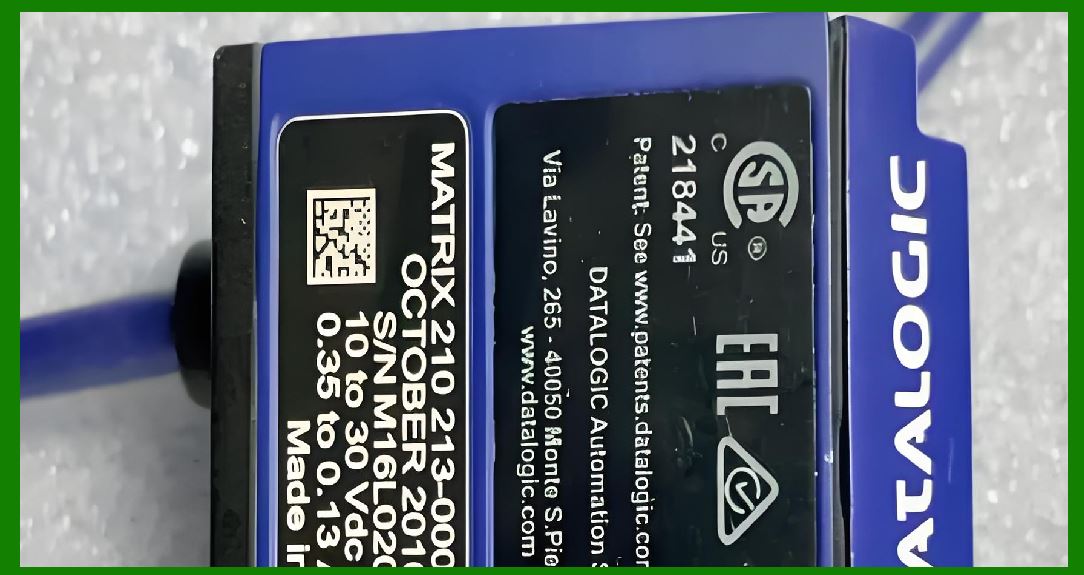
Morris Furniture, a major furniture retailer with a distribution center containing more than 13,000 rack locations across seven levels of racking, undertook a significant technology upgrade . The company invested in a new WMS, mobile scanning technology, mobile printers, and upgraded Wi-Fi infrastructure. A key part of the project was transitioning from old barcodes to robust 2D DataMatrix labels for rack location identification . |
ID Label Inc. designed customized pallet rack location labels for both horizontal and vertical rack beams, based on specifications from the technology integrator . The move to 2D DataMatrix labels was essential because it allowed the company to take advantage of the full capabilities of their new WMS software and technology environment. The labels contain unique check strings that ensure when a product is scanned to a new location, it is physically in that exact location; users cannot type or move a product without scanning the location's DataMatrix code . |
The results included improved scanning accuracy and highly durable rack labels. The transition was completed ahead of the go-live target date, demonstrating how proper labeling infrastructure is fundamental to WMS success . |
|
Chapter 10: Reusable Pallet Management |
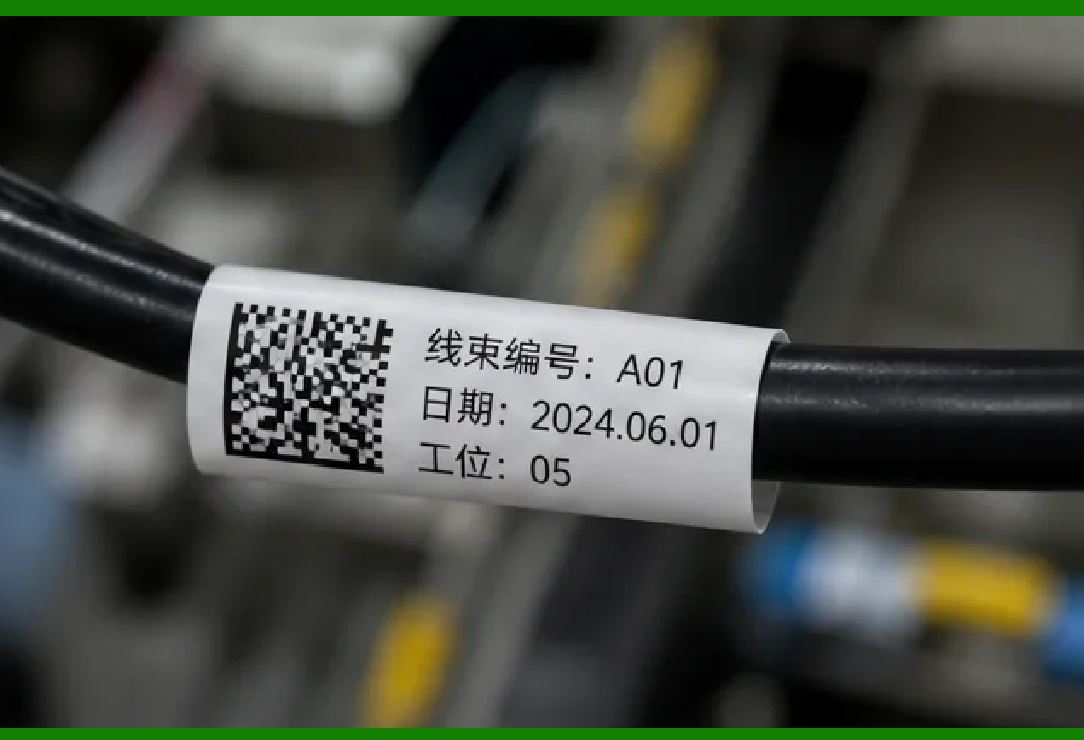
DataMatrix codes are increasingly being used to label reusable pallets and bins, enabling them to be tracked as assets through the warehouse and supply chain. Each pallet receives a unique DataMatrix code that links it to its contents and location. When a forklift operator picks a pallet, scanning both the pallet code and the rack location code confirms the correct product was retrieved from the correct spot. This supports inventory accuracy and reduces the risk of lost or misidentified assets. |
|
Chapter 11: Symaga's Implementation of DataMatrix Codes in Inventory Management |
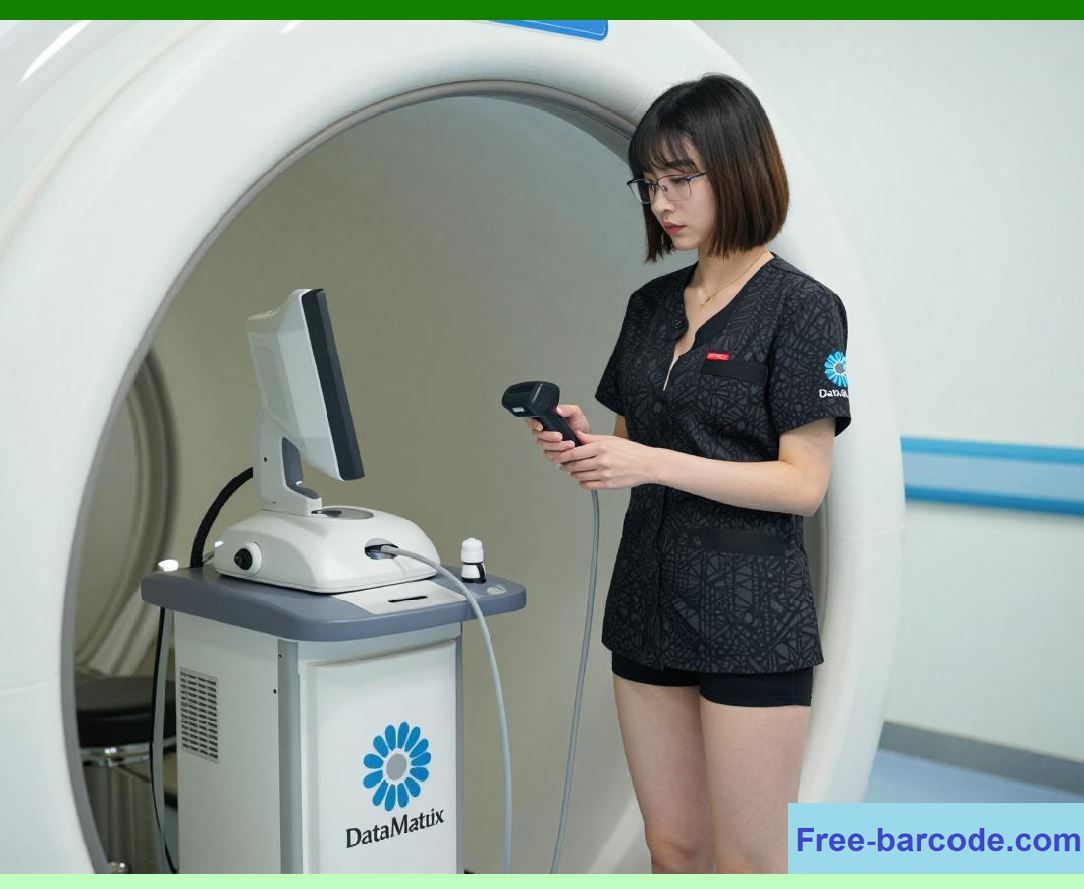
While based in Spain, Symaga's implementation of DataMatrix codes in its warehouse management system provides a relevant example for American warehouses. Symaga implemented new SGA (Warehouse Management) and MES (Manufacturing Execution) IT systems to efficiently control and manage inventory . The inventory is streamlined using DataMatrix codes to speed up the entire process, capable of managing a large volume of products quickly and accurately. The integration of the MES system facilitates order preparation from the factory, optimizing the creation of packing lists and improving the shipments of orders through terminals with code readers to register them in real-time, reducing human errors . |
|
Chapter 12: Cold Storage and Refrigerated Warehouses |
In cold storage facilities, where temperatures can drop below freezing and condensation is common, durable labels and reliable scanning equipment are essential. Labels must be designed with adhesives that bond to cold metal surfaces, and scanners with IP ratings are necessary to withstand moisture. DataMatrix codes' error correction capability ensures readability even when frost or condensation partially obscures the code. Extended-range scanners, such as the Zebra DS3608-XR, are designed for cold storage inventory workflows, enabling workers to scan rack labels from a distance without entering hazardous or extremely cold environments . |
|
Detailed Summary |
DataMatrix codes on metal rack beams have become a foundational element of modern warehouse management, enabling accurate inventory tracking, efficient put-away and picking operations, and integration with sophisticated WMS and ERP systems. The compact footprint and error correction of DataMatrix codes allow for durable, machine-readable labels that can be scanned by forklift-mounted or handheld extended-range scanners from up to 105 feet away . |
The technical implementation involves several best practices. Rack labels should be designed with laminated surfaces, high-contrast colors (black on white or yellow), and strong adhesives that bond to metal beams . A consistent labeling scheme---aisles marked alphabetically, racks numbered from the ground up, and positions identified with a hierarchical structure---ensures that location codes are intuitive and sortable. GS1 standards, such as the GLN Extension Component (AI 254), provide a standardized framework for encoding sub-location information . Code quality verification ensures that each DataMatrix label meets scanning standards, reducing no-read rates and preventing scanning delays . |
American applications demonstrate the transformative impact of DataMatrix-based rack location labeling. Morris Furniture's deployment of 2D DataMatrix labels across 13,000 rack locations enabled their new WMS to enforce scanning validation, improving accuracy and ensuring that product movements are physically verified . Extended-range scanners such as the Zebra DS3608-XR support forklift operators in scanning labels at extreme distances, reducing the need for workers to dismount and manually verify locations . Cold storage facilities benefit from the ruggedness of DataMatrix labels and scanners designed for harsh environments . |
|
The DataMatrix code on a warehouse rack beam is more than just a label---it is a digital anchor that connects the physical storage location to the virtual inventory record. When a forklift operator scans a rack code, they are not just identifying a position; they are verifying that the right product has been placed in the right place, creating a real-time, accurate map of the warehouse inventory. This is the foundation upon which modern supply chains are built. |
 cs@easiersoft.com