DataMatrix Decoded: A Technical Deep-Dive |
Executive Summary |
The DataMatrix barcode is standardized under ISO/IEC 16022, a globally recognized specification that ensures every DataMatrix code can be reliably produced, scanned, and interpreted anywhere in the world. This standard defines everything from the shape and size of the code to how data is encoded and how errors are corrected. Without this common technical language, DataMatrix would be a fragmented technology, with different scanners unable to read codes from different printers. In the United States, this standardization has made DataMatrix the mandatory barcode for pharmaceutical serialization under the Drug Supply Chain Security Act, the preferred carrier for medical device identification under FDA regulations, and a cornerstone of defense logistics through the Department of Defense's Item Unique Identification program. The 2024 revision of ISO/IEC 16022 added support for UTF-8 characters and removed obsolete versions, ensuring the standard remains relevant for modern applications. This article explores the technical content of the DataMatrix standard and how it enables dozens of real-world applications across the American economy. |

|
Part One: The Standardization Framework |
Chapter 1: What is ISO/IEC 16022 |
ISO/IEC 16022 is the international standard that defines everything about the DataMatrix barcode . It is published jointly by the International Organization for Standardization (ISO) and the International Electrotechnical Commission (IEC), two of the world's leading standards bodies. The standard specifies the symbology characteristics, data character encodation, symbol formats, dimensions, print quality requirements, error correction rules, decoding algorithm, and user-selectable application parameters . In plain language, it provides a complete recipe for creating and reading DataMatrix codes. |
Chapter 2: Why Standards Matter |
A barcode standard is like a common language. Without it, a barcode printed by one company might be unreadable by another company's scanner. The standard ensures that any DataMatrix code, regardless of where it was printed or by whom, can be decoded by any compliant scanner anywhere in the world. This is essential for global trade, where products manufactured in one country are scanned in another. The standard also provides a reference that equipment manufacturers, software developers, and end users can rely on when developing and implementing DataMatrix systems . |
Chapter 3: The Technical Committee Behind the Standard |
ISO/IEC 16022 is developed by Joint Technical Committee JTC 1, specifically Subcommittee SC 31, which is responsible for automatic identification and data capture techniques . This committee brings together experts from around the world, including representatives from national standards bodies, industry associations, and technology companies. The collaborative nature of this committee ensures that the standard reflects the needs of all stakeholders and incorporates the latest technical advances. |

|
Chapter 4: The Evolution of the Standard |
The first edition of ISO/IEC 16022 was published in 2000 . The second edition followed in 2006, and the third edition was published in May 2024 . Each revision incorporates lessons learned from real-world applications, improvements in technology, and feedback from users and manufacturers. The 2024 revision made several important changes, including removing the obsolete ECC 000 through ECC 140 variants, adding support for UTF-8 character encoding, and introducing new print quality measurements . |
Chapter 5: What the Standard Covers |
The standard is comprehensive, covering every aspect of the DataMatrix symbology. It defines the basic characteristics, including the encodable character set, symbol sizes, and data capacity . It specifies the symbol structure, including the finder pattern, data regions, and alignment patterns. It describes the encoding process, from data character conversion to module placement in the matrix. It also defines the error correction rules and the reference decoding algorithm that every scanner must implement . |
Chapter 6: The Scope of the Standard |
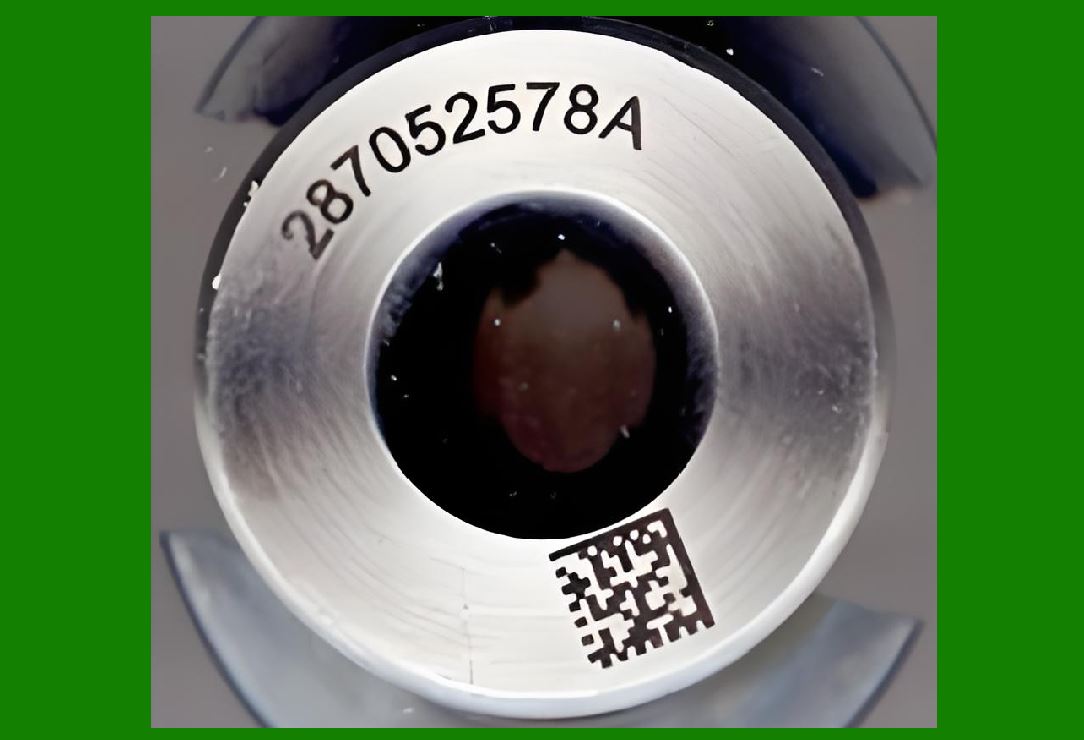
ISO/IEC 16022 applies to all DataMatrix symbols produced by any printing or marking technology . This is an important point because DataMatrix codes can be produced in many ways: printed on labels, laser-etched onto metal, inkjet-printed on cardboard, or even dot-peened onto plastic. The standard covers all of these marking methods, ensuring that codes produced by any technology are readable by any scanner. This universality is a key strength of DataMatrix. |

|
Chapter 7: Normative References |
The standard also references other important documents. These include ISO/IEC 15415, which specifies print quality requirements for two-dimensional symbols, and ISO/IEC 29158, which provides quality guidelines for direct part marking . It also references ISO/IEC 646, which defines the ASCII character set, and ISO/IEC 8859-1, which defines the extended Latin character set . These referenced documents are integral to the DataMatrix specification, as they define the character sets and quality measurement methods that the standard relies on. |
Chapter 8: The 2024 Revision Highlights |
The 2024 revision of ISO/IEC 16022 introduced several significant changes. The extended channel interpretations and rectangular formats became mandatory features, meaning all new DataMatrix implementations must support them . The historic ECC 000 through ECC 140 variants were removed, simplifying the standard and ensuring that only the robust ECC 200 version remains. Continuous grading according to ISO/IEC 15415 was introduced for all quality measurements, providing more precise and consistent quality assessment . |
Chapter 9: Removal of Obsolete Variants |
The removal of ECC 000 through ECC 140 from the standard is a significant change. These earlier variants had limited error correction capabilities and were not as robust as ECC 200. By removing them, the standard ensures that all new DataMatrix codes use the superior error correction of ECC 200 . This simplifies implementation and improves reliability for all users. Existing codes using the obsolete variants are still valid, but the standard no longer supports the creation of new codes using those formats. |

|
Chapter 10: UTF-8 Support |
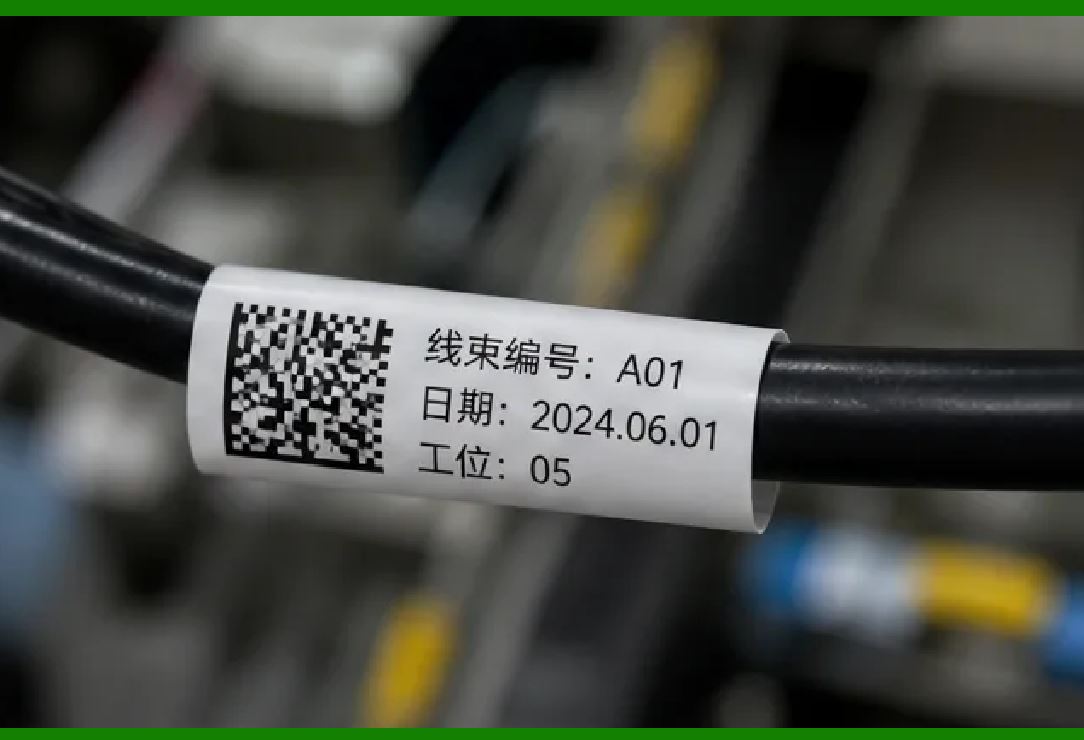
One of the most important additions in the 2024 revision is support for UTF-8 character encoding . Previously, DataMatrix codes primarily supported ASCII and extended Latin characters. With UTF-8 support, DataMatrix can now encode characters from virtually any language, including Arabic, Chinese, Cyrillic, Greek, and Hebrew . This is essential for global trade, where product information often needs to be displayed in multiple languages. It also supports applications involving international supply chains. |
Chapter 11: The Role of GS1 US |
While ISO/IEC 16022 defines the technical specification, organizations like GS1 US define how DataMatrix is used in specific industries. GS1 US is a not-for-profit, global data standards organization that creates a common language for companies to identify, capture, and share trusted data . Best known as the source for UPC barcodes, GS1 US has been instrumental in driving DataMatrix adoption in American retail and healthcare. The organization publishes implementation guidelines that complement the ISO/IEC standard, providing industry-specific guidance. |
Chapter 12: GS1 US Guidelines |
GS1 US has released comprehensive guidelines for implementing DataMatrix in various sectors. The 'Unlocking the Benefits of 2D Barcodes in Apparel and General Merchandise' guideline helps brands and retailers prepare for the Sunrise 2027 initiative, which aims to enable scanning of 2D barcodes at point-of-sale . The 'Unlocking Benefits of GS1 DataMatrix in Non-Retail Healthcare' guideline assists healthcare stakeholders in implementing DataMatrix in hospitals, pharmacies, clinics, infusion centers, long-term care facilities, and ambulances . These guidelines ensure that DataMatrix is implemented consistently across each industry. |

|
Chapter 13: Sunrise 2027 |
Sunrise 2027 is the timeline set by the American retail industry, in collaboration with GS1 US, for scanning 2D barcodes at point-of-sale . This initiative recognizes that traditional 1D barcodes, while still valuable, cannot provide the rich data that modern supply chains and consumers demand. The goal is to have a total of two barcodes on product packaging, with at least one being 2D . Importantly, 1D barcodes are not being phased out; they will coexist with 2D codes . The initiative is a transition, not a hard cutoff. |
Chapter 14: The Transition Period |
During the Sunrise 2027 transition, dual marking is acceptable: products may carry both a 1D barcode and a 2D code such as DataMatrix or QR . This allows retailers and brands to upgrade their scanning systems gradually. The transition period ensures that no product becomes unreadable at checkout while the industry modernizes its infrastructure. The goal is ultimately to have just two barcodes on packaging, with one being 2D . |
Chapter 15: Why DataMatrix is Preferred for Healthcare |
In healthcare, GS1 DataMatrix is recommended by industry as the preferred data carrier . This preference is driven by several factors. DataMatrix codes are very compact, allowing them to fit on small pharmaceutical packages and medical devices. They are robust, with error correction that allows reading even if the code is damaged. They are also standardized, ensuring that codes from different manufacturers can be read by the same scanners. The FDA's regulations have made GS1 DataMatrix the mandatory format for certain applications . |

|
Chapter 16: The Global Applicability |
The ISO/IEC standard ensures that DataMatrix is globally interoperable. A DataMatrix code printed in the United States can be read by a scanner in Europe, Asia, or anywhere else. This is essential for global supply chains, where products move across borders. The standard also supports multiple character encodings, allowing DataMatrix to store information in different languages and scripts. This global applicability has made DataMatrix a preferred choice for international trade. |
Part Two: Technical Content of ISO/IEC 16022 |
Chapter 17: Basic Characteristics |
The standard defines the basic characteristics of DataMatrix. It is a two-dimensional matrix symbology made up of nominally square modules arranged within a perimeter finder pattern . The encodable character set includes values 0 through 127 in accordance with ASCII, and values 128 through 255 in accordance with ISO/IEC 8859-1 (extended ASCII) . Additional characters can be encoded using the Extended Channel Interpretations (ECI) capabilities . A dark module represents a binary one, and a light module represents a binary zero. |
Chapter 18: Symbol Sizes |
The standard defines symbol sizes ranging from 10 by 10 modules to 144 by 144 modules in square formats, plus rectangular versions ranging from 8 by 18 to 16 by 48 modules . The choice of size depends on the amount of data to be encoded and the available marking space. Smaller codes are used on tiny components like semiconductor dies, while larger codes are used on shipping labels and packaging. The standard specifies the data capacity for each size. |

|
Chapter 19: Data Capacity |
For the maximum symbol size (144 by 144 modules), the standard specifies the following data capacities: up to 2,335 alphanumeric characters, 1,555 bytes of 8-bit binary data, or 3,116 numeric digits . These capacities are more than sufficient for most applications. In practice, most DataMatrix codes encode a few hundred characters, including product identifiers, dates, and serial numbers. The capacity is defined in the standard to ensure that implementers know what to expect. |
Chapter 20: The Finder Pattern |
The standard defines the finder pattern, which is a perimeter to the data region and is one module wide . The finder pattern consists of a solid L-shape along two adjacent sides and a clock track (alternating dark and light modules) along the opposite sides. The L-shape locates the code and determines its orientation, while the clock track provides information about module size and distortion . This finder pattern is essential for reliable decoding, especially when the code is viewed at an angle. |
Chapter 21: The Quiet Zone |
The standard requires a quiet zone, or blank margin, surrounding the DataMatrix symbol . The quiet zone must be at least one module wide on all four sides. This blank space helps the scanner distinguish the code from background graphics or other printed elements. The small quiet zone requirement is one of the reasons DataMatrix can be used on very small surfaces. In practice, most applications use a larger quiet zone to be safe. |

|
Chapter 22: Data Encoding Overview |
The encoding process is defined in detail by the standard . First, the data to be encoded is converted into codewords using one of several encoding schemes. Then, error correction codewords are generated using the Reed-Solomon algorithm. Finally, the codewords are placed into the matrix in a specific serpentine pattern, along with the finder pattern and alignment patterns (for larger symbols) . The standard defines each step precisely, ensuring consistent encoding across all implementations. |
Chapter 23: Encoding Schemes |
The standard defines multiple encoding schemes, including ASCII encodation, C40 encodation, Text encodation, ANSI X12 encodation, EDIFACT encodation, and Base 256 encodation . These schemes are optimized for different types of data. ASCII encodation is used for general text. C40 encodation is more efficient for numbers and uppercase letters. Base 256 encodation is used for binary data. The encoding scheme is automatically selected based on the data to be encoded, and the decoding process automatically detects which scheme was used. |
Chapter 24: Extended Channel Interpretations |
The standard supports Extended Channel Interpretations (ECI), which enable characters from other character sets to be represented . This includes Arabic, Cyrillic, Greek, Hebrew, and other scripts. ECI also supports other data interpretations and industry-specific requirements . This feature is essential for global applications, where product information often needs to be displayed in multiple languages. The 2024 revision made ECI a mandatory feature. |

|
Chapter 25: Error Correction with Reed-Solomon |
The standard defines the Reed-Solomon error correction algorithm used by DataMatrix . Reed-Solomon is a powerful error correction scheme that adds redundant data to the original message. The redundancy allows the decoder to detect and correct errors, even if part of the symbol is damaged. The standard specifies exactly how the error correction codewords are generated and how they are interleaved with the data codewords. This ensures consistent error correction performance across all implementations. |
Chapter 26: Error Correction Capacity |
The standard specifies the error correction capacity of DataMatrix. The amount of redundancy depends on the symbol size: larger symbols have a higher proportion of error correction codewords, making them more robust. In practice, DataMatrix codes can typically recover from damage affecting up to 30% of the code area. This is achieved through the interleaving of data and error correction codewords, which ensures that damage is spread across the entire code and can be corrected. |
Chapter 27: Structured Append |
The standard supports structured append, an optional feature that allows data to be represented in up to 16 DataMatrix symbols . The original data can be correctly reconstructed regardless of the order in which the symbols are scanned . This is useful for applications where the data to be encoded is too large for a single symbol, or where it is convenient to apply multiple smaller codes to different parts of a large object. If the feature is not implemented, the reader should not transmit data for a structured append symbol. |

|
Chapter 28: Rectangular Formats |
The standard specifies six rectangular symbol formats . These formats are useful for applications where horizontal or vertical space is constrained. For example, a narrow label on a small cylindrical object may only accommodate a rectangular code. Additional rectangular formats are available through ISO/IEC 21471 . The 2024 revision made rectangular formats a mandatory feature, ensuring that all new implementations support them. |
Chapter 29: Reflectance Reversal |
The standard supports reflectance reversal, meaning DataMatrix symbols can be produced as either dark on light or light on dark . The specifications in the standard are based on dark images on a light background, but the standard explicitly provides that symbols can also be produced with the modules' colors reversed . In reflectance-reversed symbols, dark modules would be a binary zero and light modules would be a binary one. This feature is useful for applications where a light code on a dark background is more visually appropriate. |
Chapter 30: Print Quality Requirements |
The standard references ISO/IEC 15415 for print quality requirements of two-dimensional symbols . This standard defines a grading system for symbol quality, assessing parameters such as symbol contrast, modulation, and other characteristics. The 2024 revision introduced continuous grading according to ISO/IEC 15415 for all quality measurements . This provides more precise and consistent quality assessment, ensuring that DataMatrix symbols meet minimum quality standards for reliable reading. |

|
Chapter 31: Direct Part Marking Quality |
For direct part marking (DPM) applications, the standard references ISO/IEC 29158 . DPM involves marking codes directly onto the surface of a product, such as by laser etching or dot peening. These marks behave differently than printed labels, and require specialized quality assessment methods. ISO/IEC 29158 provides guidelines for assessing the quality of DPM codes, ensuring they are readable despite the challenges of marking on metal, plastic, or other materials. |
Chapter 32: The Reference Decode Algorithm |
The standard defines a reference decode algorithm that every scanner must implement . This algorithm provides a common approach to decoding DataMatrix codes, ensuring that different scanners produce the same result. The algorithm includes steps for locating the finder pattern, sampling the grid, extracting codewords, applying error correction, and decoding the data. The standard provides a detailed specification of each step, allowing developers to implement consistent decoding software. |
Chapter 33: Transmitted Data Protocols |
The standard specifies protocols for transmitting data after decoding, including protocols for the FNC1 character, which is used in GS1 applications, and for Macro characters, which enable special functions . The standard also defines the symbology identifier, which allows software to identify that the decoded data came from a DataMatrix code . These protocols ensure that data is transmitted consistently between scanners and host systems. |

|
Chapter 34: User Guidelines |
The standard includes user guidelines that provide practical advice for implementing DataMatrix systems . These cover human readable interpretation, which ensures that people can also understand the data encoded in the code. They also cover autodiscrimination capability, which allows scanners to distinguish DataMatrix from other symbologies. System considerations, such as the choice of printing technology and scanning equipment, are also addressed . |
Part Three: American Applications Enabled by Standardization |
Chapter 35: Pharmaceutical Serialization Under DSCSA |
The Drug Supply Chain Security Act (DSCSA), enacted by the U.S. Congress in 2013, mandates the serialization of prescription drugs . Under the DSCSA, each package of prescription drugs must carry a product identifier that includes the National Drug Code (NDC), lot number, and expiration date. GS1 DataMatrix is the standard format for encoding this information . The DSCSA has driven the adoption of DataMatrix across the entire American pharmaceutical supply chain, from manufacturers to wholesalers to pharmacies. The FDA's guidance makes clear that QR codes cannot replace the required DataMatrix on packages . |
Chapter 36: FDA Unique Device Identification |
The FDA requires Unique Device Identifiers (UDIs) on medical devices distributed in the United States . The UDI is a unique numeric or alphanumeric code that identifies a medical device throughout its distribution and use. The FDA requires that the UDI be encoded in a format that complies with GS1 or HIBCC standards . GS1 DataMatrix is widely used to encode UDIs on implantable devices, surgical instruments, and other medical products. A typical GS1 DataMatrix code for a medical device encodes the Device Identifier (DI), expiration date, lot number, and serial number . |

|
Chapter 37: The GS1 US Healthcare Guidelines |
GS1 US has published guidelines specifically for implementing DataMatrix in non-retail healthcare channels, including hospitals, pharmacies, clinics, infusion centers, long-term care facilities, and ambulances . These guidelines help healthcare stakeholders implement DataMatrix in settings where products are not sold at retail but still require accurate tracking and identification. Key benefits of GS1 DataMatrix in healthcare include efficient recall management, improved inventory management, enhanced traceability, and support for electronic health records . |
Chapter 38: Healthcare Labeling Consistency |
As healthcare products are sold in both retail and non-retail environments, a coordinated approach to 2D barcodes ensures labeling consistency and efficiency for brand owners . GS1 DataMatrix is recommended by industry as the preferred data carrier for healthcare products across both areas . This avoids confusion and aligns on a single barcode format. The recommendation ensures that a single DataMatrix code can serve all healthcare channels, from the pharmacy shelf to the hospital floor. |
Chapter 39: Non-Retail Healthcare Implementation |
In non-retail healthcare settings, GS1 DataMatrix enables efficient recall management. If a product is recalled, hospitals and clinics can quickly identify affected items by scanning their DataMatrix codes. Improved inventory management is another benefit, allowing healthcare providers to track supplies in real-time. Enhanced traceability supports patient safety by linking products to electronic health records. The guidelines provide practical advice for both labelers and their downstream supply chain trading partners regarding capabilities, data needs, print and scanning technologies, and data consumption . |
|
Chapter 40: Department of Defense Item Unique Identification |
The U.S. Department of Defense (DoD) requires unique item identification for equipment acquired by the military . This requirement, established under MIL-STD-130, mandates that all items delivered to the DoD carry a permanent machine-readable mark that encodes a unique identifier. DataMatrix is the standard format for this mark . The DoD's Item Unique Identification (IUID) program tracks items throughout their lifecycle, from acquisition to maintenance to disposal. The DataMatrix codes are verified to meet ISO 15415, AS9132, or AIM DPM quality standards . |
Chapter 41: Defense Logistics |
The DoD's use of DataMatrix extends beyond acquisition to logistics and supply chain management. DataMatrix codes on military equipment enable automated tracking through the defense supply chain, from warehouses to deployed units. The codes are read by handheld scanners and fixed readers at military facilities, providing real-time visibility into equipment location and status. This visibility is essential for maintaining military readiness and supporting operations. The standardization of DataMatrix under ISO/IEC 16022 ensures interoperability across the defense industrial base. |
Chapter 42: Aerospace Parts Marking |
The American aerospace industry relies on DataMatrix for part marking and traceability . Components such as turbine blades, engine housings, and airframe structures are marked with DataMatrix codes using laser etching . These codes must survive extreme temperatures and harsh environments. The FAA and NASA have recognized the value of DataMatrix, with NASA developing Handbook 6003 on the application of DataMatrix identification symbols to aerospace parts . The standard ensures that codes from different suppliers can be read by any aerospace scanner. |
|
Chapter 43: Aerospace Quality Verification |
Aerospace DataMatrix codes are verified to meet stringent quality standards . For labels and nameplates, linear barcodes (Code 128, Code 39) are graded according to ISO 15416. For DataMatrix codes, they are verified according to ISO 15415 and industry-specific standards such as AS9132, which is the aerospace industry's own specification for dot-peen direct part marking . The verification ensures that DataMatrix codes in the aerospace supply chain meet minimum quality requirements for reliable reading. |
Chapter 44: Automotive Industry Applications |
The American automotive industry uses DataMatrix for parts tracking and traceability . Components from engine blocks to electronic control units carry DataMatrix codes that are read by robotic cameras on assembly lines. The codes enable just-in-time production scheduling and quality control. The Automotive Industry Action Group (AIAG) has established standards for DataMatrix marking in the automotive supply chain, ensuring consistency across suppliers. The ISO/IEC standard provides the technical foundation for these industry-specific guidelines. |
Chapter 45: USPS Intelligent Mail Matrix Barcode |
The United States Postal Service has developed a DataMatrix-based symbol called the Intelligent Mail Matrix Barcode (IMmb) for use on package labels . The IMmb provides a smaller footprint and redundant reads alongside the existing Intelligent Mail Package Barcode (IMpb), improving sortation reliability on automated equipment . The USPS's adoption of DataMatrix demonstrates the technology's viability for large-scale logistics applications and its compatibility with the ISO/IEC standard. |

|
Chapter 46: Retail Sunrise 2027 |
The American retail industry's Sunrise 2027 initiative aims to enable scanning of 2D barcodes at point-of-sale . GS1 US has issued implementation guidance for this transition. The initiative is driven by the need for richer product information, including traceability, safety information, and digital engagement . The transition is also driven by changing hardware: laser scanners can only read 1D codes, while area imagers can read both 1D and 2D codes . As the installed base of scanners upgrades, 2D codes become feasible at checkout. |
Chapter 47: Apparel and General Merchandise Guidelines |
GS1 US has published guidelines for implementing 2D barcodes in the apparel and general merchandise sectors . These guidelines provide practical advice for brands and retailers preparing for Sunrise 2027. The guidelines explain how 2D barcodes can provide improved product information, traceability, authentication, and streamlined checkout and returns . Use cases illustrate the benefits. The guidelines were produced by a GS1 US workgroup comprising retailers, brands, and solution providers, ensuring they reflect real-world needs. |
Chapter 48: Consumer Engagement |
Beyond supply chain applications, DataMatrix codes are increasingly used for consumer engagement. Brands can encode product information, promotional content, and user manuals in DataMatrix codes. Consumers can scan the codes with their smartphones to access this information. GS1 Digital Link URI, which can be encoded in DataMatrix, allows the code to connect users to online resources . However, not all mobile device cameras can automatically process DataMatrix codes at this time . For consumer engagement, QR codes are currently the preferred format because default camera apps can automatically scan them and connect to websites . |

|
Chapter 49: The Coexistence of 1D and 2D |
During the transition to 2D barcodes, 1D barcodes will continue to coexist . The 1D barcode is not going anywhere; there is no sunset for 1D codes . This means that during the Sunrise 2027 transition period, packaging may carry both a 1D barcode and a 2D code. The dual marking approach ensures that products remain readable by all scanners, regardless of whether they are upgraded to support 2D codes. The long-term goal is to reduce to two barcodes on packaging, with at least one being 2D . |
Chapter 50: The Future of DataMatrix Standardization |
The 2024 revision of ISO/IEC 16022 ensures that DataMatrix will continue to meet the needs of American industry. The addition of UTF-8 support makes DataMatrix more suitable for global applications, including products with multi-language labeling requirements. The mandatory support for rectangular formats and ECIs provides greater flexibility for implementers. The removal of obsolete variants simplifies the standard and ensures that all new codes use robust error correction. As American industries continue to digitize and the demand for traceability grows, DataMatrix will remain a central technology. |

|
Detailed Summary |
ISO/IEC 16022 is the cornerstone of DataMatrix technology, providing a global standard that ensures interoperability across scanners, printers, and software ecosystems. The standard defines every aspect of DataMatrix, from the size and shape of the code to the encoding process and error correction rules. Without this standard, DataMatrix would be a fragmented technology, with different manufacturers producing incompatible codes. The standard's existence has enabled the widespread adoption of DataMatrix in American industry. |
The 2024 revision of ISO/IEC 16022 represents a significant update to the standard. It removed the obsolete ECC 000 through ECC 140 variants, ensuring that only the robust ECC 200 version remains. It added mandatory support for extended channel interpretations, enabling characters from multiple languages to be encoded. It added mandatory support for rectangular formats, providing flexibility for space-constrained applications. It introduced continuous grading for print quality measurements, improving consistency and reliability. It also added support for UTF-8 encoding, making DataMatrix suitable for global applications. |
In the United States, the ISO/IEC standard has enabled DataMatrix to become the mandatory barcode for critical applications. Under the Drug Supply Chain Security Act, GS1 DataMatrix is required on every package of prescription drugs, providing a product identifier that includes the NDC, lot number, and expiration date . Under FDA regulations, DataMatrix is used to encode Unique Device Identifiers on medical devices . Under DoD policy, DataMatrix is used for Item Unique Identification of military equipment . These applications rely on the ISO/IEC standard to ensure that codes are produced and read consistently. |
The USPS has adopted a DataMatrix-based symbol called the Intelligent Mail Matrix Barcode (IMmb) for package routing . The aerospace industry uses DataMatrix for part marking, with NASA issuing guidance on the application of DataMatrix to aerospace parts . The automotive industry uses DataMatrix for parts tracking and quality control . The retail industry's Sunrise 2027 initiative aims to enable scanning of 2D barcodes at point-of-sale, with DataMatrix playing a key role . |

|
GS1 US has been instrumental in driving DataMatrix adoption, releasing implementation guidelines for healthcare, apparel, and general merchandise . These guidelines provide practical advice for implementing DataMatrix in specific industry contexts, complementing the technical specification of ISO/IEC 16022. The guidelines address the needs of both retail and non-retail channels, ensuring that a single DataMatrix code can serve all applications . |
The standardization of DataMatrix under ISO/IEC 16022 has created a global ecosystem of compatible equipment and software. Manufacturers can produce scanners and printers with confidence that they will work with any DataMatrix code. Users can adopt DataMatrix with confidence that their codes will be readable by any compliant scanner. This interoperability is essential for the global supply chains that move products across borders and between companies. |
Looking to the future, DataMatrix will continue to evolve. The ISO/IEC standard will be updated periodically to reflect improvements in technology and changes in user needs. New applications will emerge, driven by the Internet of Things, blockchain traceability, and other trends. Through it all, ISO/IEC 16022 will remain the technical foundation that makes DataMatrix a reliable and trusted technology. From pharmaceutical packages to jet engines, from military equipment to retail products, DataMatrix silently secures our material world, and the ISO/IEC standard makes it all possible. |
 cs@easiersoft.com