DataMatrix Decoded: A Technical Deep-Dive |
Executive Summary |
Smart packaging represents one of the most transformative applications of DataMatrix technology. By printing these compact, machine-readable codes on cardboard boxes and other packaging, brands are turning passive containers into active digital gateways. Consumers armed with smartphones can scan the code to access a rich array of interactive content, including product videos, traceability maps, ingredient information, and sustainability credentials. Unlike traditional static labels, smart packaging creates a dynamic, updatable connection between the physical product and the digital world. |
The transition is being driven by both consumer demand and regulatory pressure. The GS1 Sunrise 2027 initiative, a global effort to prepare retailers to scan 2D barcodes at point-of-sale, is accelerating adoption across industries . Meanwhile, Amazon's Transparency program, which requires brands to apply serialized 2D DataMatrix codes to their products, is already providing a powerful model for smart packaging implementation in e-commerce . The technology enables brands to combat counterfeiting, prevent grey market activity, reduce retail theft, and build deeper consumer trust---all through a single, standardized code . |
This article explores the technical foundations of DataMatrix-enabled smart packaging, the standards that make it work, and real-world American and global applications that demonstrate how this technology is transforming consumer engagement, supply chain transparency, and sustainability. |

|
Part One: Technical Foundations of Smart Packaging |
Chapter 1: What is Smart Packaging |
Smart packaging refers to packaging that goes beyond its traditional roles of protection, containment, and identification to provide enhanced functionality through digital connectivity . A DataMatrix code printed on a cardboard box transforms that package into a digital touchpoint that can deliver real-time, interactive information directly to consumers' mobile devices. This includes everything from video content and traceability maps to ingredient lists, recycling instructions, and sustainability credentials . |
The key technological enabler is the 2D code's ability to store data in two dimensions, allowing significantly more information than a traditional linear barcode. While a 1D UPC code can only hold a product identification number, a 2D code can encode serial numbers, batch numbers, expiration dates, and even URLs linking to dynamic web content . Some experts estimate that 2D codes can carry up to 200 times more data than a traditional linear barcode . |

|
Chapter 2: The GS1 Digital Link Standard |
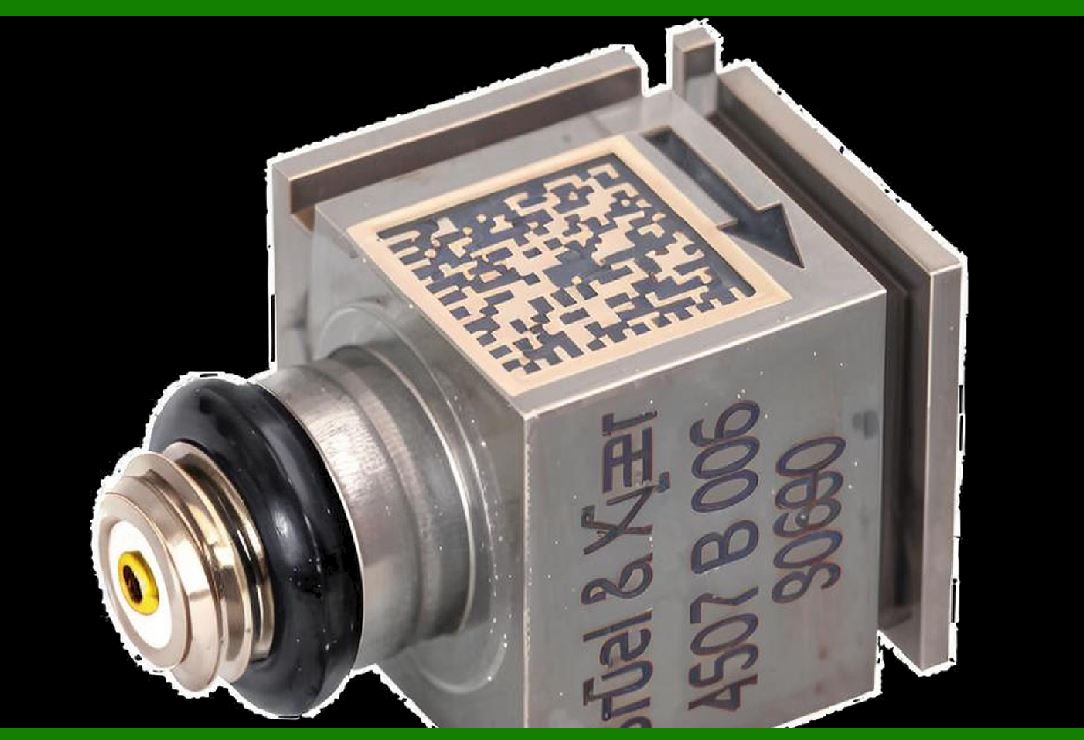
The GS1 Digital Link standard is the framework that makes smart packaging truly interoperable across the global supply chain . This standard defines how structured product data, including Global Trade Item Numbers (GTINs), serial numbers, batch numbers, and expiration dates, is encoded in a 2D barcode. Crucially, GS1 Digital Link also enables the code to include a URL that directs consumers to relevant online content . |
The beauty of GS1 Digital Link is its flexibility. The content behind the code can be updated after the product leaves the factory, provided the data is managed through a cloud-based platform . This means a brand can use the same printed DataMatrix code to deliver different content to different regions, update promotional offers dynamically, or add new information as regulations evolve---all without changing the packaging itself. |
|
Chapter 3: DataMatrix vs. QR Codes for Smart Packaging |
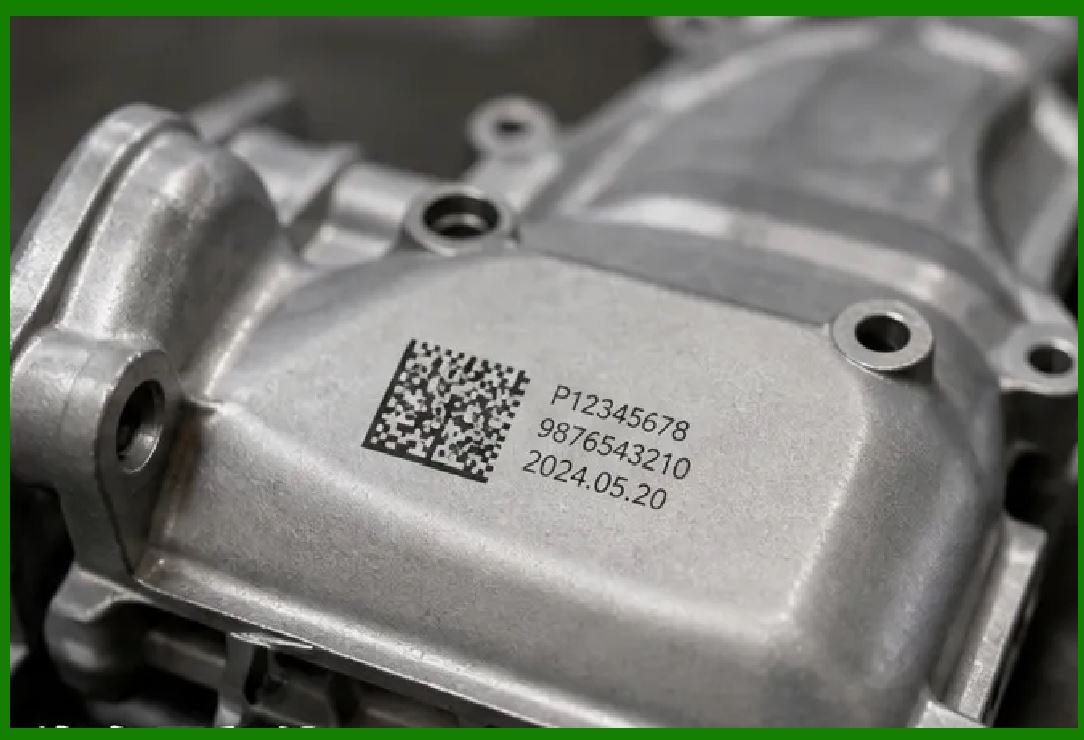
Both GS1 DataMatrix and QR codes with GS1 Digital Link are used in smart packaging applications, each with its own advantages . GS1 DataMatrix is more compact and suitable for direct part marking on small products . QR codes, on the other hand, are more widely recognized by consumers and are more readily scanned by default smartphone camera apps. |
In practice, many smart packaging applications use QR codes for consumer-facing engagement, while DataMatrix codes are used for supply chain traceability and authentication . However, the GS1 Digital Link standard supports both symbologies, and a single standardized code can serve both retail scanning and consumer engagement purposes . This convergence is a key trend as the industry moves toward unified 2D barcode adoption . |
|
Chapter 4: The Sunrise 2027 Initiative |
Sunrise 2027 is the industry-wide initiative led by GS1 US and other GS1 member organizations to transition from traditional 1D barcodes to 2D barcodes capable of scanning at retail point-of-sale by the end of 2027 . This initiative recognizes that the traditional UPC barcode, introduced in 1974, can no longer meet the data demands of modern supply chains. Today's products require much more information---traceability, transparency, sustainability, and consumer engagement---than a simple product identification number can provide . |
For packaging manufacturers, this represents a major operational shift. Packaging artwork must be redesigned, printing systems must support high-quality 2D symbols, and data systems must be integrated to manage dynamic content . During the transition period, many products will carry both a traditional 1D barcode and a 2D code, allowing existing checkout systems to continue working while retailers upgrade their scanning equipment . |
|
Chapter 5: Amazon's Transparency Program |
Amazon's Transparency program provides a powerful real-world model for smart packaging implementation . The program requires brands enrolled in Amazon's Brand Registry to apply a serialized 2D DataMatrix code to every unit they sell on the platform. Amazon generates a unique 26-character alphanumeric serial number for each item, which the brand must physically apply to the product packaging . |
Amazon scans every unit at outbound fulfillment centers. If the code does not match the product description or is not associated with a valid serial number, the unit is sidelined, investigated, and destroyed---it will never reach a customer . This proactive anti-counterfeit system protects Amazon's marketplace and gives brands a powerful tool for protecting their products. |
As Michael Manley, Global Head of Technical Business Development at Amazon, explained: 'This creates tremendous off-Amazon value... It's a win, win all the way across the supply chain. Now it's a serial number that can be used for parent/child and all of the track and trace use cases' . |
|
Chapter 6: Print Quality and Verification |
The effectiveness of smart packaging depends on the quality of the DataMatrix code. For a code to be reliably scanned by consumers and retailers, it must meet print quality standards. Key parameters include contrast, modulation, axial non-uniformity, and grid non-uniformity . Verification systems are essential to ensure that every code printed on a packaging line meets the required standards before products leave the factory . |
Variable data printing adds another layer of complexity to the print process. Serialized codes must be unique for each product, requiring the printer to handle dynamic data at production speeds . As Amazon notes, 'that requires that your printing provider has variable data capability. We've been building out that network for years' . Brands that have not yet transitioned to variable data printing face significant challenges in implementing serialized smart packaging at scale. |

|
Part Two: American and Global Applications in Action |
Chapter 7: Amazon's Transparency Program |
Amazon's Transparency program is the most comprehensive implementation of serialized DataMatrix codes in American e-commerce . The program, which requires brands to apply serialized 2D codes to their products, has become a powerful tool for brand protection and supply chain visibility. |
For packaging and operations teams, the central question is how to apply serialized 2D codes at scale. Amazon offers three models : |
1. Service provider model: Work with a Transparency service provider that prints and ships serialized labels within 48 hours. |
2. Integrated artwork model: Integrate 2D codes into existing packaging artwork using converters that support variable data printing. |
3. Internal integration model: Feed Amazon brand-owned serial numbers through API or SFTP, using internal systems already in place for quality assurance or traceability. |
Brand benefits extend beyond Amazon. Serialized 2D codes can tell a brand's story, enabling consumers to scan using the Amazon app to verify authenticity and access sustainability information, sourcing details, and customer engagement content . The system also helps prevent grey market activity and, with item-level serialization, can flag units that were never scanned at a retailer's point-of-sale---indicating possible theft . |
Nick Viskovich, Global Head of Sales, Consumer Electronics for Amazon, emphasized the anti-counterfeit value: 'If [a code] is not matching the description, and there's no serial number associated, it will be sidelined, investigated, and destroyed' . The program employs former FBI and Interpol agents in its Counterfeit Crimes Unit, building real cases against counterfeiters. |

|
Chapter 8: GS1 US Industry Guidelines |
GS1 US has released comprehensive guidelines to accelerate 2D barcode adoption in healthcare, apparel, and general merchandise sectors . The guideline 'Unlocking the Benefits of 2D Barcodes in Apparel and General Merchandise: Getting Brands and Retailers Ready for Sunrise 2027' provides stakeholders with practical advice for implementing 2D barcodes by 2027 . This resource explains how 2D barcodes can be used to provide improved product information, traceability, authentication, and streamlined checkout and returns, with use cases illustrating the benefits. |
For healthcare, GS1 US has also released 'Unlocking Benefits of GS1 DataMatrix in Non-Retail Healthcare' . This guideline is designed to assist hospitals, pharmacies, clinics, infusion centers, long-term care facilities, and ambulances in implementing GS1 DataMatrix codes. Key benefits include efficient recall management, improved inventory management, enhanced traceability, and support for electronic health records . |
As Melanie Nuce-Hilton, senior vice president of community engagement at GS1 US, noted: 'As technology and consumer expectations for more information about products evolve, the demand for enhanced product information goes beyond the traditional role of UPC barcodes' . |

|
Chapter 9: Retailer Mandates |
Major American retailers are actively driving 2D barcode adoption through compliance requirements. While 2D barcodes may not be legislated mandates, they function as such through retail compliance---as soon as a major retailer requires them for shelf space, brands need to comply or risk losing distribution . |
At GS1 US's Amplify event, Chuck Lasley, CTO of Dillard's, made clear: 'We're going to give you a minimum requirement. But what you choose to add, in addition to that, is entirely up to you' . Those minimums include a GTIN, a serial number, and ideally a brand URL, all encoded to the GS1 Digital Link standard. |
Paul Wawrzyniak at Wegmans Food Markets indicated that the retailer is preparing a formal communication to suppliers, emphasizing the value of 2D barcodes beyond mere compliance: 'We are discussing and talking about a letter to go out... Part of our challenge is communicating and explaining the value statements of this and why manufacturer suppliers will want to embrace this and add it to their products' . |
|
Chapter 10: Connected Consumer Experiences |
Smart packaging creates a direct digital connection with customers without requiring any changes to the package after it has been printed . A single 2D code can serve multiple purposes simultaneously: point-of-sale scanning, consumer engagement, nutritional and allergen disclosures, sustainability and recycling information, Digital Product Passport readiness, supply chain traceability, product authentication, and regulatory compliance . |
Brands are using DataMatrix and QR codes to tell their brand story, enabling consumers to access video content, origin information, and sustainability credentials with a simple scan . Two-thirds (67%) of consumers state that connected packaging fosters customer loyalty through personalization, while 59% say it enhances direct customer communication . |
Consumer engagement is not only earned but sustained. GS1-approved QR codes increase landing page dwell time by seven times, indicating that consumer interest in new technologies translates into sustained engagement . |

|
Chapter 11: Sustainability and Digital Product Passports |
Smart packaging is also playing a crucial role in sustainability and circular economy initiatives. 2D codes enable Digital Product Passports, a regulatory requirement in the European Union that is expected to become a standard for sustainability verification globally . The Digital Product Passport creates a verifiable, structured digital record that travels with a product, detailing its origin, materials, and recyclability. |
In the United States, the transition to 2D barcodes is helping brands prepare for these future requirements while delivering immediate benefits. Sustainability information can be shared directly with consumers, demonstrating transparent sourcing and environmental credentials . For food and beverage products, 2D barcodes can provide recycling instructions, ingredient provenance, and sustainable supply chain verification . |

|
Chapter 12: Healthcare Smart Packaging |
The healthcare industry is a pioneer in smart packaging applications, using GS1 DataMatrix codes for serialization, patient safety, and regulatory compliance . Unlike consumer apps that may use QR codes for engagement, healthcare smart packaging typically uses GS1 DataMatrix codes because of their compact size and reliability . |
The GS1 Healthcare Demo Scanner app, developed for proof-of-concept demonstrations, enables smartphones to read GS1 DataMatrix codes and access electronic Instructions for Use (eIFU) or Electronic Package Inserts (ePI) for pharmaceuticals and medical devices . This includes product use videos, GTIN authentication, batch/lot numbers, expiration dates, and serial numbers---all accessed through a single DataMatrix code . |
The app demonstrates that an additional data carrier is not needed, avoiding the clutter of multiple symbols on a label or package . |
|
Chapter 13: Cross-Industry Adoption |
Beyond retail and healthcare, smart packaging is being adopted across a wide range of industries. In fresh food, 2D scanning helps retailers manage expiry dates, reduce waste, and improve food safety . In wine and spirits, QR codes now link to mandatory nutritional and ingredient disclosures across Europe . In consumer packaged goods, 2D codes are enabling better inventory management, faster and more targeted recalls, and improved consumer engagement . |
The adoption is being driven by the convergence of regulatory pressure, consumer demand for transparency, and the availability of cloud-based platforms that can manage the data behind each code . As Andy Meadows, Vice President of Product at Loftware, explained: 'The industry has hit a tipping point: multiple smart packaging technologies are now feasible at scale because the data behind them can be managed and connected via cloud platforms' . |

|
Detailed Summary |
DataMatrix codes on smart packaging represent one of the most transformative applications of 2D barcode technology. By printing these compact, machine-readable symbols on cardboard boxes and other packaging, brands create a digital gateway that links consumers to interactive content, traceability information, and sustainability credentials. This turns packaging from a passive container into an active, dynamic communication channel. |
The technical foundation is the GS1 Digital Link standard, which enables structured data and web links to be encoded in a single code . This standard allows the content behind the code to be updated after the product leaves the factory, giving brands unparalleled flexibility to deliver region-specific content, update promotional offers, or add new information without changing the packaging itself . |
The adoption of DataMatrix-enabled smart packaging is being driven by multiple factors. The GS1 Sunrise 2027 initiative, a global effort to transition from 1D to 2D barcodes at retail point-of-sale, is creating an industry-wide infrastructure for smart packaging . Amazon's Transparency program provides a powerful real-world model, requiring brands to apply serialized 2D DataMatrix codes to their products for anti-counterfeiting and supply chain visibility . Major retailers including Dillard's and Wegmans are signaling that 2D barcodes will be a compliance requirement for shelf space . |
American applications demonstrate the technology's transformative impact. Amazon's Transparency program is giving brands a powerful tool for brand protection and consumer engagement . GS1 US guidelines are accelerating 2D barcode adoption across healthcare, apparel, and general merchandise . Brands are using connected packaging to tell their stories, with 67% of consumers stating that it fosters customer loyalty . |
Sustainability and Digital Product Passports represent the next frontier for smart packaging. The technology enables brands to verify product authenticity, demonstrate sustainable sourcing, and provide transparency throughout the product lifecycle . For healthcare, GS1 DataMatrix codes enable electronic Instructions for Use and Package Inserts, improving patient safety and reducing waste . |
|
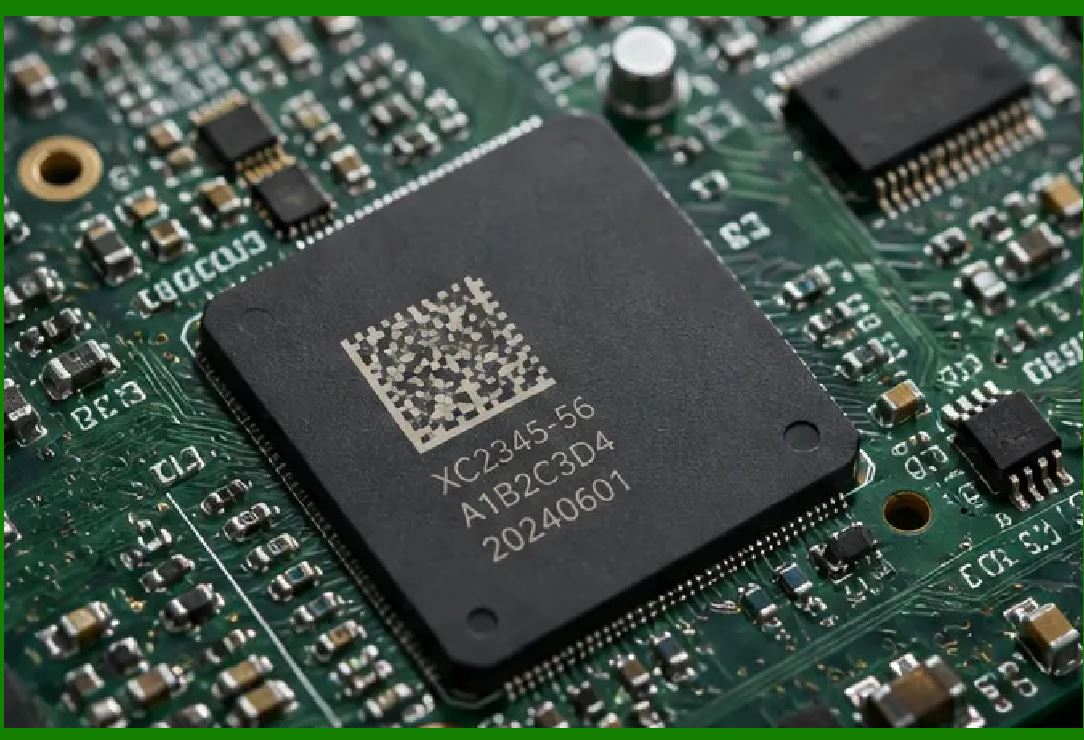
From the factory to the consumer's smartphone, the DataMatrix code on a cardboard box is transforming packaging into a powerful digital touchpoint. This tiny two-dimensional symbol is not just a replacement for a barcode---it is the gateway to a smarter, more connected, and more transparent product experience. |
 cs@easiersoft.com